

How monthly giving works for Christian senior care ministries is less about a convenient payment schedule and more about whether a ministry can sustain faithful presence with older adults whose needs rarely fit into a quarterly budget cycle. In senior care, continuity matters: caregivers and chaplains cannot appear when funding is strong and disappear when it tightens, and capital projects cannot be planned on sporadic generosity.
Monthly giving also raises an honest stewardship question for Christian donors. Regular, recurring generosity can become a disciplined act of worship, or it can become an unexamined subscription. The difference is spiritual and practical: serious giving requires clarity about what is being funded, how results are measured, and whether the ministry’s convictions shape its care.
Monthly giving is a stability instrument for ministries and for residents
Senior care ministries operate at the intersection of medical complexity, emotional vulnerability, and spiritual need. Costs are not theoretical: staffing ratios, medication management, specialized dementia programs, and safety compliance do not pause when a fundraising gala underperforms. Recurring gifts are one of the few tools a ministry has to reduce volatility without drifting into practices that compromise mission.
From a donor’s perspective, monthly giving functions like a steady stream rather than a single rainfall. It helps a ministry plan staffing and resident support with fewer abrupt trade-offs. The ministry’s leadership can make decisions earlier, and often more responsibly, because they are not waiting to see whether a year-end appeal will close a gap.
Why predictability matters in senior care
Predictability is not merely administrative convenience; it is a form of care. A chaplain’s hours, a social worker’s caseload, and a benevolence fund for residents who outlive their resources all require sustained funding. When these supports are cut mid-year, residents experience it as abandonment even if the cause is financial.
How recurring gifts shape budgeting choices
Monthly giving affects which expenses can be responsibly committed. A one-time gift might fund a van or renovate a common area. A dependable base of monthly support can underwrite staffing, training, pastoral care, and resident assistance over time. Ministries that understand this distinction will be specific about what monthly partners make possible, rather than speaking in generic terms about “supporting the mission.”

What donors are actually funding in Christian senior care
Christian senior care ministries are not identical. Some operate residential communities or skilled nursing facilities. Others fund home-based services, respite care, caregiver support, or chaplaincy across multiple sites. Monthly giving commonly supports the mission-critical work that cannot be easily restricted to a single project line.
Donors also deserve clarity about what is charitable versus what is revenue-supported. Many senior living communities rely heavily on resident fees, Medicare or Medicaid, or other reimbursements. Charitable giving often fills gaps that reimbursements do not cover: uncompensated care, spiritual care that is not billable, benevolence for residents with exhausted resources, and program quality improvements.
Common uses of monthly gifts
- Resident benevolence funds for those who cannot fully afford care
- Chaplaincy and spiritual formation for residents, families, and staff
- Dementia care enrichment, memory support programming, and caregiver training
- Support for staff retention and formation in mission-aligned care
- Home-visit ministries, respite services, or caregiver support groups where offered
A note on aging demographics and why the need is enduring
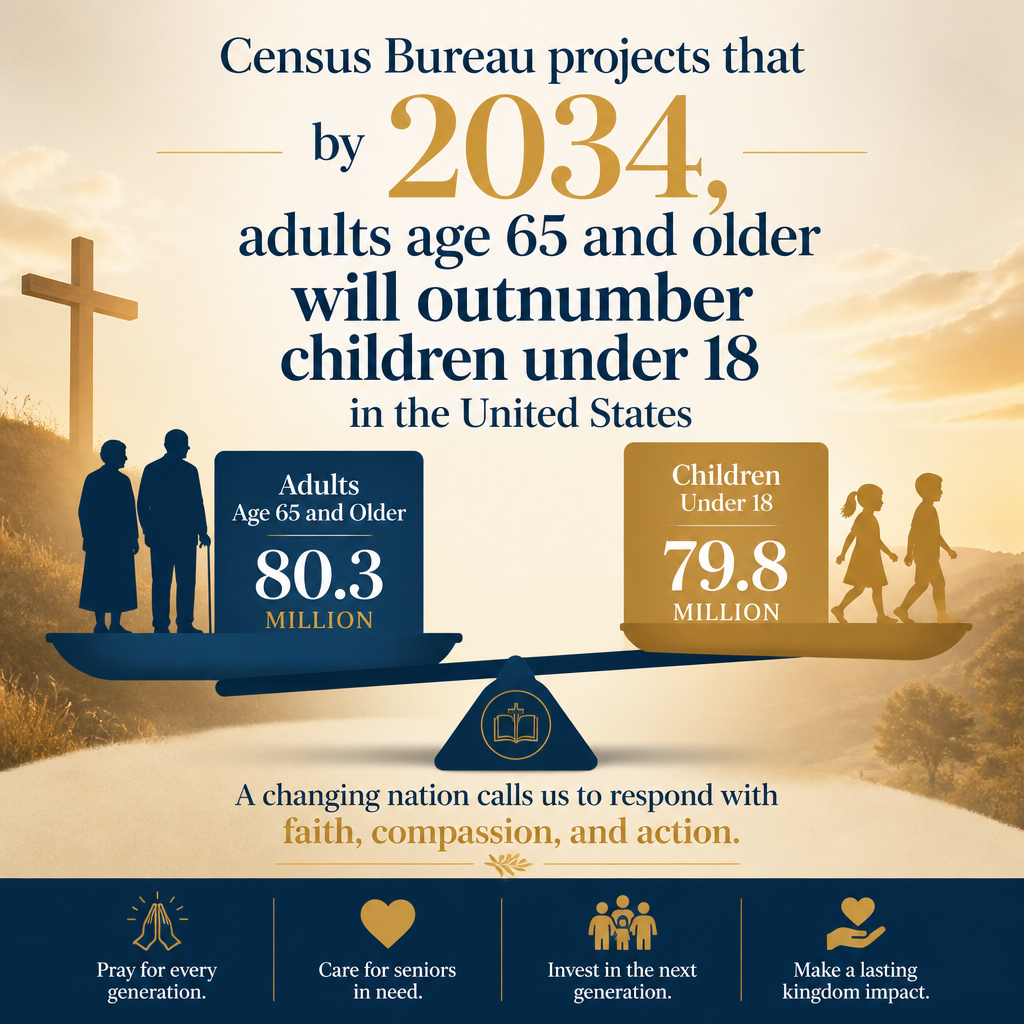
The United States is aging rapidly, and this is not a short-term trend. The U.S. Census Bureau projects that by 2034, adults age 65 and older will outnumber children under 18 in the United States (U.S. Census Bureau). For Christian donors, that demographic shift is not merely an economic forecast; it is a pastoral reality for the church’s life, as more families will face long seasons of caregiving, cognitive decline, and end-of-life decisions.
Monthly giving, at its best, is one way the Christian community shares that burden. It helps ministries remain stable as demand grows, while also allowing donors to practice steady generosity instead of reacting only to crisis appeals.
How ministries structure monthly giving programs and what to ask
Recurring giving programs typically run through a donor management platform that processes gifts monthly and tracks retention. That infrastructure can be a virtue when it serves clarity and accountability. It can also become a weakness when ministries rely on marketing language rather than measurable stewardship.
The harder question is not whether a ministry has a monthly giving program, but whether the program is governed well. Donors should expect clear financial statements, responsible data practices, and truthful communication about outcomes and limitations.
Questions that separate mature programs from marketing
Across our verification work at Most Trusted, the ministries that meet The Most Trusted Standard tend to answer donor questions with documentation rather than reassurance. A donor does not need insider access, but a donor should be able to obtain clear, consistent answers such as:
- What expenses do monthly gifts most often support, and how is that tracked internally?
- Is the program designed to fund ongoing operations, resident benevolence, or both?
- What percentage of monthly donors are retained year over year, and what has leadership learned from attrition?
- How does the ministry safeguard donor data and handle cancellations or errors?
- Does the ministry report outcomes that fit its mission, not only activity metrics?
How to interpret financial clarity without falling into simplistic ratios
Christian donors sometimes default to a single test: “How much goes to programs?” The sector has had to correct that instinct. In 2013, Charity Navigator, GuideStar, and the BBB Wise Giving Alliance published an open letter warning against judging charities primarily by overhead ratios, arguing that underinvestment in infrastructure can hurt performance and accountability (Charity Navigator). Senior care is a field where compliance, training, and clinical oversight are not optional; an artificially low administrative line may signal under-resourcing rather than faithfulness.
A better approach is to ask whether the ministry’s spending aligns with its stated calling, and whether governance ensures that spending decisions are documented, reviewed, and communicated honestly.
What monthly giving does to the donor and why spiritual formation matters
Jesus spoke with directness about money because money exposes allegiance. “Where your treasure is, there your heart will be also” (Matthew 6:21). Monthly giving can form a Christian donor in steadiness, patience, and long obedience, particularly in a culture trained for immediacy.
Yet routine can also hollow out meaning. A recurring gift may continue long after a donor would no longer affirm the ministry’s direction, or long after leadership changes reduce clarity. Mature stewardship includes regular review, not because trust is impossible, but because trust should be informed and tested.
Recurring giving as disciplined generosity
When monthly giving is chosen intentionally, it mirrors the church’s ordinary faithfulness: weekly worship, sustained prayer, and long-term community. Senior care is rarely dramatic. Residents decline gradually, families grieve in slow motion, and caregivers face quiet fatigue. A recurring gift honors that reality and refuses to fund only what is emotionally vivid.
When donors should reconsider or redirect
Christians genuinely disagree about what counts as sufficient “Christian distinctiveness” in a senior care setting. Some donors prioritize explicit evangelism and sacramental life. Others prioritize a theological ethic of dignity expressed through excellent care. We advise donors to look for coherence: does the ministry’s stated faith foundation actually shape policies, hiring, spiritual care practices, and decision-making under pressure?
If a ministry cannot explain that coherence, or if reporting becomes evasive, donors should reconsider. Monthly giving is powerful precisely because it is sustained; if sustained support is being offered, sustained accountability should be expected.
How Most Trusted evaluates monthly-giving readiness in senior care ministries
Donors often ask whether recurring giving is “safe.” No verification can eliminate risk, but responsible review can reduce preventable risk. At Most Trusted, we evaluate ministries against The Most Trusted Standard, looking for verifiable evidence across faith commitments, financial integrity, governance and leadership, and transparency and effectiveness. For monthly giving, a ministry’s systems and habits matter as much as its storytelling.
What this means in practice is that we look for consistent documentation: board oversight, clear financial reporting, conflict-of-interest policies, responsible fundraising practices, and truthful impact communication. In senior care, we also pay attention to how the ministry describes care quality and spiritual care without making claims it cannot substantiate.
Signals of strength for recurring programs
Monthly giving programs tend to be healthier when a ministry can show:
- Clean, consistent financial statements and transparent annual reporting
- Clear governance structures with documented board responsibilities
- Fundraising communications that avoid manipulation, urgency theater, or vague promises
- Policies that protect residents’ dignity and donors’ intent
- Outcome reporting that matches the ministry’s actual scope of control
Signals of avoidable risk
Recurring programs warrant caution when ministries rely heavily on emotional narratives while offering little documentation, treat questions as disloyalty, or imply that donor dollars alone guarantee clinical outcomes. Senior care is complex; honest ministries name constraints, regulatory realities, staffing pressures, and the limits of what philanthropy can fix.
Donors seeking a broader view of organizations in this field often begin with Christian Senior Care Ministries, then narrow toward giving practices through How to Give to Christian Senior Care Ministries. The goal is not to create suspicion, but to give with clear eyes and settled convictions.
FAQs for How monthly giving works for Christian senior care ministries
Is monthly giving better than a single large gift for senior care ministries?
Neither is universally better. Monthly giving tends to support ongoing staffing, chaplaincy, benevolence, and program continuity, while a single large gift can be decisive for capital needs or targeted initiatives. Many mature donors do both: a steady monthly commitment plus occasional larger gifts aligned with specific needs.
How often should donors review a recurring gift to a senior care ministry?
We recommend reviewing at least annually, or sooner if leadership changes, reporting becomes unclear, or the ministry’s stated mission shifts. A simple review can include reading the annual report, confirming basic governance and financial transparency, and assessing whether the ministry’s faith commitments remain integrated into its care.
Monthly giving as faithful steadiness
Monthly giving works best in Christian senior care when it underwrites the quiet, costly consistency that dignifies older adults: stable care, sustained spiritual support, and responsible planning. Donors should not treat recurring gifts as automatic virtue. They should treat them as ongoing stewardship, grounded in Scripture’s call to honor the vulnerable and disciplined by the kind of verification and transparency that keeps generosity aligned with truth.



