

Christian medical ministries help families in medical crisis by meeting needs that are simultaneously clinical, financial, emotional, and spiritual. When a diagnosis arrives without warning, families rarely experience it as a single problem to solve. They experience it as a cascading disruption that touches work, caregiving, transportation, housing, and the integrity of faith under pressure.
For Christian donors, the question is not whether to care for the sick. Jesus names visiting the sick among the marks of fidelity in Matthew 25, alongside feeding the hungry and clothing the naked. The question is how medical ministries can serve wisely: strengthening families without replacing what belongs to local churches, and offering material help without turning suffering into a fundraising narrative.
Medical crisis is rarely only medical
Most families can absorb ordinary health expenses; crisis is different. A major hospitalization, a cancer diagnosis, a complicated pregnancy, a child with a congenital condition, or a disabling accident can produce a level of instability that overwhelms even disciplined household budgets and supportive extended family networks.
Financial pressure can become a spiritual crisis
Medical debt is one of the most common forms of financial distress in the United States. When families cannot see a path forward, they often experience shame, isolation, and fractured trust—sometimes even toward God and the church. That spiritual dimension is not ancillary; it shapes whether a family seeks help, accepts help, and remains connected to Christian community.
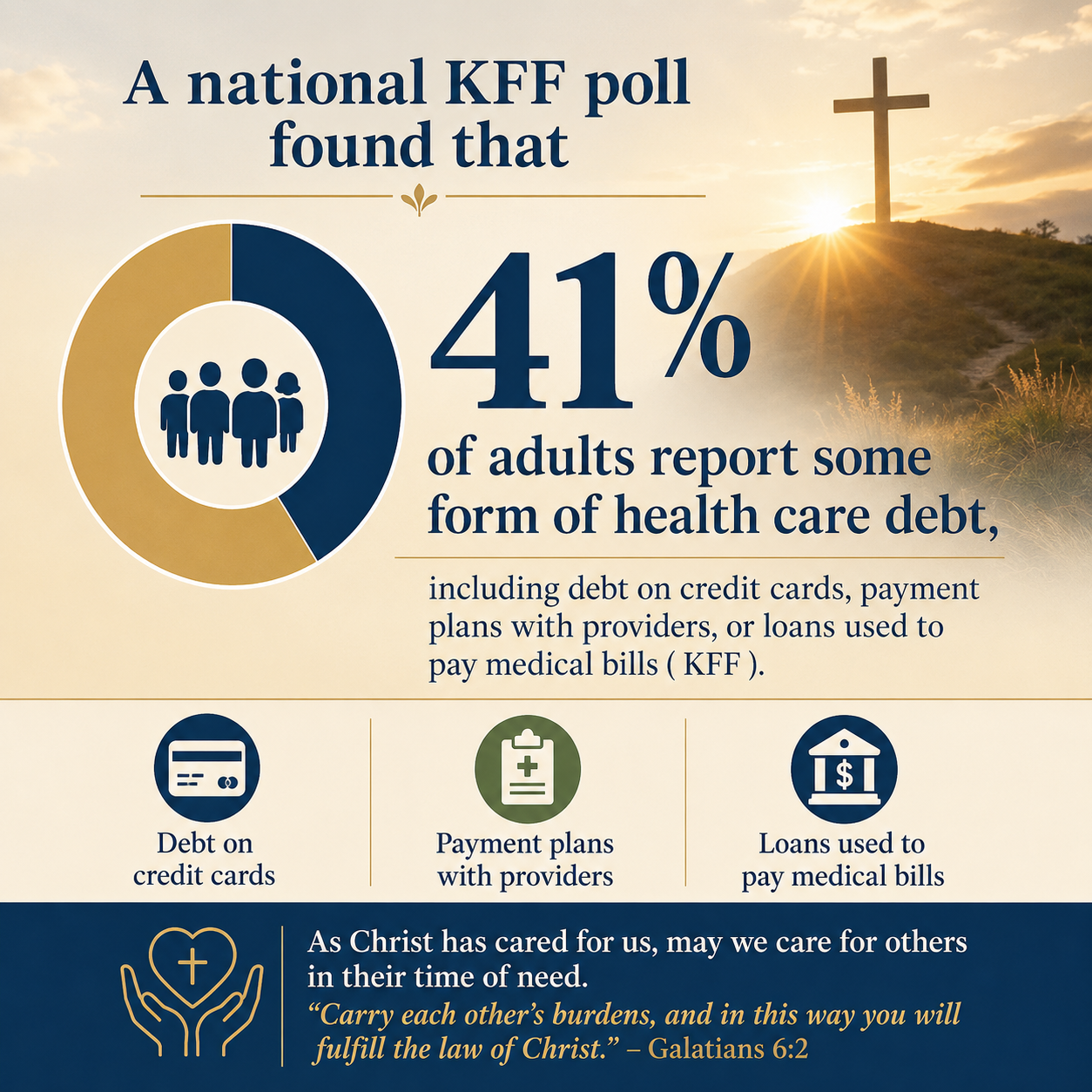
Verifiable evidence suggests the financial stakes are substantial. A national KFF poll found that 41% of adults report some form of health care debt, including debt on credit cards, payment plans with providers, or loans used to pay medical bills (KFF). A ministry serving families in crisis must understand this as more than an accounting problem; it is a destabilizing force that can lead to housing insecurity, depleted savings, and long-term vulnerability.
Caregiving strain reshapes a household
Medical crisis frequently forces a reallocation of time: one parent reduces work hours, siblings receive less attention, and extended family members are pulled into ongoing logistics. Transportation to appointments, time in waiting rooms, and the complexity of insurance paperwork can become a second job. Christian medical ministries are often most effective when they relieve these compounding burdens rather than focusing narrowly on a single line item.
What Christian medical ministries actually provide
In the public imagination, “medical ministry” can mean almost anything: a hospital chaplaincy, a free clinic, a mission hospital overseas, a patient housing program, a medical equipment lending closet, or a counseling program for families living with chronic illness. For donors who want to give with discernment, clarity about the actual services—and their intended outcomes—matters.
Direct medical care and gap-filling services
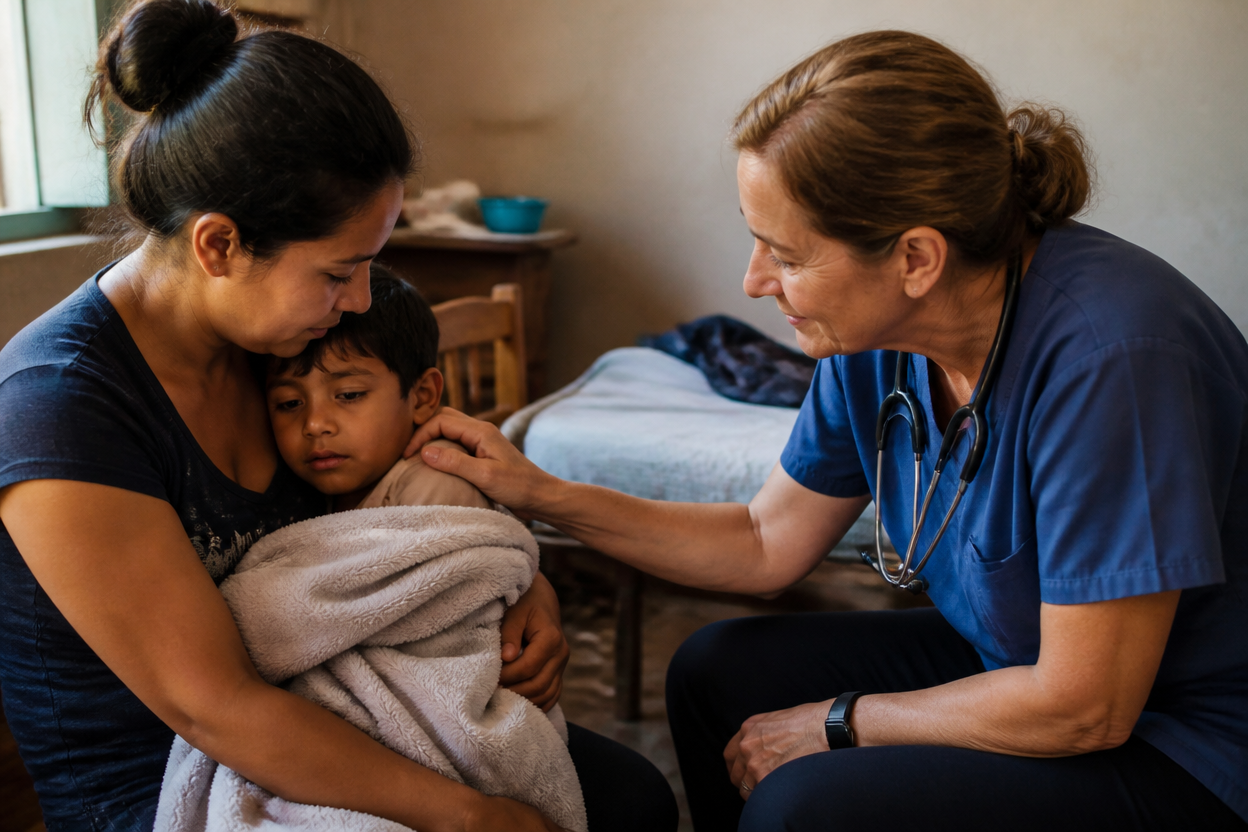
Some ministries provide clinical services directly: primary care, dental care, prenatal care, or specialty care delivered through licensed providers. Others serve as a bridge around common barriers—transportation vouchers, temporary housing near treatment centers, translation services, or patient navigation through complex systems.
There is a legitimate debate among Christians about whether a ministry should become a parallel health system or a targeted supplement to existing care. In our verification work at Most Trusted, ministries that meet The Most Trusted Standard tend to articulate their role precisely: they can name the particular gap they exist to fill, the population they serve, and the boundaries of what they will and will not attempt to do.
Financial assistance that protects dignity
Medical assistance often comes through grants to families, payment of specific bills, or support routed through partner hospitals and social workers. Done poorly, cash assistance can be arbitrary, vulnerable to favoritism, or shaped more by donor emotion than patient need. Done well, it is governed by clear eligibility criteria, documentation standards, and a pastoral posture that treats families as neighbors rather than projects.
When donors evaluate a ministry that provides financial help, we recommend asking a concrete question: does the ministry have a consistent, documented process that would look the same for a family without social capital as it would for a family connected to the right church network?
How help becomes ministry without becoming spectacle
Christians rightly want giving to be personal. Yet medical crisis is also deeply private. The family’s vulnerability is not a commodity for promotional storytelling, and health information should be guarded with the seriousness it deserves. A ministry’s theology of the person—made in the image of God—shows up in how it handles privacy, consent, and representation.
Trauma-informed compassion is not secular language
Some Christian donors are wary of “trauma-informed” terminology, as though it signals therapeutic overreach. But the basic insight is compatible with Christian anthropology: suffering shapes perception, decision-making, memory, and trust. Ministries that serve crisis well tend to train staff and volunteers to listen patiently, to avoid coercive spiritual pressure, and to offer prayer and Scripture in ways that respect the family’s capacity in that moment.
Prayer and presence are not replacements for competence
In medical settings, sincerity cannot substitute for professionalism. Whether a ministry operates a clinic or partners with hospitals, it must handle licensing, safeguarding, referral protocols, and documentation with rigor. The witness of the gospel is not strengthened by operational shortcuts; it is undermined by them.
For donors seeking a broader view of the sector, our coverage of Christian Medical Ministries examines the distinct models and the questions each model raises for faithful, accountable service.
What measurable impact looks like in a medical crisis
Measuring outcomes in medical crisis is complicated. A ministry may do faithful work and still see patients decline. A family may receive substantial support and still endure loss. Christian evaluation must avoid the cruelty of demanding “success stories” as proof of stewardship.
Appropriate metrics balance outputs, outcomes, and integrity
In our experience, the strongest ministries use a small set of metrics that are credible and not easily manipulated. Outputs matter—number of patient nights housed, transportation rides provided, clinic visits delivered—but outputs are not the same as impact.
Outcomes in this space often look like stability rather than transformation: reduced missed appointments, improved care adherence, fewer days without medication, or a documented reduction in the practical barriers that keep a family from receiving appropriate treatment. Some outcomes are relational and pastoral: sustained connection to church community, reduced isolation, and access to biblically grounded counsel during prolonged uncertainty.
A short list of impact questions donors can ask
- Does the ministry define the problem it addresses with specificity, and can it explain why its approach is appropriate for that problem?
- Are eligibility criteria and decision processes documented, consistent, and auditable?
- How does the ministry protect patient privacy and obtain meaningful consent for any public storytelling?
- What partnerships exist with hospitals, social workers, local churches, or public agencies, and how are referrals handled?
- What evidence does the ministry provide that its assistance reduces barriers to care or stabilizes families under strain?
Donors should also resist a common misunderstanding about nonprofit evaluation: the goal is not the lowest administrative expense, but the highest integrity and effectiveness. Charity Navigator, Candid, and the BBB Wise Giving Alliance jointly warned that focusing narrowly on overhead can distort decision-making and harm outcomes (Charity Navigator).
How donors can give with confidence and Christian seriousness
Medical ministries are often compelling because the need is visible and the suffering is acute. That immediacy can also pressure donors into reactive giving. Mature generosity is not less compassionate; it is more deliberate about truth, accountability, and long-term fruit.
Discern the ministry’s theology of care
Christian medical ministry is not merely humanitarianism with prayer added. Its theological center should be clear: human beings as embodied souls, the church’s calling to mercy, and the hope of resurrection that neither denies suffering nor makes it ultimate. Donors can reasonably ask how a ministry understands evangelism in contexts where people cannot easily refuse attention, and how it avoids transactional spirituality.
Verify governance, finances, and transparency
The practical question is whether a ministry deserves trust when families are most vulnerable. Most Trusted exists to help donors give with confidence by evaluating ministries against The Most Trusted Standard, a 15-criteria framework that examines faith foundation, financial integrity, governance and leadership, and transparency and effectiveness. The ministries that serve well in medical crisis tend to be the same ministries that document policies, welcome appropriate scrutiny, and report results without exaggeration.
For donors who want to focus specifically on evaluation questions in this field, How Christian Medical Ministries Measure Impact addresses what credible evidence can and cannot show when the goal is faithfulness in the presence of suffering.
FAQs for How Christian medical ministries help families in medical crisis
Do Christian medical ministries replace insurance or public assistance?
Some models are designed as alternatives to conventional insurance arrangements, but many Christian medical ministries function as supplements: they cover practical barriers, short-term housing, transportation, or targeted financial assistance. Donors should examine how clearly the ministry defines its role, how it coordinates with existing systems, and whether it avoids creating dependency or confusion for families already navigating complex benefits.
What should donors watch for when a ministry shares patient stories?
Donors should look for clear evidence of informed consent, privacy safeguards, and restrained storytelling that preserves dignity. Ministries should avoid unnecessary medical details, refrain from presenting children as fundraising assets, and demonstrate that families can receive help without agreeing to publicity. A ministry’s communications practices often reveal whether compassion is governed by Christian respect for the person or driven by the demands of marketing.
Faithful help in medical crisis requires competence and compassion
Christian medical ministries help families in medical crisis when they reduce practical barriers to care, stabilize households under financial strain, and provide pastoral presence without exploitation. Donors best serve this work by funding ministries that are clear about their model, serious about governance, careful with evidence, and humble about what can and cannot be measured when suffering does not yield to tidy outcomes.



