
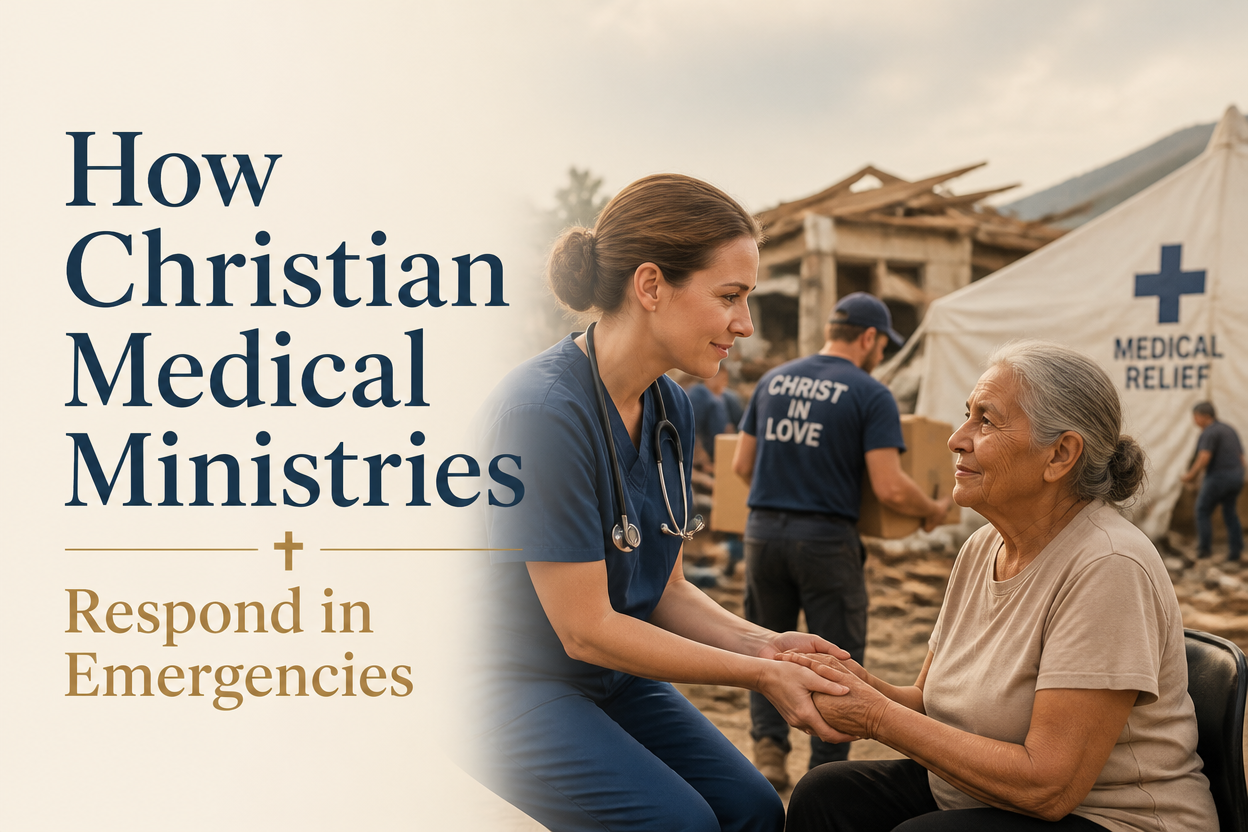
How Christian medical ministries respond in emergencies reveals a great deal about a ministry’s theology, competence, and stewardship. In the first hours after a disaster, the Christian instinct to run toward suffering can be either a quiet embodiment of Matthew 25 or an unplanned intervention that adds confusion to an already fragile local system.
For donors, the question is not whether Christians should help. Scripture is unequivocal about mercy for the sick and wounded. The question is whether a given ministry is prepared to help in ways that are medically sound, ethically ordered, and accountable to both the church and the communities it serves.
Emergency response is medical work, not only compassion
In crises, Christian witness is expressed through competent service. Disaster medicine is a disciplined field with hard-earned norms: triage, infection control, supply-chain integrity, documentation, referral networks, and continuity of care. When Christian medical teams treat emergency response as a spiritual impulse more than a medical practice, patients carry the cost.
Triage is a moral practice, not a cold calculation
Triage can feel jarring to donors because it necessarily makes distinctions. Yet triage is one way medicine operationalizes love of neighbor under constraint. In mass casualty situations, clinicians prioritize the greatest chance of survival with available resources. The ethical weight is real, and mature ministries do not sentimentalize it; they train for it, document it, and submit it to clinical oversight.
What this means in practice is that the strongest Christian medical ministries build clear clinical protocols before a crisis. They do not invent standards on the tarmac. They also know when not to deploy—because sometimes the most faithful action is funding local capacity rather than inserting a foreign team.
Speed matters, but coordination matters more
Many donors understandably prize rapid deployment. But speed without coordination can undermine the local health system that will still exist after the cameras leave. The World Health Organization has repeatedly emphasized that emergency medical teams should be coordinated and meet minimum standards; uncoordinated arrivals can produce duplication, gaps, and patient safety failures.World Health Organization
Across our verification work at Most Trusted, we observe that the ministries most prepared for emergencies treat coordination as a core competency: formal relationships with local ministries and hospitals, clear government interfaces, and a disciplined approach to scope of practice. Compassion becomes credible when it is integrated into the real architecture of response.
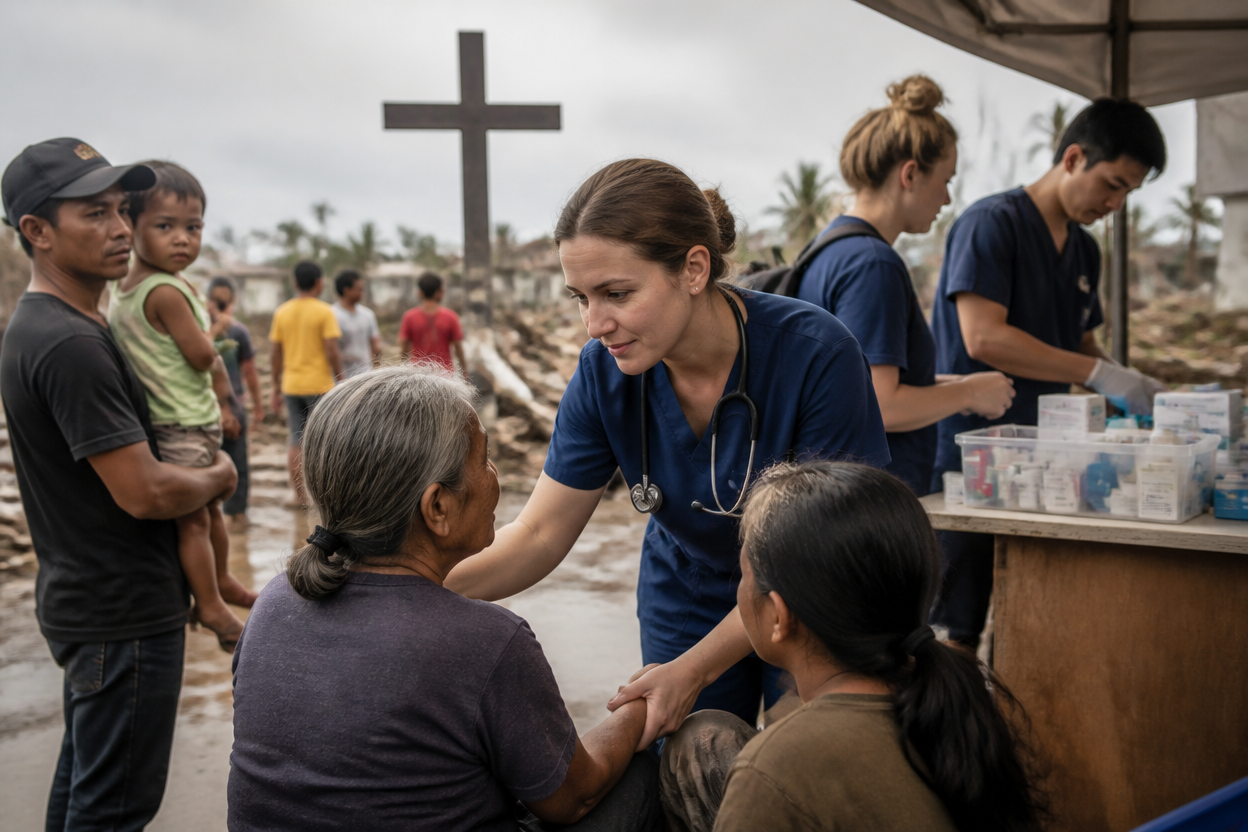
The first question donors should ask is about preparedness
Emergency response is rarely improvised well. The ministries that serve effectively in disasters are typically those that have done faithful work in ordinary time: building clinics, training local staff, establishing referral pathways, and developing governance that can absorb sudden operational strain.
Preparedness includes governance, not only logistics
Most donors think first of supplies, planes, and volunteer rosters. Those matter. But preparedness also includes who has authority to deploy, how medical decisions are supervised, how risk is managed, and how finances are controlled under pressure. A ministry with weak governance can spend quickly and still serve poorly.
This is one reason we encourage donors to evaluate emergency response through the same integrity lens they would apply to any other ministry. At Most Trusted, we assess ministries against The Most Trusted Standard, examining faith commitments alongside financial integrity, governance and leadership, and transparency and effectiveness. In emergencies, those criteria are not abstract; they are the difference between organized service and reactive activity.
Clinical quality requires credentialing and supervision
Disasters attract volunteers, including well-intentioned clinicians whose credentials and competencies are difficult to verify quickly. Mature ministries do not assume that a willingness to serve equals readiness to practice. They pre-credential clinicians, confirm licensure, maintain malpractice coverage where relevant, and ensure appropriate supervision and scope of practice.
The harder question is how ministries handle pharmaceuticals and controlled substances in chaotic environments. Donors should expect disciplined pharmacy controls, documented chain of custody, and compliance with local law. Anything less is not merely a paperwork gap; it is a patient safety issue and an ethical failure.
Effective emergency care depends on local trust and local ownership
Christians genuinely disagree about the best balance between international surge capacity and local empowerment. Some argue that only outside teams can bring specialized skills quickly; others warn that outside teams can displace local professionals and erode institutions. In practice, the best ministries hold both truths: outside help can be necessary, and local leadership must remain central.
Partnership is not a slogan in a disaster
Healthy partnership shows up in concrete decisions. Who sets clinical priorities? Who communicates with community leaders? Who owns the data? Who will follow the patient after the foreign team leaves? A ministry that cannot answer these questions clearly is likely to be operating in parallel rather than in partnership.
Well-ordered ministries also understand that disasters are not only medical events. They are social and spiritual ruptures. Pastoral care, trauma-informed counseling, and church-based support can be indispensable, but they must not override consent or blur medical boundaries. The gospel does not need coercion; it is proclaimed most faithfully when service is freely given and dignity is protected.
The ethical edge cases are where integrity is tested
Emergency settings create recurring ethical tensions: photographing patients for fundraising, distributing aid through church networks that may exclude outsiders, or offering care in ways that unintentionally privilege those who can travel to a temporary clinic. Donors should not assume malice; they should assume complexity.
A serious ministry anticipates these pressures. It has written policies on patient privacy, informed consent, child protection, and appropriate storytelling. It trains staff to honor confidentiality even when a dramatic narrative would raise more money. These are not secondary matters. They are applications of the doctrine that every person bears God’s image.
Measuring impact in emergencies requires humility and evidence
Emergency response produces powerful stories. Stories have a rightful place in Christian giving, because the Kingdom is personal and because Christ healed particular people, not abstract categories. Yet story without evidence can mislead donors and tempt ministries toward performative urgency.
Output metrics are not the same as outcomes
“Patients treated” and “supplies delivered” are outputs. They matter, but they do not fully describe whether care was effective, safe, or durable. Outcomes might include reduced morbidity, appropriate referrals completed, continuity of chronic disease care, or restored local service capacity. These are harder to measure, especially in unstable settings, and that difficulty should make donors cautious about overconfident claims.
Verifiable evidence suggests donors should also be attentive to the difference between short-term relief and long-term recovery. The literature on disaster recovery consistently notes that rebuilding local systems takes far longer than the initial response phase, and that poorly coordinated short-term interventions can complicate recovery.National Academies
Financial reporting must stay clear when urgency rises
Disasters raise money quickly, often restricted to a specific event. Donors should expect ministries to track restricted funds carefully, report expenditures with clarity, and explain if funds are redirected when needs change. Ambiguity here is not merely an accounting matter; it is a trust matter.
- Clear event-specific fundraising language that matches how funds will actually be used
- Segregated tracking for restricted gifts and documented approvals for any reallocation
- Public reporting that distinguishes immediate relief from longer-term recovery costs
- Independent financial oversight appropriate to the ministry’s size and complexity
- Evidence of coordination with local health authorities and existing care networks
For donors seeking a broader view of how ministries define and demonstrate results, the category How Christian Medical Ministries Measure Impact addresses common claims, common pitfalls, and the evidence practices that tend to correlate with durable fruit.
What a mature donor looks for before funding the next crisis
Some Christian donors prefer to give only when a crisis is visible. Others prefer steady support that builds readiness long before a headline. Both instincts can be faithful. The more important distinction is whether giving is anchored in discernment or driven by urgency alone.
Discernment means asking questions that ministries should welcome
Donors sometimes hesitate to ask hard questions out of fear of seeming cynical. Yet in Scripture, stewardship is a moral category, not a bureaucratic one. When Paul organized famine relief, he emphasized careful administration “to avoid any criticism of the way we administer this liberal gift” (2 Corinthians 8:20). Transparency is not a concession to suspicion; it is a practice of integrity.
In emergencies, donors can reasonably ask: How do you decide to deploy? What clinical standards govern care? How do you coordinate with local systems? How will you report outcomes, not only activity? How do you protect vulnerable patients from exploitation in storytelling? Ministries worthy of trust will not treat these as hostile questions.
Verification supports generosity rather than replacing it
Generosity is not reducible to a scorecard. But verification can protect generosity from being manipulated by theatrics or underwritten by weak controls. Most Trusted exists to help donors give with confidence by evaluating Christian nonprofits against The Most Trusted Standard, including the hard-to-fake signals of governance, financial integrity, and transparency that become most visible under stress.
For donors comparing approaches across the field, the broader topic Christian Medical Ministries provides context on common models of care, program types, and the particular accountability questions that arise when medicine and ministry meet.
FAQs for How Christian medical ministries respond in emergencies
Should donors prioritize rapid-response teams or long-term medical work?
Both can be faithful, but they are not interchangeable. Rapid-response teams are most effective when they deploy within recognized coordination structures, operate within clear clinical standards, and have a plan for handoff to local providers. Long-term medical work often produces the local trust, staffing, and systems that make emergency response safer and more effective. Many of the strongest ministries do both by investing in local capacity before a crisis and adding surge support only when it truly helps.
What warning signs suggest an emergency medical ministry may be unprepared?
Common warning signs include vague descriptions of clinical oversight, unclear relationships with local health authorities, heavy reliance on dramatic imagery without patient privacy safeguards, and reporting that focuses only on totals rather than clinical quality and follow-up. Donors should also be cautious when a ministry raises restricted disaster funds without clear, timely reporting on how those funds were spent and what changed as needs evolved.
Emergency response as a test of faithfulness
Disasters expose what is already true about a ministry: whether it is governed with integrity, whether it honors the dignity of the vulnerable, and whether it can translate compassion into competent care. Christian medical ministries respond in emergencies at their best when they pair urgency with order, mercy with medical discipline, and spiritual conviction with transparent accountability. Donors who give with discernment make it more likely that relief will be both immediate and genuinely healing.



