
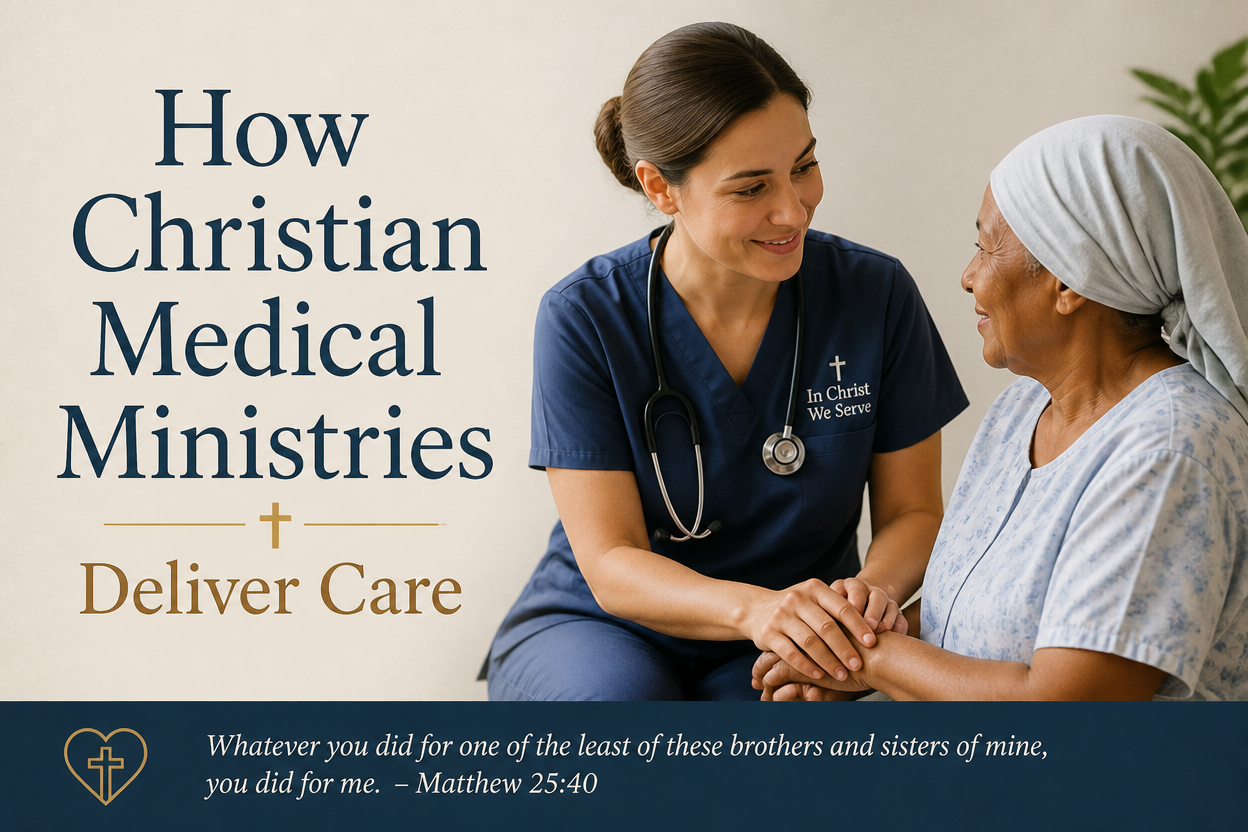
How Christian medical ministries deliver care is not a single model so much as a set of convictions expressed through clinical systems. Donors are often deciding between compelling stories and verifiable capacity: a rural hospital that keeps its doors open, a mobile team that reaches the unreached, a training pipeline that forms Christian clinicians, or a referral fund that keeps a child from dying of a treatable illness. The question is not whether Christians should care for the sick; Scripture is unambiguous. The question is what faithful, competent, accountable care looks like in places where health systems are fragile and the moral risks of doing harm are real.
Jesus did not treat healing as a public-relations strategy. He healed as a sign of the Kingdom and as an act of mercy toward embodied people—people with names, diseases, social isolation, and fear. Christian medical work that reflects him therefore needs both compassion and competence. It needs spiritual integrity without manipulation, and it needs measurable medical quality without becoming technocratic. Mature donors should expect ministries to name these tensions and to build structures that can bear the weight of them.
Care delivery in Christian medical missions begins with a theology of the person
Christian medical ministries work from a particular anthropology: every patient bears the image of God, and therefore deserves truthful communication, dignified treatment, and wise stewardship of scarce resources. That theological claim sounds obvious in Christian circles, but it carries operational implications. It shapes informed consent practices, confidentiality, triage decisions, end-of-life care, and how a ministry relates to local staff, governments, and churches.
Across our verification work at Most Trusted, the ministries that meet The Most Trusted Standard tend to make this theology explicit in policies rather than leaving it as aspiration. They articulate how they avoid coercion, how they respect local authority, and how they protect vulnerable patients—especially women, children, and displaced people. They also name what they will not do: exaggerate outcomes, use medical care as a bargaining chip for conversion, or blur lines between pastoral care and clinical decision-making.
Mercy and witness must not become medical coercion
Christians genuinely disagree about how explicitly evangelism should be integrated into clinical settings. Some contexts welcome prayer at the bedside; others require careful discretion for safety and legal compliance. The boundary that should not be crossed is coercion. A patient in pain is not a prospect. Ethical care requires that treatment never depends on religious participation and that spiritual conversations are offered with clarity and freedom.
Donors can reasonably ask for written commitments: non-discrimination policies, patient rights statements, and staff training on appropriate spiritual care. A ministry’s theology should increase a patient’s freedom, not diminish it.
Quality is part of love of neighbor
In global health, good intentions do not compensate for poor clinical practice. Ministries that deliver care well invest in infection prevention, medication management, surgical safety checklists, equipment maintenance, and referral protocols. For donors, “compassionate care” should not be code for “unmeasured care.” It should mean care that is both kind and clinically responsible.
Where capacity is limited, wise ministries often choose a narrower scope of services they can do well rather than offering everything with inconsistent quality. That kind of focus is frequently the difference between a clinic that becomes trusted locally and one that is tolerated but avoided when the stakes rise.
Hospitals, clinics, and community health each require different operational disciplines
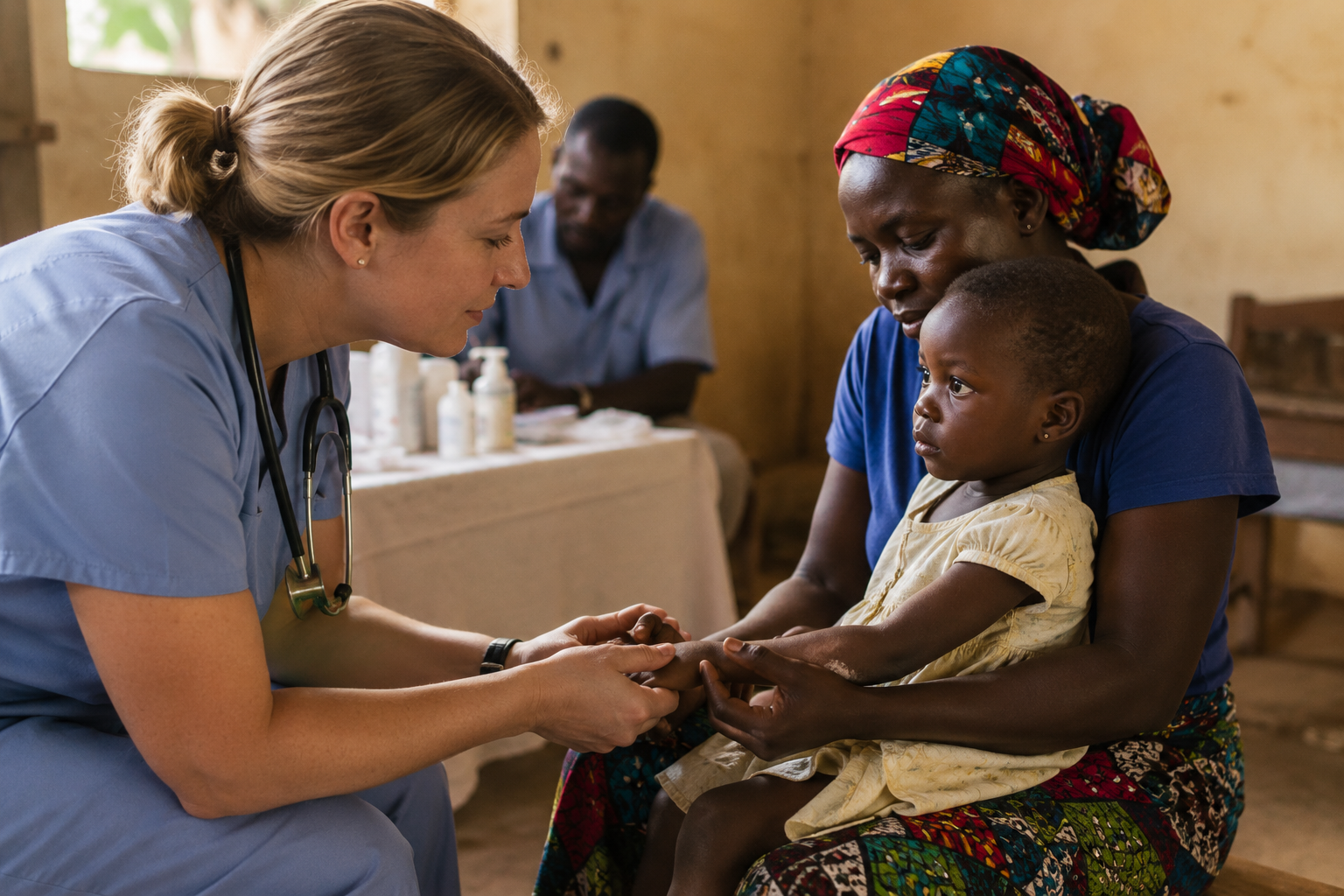
Christian medical ministries commonly deliver care through a mix of fixed facilities and outreach. Each model has distinct costs and accountability questions. A hospital can offer surgery, obstetrics, inpatient pediatrics, and emergency care, but it carries heavy infrastructure burdens. A primary-care clinic is less capital intensive and can serve as a trusted first point of contact. Community health programs can reduce preventable disease at scale, but they require patient follow-up and local ownership to avoid becoming episodic campaigns.
Hospitals and surgical programs depend on systems, not heroics
In many mission hospitals, the most faithful act is not dramatic intervention; it is keeping the generator fueled, the sterilizer functioning, the supply chain reliable, and the staff paid. Surgery and obstetrics in particular demand disciplined systems: blood availability, anesthesia competence, postoperative monitoring, and pathways for complications.
Donors should expect a sober explanation of constraints: what cases the hospital can safely handle, how referrals work, and what quality controls are in place. Ministries that rely on visiting teams can do meaningful work, but the harder question is continuity—how follow-up is managed after the team leaves, and whether local clinicians have real authority rather than functioning as assistants to outsiders.
Primary care and mobile clinics rise or fall on continuity
Mobile clinics can reach remote communities and displaced populations, especially where conflict or geography blocks access. They are also vulnerable to a common failure mode: episodic encounters without follow-up. Chronic disease management, prenatal care, tuberculosis treatment, and mental health care require continuity, reliable records, and trust over time.
Stronger ministries build networks: community health workers, referral relationships with local facilities, and data systems that allow a patient to be known beyond a single visit. The aim is not merely to “see more patients,” but to strengthen a local care pathway that persists.
Community health and prevention are often the quiet work with lasting impact
Many of the largest gains in global health come through prevention: clean water, immunization, maternal health education, nutrition support, and early treatment. The U.S. Centers for Disease Control and Prevention identifies immunization as one of the most effective public health interventions, preventing millions of deaths globally over time CDC. Prevention programs can align deeply with Christian mercy because they protect the most vulnerable before crisis strikes.
For donors, the evaluation question is whether prevention is integrated with local leadership. Programs that depend on outside funding indefinitely may still be necessary in fragile settings, but mature ministries describe a long-term plan for local capacity, appropriate cost recovery where feasible, and honest limits where it is not.
Training and staffing are the true delivery mechanism
Buildings, equipment, and supplies matter, but people deliver care. Christian medical ministries typically staff through a combination of local professionals, national leadership, and expatriate specialists. The model is under pressure worldwide because health workforce shortages are severe, and retention is difficult even for well-funded governments. The World Health Organization projects a substantial global shortage of health workers by 2030, concentrated in low- and middle-income countries World Health Organization.
That shortage creates a moral tension for Christian ministries: recruiting from local systems can strengthen a ministry’s capacity while weakening public hospitals that already struggle. Responsible ministries name this openly and take steps to mitigate it—through training pipelines, fair compensation that does not destabilize local labor markets, and partnerships that build the overall system rather than extracting from it.
Medical missionary training requires formation, not only skills
Clinical competence is non-negotiable, but so is character. Cross-cultural medicine exposes pride quickly. Ministries that prepare clinicians well invest in language learning, cultural humility, trauma awareness, and team accountability. Many also require training in safeguarding and professional boundaries, acknowledging that spiritual authority and clinical authority can be misused when not constrained.
Donors should ask whether a ministry can describe its training pathway with specificity: supervision structures, continuing medical education, and what happens when a worker fails ethically or clinically. The presence of a clear corrective process is usually a sign of maturity, not scandal.
Local leadership is not a slogan
There is a difference between employing local staff and being locally led. In stronger models, local clinicians hold real authority over clinical protocols and strategic decisions, and boards include national leaders with meaningful governance power. This is not merely a matter of optics. Local leadership increases contextual wisdom, reduces dependency, and strengthens credibility with governments and communities.
Where expatriate leadership remains necessary for specialized roles or fundraising, prudent ministries establish clear succession planning. Donors can treat the absence of any plan as a risk indicator.
Partnership with churches can strengthen care when it is properly defined
Churches are often the most durable institutions in fragile contexts, and Christian medical ministries frequently partner with them for community health education, patient support, and follow-up. The partnership is healthy when the church’s role is pastoral and relational rather than clinical, and when confidentiality and consent are protected. A patient should never have to choose between receiving care and having sensitive information shared inappropriately.
This is one place where theology and governance intersect. Ministries with mature ecclesiology tend to honor the church’s spiritual responsibility while protecting clinical integrity.
Donor confidence depends on verifiable accountability, not inspiring narratives
Christian donors are often moved by stories of a child healed or a village reached, and stories matter. But medical missions also involve money, power, and the vulnerability of patients. That combination requires unusually strong governance and transparency. A ministry can do sincere work and still misstate outcomes, mishandle restricted gifts, or avoid independent oversight.
Most Trusted exists because donors should not have to choose between compassion and caution. Through our verification process, we evaluate ministries against The Most Trusted Standard, examining faith commitments alongside financial integrity, governance and leadership, and transparency and effectiveness. Medical ministries, in particular, benefit from this kind of external scrutiny because their impact claims can be difficult for a donor to verify from a distance.
What measurable effectiveness should look like in a medical ministry
Not every ministry should publish peer-reviewed outcomes, and not every context permits granular reporting. But mature organizations can still provide credible indicators: surgical volume with complication tracking, maternal mortality trends in their facility, vaccination coverage in a defined catchment area, patient follow-up rates, and independent evaluations when feasible.
They should also be able to explain what they do not measure well and why. Overconfidence is not a virtue in global health. A donor can trust a ministry more when it acknowledges uncertainty and shows how it learns.
Financial transparency and the overhead conversation
Christian donors sometimes default to a simple metric: “low overhead.” The sector has repeatedly warned that this can mislead. A widely cited open letter on the “overhead myth,” signed by leaders from GuideStar, Charity Navigator, and BBB Wise Giving Alliance, argues that administrative and fundraising ratios are poor proxies for performance and can incentivize underinvestment in systems that protect mission and beneficiaries Candid GuideStar.
For medical ministries, underinvestment can mean unsafe care: inadequate sterilization, poor medical records, lack of audit controls, or weak safeguarding. Donors should ask whether spending patterns match the real cost of responsible healthcare.
Governance and safeguarding are patient-protection issues
Medical missions require disciplined governance because the ministry holds power over patients who may have little recourse. Board independence, conflict-of-interest policies, whistleblower channels, and safeguarding systems are not bureaucratic burdens; they are ways of honoring the dignity of those served. This is especially true where ministries serve children, survivors of violence, or displaced communities.
Donors can ask direct questions: Who can report misconduct? Who investigates? Are there written safeguarding policies and training records? Is there independent financial oversight? A ministry that welcomes these questions is usually a ministry that expects to be accountable before God and people.
Faithful medical care is both mercy and stewardship
Christian medical ministries deliver care through hospitals, clinics, outreach, and training—yet the deeper delivery mechanism is integrity: theological clarity that resists coercion, clinical competence that treats quality as love of neighbor, leadership that honors local authority, and transparency that can withstand scrutiny. Those are not abstract ideals. They are the conditions under which a patient is protected and a donor’s gift becomes durable service rather than a temporary intervention.
For donors seeking to support Christian Medical Ministries, the task is not only to be generous but to be discerning. Scripture commends generosity that is wise, not naïve. When ministries can demonstrate accountable governance, credible outcomes, and a theology that dignifies the patient, donors can give with confidence that mercy is being carried with stewardship.



