

What fundraising red flags should Christian donors watch in apologetics ministries? The question matters because apologetics ministries often address real intellectual obstacles to faith, but they also operate in a high-attention environment where urgency, controversy, and personal brands can distort how money is raised and how donors are treated.
Scripture treats the handling of money as a matter of discipleship, not mere administration. Jesus taught that treasure tracks the heart (Matthew 6:21), and the New Testament repeatedly binds spiritual credibility to financial integrity and sober leadership (1 Timothy 3:2–3; Titus 1:7). For donors, the aim is not cynicism. It is stewardship that is both generous and discerning.
1. When urgency becomes a substitute for accountability
Apologetics can be urgent without being manipulative
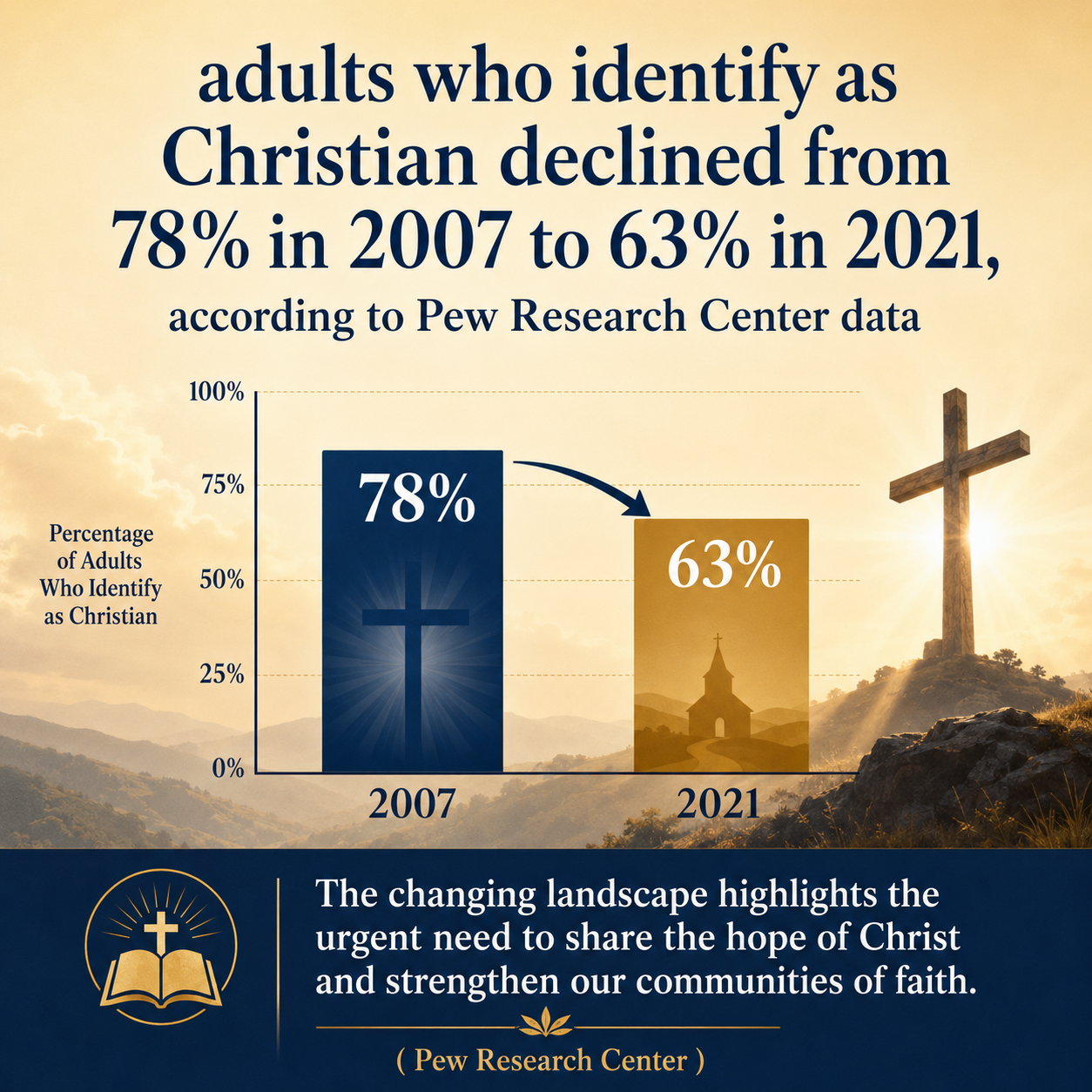
Apologetics ministries often speak in the language of crisis: a rising generation deconstructing, aggressive secularization, hostile media ecosystems, or the spread of ideologies incompatible with historic Christianity. Some of that concern is warranted; American religious affiliation has shifted meaningfully in recent decades. For example, the share of U.S. adults who identify as Christian declined from 78% in 2007 to 63% in 2021, according to Pew Research Center data (Pew Research Center).
The red flag is not urgency itself; it is urgency that functions as a pressure tactic to bypass ordinary questions. When a ministry trains donors to believe that requesting audited financials, board lists, or evidence of impact is disloyal, it has quietly replaced Christian stewardship with a demand for uncritical loyalty.
What this means in practice for donors
Across our verification work at Most Trusted, the ministries that meet The Most Trusted Standard tend to treat donor questions as part of faithful partnership. Their fundraising materials make room for reflection, clarify how funds are used, and resist the temptation to frame every appeal as an emergency requiring immediate compliance.

2. When the message is orthodox but the governance is personal
Sound teaching does not erase structural risk
Many apologetics organizations teach with doctrinal clarity and genuine pastoral concern. Yet fundraising red flags often appear not in what is said about the faith, but in how authority is arranged behind the scenes. A ministry can defend the resurrection publicly while operating internally with weak board oversight, unclear conflict-of-interest practices, or founder-centric decision making.
The New Testament assumes that leaders are accountable and above reproach, not merely gifted communicators (1 Timothy 3:1–7). When a single personality effectively controls the board, sets compensation without independent review, and directs spending with minimal documentation, donors should recognize an elevated risk profile even if the public-facing content is strong.
Signals of healthy governance donors can verify
Healthy ministries can name their board members, explain how the board functions, and show that meaningful oversight exists. Donors should expect clarity on who approves budgets, who reviews executive compensation, and how conflicts of interest are disclosed and managed. When those answers are treated as proprietary, it is not prudence; it is opacity.
3. When financial reporting is selective, delayed, or treated as optional
Transparency is a moral posture, not a public-relations tactic
Apologetics ministries can be complex to fund. Some produce media, host events, travel for speaking, and distribute books and courses. Complexity does not excuse financial vagueness. Donors should be able to see where money goes and how leadership understands its fiduciary responsibility.
A common red flag is selective transparency: celebrating large revenue numbers while avoiding clear expense breakdowns; highlighting program stories while never naming program costs; or publishing annual reports that function as marketing collateral rather than financial disclosure.
Donor questions that should receive direct answers
When evaluating organizations in the broader ecosystem of Christian Apologetics Ministries, we recommend asking a few concrete questions and noting how the ministry responds. The substance matters, but the posture matters as well. Evasive answers frequently correlate with deeper issues.
- Will the ministry provide recent IRS Form 990s or audited financial statements if applicable?
- Does it publish a clear breakdown of major expense categories and how it defines programs?
- Are related-party transactions disclosed and governed by a conflict-of-interest policy?
- Is executive compensation reviewed and approved by independent oversight?
- Does the organization explain reserves, debt, and major financial commitments in plain terms?
Donors should also be cautious with ministries that dismiss any concern about administration or governance by invoking the so-called “overhead” debate in a simplistic way. The sector has rightly critiqued the idea that low overhead automatically equals effectiveness; the “Overhead Myth” letter is one prominent statement of that point (Candid GuideStar). But rejecting crude overhead ratios is not the same as rejecting transparency, internal controls, or disciplined budgeting.
4. When fundraising language trades on fear, flattery, or faction
Apologetics can become culture-war fundraising
Christians genuinely disagree about how directly apologetics should engage political and cultural controversies. Some ministries view that engagement as necessary truth-telling; others see it as a distraction from gospel proclamation. Donors can respect those differences while still recognizing a distinct fundraising risk: appeals that motivate giving primarily through outrage, threat narratives, or a sense of being part of the “real” faithful remnant.
Fundraising that regularly frames donors as heroic insiders while portraying critics as enemies can create a self-sealing ecosystem. Over time, the ministry’s incentives shift: raising money becomes tied to escalating rhetoric, public conflict, and reputational drama rather than patient, credible ministry.
Red flags in the tone and claims of appeals
Watch for recurring patterns such as: unverifiable claims about opponents, constant “last chance” language, implied spiritual guilt for not giving, or insinuations that ordinary church giving is insufficient unless supplemented by donations to the ministry’s brand. Paul’s fundraising for the Jerusalem church modeled clarity and safeguards, including multiple trusted representatives handling funds (2 Corinthians 8:18–21). The principle is enduring: faithful ends do not justify reckless means.
5. When impact is asserted, but not evidenced
Apologetics outcomes are real, but they are not always measurable in simple ways
Apologetics ministries often point to testimonies: a student remained in the faith, an atheist reconsidered, a pastor found language to address doubt, a parent learned to talk with a questioning teenager. Those are meaningful outcomes, and donors should not demand a kind of mechanistic reporting that treats spiritual formation like a factory output.
Still, credible ministries can show evidence appropriate to their work. That may include responsible audience data, curriculum adoption, trained leaders, translations distributed, or documented follow-up pathways into local churches. A red flag appears when a ministry offers only broad claims—“we reached millions,” “revival is coming,” “this is the most important work on earth”—without any verifiable indicators of reach, depth, or fruit.
Effectiveness should include ecclesial humility
Another subtle red flag is a ministry that treats itself as functionally independent of the local church. Healthy apologetics ministries typically strengthen pastors, equip congregations, and speak about the church with honor even when they name real failures. When a ministry positions itself as the primary guardian of Christian truth, donors should ask whether it is building durable discipleship or consolidating dependence on its content and fundraising machine.
Donors who want to go further in due diligence within How to Give Wisely to Christian Apologetics Ministries can treat this as a guiding question: does the ministry’s public confidence correspond to a private culture of accountability?
FAQs for What fundraising red flags to watch in apologetics ministries
Is it a red flag if an apologetics ministry is led by a well-known speaker or author?
Not necessarily. Public visibility can help apologetics reach people who would not otherwise engage Christian claims. The concern is structural: whether governance, financial controls, and decision making are genuinely independent of the personality at the center. Donors should look for an accountable board, clear reporting, and a posture that welcomes scrutiny.
Should donors avoid apologetics ministries that ask for emergency gifts?
Not always. Ministries can face real financial strain, especially when revenue depends on events or media cycles. The red flag is repeated emergency framing without transparent financial explanation and corrective planning. Mature ministries can name what happened, what changes they are making, and how donors can assess progress over time.
Stewardship that honors truth in message and method
Apologetics ministries exist to commend the truth of Christ to a skeptical world. Donors rightly care about intellectual rigor and doctrinal fidelity, but fundraising red flags often reveal themselves in governance, financial transparency, and the moral tone of appeals. The goal is not suspicion; it is faithful stewardship that expects integrity to be as visible in a ministry’s handling of money as in its handling of arguments.
Across our work at Most Trusted, the organizations that align with The Most Trusted Standard tend to treat accountability as part of their witness. That posture serves donors, protects the vulnerable, and honors the gospel the ministry exists to defend.



