
Donor partnership with Biblical museum ministries is a particular kind of stewardship: supporting the careful preservation, interpretation, and public witness of the biblical world in a culture that often treats Scripture as either private devotion or contested artifact. For Christian donors, the question is not whether history can save. It cannot. The question is whether credible historical work can serve the church by clarifying what we mean when we say the gospel entered real places, real languages, and real time.
Mature giving in this space acknowledges both promise and risk. Museums can deepen confidence in the reliability of the biblical storyline and strengthen public discipleship. They can also drift into ideological reenactment, sensational claims, or branded experiences that obscure the slow disciplines of scholarship and conservation. Donor partnership is healthiest when it is covenantal rather than transactional: generous, patient, and governed by truth.
Why donor partnership matters for Biblical museum ministries
Christian tradition has never treated memory as optional. Israel’s life with God is structured by remembrance—feasts, stones of witness, genealogies, and public reading of the law. The church, in turn, is commanded to “remember Jesus Christ” and to receive apostolic testimony as something delivered and guarded. Biblical museum ministries serve this habit of remembrance in a public register. They insist that the faith is not an abstract ethic but good news that occurred in history.
What this means in practice is that donors are not merely underwriting exhibitions; they are enabling a ministry’s capacity to tell the truth with reverence. That includes the unglamorous work donors rarely see: conservation labs, provenance research, climate control, and the long arc of cataloging and curatorial review. These functions rarely produce viral moments, but they are where credibility is earned.
Formation and evangelistic contact are real outcomes, but they are not simple to measure
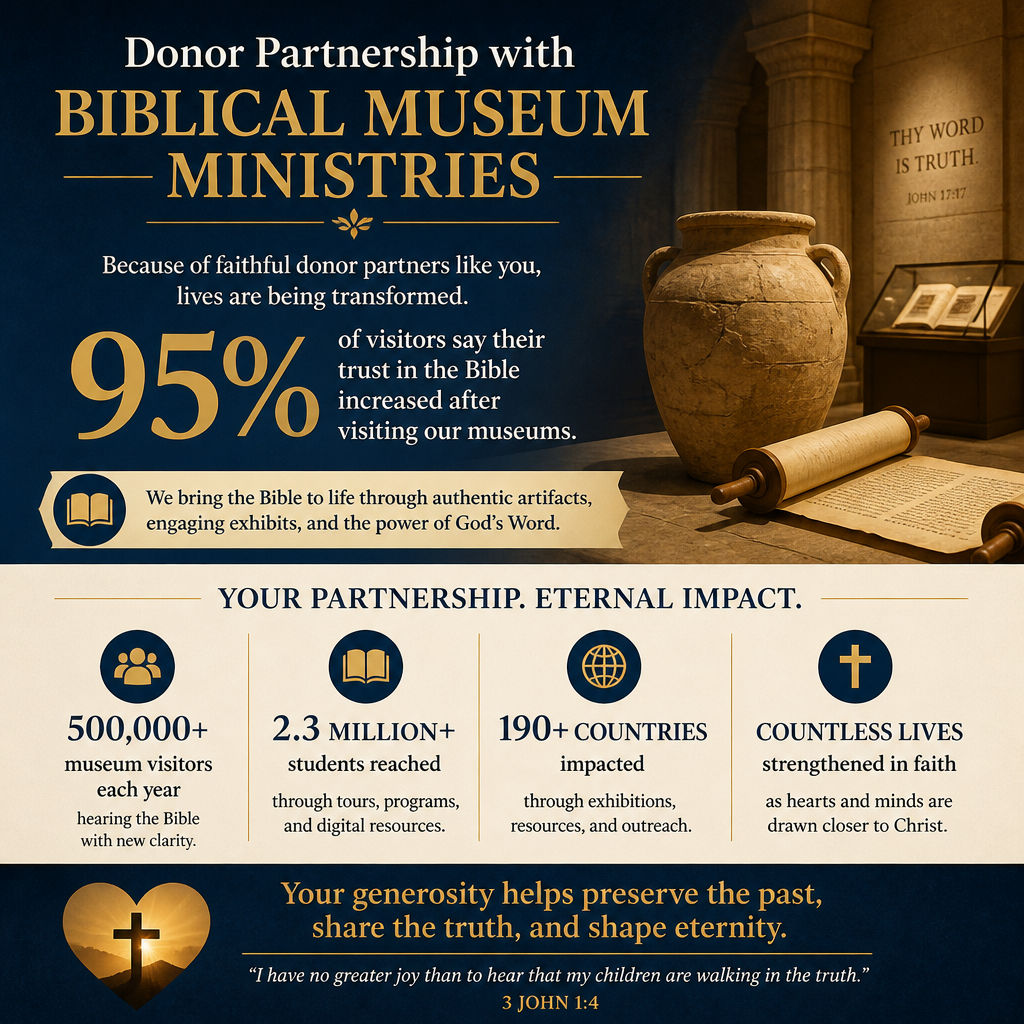
Many museum leaders speak about “impact” in terms of visitors, school groups, and media reach. Those counts have value, yet Christian donors typically want more: evidence that people are encountering Scripture with clarity and that the ministry is serving the local church rather than competing with it. Measuring spiritual formation is inherently difficult. It is also necessary to resist substituting attendance for discipleship.
The best ministries in this category hold two commitments together: serious interpretive work that can stand in public scrutiny, and pastoral instinct about how audiences actually hear claims about Scripture. They do not assume that better artifacts automatically produce better faith. They treat museumgoing as one possible threshold for conversation, not the end of the work.
Public credibility depends on intellectual honesty
Biblical museums live near contested questions: the relationship between faith and archaeology, the use of historical inference, and the limits of what any artifact can “prove.” Christians genuinely disagree about how much evidential apologetics should carry, especially for skeptical audiences. Responsible ministries neither retreat from evidence nor oversell it. They state what is known, what is plausible, and what is speculative, and they distinguish interpretation from certainty.
Donors can help by funding the disciplines that keep interpretation honest: peer engagement, clear labeling, careful citations, and the willingness to correct an exhibit when new information emerges. That posture is not weakness. It is a form of integrity.
What healthy long term partnership looks like for Christian donors
Long-term partnership begins with shared aims and ends with durable trust. In our verification work at Most Trusted, the ministries that meet The Most Trusted Standard tend to treat donor relationships as a stewardship obligation, not simply a revenue channel. They cultivate clarity on mission boundaries, provide consistent reporting, and submit their work to accountable governance. Those practices protect both the ministry and the donor.
Aligning expectations about mission, audience, and theological commitments
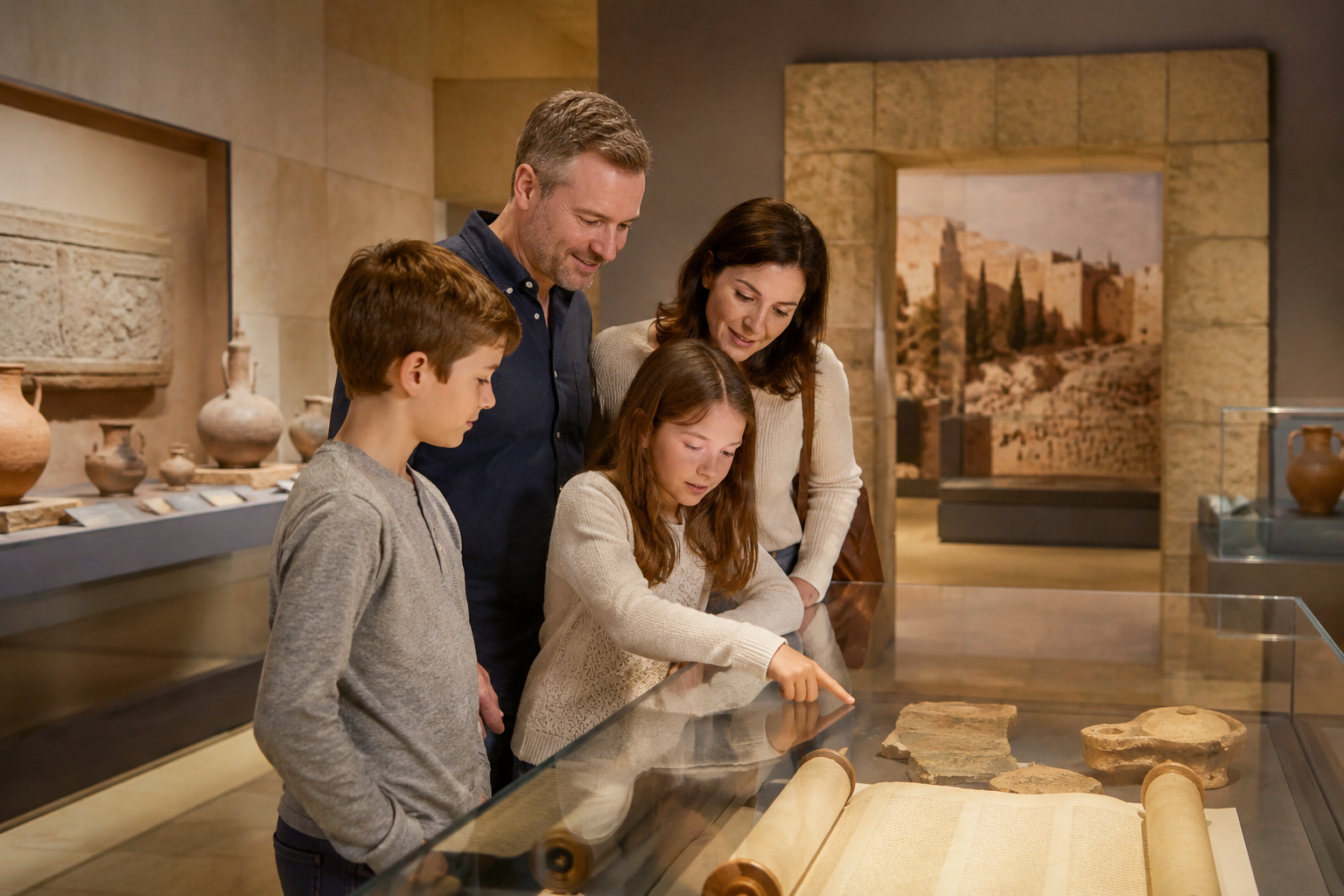
A Biblical museum ministry may serve multiple audiences at once: Christians seeking formation, families seeking educational experiences, skeptics curious about the Bible, and scholars evaluating claims. Donors should ask how the ministry prioritizes those audiences and how it prevents “broad appeal” from eroding theological substance. A museum can be hospitable to visitors who do not share Christian faith without becoming doctrinally ambiguous.
This is also where donors should listen for a coherent theology of cultural engagement. Does the ministry treat history as a servant of proclamation, or does it treat proclamation as a marketing overlay on a cultural institution? The difference emerges in governance documents, curatorial standards, and how leaders speak when controversy arises.
Understanding what major donor recognition can and cannot do
Most donors appreciate gratitude, and Scripture commends giving honor where honor is due. Recognition can also create subtle distortions if it becomes a parallel system of status. Mature ministries set clear policies: how names are displayed, how anonymous giving is handled, and how recognition aligns with the ministry’s theology of generosity.

For major donors, the most important question is not “Will our name be visible?” but “Will this ministry remain free to tell the truth?” If recognition practices create pressure to adjust interpretive decisions, soften standards, or accelerate programming prematurely, donors and leaders both lose. Healthy ministries protect curatorial independence and put boundaries in writing.
Naming opportunities require careful governance and clear time horizons
Naming opportunities can be legitimate: they can signal gratitude, help fund long-lived assets, and invite others to participate. They can also become unclear commitments if the ministry does not specify what is being named (a gallery, a program, an endowment), how long the name remains, and what happens if exhibits change or facilities are renovated.
Donors should expect written terms that address duration, gift amount, payment schedules, and reputational risk on both sides. Museums are dynamic by nature; exhibits rotate, collections expand, and interpretive frameworks develop. Naming agreements that assume static programming often generate disappointment later.
How to evaluate trust and integrity before you give
Biblical museum ministries often operate with high public visibility and substantial fundraising needs. That combination makes due diligence more than prudent; it is a Christian responsibility. “It is required of stewards that they be found faithful” is not merely an internal ministry ethic. Donors also bear stewardship for the resources entrusted to them.
Most Trusted exists to help donors give with confidence by evaluating ministries against The Most Trusted Standard, a 15-criteria framework across Faith Foundation, Financial Integrity, Governance and Leadership, and Transparency and Effectiveness. In practice, donors can ask a set of concrete questions that align with this kind of verification.
Financial integrity and the problem of simplistic overhead debates
Museums have structural costs that do not look like “programs” to the casual reader: security, facility maintenance, collections care, insurance, and compliance. Some donors have been trained to equate low overhead with virtue, but the sector has repeatedly warned against that reduction. The signatories behind the “Overhead Myth” letter—Charity Navigator, GuideStar, and BBB Wise Giving Alliance—have argued that overhead ratios alone are a poor measure of nonprofit performance and can incentivize underinvestment in capacity and accountability Charity Navigator.
What donors should look for instead is whether financial statements reflect realism and discipline: audited statements where appropriate, sensible reserves, transparent allocation methods, and a funding model that does not require continual crisis appeals. A museum that cannot afford proper collections care is a museum that will eventually pay for that neglect in lost credibility.
Governance and leadership accountability in a public facing institution
Because museums engage contested claims, governance cannot be a formality. Donors should look for an active, independent board; documented conflict-of-interest policies; and clear lines between fundraising influence and curatorial decision-making. Ministries should be able to articulate who holds final authority on acquisitions, exhibit claims, and corrections when errors are discovered.
When a ministry faces criticism—whether from scholars, journalists, or other Christian leaders—its response is revealing. Transparent institutions can name what is being alleged, what evidence supports or refutes it, and what steps are being taken. Defensive silence and vague assurances are rarely compatible with integrity.
Transparency and effectiveness should include interpretive standards
For Biblical museum ministries, transparency is not only financial. It also includes interpretive clarity: provenance where relevant, bibliographies and sources, and clear differentiation between artifact, reconstruction, and artistic imagination. Donors should ask whether exhibits are reviewed by qualified experts and whether the ministry is willing to correct labels and claims publicly when needed.
Effectiveness can be evaluated through more than attendance: partnerships with churches and schools, evidence of educational outcomes, responsible content for children, and programs that foster biblical literacy without collapsing complexity into slogans. These are demanding aims, but serious institutions embrace demanding standards.
Donors who want a broader view of how these ministries fit within the field can consult Biblical Museum Ministries through Most Trusted’s coverage and verification lens.
Practical ways donors can strengthen the ministry beyond a single gift
Partnership becomes durable when donors help stabilize what is fragile and important. For many museums, that includes funding that is flexible rather than restricted only to high-visibility projects. It also includes patience with the timelines that scholarship, acquisitions review, and exhibit development require.
Matching gifts and employer programs can extend impact with minimal friction
Many employers offer matching gift programs, yet a significant share of eligible gifts are never matched because donors do not complete the process. Some estimates place the proportion of unclaimed matches at the majority of eligible donations, indicating a substantial gap between what donors give and what could be unlocked through basic follow-through Double the Donation.
For donors, the discipline is straightforward: ask the ministry whether it can provide matching gift instructions, confirm eligibility categories, and supply appropriate receipts. For ministries, the discipline is equally straightforward: treat matching gifts as part of donor care, not as an afterthought.
Expect ministry updates that respect both transparency and security
Museums handle sensitive information: donor privacy, security protocols, and at times legal issues around acquisitions or loans. Donors should expect updates that are substantive without being reckless—clear reporting on programs, attendance, educational partnerships, and major institutional decisions, without disclosing information that endangers staff, collections, or legal responsibilities.
Strong updates do not read like marketing copy. They provide specific progress markers, explain setbacks candidly, and connect the ministry’s work to its stated mission. When a museum is building a new exhibit, adding staff, or changing strategy, donors should not hear it first through rumors.
Inviting friends into support should be relational, not performative
Many Christian donors want to invite peers into causes they trust, yet they hesitate to appear to be fundraising socially. That caution is understandable. The most faithful posture is neither silence nor pressure. It is to share why the ministry matters, what standards of integrity have been applied, and what kind of giving is actually helpful.
Practically, that means inviting friends into a visit, a lecture, or a behind-the-scenes briefing when available, and framing giving as participation in witness rather than as mere sponsorship. It also means being honest about what the ministry can and cannot do. Biblical museums can illuminate context, strengthen literacy, and open doors for gospel conversation. They cannot substitute for the local church, nor can they resolve every historical question to everyone’s satisfaction.
Giving with confidence in a ministry of public remembrance
Donor partnership with Biblical museum ministries is most compelling when it strengthens truth-telling in public: careful scholarship, reverent interpretation, and transparent institutional life. The Christian donor’s calling is not only to be generous, but to be discerning—supporting ministries that welcome scrutiny because they have nothing to hide and much to offer.
When donors pair generosity with verification-minded diligence, they help these ministries remain credible servants of the church and honest neighbors to the public. That is a form of witness in itself: confidence grounded not in spectacle, but in faithfulness.



