
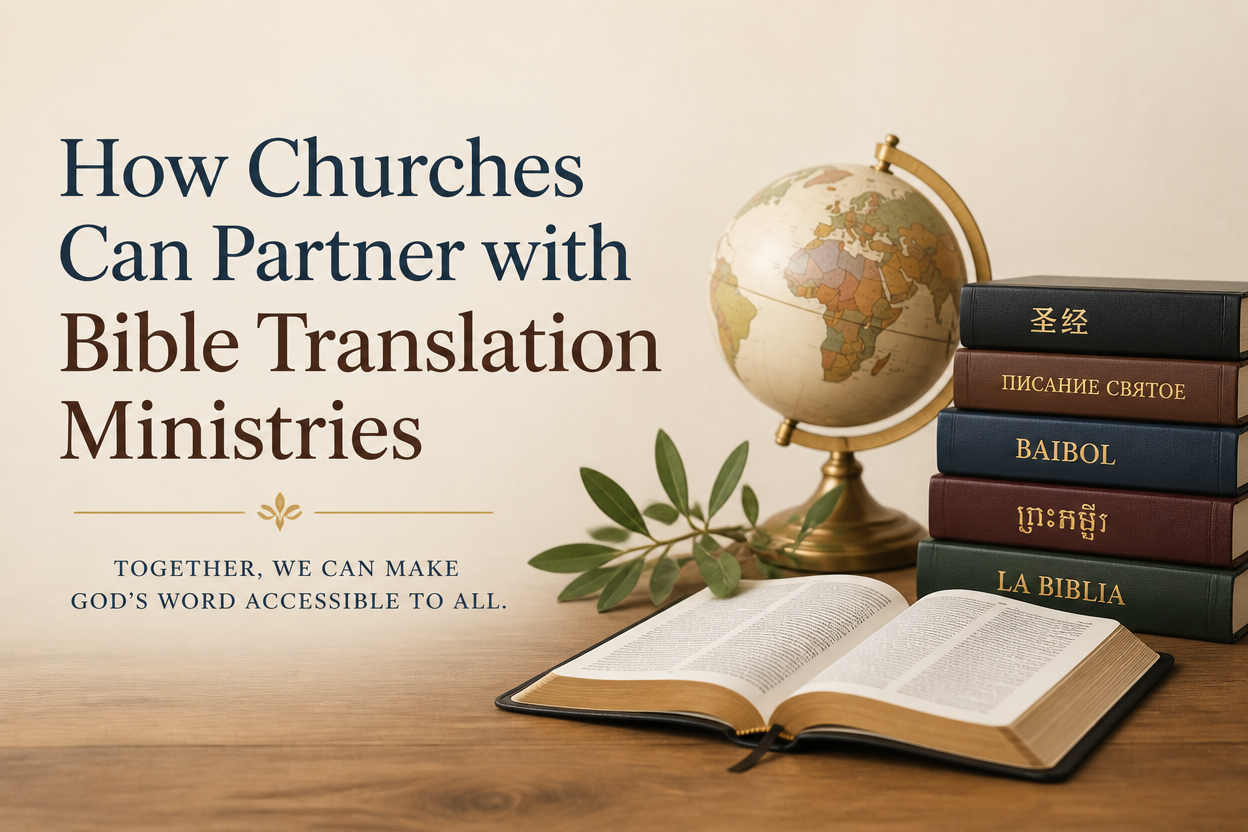
How churches can partner with Bible translation ministries is a stewardship question before it is a strategy question. Scripture’s logic is clear: God speaks, God’s people hear, and God’s people respond with obedience and worship. The church’s partnership with translation is therefore not an accessory to mission, but a means by which the Word of Christ dwells richly among peoples who cannot yet hear it in the language of their heart.
Many donors and church leaders also sense the complexity. Bible translation is long-horizon work with specialized roles, layered partnerships, and meaningful ethical questions about local authority, linguistic ownership, and ecclesial accountability. The most faithful partnerships are rarely the most dramatic ones. They are the ones that hold together theological seriousness, patient funding, and verifiable integrity.
Begin with a theology of Word and church
The church does not sponsor translation as a side project
Translation belongs to the church’s calling to make disciples by teaching Christ’s commands (Matthew 28:18–20). The apostolic pattern assumes intelligibility: at Pentecost, the gospel is heard in the languages of the nations (Acts 2:5–11). Paul insists that worship and instruction must be understood, because “if I do not know the meaning of the language, I will be a foreigner to the speaker” (1 Corinthians 14:11). The spiritual logic is not merely access to information; it is the gathered people of God receiving God’s Word and being formed by it.
That theology changes the conversation inside a church. Translation ministries are not only “mission organizations we like.” They are partners in a work that strengthens preaching, discipleship, pastoral care, and church planting among communities that often have little inherited Christian infrastructure. When a church treats translation as ecclesial work, it will ask different questions: Who is accountable? Who is being trained? Who will shepherd the congregations that are born from this labor?
Name the trade-offs candidly
Christians genuinely disagree about how to prioritize translation relative to other needs: clean water, refugee care, theological education, local church support, and evangelism. Those are not frivolous disagreements. Churches can honor them by refusing false alternatives. Translation is not the only Kingdom work; it is a foundational form of Word-ministry that frequently multiplies other ministries over time.
This is also where donors often feel tension between urgency and patience. Some translation projects take years, sometimes decades, especially when orthography development, literacy, community testing, and pastoral training must be built from the ground up. A church that only celebrates rapid results may unintentionally discourage the very faithfulness translation requires.
Choose partners with verifiable integrity and local legitimacy
Partner selection is part of discipleship
Scripture warns against carelessness with funds and credibility. Paul describes careful administration of the collection “to avoid any criticism” and to do what is right “not only in the Lord’s sight but also in the sight of man” (2 Corinthians 8:20–21). Churches should bring that same seriousness to translation partnerships. The goal is not suspicion. The goal is love of neighbor expressed through competent, accountable stewardship.
Across our verification work at Most Trusted, we observe that the strongest Bible translation ministries tend to combine theological clarity with operational discipline. They can explain how they protect local communities from extractive practices, how they govern partnerships, how they measure progress without exaggeration, and how they handle restricted gifts. Those qualities align closely with The Most Trusted Standard, which evaluates ministries across Faith Foundation, Financial Integrity, Governance and Leadership, and Transparency and Effectiveness.
Ask about the community’s role, not only the organization’s brand
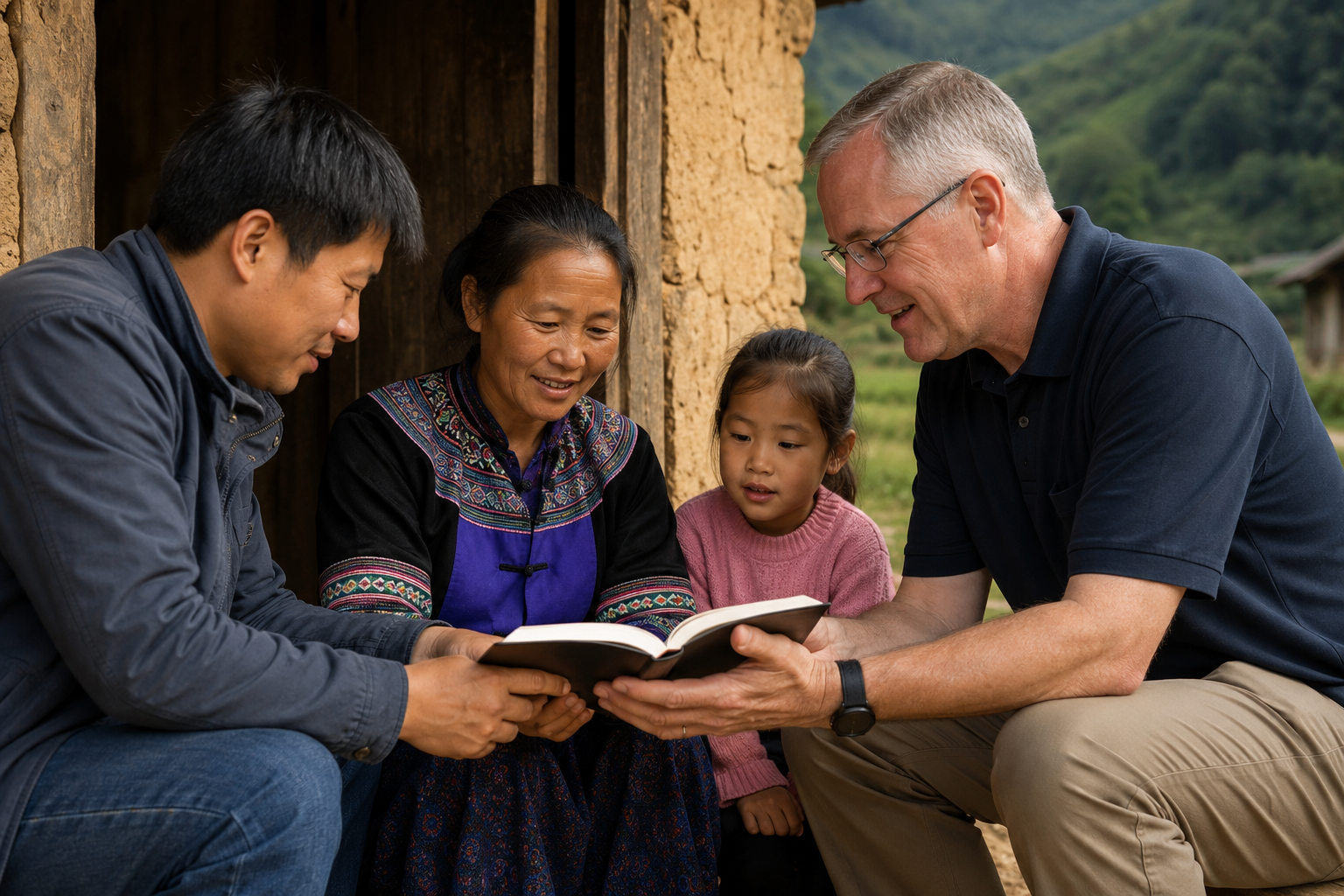
Translation is never merely a technical exercise. It is a relationship with a speech community, shaped by trust, consultation, and often conflict resolution. Churches should ask prospective partners how local believers participate in decision-making, how Scripture engagement and pastoral formation are integrated, and how intellectual property and publishing decisions are handled. A ministry’s answers reveal whether it is building local capacity or simply delivering a product.
Church leaders who want a deeper view of the broader landscape of ministries and approaches can begin with Bible Translation Ministries, which situates translation in the wider work of Christian mission and donor stewardship.
Build a partnership model that fits the church’s vocation
Match your commitments to the realities of translation work
Churches sometimes default to the only tools they know: an annual special offering, a single short-term trip, or a sporadic missionary update. Those can be meaningful, but translation ministries often need steadier commitments: multi-year funding for a team, support for literacy and Scripture engagement, and prayer that is informed rather than generic.
A mature partnership model recognizes that translation involves stages. Early work may be research-heavy and slower to describe. Later stages may produce published portions and broader engagement. Churches should align expectations with those stages so that faithfulness is not confused with visible output.
Practical pathways for churches
The following partnership practices tend to be both sustainable and pastorally constructive:
- Adopt a multi-year commitment tied to a defined project, with clear reporting expectations and a plan for renewal decisions.
- Integrate prayer into regular worship using specific requests from the translation team, including local church leadership development.
- Fund Scripture engagement and training alongside translation, so communities are equipped to read, teach, and obey.
- Develop a missions education cadence that teaches the congregation what translation entails and why timelines are long.
- Offer specialized pro bono service only when requested and supervised, especially in technology, finance, communications, or security.
Short-term visits can be appropriate in limited cases, but translation contexts can be sensitive. A trip that is not clearly invited and locally directed can burden a team or compromise security. Churches should treat presence in the field as an exception that must be justified, not as a default expression of partnership.
Fund translation with patience and honesty about outcomes
Reject simplistic metrics without abandoning accountability
Donors want to know whether giving is effective. That desire is proper. The temptation is to accept simplistic outputs as proof of impact. In translation, a single metric rarely tells the truth. “Portions completed” does not guarantee comprehension, adoption, or church formation. “Bibles printed” does not prove that communities have access, literacy, or pastoral leadership to use them well.
More credible reporting combines milestones with narrative evidence: community testing results, local church engagement, literacy progress, training of translators and reviewers, and concrete steps taken to ensure accuracy and acceptance. Churches should expect both clarity and humility: clarity about what was done, humility about what cannot yet be claimed.
Take overhead debates seriously but not naively
Translation requires trained personnel, quality control, and long-term support systems. Churches that demand unrealistically low administrative costs may pressure ministries toward underinvestment in governance, security, and accountability. The field of philanthropy has repeatedly warned donors against treating overhead ratios as a proxy for effectiveness; Charity Navigator, Candid, and the BBB Wise Giving Alliance jointly argued that overhead alone is a poor measure of performance in their “Overhead Myth” statement (Charity Navigator).
What this means in practice is that churches should fund capacity when it is clearly connected to mission. The harder question is whether a ministry can explain those costs with transparency, restraint, and evidence that they serve the work rather than the institution.
Strengthen trust through governance, transparency, and spiritual accountability
Translation partnerships require more than financial due diligence
A church’s partnership is not merely a grant. It is a relationship that bears moral and spiritual responsibility. That responsibility includes ensuring that the ministry’s theology is orthodox and that its posture toward local churches is genuinely collaborative. It also includes ensuring that leadership structures are healthy, conflicts of interest are managed, and safeguarding practices are real.
In many contexts, translation teams work across cultures and power differentials. Without strong governance, good intentions can drift into control, opacity, or harm. Churches should ask about board oversight, independent audits, policies for reporting misconduct, and whether local leaders have meaningful authority in program decisions.
Practice a disciplined form of transparency
Transparency is not the same as publicity. Some translation work occurs in restricted environments where public reporting can endanger believers or partners. Mature ministries can articulate what they disclose publicly, what they restrict, and why. Churches should not penalize responsible discretion, but they should expect enough information to make informed decisions: financial statements, governance documentation, project-level progress, and clear explanations of setbacks.
For churches developing a broader culture of prayer, giving, and partnership, Praying for and Partnering with Bible Translation Ministries frames the habits that keep enthusiasm from becoming instability.
FAQs for How churches can partner with Bible translation ministries
Should our church give to Bible translation or to church planting instead?
Many churches will rightly do both, because the two are often interdependent. Translation strengthens preaching, discipleship, and theological formation; church planting creates the communities that will read and live the translated Word. The most discerning approach is to ask how a prospective partner integrates Scripture engagement and local church development, and whether local pastors and elders are being equipped to shepherd new believers.
What should we ask a Bible translation ministry before we commit funds?
Churches should ask about theological commitments, governance and oversight, audited financials, how local believers participate in translation decisions, what safeguards protect vulnerable people, and how progress is reported without exaggeration. It is also prudent to ask how the ministry handles security and restricted information, and how it evaluates success beyond publications, including comprehension, adoption, and local church use.
A faithful partnership is measured over time
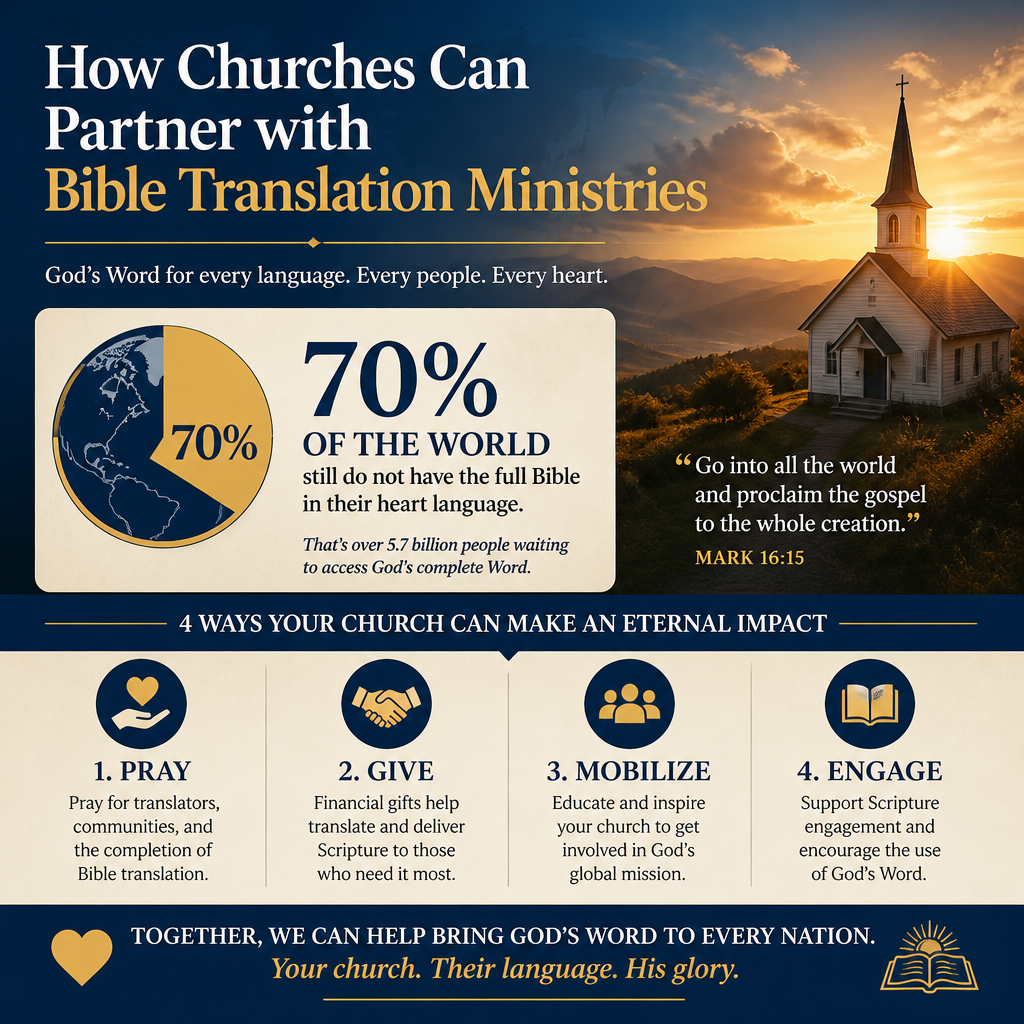
Churches partner with Bible translation ministries most faithfully when they treat translation as Word-centered mission rather than a project to sponsor. The work calls for patient funding, informed prayer, and sober due diligence that honors both spiritual fruit and verifiable integrity. When churches give with clarity and accountability, they participate in the ancient pattern of God’s people laboring so that the nations may hear the mighty works of God in their own tongues.



