
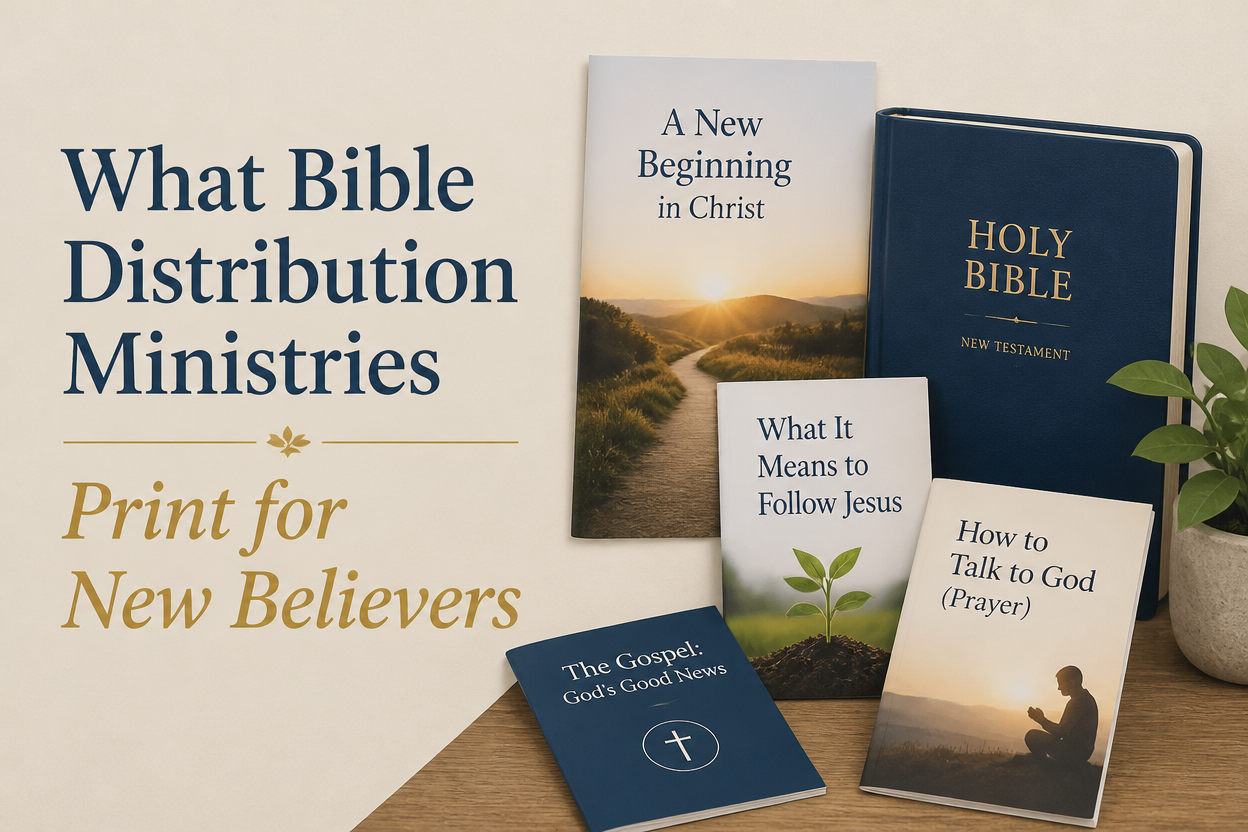
What Bible distribution ministries print for new believers is rarely an arbitrary choice. It is a theological and pastoral decision shaped by literacy, church access, risk, cost, and the kind of discipleship a ministry believes Scripture is meant to nourish. For Christian donors, the question is not merely whether a ministry “gets Bibles out,” but whether what is printed helps new believers hear God rightly, grow in faith, and persevere in a real local context.
Scripture itself sets the tone: the Word of God is living and active, able to pierce and to heal, to reprove and to train in righteousness (Hebrews 4:12; 2 Timothy 3:16–17). New believers do not simply need religious material. They need the Word in forms they can read, understand, keep, and return to in community. The details of what is printed, and why, become a concrete test of seriousness.
1 New believers need more than access they need formation
Many ministries begin with a defensible impulse: if people do not have a Bible, nothing else can proceed. Yet distribution without formation can slide into a familiar philanthropic error—treating provision as the same thing as outcomes. The Great Commission is not only “go,” but “make disciples…teaching them to observe all that I have commanded you” (Matthew 28:19–20). What is printed for new believers often reveals whether a ministry is thinking primarily in units shipped or in disciples formed.
Why many ministries start with a New Testament
A common first print for new believers is a New Testament, sometimes paired with Psalms and Proverbs. The pastoral logic is straightforward: the Gospels and epistles explicitly center on Christ, repentance, faith, and the life of the church. The practical logic is equally real: New Testaments are cheaper to print and easier to carry discreetly in restricted environments.
This is not a consensus position. Christians genuinely disagree about whether giving only a New Testament unintentionally communicates that the Old Testament is secondary, when Jesus and the apostles treated it as Scripture. Donors should look for ministries that can articulate the trade-off clearly and that can explain how the fuller biblical story will be taught, not merely assumed.
When a full Bible is the more faithful first gift
In many settings, a full Bible is the first and best print, especially where churches are scarce, where believers may face isolation, or where teachers themselves are newly converted. The Old Testament grounds doctrine of God, sin, covenant, sacrifice, and wisdom; it also guards against shallow readings of the New Testament that detach grace from holiness or the Kingdom from covenant.
Across our verification work at Most Trusted, we find that ministries that meet The Most Trusted Standard tend to explain their “first print” strategy in terms of local church realities rather than donor expectations. The question to ask is not “Which format is ideal in theory?” but “What is responsible discipleship in this place, for these people, at this stage?”
2 Translation choices signal theological commitments and local respect
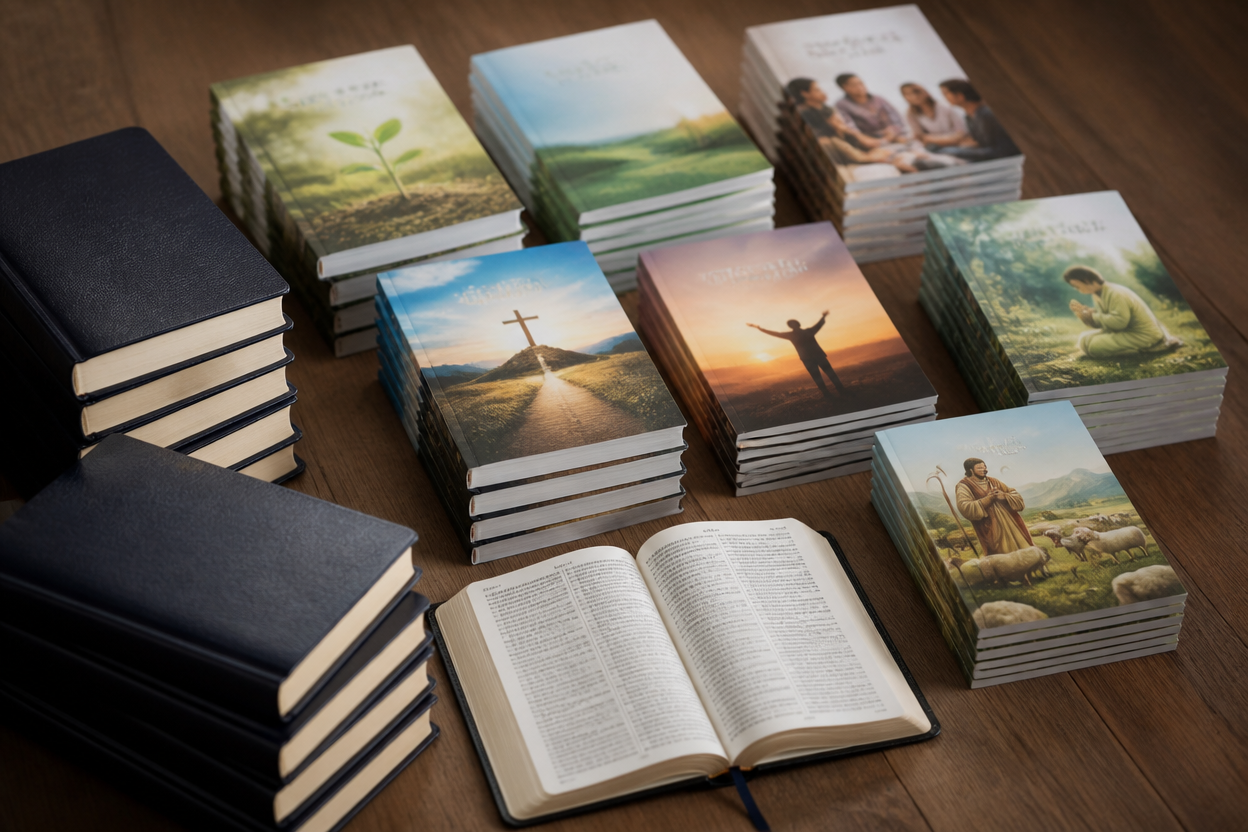
New believers are not helped by a Bible they cannot understand. Nor are they well served by an overly domesticated translation that flattens theological vocabulary. What Bible distribution ministries print for new believers often hinges on translation philosophy, and donors should recognize how consequential that decision is.
Heart language and the cost of comprehension
Many ministries prioritize heart-language translation—Scripture in the language a person thinks and prays in—because comprehension is a discipleship issue, not a convenience. The modern Bible translation movement has made measurable progress, but significant work remains. As of 2024, 3,526 languages still had no portion of the Bible available, according to Wycliffe Global Alliance data Wycliffe Global Alliance. That number is not merely a statistic; it represents communities where evangelism and discipleship often depend on oral methods, limited excerpts, or bilingual believers.
In such contexts, ministries sometimes print bilingual editions, simple-language translations, or carefully selected portions while a full translation is underway. Donors should expect clarity about what is being printed now, what is being developed, and how local churches are involved in testing and receiving the text.
Formal equivalence and dynamic equivalence are not merely technical
Translation debates are often framed as “word-for-word” versus “thought-for-thought,” but the underlying question for donors is pastoral: which approach best serves a new believer in a particular culture and educational setting? A more formal translation may preserve theological terms that matter for catechesis. A more dynamic translation may reduce barriers for first-time readers and oral cultures. Neither is morally superior in the abstract.
Ministries that handle this well typically do three things: they name their translation principles, they defer to local church leaders where trustworthy leadership exists, and they test materials with real readers rather than assuming readability from a distance. If a ministry cannot explain why it prints a particular translation for new believers, the risk is that printing becomes brand-driven rather than church-serving.
3 Format is a discipleship decision not a marketing choice
Format is where donors can most easily mistake aesthetics for impact. Leather covers and gilded edges can look like honor, but a fragile binding that fails after months in the field is not stewardship. Conversely, the least expensive option can become false economy if it disintegrates or cannot be used discreetly.
Common print formats for new believers
Across the field, several formats are especially common for first-time recipients. A ministry’s selection should align with context, not preference.
- Portable New Testaments for discreet carrying and low cost in restricted environments
- Full Bibles where church access is limited or where comprehensive teaching is needed early
- Large-print editions for older believers or communities with widespread vision limitations
- Scripture portions such as Gospels or Luke-Acts where distribution must be rapid and lightweight
- Audio Bibles and solar audio devices where literacy is low and oral learning is normative
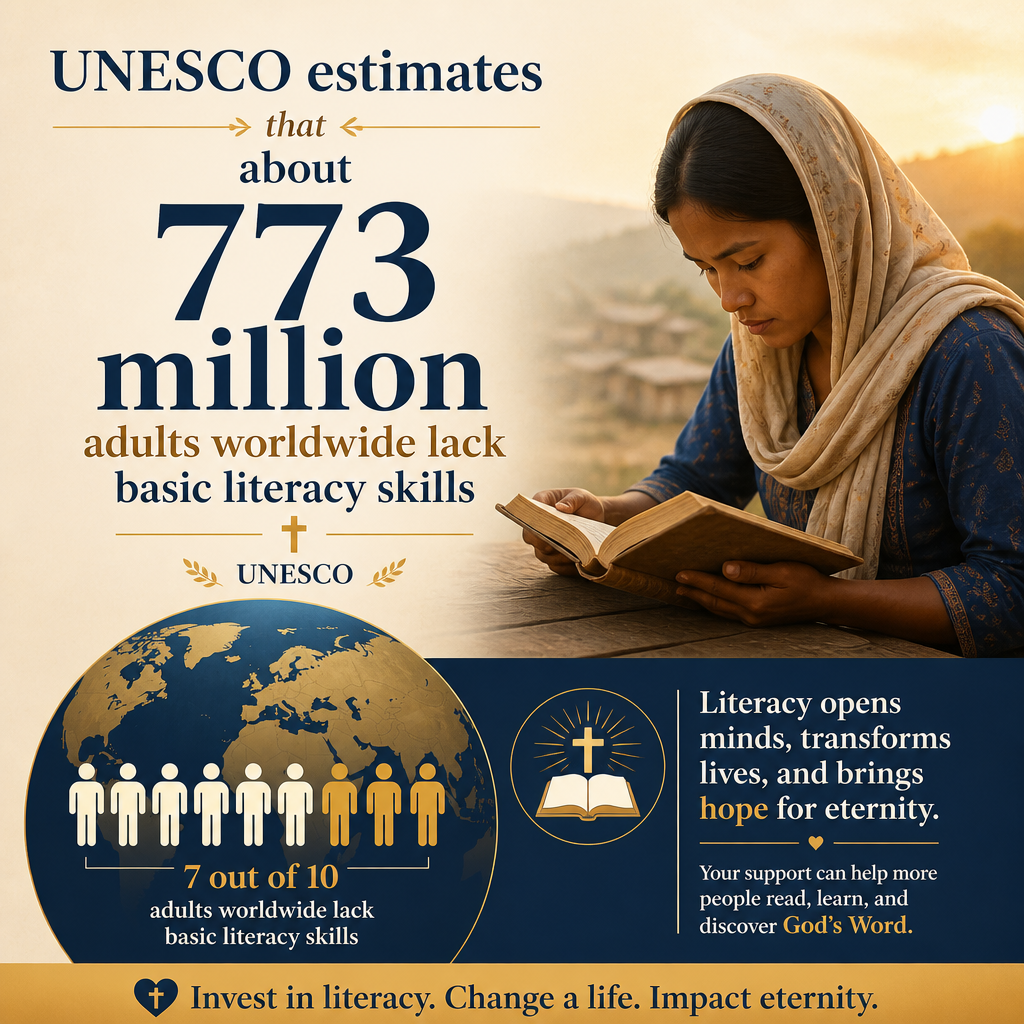
Audio deserves particular attention. UNESCO estimates that about 773 million adults worldwide lack basic literacy skills UNESCO. In such settings, printing alone can unintentionally privilege the educated minority and create a gap between “Bible owners” and “Bible hearers.” Mature ministries integrate print and audio, and they tie both to accountable discipleship relationships.
Security and durability are forms of love
In areas where Christians face surveillance or social penalty, what is printed can put a new believer at risk. Smaller formats, neutral covers, and non-descript packaging are not concessions to fear; they can be prudent love of neighbor. At the same time, security practices can be misused rhetorically to excuse opacity. Donors should expect ministries to describe risk management in ways that protect people without insulating the organization from reasonable questions about accountability.
Durability is equally moral. A Bible that falls apart teaches an unintended lesson about what donors value. Strong bindings, quality paper, and repairable construction matter, especially where replacements are improbable. Responsible ministries can describe why they chose a certain paper weight, binding method, or print partner, and how those choices affect long-term cost.
4 Many ministries print helps alongside Scripture and donors should weigh that carefully
Most Bible distribution ministries print more than a bound text. They often include discipleship aids intended to help new believers read well, avoid syncretism, and connect with the church. The question is not whether helps are permissible. The question is whether they are faithful, restrained, and locally accountable.
Study notes devotionals and reading plans
New believers commonly receive basic tools: a Gospel overview, a reading plan, a short guide to prayer, and a brief explanation of baptism and the Lord’s Supper. These can be profoundly helpful when they are modest in scope and clearly subordinate to Scripture.
The danger is that notes can become a covert confessional system exported without local discernment. Christians genuinely disagree about secondary doctrines, and a discipleship insert can harden those disagreements into a gatekeeping mechanism for new believers. Donors should ask whether the helps were developed with local church leaders and whether they can be adapted across traditions without misrepresenting the gospel.
Catechisms and trauma informed materials
In some places, ministries print catechisms or question-and-answer summaries of the faith, especially where new believers have little access to trained teachers. Historically, catechesis has been a central Christian practice, and it can strengthen doctrinal stability and resilience under pressure.
In humanitarian and post-conflict contexts, ministries may also print materials that address suffering, lament, or trauma in explicitly biblical terms. Donors should welcome that seriousness while still evaluating whether the content reflects sound theology and appropriate pastoral care. Lament is biblical; simplistic “victory” language can become harmful when it denies grief rather than discipling it.
Donors who want to understand the range of ministry choices in this space can review Translations, Formats, and Languages in Bible Distribution to see how different organizations approach translation, printing, and distribution constraints.
5 What discerning donors should ask before funding print and distribution
Printed Scripture is expensive, logistically complex, and spiritually consequential. It is also an area where good intentions can mask weak controls: poor inventory tracking, unclear unit costs, distribution stories that cannot be verified, or partnerships that do not meaningfully involve the local church. Donors are right to apply a higher standard here, not because we distrust ministries, but because we honor the gravity of putting God’s Word into human hands.
Questions that map to credible stewardship
Across Most Trusted’s evaluation work, the ministries that most consistently earn donor confidence tend to welcome concrete questions and provide verifiable documentation. These are not adversarial questions. They are stewardship questions.
Consider asking:
- What exactly is being printed for new believers: full Bible, New Testament, portions, audio, or a bundle?
- Which translation is used, and who made that decision in-country?
- What is the per-unit cost range, including shipping, warehousing, and last-mile distribution?
- How does the ministry verify delivery and reduce diversion or resale?
- What discipleship pathway follows distribution, and how are local churches involved?
Verification is not suspicion it is love of truth
The New Testament assumes that Christian communities will test claims, examine fruit, and insist on honesty (1 John 4:1; 2 Corinthians 8:20–21). That posture belongs in philanthropy as well. At Most Trusted, we evaluate ministries against The Most Trusted Standard, a 15-criteria framework that examines faith commitments, financial integrity, governance, and transparent reporting of outcomes. In Bible distribution, those criteria often surface in practical questions: audited financials, board oversight, controlled procurement, conflict-of-interest policies, and credible reporting that distinguishes shipments from Scripture received and used.
Donors looking for a wider view of organizations and approaches can consult Bible Distribution Ministries as a starting point for comparing models, claims, and accountability signals across the field.
FAQs for What Bible distribution ministries print for new believers
Do Bible distribution ministries usually print full Bibles or only New Testaments for new believers?
Both are common. New Testaments are often chosen for cost, portability, and an immediate focus on the life and teaching of Jesus. Full Bibles are often chosen where believers may have limited ongoing teaching, where the church is sparse, or where a comprehensive biblical story is essential for durable discipleship. A responsible ministry can explain the trade-offs in the local context rather than treating one choice as universally superior.
Should donors prefer ministries that include study notes and discipleship guides with printed Scripture?
Helps can serve new believers well when they are modest, theologically sound, and accountable to local church leadership. They can also introduce distortion if notes function as an exported confessional system or if they replace careful teaching with slogans. Donors should ask who authored the materials, how they were tested with local readers, and how the ministry ensures Scripture remains primary.
A faithful print strategy is accountable to the church and to the Word
What Bible distribution ministries print for new believers is a window into their theology of discipleship. Mature ministries make translation and format decisions with humility, with local partnership, and with a realistic view of risk and cost. Mature donors fund with the same seriousness, seeking evidence, asking hard questions, and supporting work that treats Scripture not as a product to move but as God’s means of forming faithful Christians in real places.



