
Prison Bible study programs need monthly donors because discipleship behind bars is not an event; it is a long obedience in the same direction. The men and women who open Scripture in a cellblock are often doing so after years of formation in distrust, violence, addiction, and rupture. A one-time gift can buy materials. Sustained giving sustains presence, consistency, and the slow work of gospel formation.
Christian donors also understand a harder reality: ministry in correctional settings is structurally fragile. Access can change without notice, volunteers can be delayed or denied entry, and chaplaincy policies can shift with leadership. Monthly support does not remove these constraints, but it gives ministries the resilience to keep serving when conditions tighten rather than only when conditions are favorable.
Prison Bible study is a ministry of presence that requires continuity
Scripture frames prison ministry as a sustained work of mercy
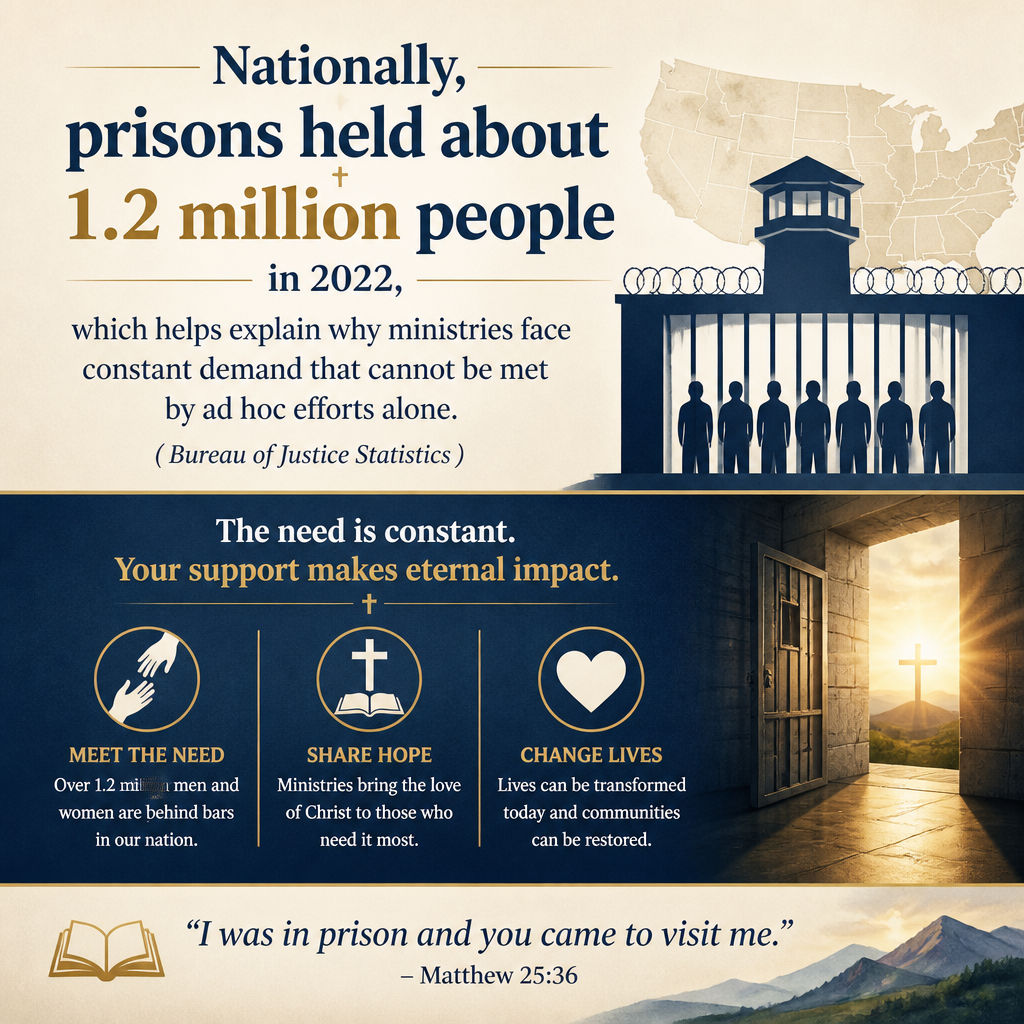
Jesus places ministry to people in prison alongside feeding the hungry and visiting the sick: “I was in prison and you came to me” (Matthew 25:36). The text assumes more than a symbolic gesture. Coming to someone implies attention, time, and the willingness to return. Bible study programs function similarly. Trust is earned in increments, often after repeated contact and demonstrated integrity.
Monthly donors underwrite that continuity. When a ministry can reliably fund its coordinator, its volunteer training, and its curriculum replenishment, it can show up with the steadiness that trauma-affected communities require. Sporadic funding tends to create sporadic presence, and sporadic presence can unintentionally reinforce a familiar story for incarcerated people: that care arrives briefly and then leaves.
Formation in prison is rarely linear
Prison Bible study programs operate in a setting where setbacks are expected. A participant can be transferred with little warning. A lockdown can suspend programming for weeks. A promising group can fracture because of gang dynamics or a single incident in the housing unit. The ministries that endure treat those disruptions not as exceptions but as part of the field.
What this means in practice is that program “momentum” is a poor basis for funding. If support rises only when a program feels inspiring and visible, ministries become vulnerable precisely when their steadiness is most needed. Monthly giving gives room for a ministry to absorb disruption without abandoning the work.
Monthly donors fund the unglamorous essentials that make Bible study possible
Access, compliance, and coordination are real costs
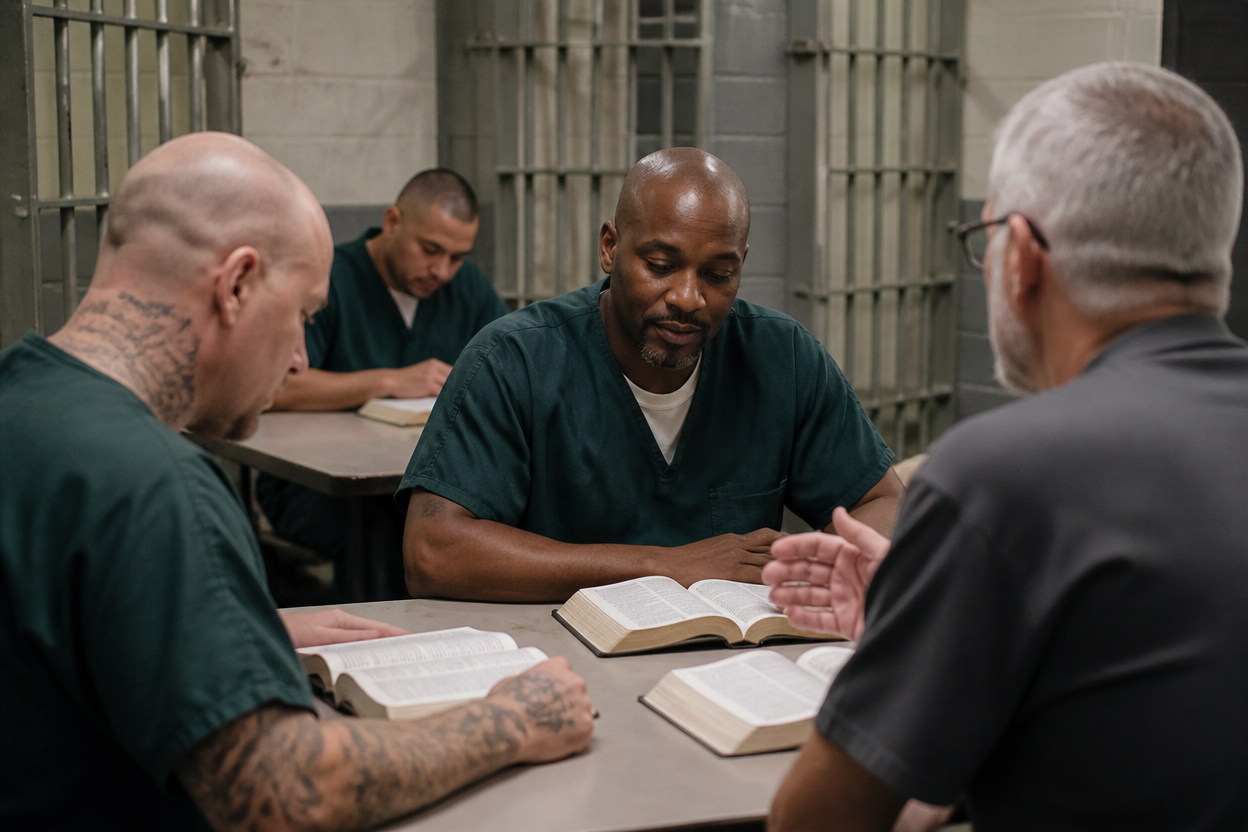
Many donors picture prison Bible study as a volunteer arriving with a Bible and a lesson. That image is not wrong, but it is incomplete. The ministry must coordinate with chaplains, comply with facility rules, process volunteer clearances, track attendance, and often provide approved materials that meet institutional guidelines. The administrative layer is not “overhead” in the pejorative sense; it is the infrastructure that makes spiritual care possible in a regulated environment.
Nationally, prisons held about 1.2 million people in 2022, which helps explain why ministries face constant demand that cannot be met by ad hoc efforts alone (Bureau of Justice Statistics). The scale of incarceration creates scale in logistics. Monthly funding enables ministries to plan staffing and coverage rather than relying on short-term surges.
Materials and follow-through are part of pastoral care
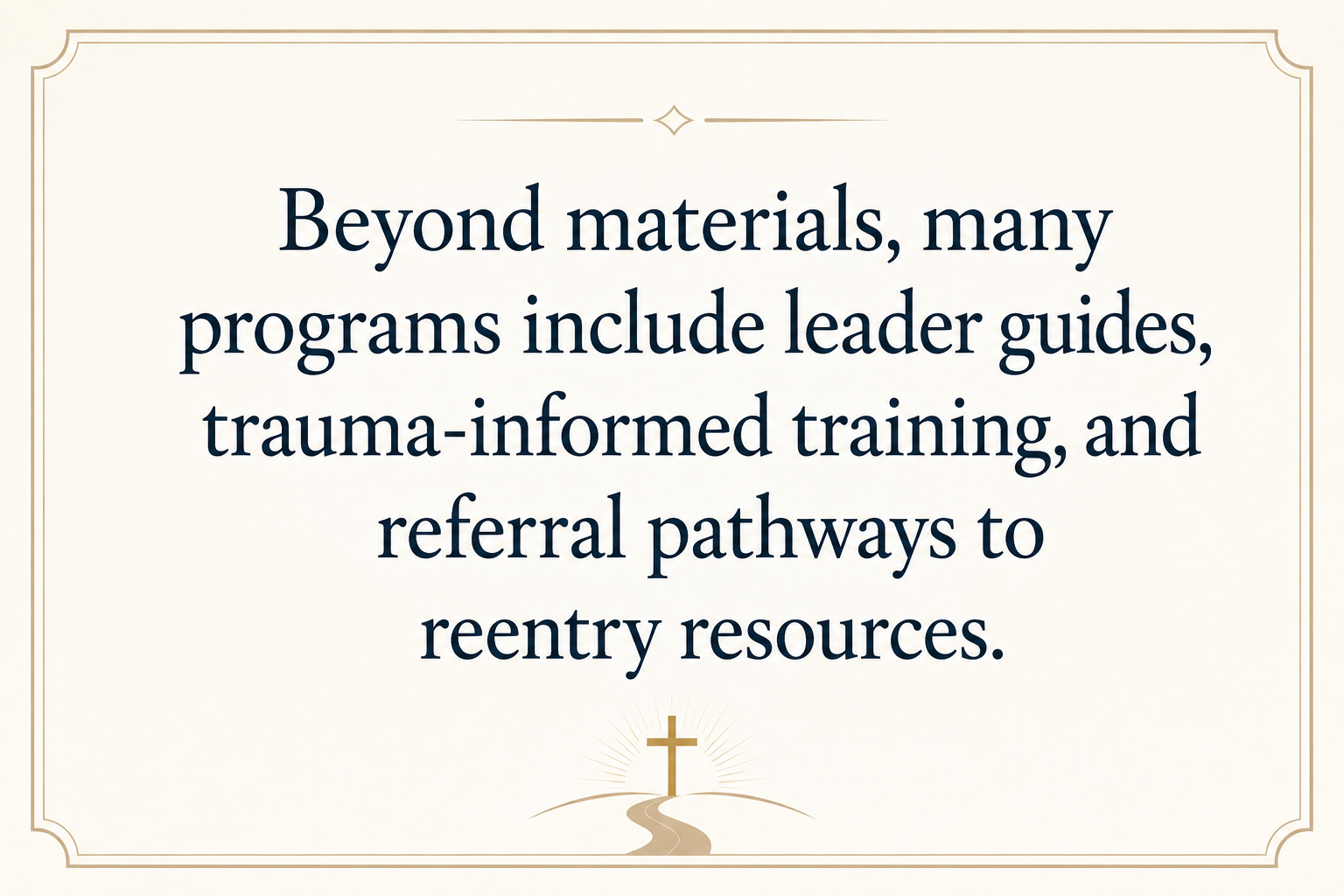
Bibles, study guides, notebooks, and correspondence resources sound simple until one remembers the constraints: some facilities restrict hardbacks, staples, and certain bindings; some limit what can be mailed; some require vendor sourcing. Beyond materials, many programs include leader guides, trauma-informed training, and referral pathways to reentry resources. These elements are often the difference between a sincere first encounter with Scripture and a sustained pattern of reading, prayer, and accountability.
The “Overhead Myth” letter signed by Charity Navigator, Candid, and the BBB Wise Giving Alliance cautioned donors against simplistic overhead ratios as a measure of impact (Candid). Prison Bible study is a category where that warning is especially relevant. The work depends on systems and skilled coordination, not only on the cost of printed pages.
Reliability matters because prisons and jails are operationally volatile
Lockdowns, staffing shortages, and policy shifts can stall programs
Correctional institutions are shaped by security needs, staffing levels, and administrative priorities that can change quickly. Lockdowns and restricted movement are not occasional inconveniences; they are a recurring feature of the environment. When programs are paused, ministries that lack stable funding can lose staff, lose volunteer morale, and lose relationships with institutional partners. Restarting then becomes harder than sustaining.
Monthly donors help a ministry retain core capacity through the pauses. That may mean keeping a part-time coordinator employed, maintaining volunteer communications, and continuing to serve through approved alternatives such as correspondence lessons where permitted. Stability does not guarantee access, but it enables faithful persistence.
Jails create a different discipleship challenge than prisons
Jails typically have rapid turnover, while prisons tend to house people longer. Both contexts matter, and they require different strategies. In a jail, Bible study often functions as crisis pastoral care and first exposure to the gospel. In a prison, it can become structured discipleship, leadership development, and preparation for reentry. A mature ministry often serves across both settings, which increases complexity in scheduling, curriculum selection, and volunteer training.
Christians genuinely disagree about which approach should receive priority: evangelistic exposure, intensive discipleship, reentry preparation, or family restoration. Monthly support gives ministries the freedom to design programs that are coherent rather than reactive, even as they remain accountable to measurable goals and sound theology.
Monthly giving aligns with the long horizon of reentry and relapse risk
Reentry is where many gains are tested
The temptation for donors is to treat conversion moments as the finish line. Scripture treats them as the beginning of new life, requiring teaching, perseverance, and community. The New Testament’s language of discipleship assumes time: “teaching them to observe all that I have commanded you” (Matthew 28:20). For many participants, the decisive spiritual battles come after release, when old networks and pressures return and when the church’s welcome is not guaranteed.
Recidivism data is often cited carelessly, but the broader point is not contested: returning to the community after incarceration is unstable, and many people cycle back into the system. The Bureau of Justice Statistics has documented high rates of rearrest in longitudinal studies, underscoring the fragility of reentry and the need for sustained support (Bureau of Justice Statistics). Ministries that connect prison Bible study to post-release mentoring, church integration, and practical support are attempting to meet that instability with steady Christian community.
Faithful outcomes are real, but measurement has limits
Donors rightly want evidence. At the same time, some of the most important outcomes in prison Bible study are difficult to quantify: repentance, restored conscience, reconciliation attempts, and the emergence of responsibility where there was once avoidance. Ministries can and should track participation, completion, volunteer hours, and post-release engagement where possible. Yet spiritual fruit does not always appear on a reporting schedule.
Our approach at Most Trusted is to honor both realities: we want ministries to be transparent about what they can measure and humble about what they cannot. The ministries that meet The Most Trusted Standard tend to communicate clearly about inputs and outcomes, while also resisting exaggerated claims that treat the gospel as a controllable intervention.
Monthly donors strengthen trust and accountability in a sensitive field
Prison ministry requires credibility with multiple stakeholders
Prison Bible study ministries answer to incarcerated participants, correctional staff, chaplains, volunteers, and donors. Each group has legitimate expectations: safety, theological seriousness, confidentiality boundaries, and responsible financial stewardship. A ministry that is constantly scrambling for funding can be tempted toward reactive storytelling or toward program decisions made primarily to satisfy donor emotion rather than participant need.
Monthly support reduces that pressure and makes it more feasible to maintain disciplined governance, consistent reporting, and stable leadership. For donors, recurring giving is also a way to avoid episodic engagement that is driven by headlines rather than by a principled commitment to the works of mercy Christ commends.
What donors should look for before committing to monthly support
Monthly giving is not only about convenience; it is a form of delegated trust. Donors should expect more than heartfelt stories. For those evaluating ministries in Prison and Post-Prison Ministries, clarity on theology, governance, and measurable practice is part of faithful stewardship.
A brief set of indicators can help donors distinguish sustainable, accountable work from sincere but unstable efforts:
- Clear partnership protocols with facilities and chaplains, including volunteer screening and compliance expectations
- Documented curriculum approach that is biblically faithful and appropriate to the setting
- Transparent financial reporting and a coherent budget that explains staffing and program costs
- Governance practices that reduce dependence on one charismatic leader
- A realistic outcomes framework that avoids inflated claims and names limitations candidly
Most Trusted exists to serve donors who want that level of confidence. Our independent verification evaluates ministries against The Most Trusted Standard, a 15-criteria framework spanning faith commitments, financial integrity, governance, and transparency. For donors focused specifically on How Prison Ministries Use Donor Gifts, verification helps ensure that monthly support is strengthening a ministry’s actual capacity rather than subsidizing ambiguity.
FAQs for Why prison Bible study programs need monthly donors
Is a monthly gift really better than a larger one-time donation?
Both can be faithful, and many ministries need both. One-time gifts can fund discrete needs such as printing, new facility launches, or technology for correspondence programs. Monthly gifts are uniquely valuable because they fund continuity: staffing stability, volunteer coordination, curriculum replenishment, and the capacity to persist through lockdowns and transfers.
How can donors verify that a prison Bible study ministry is trustworthy?
Donors should look for transparent financial statements, clear governance, a coherent theological basis, documented program practices, and honest reporting about outcomes and constraints. Independent verification can strengthen confidence, especially in a field where access limitations make external visibility difficult. Most Trusted evaluates Christian nonprofits against The Most Trusted Standard so donors can give with warranted trust rather than relying on sentiment or reputation alone.
Why monthly donors are a discipleship decision, not a payment method
Prison Bible study programs are one of the clearest applications of Jesus’ teaching that his disciples go to those who are confined and often forgotten. Monthly donors make that obedience more than episodic. They provide the steady resources that allow ministries to return, to teach, to endure disruption, and to connect Scripture opened in prison to a life rebuilt after release.



