
Why leadership development is central to discipleship ministries is not a program-design question so much as a doctrine-of-the-church question. If discipleship aims at maturity in Christ, then it necessarily includes the formation of men and women who can teach, shepherd, and lead others with fidelity and humility.
Christian donors often support discipleship because it feels close to the Church’s heart: Scripture opened, character formed, new believers established, families strengthened. Yet the harder question is whether a ministry’s discipleship actually reproduces capable leaders or merely gathers participants. The New Testament’s vision is unambiguous: discipleship that does not form leaders eventually starves the Church of pastors, elders, deacons, teachers, and sent ones.
Discipleship in the New Testament is inherently reproductive
Jesus formed disciples who could carry the mission
The Great Commission does not end at initial belief. Jesus commands the Church to make disciples, baptize, and teach obedience to all he commanded (Matthew 28:18–20). That charge is not limited to information transfer; it is formation aimed at embodied obedience. In practice, obedience includes the ability to help others obey. A discipleship ministry that never prepares people to lead eventually contradicts the commission it seeks to fulfill.
Paul makes the same logic explicit in the Pastoral Epistles: what Timothy has heard is to be entrusted to “faithful men” who will be “able to teach others also” (2 Timothy 2:2). This is not a niche instruction for seminaries. It is the ordinary reproductive engine of the Church. Leadership development, biblically, is discipleship pressed into the next generation.
Church leadership is a spiritual office, not a managerial upgrade
Modern donors are accustomed to leadership language drawn from business: vision, strategy, execution, succession. Those concerns matter, but Christian leadership is first a spiritual office grounded in character, doctrine, and pastoral care. The qualifications for elders in 1 Timothy 3 and Titus 1 place moral credibility, self-control, and doctrinal soundness ahead of giftedness. When discipleship ministries center leadership development, they are not importing corporate patterns; they are attending to the Church’s biblical demand that those who lead must be formed before they are platformed.
Christians genuinely disagree about some leadership structures and titles across traditions. But across those differences, the moral core is shared: leaders must be shaped by the gospel they proclaim, and the Church must be able to recognize that shaping in observable life.

Leadership development protects the integrity of discipleship outcomes
Without trained leaders, discipleship scales by dilution
Most discipleship ministries face a predictable tension: growth brings reach, but it also strains care. When participant numbers rise faster than leader formation, groups become superficial, curriculum becomes a substitute for shepherding, and accountability becomes sporadic. The result can look active while producing little spiritual maturity.
Leadership development is one of the few mechanisms that allows a discipleship ministry to grow without surrendering its standards. Trained leaders do not guarantee maturity, but they create the conditions in which truth can be spoken with wisdom, conflict can be handled without fracture, and pastoral issues can be escalated appropriately rather than ignored.
Formation must include discernment, not only enthusiasm
Donors often celebrate zeal, and zeal is not small. But the New Testament repeatedly pairs passion with discernment. The Church is warned about false teaching, domineering leadership, and sheep-like vulnerability. Discipleship ministries that develop leaders must therefore train discernment: how to handle Scripture responsibly, how to recognize spiritual manipulation, how to avoid celebrity dynamics, and how to practice authority as service.
What this means in practice is that leadership development should include more than “how to facilitate a group.” It should form theological judgment, emotional maturity, and a disciplined prayer life. These are not add-ons. They are safeguards for the people donors hope to serve.
Donors should fund the leadership pipeline, not only the front-end experience
The Church’s long-term health depends on ordinary leaders
It is easy to fund what is visible: a conference, a new curriculum, a high-attendance gathering. It is harder to fund the slower, quieter work of raising leaders: apprenticeships, mentoring systems, coaching, background checks, and ongoing theological training. Yet the Church’s long-term health depends disproportionately on ordinary leaders who are steady rather than famous—small-group shepherds, children’s ministry leaders, lay elders, deacons, and emerging pastors.
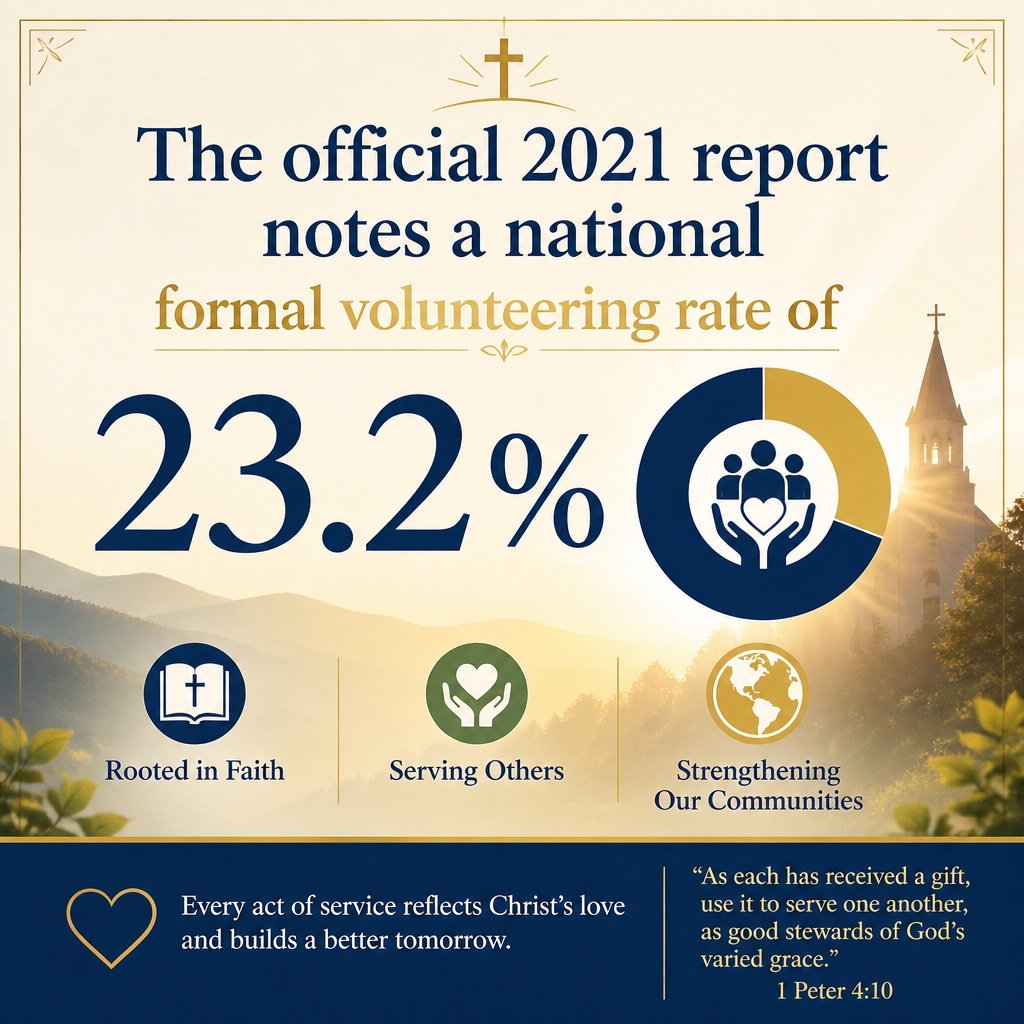
In the United States, the broader volunteer base has been under strain for years. One widely cited measure is that formal volunteering declined between 2019 and 2021, reaching a low point in the modern series tracked by the U.S. Census Bureau and AmeriCorps. The official 2021 report notes a national formal volunteering rate of 23.2%. AmeriCorps Donors should read that signal soberly: many ministries cannot assume an endless supply of ready leaders. They must form them.
What wise donors look for in leadership development
Across our verification work at Most Trusted, we observe that discipleship ministries with credible leadership development tend to be clearer about responsibility, boundaries, and measurable formation. They are also more resilient during transitions because leadership is not concentrated in one personality.
Donors evaluating discipleship ministries can ask a set of questions that are both pastoral and practical:
- How are leaders selected, trained, and supervised, and what disqualifies a leader?
- Is there a defined pathway from participant to apprentice to leader, with clear expectations at each stage?
- How does the ministry train leaders to handle Scripture faithfully rather than relying on charisma?
- What safeguarding practices exist for work with minors and vulnerable adults?
- How does the ministry respond to conflict, moral failure, or allegations of harm?
These are not cynical questions. They are stewardship questions shaped by love of the Church and concern for the vulnerable.
Leadership development is a governance and stewardship issue
Spiritual formation and organizational integrity rise or fall together
Some donors prefer to separate “ministry impact” from “organizational matters,” as though governance and financial integrity are secular distractions from spiritual work. In reality, discipleship ministries are embodied communities that handle money, authority, and information. Scripture treats those matters as spiritual. When leaders are poorly formed, the results can include misused funds, unaccountable authority, and damaged consciences.
This is one reason we built our evaluation around The Most Trusted Standard, a 15-criteria framework that examines faith commitments alongside financial integrity, governance and leadership, and transparency and effectiveness. Discipleship ministries are not exempt from scrutiny simply because their mission language is biblical. In many cases, that biblical language increases the obligation to demonstrate trustworthiness.
Healthy leadership development reduces concentration of power
The Church has had to reckon with the consequences of unaccountable leaders and institutions that confuse loyalty with faithfulness. Leadership development, when done well, is one antidote. It disperses responsibility, normalizes correction, and builds systems in which leaders are known rather than merely followed. The aim is not bureaucratic safety for its own sake. It is the protection of the flock and the credibility of the gospel.
For donors, this intersects with questions of board oversight, conflict-of-interest policies, and transparent reporting. Where authority is concentrated and opaque, discipleship becomes vulnerable to manipulation. Where authority is shared and accountable, discipleship is more likely to produce durable fruit.
What to verify when a ministry claims leadership development
Clarity about theology and clarity about outcomes
Leadership development can be claimed as a slogan while remaining vague in practice. A ministry may run leadership events without forming leaders who can teach Scripture, shepherd people, or withstand pressure. Donors should expect clarity at two levels: theological commitments and observable outcomes.
Theological clarity includes more than a statement of faith posted online. It includes how Scripture is handled, how leaders are taught to interpret passages responsibly, and how the ministry relates to the local church. Discipleship ministries that treat the local church as optional often drift toward personality-driven authority. Those that honor the church’s ordinary structures tend to build leaders who can serve beyond the ministry’s brand.
For readers seeking broader context on the place of discipleship within the Church’s calling, we address the wider landscape under Discipleship Ministries.
Evidence of practice, not only aspiration
Verifiable evidence suggests donors should look for documented training pathways, written leader expectations, safeguarding practices, and transparent evaluation. When ministries do measure outcomes, donors should read those metrics carefully. Attendance and content consumption are not the same as formation. The most credible indicators tend to be relational and behavioral: retention of trained leaders, multiplication of groups without quality collapse, and testimonies that align with observed practice.
Donors may also consider whether the ministry’s financial disclosures match its claims. If leadership development is central, budgets should usually reflect it: staff time for coaching, training materials, leader care, and appropriate screening. The goal is not to maximize overhead or minimize it. The goal is integrity between mission and spending, consistent with the broader nonprofit consensus that simplistic overhead ratios mislead donors. The “Overhead Myth” open letter—endorsed by GuideStar (now Candid), BBB Wise Giving Alliance, and Charity Navigator—argues that donors should evaluate governance, transparency, and results rather than overhead alone. Candid
Those who want a deeper treatment of leadership questions specifically can also review our analysis within How Discipleship Ministries Support Church Leadership.
FAQs for Why leadership development is central to discipleship ministries
Is leadership development a distraction from evangelism and basic discipleship?
Not when it is grounded in the New Testament’s reproductive logic. Jesus calls the Church to make disciples who obey him, and Paul instructs the entrusting of teaching to those able to teach others. Leadership development is basic discipleship extended forward so the work does not end with the first generation of participants.
What should donors do when a discipleship ministry has strong content but weak leader oversight?
We recommend treating that gap as material, not incidental. Strong content cannot compensate for untrained or unaccountable leaders, especially where spiritual authority is exercised over vulnerable people. Donors can ask whether the ministry has a credible plan, timeline, and governance support to strengthen leader selection, training, supervision, and safeguarding—and whether those commitments are reflected in transparent reporting and budgeting.
Leadership development is discipleship with a horizon
Discipleship ministries exist to form people into the likeness of Christ, and Christ forms his people to serve others. Leadership development names that horizon directly: mature disciples who can teach, shepherd, and send, without grasping for power. Donors who fund the leadership pipeline are not paying for administration; they are investing in the Church’s capacity to remain faithful across generations.



