

When a church should hire a law firm is ultimately a stewardship question: when the legal stakes exceed what goodwill, informal counsel, or ad hoc templates can faithfully carry. Churches are not merely voluntary associations; they are spiritual households with public responsibilities, fiduciary obligations, and real exposure to civil law. Wise legal counsel can protect the mission without allowing fear to govern it.
For Christian donors, this question matters because legal failure is rarely a private matter. A preventable lawsuit, a mishandled employment dispute, or a governance breakdown can redirect restricted gifts, damage public credibility, and distract leaders from the work donors intended to support. The harder tension is that legal services can be expensive, and donors rightly ask whether funds are being spent to advance ministry or to manage avoidable risk.
Legal counsel is not a lack of faith
Scripture commends prudence alongside courage
Some Christians instinctively treat attorneys as a concession to secularism, as though seeking counsel implies distrust in God. Scripture does not support that dichotomy. Proverbs repeatedly commends counsel and forethought: “Without counsel plans fail, but with many advisers they succeed” (Proverbs 15:22). Churches are called to courageous witness, but also to ordered stewardship in the affairs entrusted to them.
What this means in practice is that hiring a law firm can be a faithful act of governance, not a spiritual compromise. Prudence does not negate prayer; it disciplines prayer into responsible action. In the modern regulatory environment, the question is often not whether legal issues will arise, but whether a church will address them early, candidly, and competently.
Good lawyering can protect ministry outcomes donors care about
Donors often assume legal spending is defensive and unproductive. Sometimes it is. But sometimes a modest investment in counsel prevents mission drift, protects vulnerable people, and keeps a ministry from dissolving under the weight of a preventable crisis. Across our verification work at Most Trusted, ministries with mature governance tend to treat legal counsel as part of disciplined oversight: a tool that serves the mission, not an excuse to avoid it.
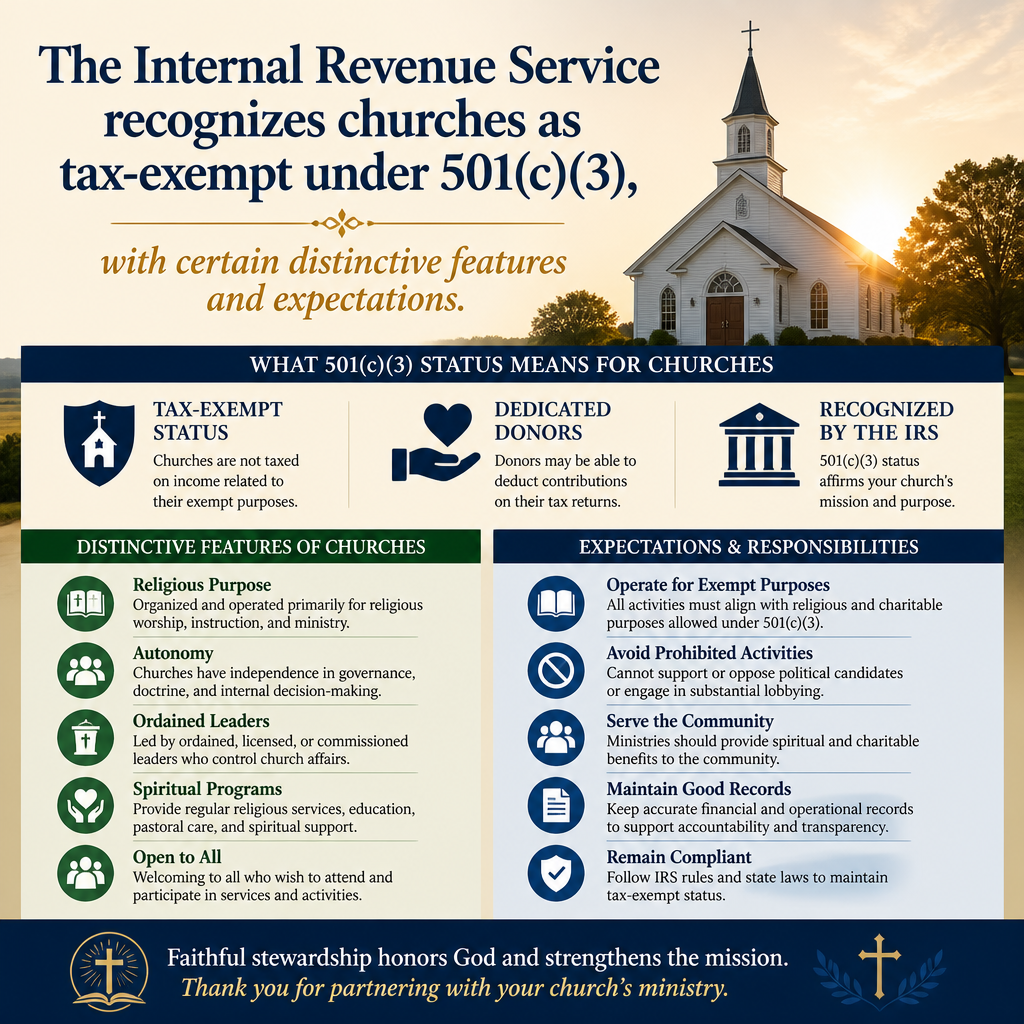
Churches also operate in a public trust context. The Internal Revenue Service recognizes churches as tax-exempt under 501(c)(3), with certain distinctive features and expectations. When a church mishandles governance or finances, it risks not only internal harm but public scandal that damages broader Christian witness. For donors, the moral and reputational costs can be as consequential as the financial ones.

Hire a law firm when the issue affects governance and fiduciary duty
Transitions, bylaws, and conflicts of interest are legal issues, not just relational ones
Many church crises begin as interpersonal conflict and then become structural dysfunction. Leadership transitions, elder removals, disputed congregational votes, and unclear bylaws routinely create the conditions for litigation. A law firm can help a church clarify governing documents, document decisions, and ensure fair process before conflict escalates.
Conflicts of interest are especially common in closely connected communities. Paid staff related to board members, real estate owned by an elder, contracts awarded to a member’s business, or pastoral housing arrangements can all create the appearance—or the reality—of self-dealing. Even when motives are clean, weak documentation and informal approvals can create serious exposure. Early counsel can establish a policy posture that is both ethically serious and legally defensible.
Financial control failures often show up as legal problems
Churches do not need to be large to face fiduciary risk. A single staff person with unchecked access to accounts, a board that does not review financial statements, or a pattern of restricted gifts being spent outside donor intent can create the conditions for civil claims and regulatory scrutiny. Donors increasingly expect that ministries will show evidence of internal controls, board oversight, and clean financial boundaries.
The National Center for Charitable Statistics reports that there were more than 1.8 million tax-exempt organizations registered with the IRS in recent years, illustrating the scale of the sector and the public interest in nonprofit accountability National Center for Charitable Statistics. Churches operate within this wider ecosystem of expectations, even when they are not required to file the same forms as other nonprofits.

Hire a law firm when people safety and mandated reporting are in view
Abuse prevention requires legal clarity, not only good intentions
Few areas require more sober clarity than child safety and abuse prevention. Churches need policies, training, and oversight; they also need accurate legal guidance about mandated reporting, documentation, background checks, and how to respond when an allegation is made. The moral obligation to protect the vulnerable is obvious. The legal and procedural obligations are complex, and mistakes can compound harm.
Many leaders underestimate how quickly an internal concern becomes a law-enforcement matter, a civil claim, or a public crisis. A competent law firm can help a church coordinate with investigators appropriately, preserve evidence, communicate carefully, and keep pastoral care from becoming mishandled interference.
Employment disputes in churches are uniquely complicated
Church employment includes categories the wider labor market does not: ministerial roles, doctrinal expectations, and discipline processes that are both pastoral and managerial. U.S. courts have recognized a “ministerial exception” grounded in the First Amendment, but it is not a blank check for careless employment practices. Misclassified employees, inconsistent documentation, poorly handled terminations, and unclear job descriptions create significant risk, even for churches with sincere theological reasons for personnel decisions.
A church should strongly consider hiring counsel when it faces any of the following:
- A credible allegation of abuse or misconduct involving minors or vulnerable adults
- An impending termination of a long-tenured staff member or pastor
- A formal demand letter, subpoena, or threat of litigation
- An internal conflict that is moving toward a contested vote or leadership removal
- A plan to change compensation structures, housing allowances, or employment classifications
Donors should not interpret these moments as automatic signs of corruption. They are often moments when leadership must demonstrate maturity: truth-telling, documentation, and a refusal to manage serious matters through informal conversations alone.
Hire a law firm for property, contracts, and high-stakes transactions
Real estate can be a blessing and a legal minefield
Church property is frequently the largest asset on the balance sheet. Buying, selling, refinancing, leasing, or sharing facilities exposes a church to zoning rules, environmental concerns, title issues, lender requirements, and liability questions. A handshake agreement with another congregation for building use may feel neighborly, but it can unravel quickly when schedules change, damage occurs, or leadership turns over.
A law firm can review purchase agreements, negotiate terms, ensure proper insurance arrangements, and protect the church from assuming liabilities it does not understand. This is not merely financial caution. A church that is dragged into years of property litigation will find its ministry narrowed by legal distraction and donor fatigue.
Contracts, intellectual property, and data privacy now touch ordinary ministry
Churches sign contracts for software, livestreaming, counseling referrals, facility rentals, and staffing services. They collect personal data through online giving platforms, children’s ministry check-in systems, and prayer request forms. They use copyrighted music and published curriculum. Each of these areas carries legal obligations that many churches did not face a generation ago.
When churches operate schools, counseling centers, adoption or foster care ministries, or international missions, complexity increases. Donors who support such work should expect to see evidence that the church has taken basic compliance seriously, including appropriate legal review for high-impact contracts and programs.
Many donors follow ministries precisely because they operate with integrity in complicated environments. For readers who support work in this space, Christian Legal Services for Churches and Ministries is where we track the recurring legal and governance dynamics that distinguish stable ministries from fragile ones.
How donors can evaluate whether legal spending is responsible
Healthy churches explain the why, not just the invoice
Donors are right to ask whether legal costs represent mission discipline or mission drift. The most credible ministries do not hide legal engagement, nor do they romanticize it. They explain, at an appropriate level, the purpose of legal counsel: protecting children, improving governance, clarifying bylaws, or completing a real estate transaction. They also show that counsel is paired with reforms—policy updates, board training, or internal controls—rather than used as a substitute for accountability.
Across our evaluation work, ministries that meet The Most Trusted Standard tend to demonstrate transparency in governance decisions and financial reporting, especially when a material event affects the organization. That does not mean a church must disclose privileged communications or sensitive personnel details. It does mean donors should be able to see that leaders are taking responsibility rather than obscuring risk.
Red flags donors should not ignore
Legal needs are sometimes unavoidable. Yet patterns can signal deeper problems. Donors should be cautious when a church repeatedly faces litigation tied to leadership behavior, retaliatory firing, or opaque financial practices; when leaders treat legal counsel as a weapon against members; or when legal spending grows without corresponding changes in policy and oversight. Churches can be both spiritually vibrant and administratively undisciplined, but donors should not confuse warmth of community with strength of governance.
Independent verification has value precisely because it asks donors to move beyond impression and reputation. Most Trusted exists to help donors give with confidence by evaluating ministries against The Most Trusted Standard, a 15-criteria framework spanning faith commitments, financial integrity, governance and leadership, and transparency and effectiveness. Legal preparedness is not a separate virtue from these concerns; it is often a practical test of whether they are real.
For donors who support ministries that provide counsel, advocacy, and compliance help to churches, Christian Legal Services Ministries is where we consider how these organizations structure their work, disclose results, and guard against conflicts of interest in a field where trust is essential.
FAQs for When a church should hire a law firm
Should a church hire a law firm before a problem becomes a lawsuit?
Yes, in many cases. Legal counsel is often most valuable when it helps a church prevent foreseeable harm: clarifying bylaws, updating child safety policies, reviewing employment practices, or structuring a major property decision. Waiting until a dispute is public usually narrows options and increases cost. Prevention is not paranoia; it is disciplined oversight.
Is paying for attorneys an appropriate use of donor funds?
It can be, depending on purpose and proportionality. If legal counsel protects vulnerable people, ensures faithful governance, or preserves the ministry’s ability to operate, it can be a prudent use of resources. Donors should expect the church to show that legal spending is tied to clear decisions, appropriate board oversight, and concrete improvements—not simply to protect leaders from accountability.
Faithful stewardship includes competent legal care
When a church should hire a law firm is not a question of whether the church trusts God; it is a question of whether leaders will govern with the sobriety Scripture commends and the public responsibility the church necessarily bears. Donors can encourage this maturity by supporting churches that pursue counsel early, tell the truth about risk, protect the vulnerable, and demonstrate that legal spending serves mission rather than shielding dysfunction.



