
What Scripture says about supporting Bible distribution is not merely that the Word is valuable, but that God intends to advance his purposes through it. Christian donors often feel the weight of that claim: if the Bible is living and active, then funding its translation, printing, and delivery is not a niche cause but a strategic act of stewardship. Yet the modern Bible distribution ecosystem also raises sober questions about effectiveness, integrity, and cultural wisdom that serious givers cannot ignore.
The Bible itself supplies both the mandate and the safeguards. Scripture presents the Word as God’s appointed means of creating faith, strengthening the church, and summoning repentance. At the same time, it warns against empty religious commerce, manipulative appeals, and leaders who “peddle” God’s Word for profit. Donors who want to support Bible distribution faithfully need both convictions held together.
Scripture frames Bible distribution as Word ministry, not mere publishing
The Word creates and sustains faith
Christian support for Bible distribution rests on a distinctly biblical doctrine of God’s speech. The Scriptures do not treat the Word as a neutral religious text waiting for human activation. God speaks, and realities change: creation itself comes by divine command. In the church, the Word is the ordinary instrument by which God grants new life and sustains mature discipleship.
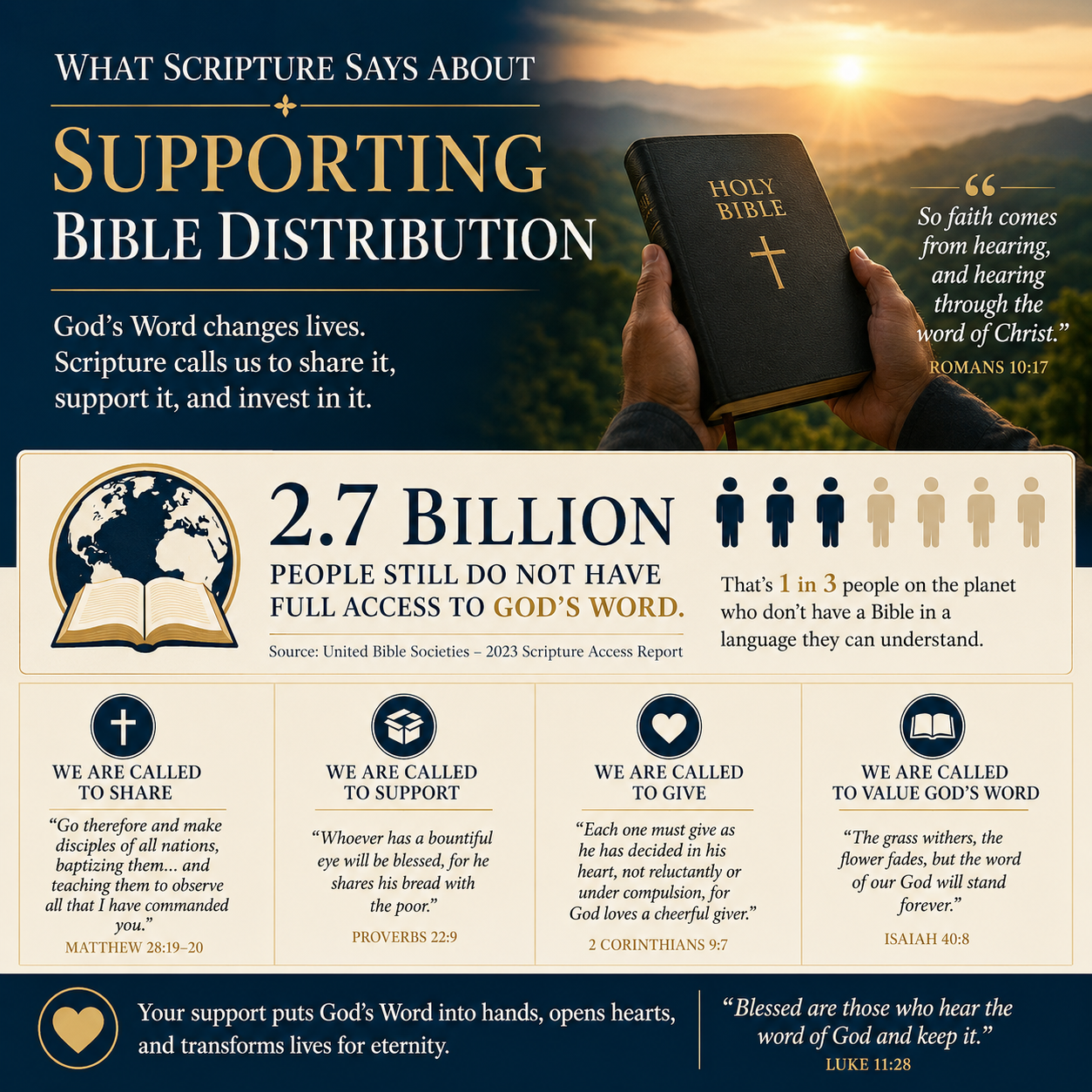
Paul’s argument in Romans is direct: saving faith is ordinarily awakened through hearing the message of Christ, and hearing presupposes proclamation. Bible distribution participates in that chain, especially where access barriers are real. The mission logic is not that paper and ink convert, but that the Spirit uses the Word to open blind eyes, correct falsehood, and form a people.
The Great Commission assumes teachable access to Christ’s words
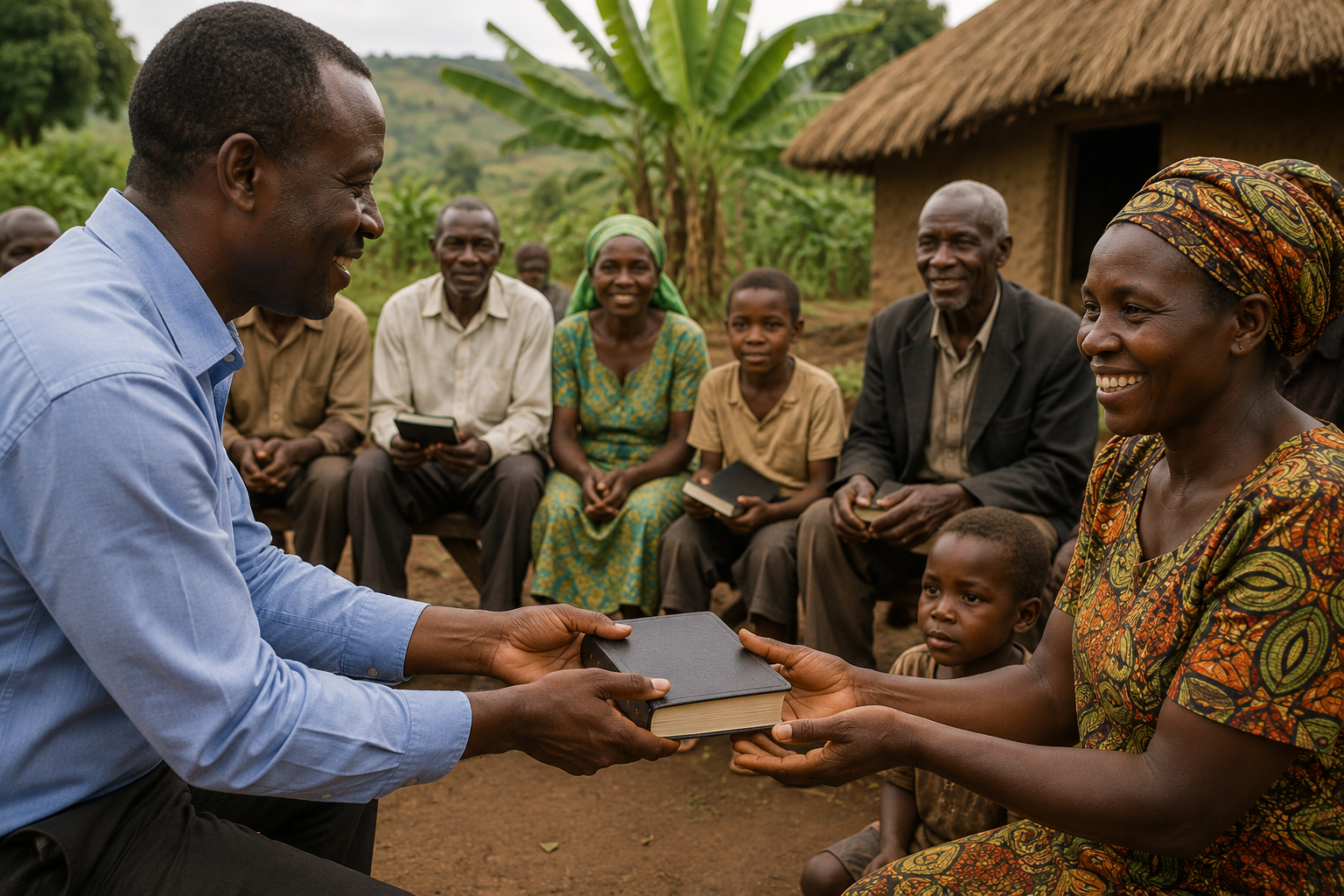
Jesus commissions the church not only to baptize but to teach obedience to all he commanded. That teaching is anchored in the apostolic witness, preserved and transmitted in Scripture. In that sense, Bible distribution is an infrastructure ministry for the church’s long obedience: it strengthens pastors, equips parents, guards congregations against error, and gives persecuted believers durable nourishment.
What this means in practice is that donors should evaluate Bible distribution as ministry to real communities, not as product fulfillment. The questions are ecclesial and pastoral: Who will teach? Who will shepherd? How will believers be formed? A faithful Bible distribution strategy will usually be linked, formally or informally, to local church presence and durable discipleship pathways.
Scripture also warns against corrupted Word ministry
God’s Word must not become a tool for personal gain
The New Testament repeatedly confronts the temptation to turn sacred ministry into a revenue stream. Paul distinguishes his own ministry from those who “peddle the word of God,” insisting on sincerity before God and in Christ. The warning is not theoretical. Wherever donors, budgets, and public reputation accumulate around religious activity, temptation follows.
For donors, the primary implication is not suspicion for its own sake but disciplined discernment. A ministry can print and ship Bibles at scale and still be disordered in motive, governance, or financial practice. Scripture’s concern is deeper than efficiency; it is integrity before God.
Truthfulness and accountability are biblical, not merely regulatory
When Paul organizes the Jerusalem relief offering, he insists on safeguards “to avoid any criticism,” taking pains that the administration will be honorable not only in the Lord’s sight but also in the sight of men. That passage is often cited in financial stewardship contexts because it normalizes transparent processes as a spiritual obligation, not a concession to modern compliance culture.
Christian donors sometimes feel tension here: robust due diligence can sound like distrust, especially when ministries are doing difficult work in hostile environments. Scripture gives permission to be both generous and careful. Care is one way love protects the church’s witness and ensures that resources serve the people they are meant to serve.
The donor’s calling is stewardship, not sentiment
God measures faithfulness, and faithfulness uses means
Jesus’ parable of the talents rejects the idea that good intentions sanctify poor stewardship. The faithful servants act, plan, and accept accountability. Donors supporting Bible distribution are not exempt from that logic. A desire to “get Bibles out” must be paired with attention to whether funds are handled rightly and whether distribution is plausibly connected to gospel outcomes.
In practice, that means asking about the whole chain: translation quality, theological oversight, printing costs, supply chain risk, local legal constraints, and the presence of partners who can disciple new readers. Not every ministry can do everything; specialization can be wise. But Scripture commends faithfulness with the resources entrusted, not only zeal.
Generosity must be paired with discernment about need
Christians genuinely disagree about what counts as “need” in Bible distribution. In some places, the primary barrier is language: no complete Bible exists, or literacy levels are low. In other settings, the barrier is legal or economic: Scripture is available but unaffordable or risky to possess. In still other contexts, access is abundant, but attention and formation are scarce.
Discernment requires humility. Donors can unintentionally fund duplication where Scripture is already plentiful, while underfunding the slow work of translation, oral Scripture, or training local leaders. The calling is not to fix everything but to give where the marginal impact is real and where the ministry’s practices are consistent with biblical ethics.
How Scripture shapes what we should ask Bible distribution ministries
What fruit should donors expect to see
The New Testament does not reduce ministry evaluation to numbers, but it does not forbid measurement either. Paul can speak of the gospel “bearing fruit and growing,” and Luke records growth patterns in Acts as evidence of God’s work. What Scripture resists is boasting, manipulation, or implying that God’s blessing is mechanically controlled by human technique.
For mature donors, the expectation should be proportionate evidence: credible reporting about where Bibles went, who received them, how partnerships functioned, and what obstacles were encountered. In contexts where public disclosure would endanger believers, donors can still expect private documentation and third-party accountability.
Questions that align with biblical accountability
Across our verification work at Most Trusted, we observe that ministries prepared to answer disciplined questions are rarely offended by them. They tend to have clearer theology of the church, more consistent financial controls, and more realistic reporting about what is and is not knowable. The Most Trusted Standard is built to test for that kind of maturity across faith commitments, financial integrity, governance, and transparent communication.
A brief set of donor questions often clarifies whether a Bible distribution ministry is operating in that spirit:
- How does the ministry determine where Scripture access is genuinely constrained, rather than assumed?
- What safeguards prevent Scripture distribution from becoming dependent-driven or coercive?
- Who provides theological oversight for translation choices and study resources?
- What controls exist for inventory, cash handling, and partner disbursements in-country?
- How does the ministry report outcomes without exaggeration or unsafe disclosure?
Donors who want broader context on the field often benefit from tracking how different models fit together—translation, publishing, church-based distribution, digital delivery, and training. For a larger view of the category and how ministries differ, see Bible Distribution Ministries.
Giving with confidence requires verification and ecclesial humility
The modern field includes real operational and ethical complexity
Supporting Bible distribution is not simply a decision about passion; it is a decision about governance and risk. Ministries operate across borders, sometimes in fragile states. They may rely on volunteers, complex shipping channels, or sensitive partnerships with local churches. In certain settings, digital distribution is safer and cheaper; in others, physical copies are essential because connectivity is limited or surveillance is severe.
Even in favorable contexts, the field has had to reckon with donor expectations that can distort strategy. Pressure for rapid scale can privilege quantity over discipleship. Pressure for compelling stories can tempt ministries to overstate outcomes. Scripture’s warnings about falsehood and vainglory apply as much to fundraising narratives as to preaching.
Verification is one form of neighbor-love in giving
Verification is not a substitute for prayer, nor is it a claim to omniscience. It is an act of stewardship: a disciplined attempt to test whether a ministry’s faith commitments are coherent, its financial practices are sound, its leadership is accountable, and its public claims are appropriately supported. Donors are not called to cynicism, but neither are they called to fund without examination.
At Most Trusted, our role is to help donors give with confidence by evaluating ministries against The Most Trusted Standard. The aim is not to reward sophistication for its own sake, but to protect the witness of the gospel and the people served. When donors give carefully, they strengthen ministries that tell the truth, handle money cleanly, and serve churches rather than substituting for them.
For donors who are weighing how to pray and give in this space, the broader set of related concerns—discernment, accountability, partnership with local churches, and wise support—are addressed throughout Praying for and Supporting Bible Distribution Ministries.
FAQs for What Scripture says about supporting Bible distribution
Is supporting Bible distribution always the best way to advance the gospel?
Scripture presents the Word as central to the church’s life and mission, so Bible access is never a trivial concern. Yet the New Testament also emphasizes the church’s embodied witness: preaching, sacraments, mercy, discipline, and shepherding. In some contexts, funding translation or distribution is strategically urgent; in others, strengthening local pastoral training or discipleship may address the deeper bottleneck. Wise giving often supports both Scripture access and the ecclesial structures that help people understand and obey what they read.
How can donors guard against funding inflated claims in Bible distribution?
Scripture commends honorable administration and truthful speech, and donors can reflect that by requiring clear documentation. Practical safeguards include reviewing audited financials when available, asking how distribution is tracked, and requesting a plain explanation of what outcome metrics can and cannot demonstrate. Independent verification can also help. Ministries willing to submit to external accountability and to describe setbacks as well as successes typically show the kind of integrity Scripture praises.
Supporting Bible distribution as an act of faithful stewardship
Scripture commends confident generosity anchored in truth. Supporting Bible distribution is one concrete way donors can participate in God’s ordinary means of grace, strengthening the church and extending the witness of Christ. That support should also reflect the Bible’s own moral seriousness: transparent administration, accountable leadership, and honest claims. When donors give in that posture, the gift itself becomes a form of discipleship—money directed by the Word, for the sake of the Word, under the lordship of Christ.



