
What partnerships help Bible study ministries grow locally is not a marketing question as much as an ecclesial one. Local growth that endures usually follows a simple pattern: the ministry enters existing networks of trust, submits to local accountability, and serves a clearly defined community with Scripture handled faithfully.
Donors often ask for “scalable” Bible engagement. Scripture itself commends fruitfulness, but it also warns against mistaking activity for faithfulness. Paul’s planting-and-watering image in 1 Corinthians 3 locates growth with God, and it also locates responsibility with human co-laborers. Partnerships are one of the primary ways a Bible study ministry becomes a co-laborer rather than a parallel institution competing for attention, volunteers, and funding.
Partnerships that borrow trust rather than manufacture it
Most effective local partnerships begin with a sober recognition: Bible study ministries rarely “arrive” in a community as neutral actors. They arrive with assumptions, funding constraints, and a particular theological and cultural posture. The question is whether those assumptions are tested and refined through relationships strong enough to tell the truth.
In practical terms, the partnerships that help ministries grow locally are those that let the ministry borrow trust that already exists. Schools, congregations, immigrant associations, recovery communities, and neighborhood nonprofits often hold relational capital a new program cannot quickly create. A ministry that learns to honor those institutions can grow without hollowing out local leadership.
Local churches as sending and shepherding partners
The first partnership that should be named is the local church. Not every Bible study ministry is church-based, and Christians genuinely disagree about how para-church work relates to the church. Yet Scripture’s ordinary pattern is clear: teaching, discipleship, discipline, and pastoral care belong to the gathered people of God (Ephesians 4). When a Bible study ministry grows locally without meaningful church partnership, it may gain attendance while losing the very shepherding that protects participants.
For donors, a basic due diligence question is whether the ministry can name the churches it serves, how pastors participate, and what happens when a participant discloses trauma, addiction, abuse, or theological confusion. A church partnership is not a logo on a flyer; it is a shared commitment to care for souls.
Anchored leaders rather than celebrity teachers
In local growth, credibility often attaches to leaders who are known in the community more than to teachers who are known online. That does not mean ministries should reject gifted communicators. It does mean that ministries should treat local leadership development as a primary outcome, not as a long-term aspiration.
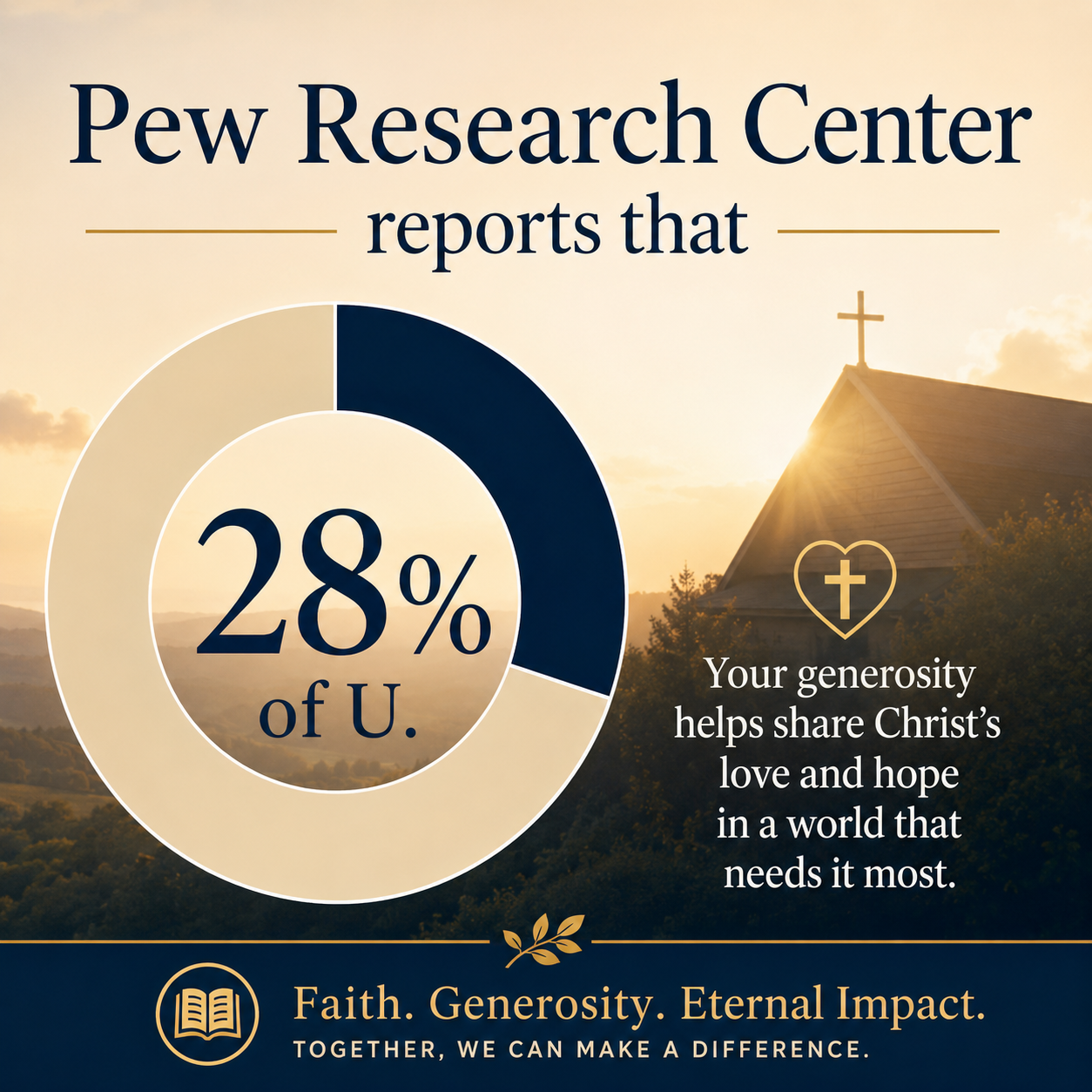
One measurable reality is that Americans are not naturally embedded in thick local relationships. Social capital has declined for decades, and religious participation has also shifted in ways that make forming durable groups harder. Pew Research Center reports that 28% of U.S. adults are religiously unaffiliated as of 2023, which often correlates with weaker connection to congregational life where Bible study typically stabilizes Pew Research Center.

Institutional partnerships that create predictable access
Local growth does not happen only by inspiration. It happens because people can actually attend. Predictable access to space, schedules, and referral pathways often matters more than a ministry’s curriculum quality.
Institutional partners can provide that access: schools, prisons, shelters, clinics, libraries, and employers. These partners can also impose needed discipline. When an institution requires background checks, reporting protocols, and clear boundaries, a Bible study ministry is forced to mature.
Schools and youth-serving organizations
When ministries serve youth, school-related partnerships require humility and precision. Public schools are legally constrained; churches and Christian schools are not. The wise approach is to avoid vague promises and build agreements around what is permissible, what is invited, and what is off-limits.
Youth partnership also raises a sobering safeguarding obligation. The U.S. Department of Justice has reported high lifetime prevalence of sexual violence for women and men, underscoring why ministries must treat child protection as a serious governance matter rather than a program detail U.S. Department of Justice.
Corrections and reentry partners
Prison and reentry Bible studies often grow through partnerships that combine access and continuity. A jail Bible study may be spiritually significant yet remain episodic unless it connects to reentry housing, job placement, addiction recovery, and a local church prepared to receive returning citizens.
These partnerships require patience. Corrections systems are slow by design, and reentry outcomes are shaped by factors a Bible study cannot control. Donors should expect ministries to measure what is measurable—attendance consistency, group completion, local church connections—without claiming responsibility for outcomes that properly belong to God and to complex social systems.
Partnerships that integrate Scripture with whole-person discipleship
Bible engagement is not merely content delivery. Scripture forms people into obedience, wisdom, and love. Local growth often accelerates when Bible study ministries partner with organizations addressing concrete needs that otherwise block participation: transportation, childcare, food insecurity, and mental health support.
This is not a concession to a “social gospel.” It is an application of biblical anthropology. Humans are embodied souls, and discipleship has always been practiced in communities where needs are seen and shared (Acts 2). The danger is not in integrating care; the danger is in confusing care with control, or in treating material help as a recruitment tool.
Mutual aid and compassion ministries with clear boundaries
The best partnerships treat compassion as a ministry of presence rather than a funnel. In the When Helping Hurts framework articulated by Steve Corbett and Brian Fikkert, harm often occurs when helpers unintentionally reinforce dependency or paternalism. Bible study ministries that partner with mature local compassion organizations can learn to honor agency, listen before acting, and practice accountability in benevolence.
For donors, a concrete question is whether the partnership has written boundaries: who provides benevolence funds, who approves them, what documentation is required, and how confidentiality is protected. Clarity is not unspiritual; it is a form of love.
Trauma-informed care partners
In many communities, “Bible study” quickly becomes “pastoral counseling by default.” Participants disclose domestic violence, suicidal ideation, substance use relapse, and childhood abuse. A ministry that cannot refer well can unintentionally place vulnerable people at risk.
Partnerships with licensed counselors, domestic violence shelters, and crisis response organizations do not replace prayer or Scripture. They help a ministry remain within competence while still caring for participants. Where theology and clinical frameworks collide, mature ministries neither surrender biblical conviction nor dismiss professional expertise. They negotiate carefully, in writing, and with accountability to church leadership.
Partnerships that reinforce theological fidelity and credibility
Local growth can expose a ministry to doctrinal drift. The pressure to broaden appeal, reduce offense, or flatten distinctive claims is real, especially when partners have differing theological commitments. This is where partnerships must be evaluated not only for access but for alignment.
Doctrinal clarity does not require sectarianism. It does require that a ministry knows what it believes, teaches it with integrity, and does not conceal convictions to keep relationships intact.
Seminaries and trusted training institutions
Partnerships with seminaries, Bible colleges, and reputable training centers can strengthen teaching quality and prevent shallow interpretation. This matters because Bible study ministries often multiply through volunteer leaders. Volunteers need more than a facilitator guide; they need formation in hermeneutics, doctrine, and pastoral wisdom.
Donors should not assume that “trained” means “safe.” Yet a ministry that invests in structured training, assessments, and ongoing supervision is usually more prepared to grow without collapsing under its own expansion.
Ecumenical coalitions with defined confession
Some local settings require cooperation across denominations. Ecumenical partnerships can expand reach and reduce duplication. They can also blur theological lines if the ministry does not state its confession plainly.
The ministries that sustain local growth tend to make three things explicit: what beliefs are required for leaders, what is expected for participants, and what is treated as secondary. Donors can assess these commitments by reviewing statements of faith, curriculum selection processes, and how the ministry handles contested issues with charity and conviction.
Partnerships that strengthen governance, safeguards, and donor confidence
Many Bible study ministries are born out of sincere calling and immediate need. Governance often matures later. Yet local growth will eventually test financial controls, data practices, child protection, and reporting integrity. Partnerships can either accelerate maturity or expose weakness.
Across our verification work at Most Trusted, we observe that ministries meeting The Most Trusted Standard tend to treat partnerships as governance questions, not merely program opportunities. They ask who holds authority, how decisions are made, how money flows, and what happens when something goes wrong. This is not cynicism. It is stewardship.
Referral partners with shared safeguarding expectations
When a ministry receives referrals from schools, shelters, or case managers, it becomes part of a larger care ecosystem. That ecosystem depends on trust. Safeguarding failures travel quickly across networks, harming victims first and also discrediting the gospel in a community.
Before a ministry seeks growth through referral partnerships, we recommend confirming that the following are in place and enforced:
- Written child protection and vulnerable adult safeguarding policies
- Background checks and documented screening for leaders and volunteers
- Mandatory reporting training and clear incident response procedures
- Data privacy practices for participant information and prayer requests
- Formal agreements describing roles, boundaries, and escalation pathways
Financial and reporting partners that resist the Overhead Myth
Partnerships often introduce restricted funding, shared events, and co-branded campaigns. Those arrangements increase complexity and the temptation to understate true costs. Mature donors increasingly recognize that “low overhead” is not a synonym for effectiveness. The Overhead Myth statement, signed by GuideStar, BBB Wise Giving Alliance, and Charity Navigator, argues that administrative and fundraising ratios are poor proxies for impact Candid GuideStar.
What this means in practice is that a locally growing Bible study ministry should be willing to fund the unglamorous work: financial controls, leader training, evaluation, and safeguarding. Partnerships that reward only visible program activity often weaken a ministry over time.
Donors considering support for Bible Study and Engagement Ministries can compare ministries not only by stories but by verifiable practices. In our editorial work, we encourage donors to look for public documentation: audited or reviewed financial statements when appropriate to size, board independence, conflict-of-interest policies, and clear reporting on outcomes and limitations. These themes are developed across Bible Study and Engagement Ministries as donors evaluate how Scripture-centered work is carried out with integrity.
FAQs for What partnerships help Bible study ministries grow locally
Should Bible study ministries prioritize church partnerships over other local partners?
In most cases, yes, because the church is the ordinary context for teaching, pastoral care, and sacramental life. Other partnerships can extend access and address barriers to participation, but if they are not tethered to local churches, ministries often struggle to provide spiritual oversight when participants face crisis, doctrinal confusion, or relational breakdown. A prudent donor looks for ministries that can name accountable church relationships without treating churches as a distribution channel.
What should donors ask before funding a partnership-driven expansion?
Donors should ask what is written down. Specifically: What agreements define roles and safeguards? Who owns participant data? How are leaders screened and trained? How are finances tracked when funds are restricted or shared? How does the ministry evaluate fruit without overstating causality? These questions are not peripheral to mission; they are expressions of stewardship. Our related analysis on community reach and accountability is gathered in How Bible Study and Engagement Ministries Reach Communities.
Local growth worth funding is usually relational, accountable, and slow enough to be real
Partnerships help Bible study ministries grow locally when they deepen trust, widen access, and strengthen faithfulness under scrutiny. The strongest partnerships do not merely expand attendance. They build a web of shared responsibility—churches that shepherd, institutions that safeguard, and community organizations that remove barriers without coercion. Donors serve the church best by funding growth that can be explained, governed, and sustained in the light.



