
How to invite friends to support biblical museum ministries is not primarily a question of tactics. It is a question of witness: whether we commend the truth of Scripture with clarity, integrity, and measurable seriousness, or whether we reduce giving to social pressure and sentimental appeal.
Biblical museums and related ministries occupy a contested space. Christians genuinely disagree about how public institutions should engage archaeology, history, and claims of biblical reliability. That disagreement makes careful invitation more, not less, necessary. The goal is not to recruit friends into a fundraising moment, but to invite them into faithful stewardship that can withstand scrutiny.
Begin with shared convictions, not a fundraising ask
Anchor the invitation in the purpose of remembrance
Scripture treats remembrance as a spiritual discipline. Israel was repeatedly commanded to remember the Lord’s works and to teach them to the next generation (Deuteronomy 6:6–9). Biblical museum ministries, at their best, serve that mandate by helping ordinary believers see the historical texture of the biblical world and by strengthening confidence that Christianity is not a private spirituality detached from reality.
When we invite friends, we recommend beginning here: not with a budget gap, but with why this kind of ministry exists. A thoughtful friend may not be moved by another “cause,” but many are open to a serious conversation about formation, catechesis, and public truth.
Name the complexity rather than smoothing it over
Biblical museums sit at the intersection of scholarship, education, and apologetics, and each domain has its own standards. Some friends will worry that museums overstate claims; others will worry that Christian institutions concede too much. It helps to say directly that careful donors ask: Are exhibits historically responsible? Are claims properly sourced? Are educational outcomes evaluated? Are donors told what is working and what is not?
That posture communicates respect. It also prevents a common donor mistake: confusing personal excitement with verified effectiveness.
Offer a credible path to trust, not a plea for trust
Explain what due diligence looks like for museum ministries
Friends who already support a local church often have less practice evaluating organizations outside the congregation. A biblical museum ministry may be orthodox in doctrine and still weak in governance, unclear in financial reporting, or imprecise about outcomes. This is where mature donors distinguish between theological alignment and organizational trustworthiness.
Most Trusted exists because donors deserve more than marketing assurances. We evaluate ministries against The Most Trusted Standard, a 15-criteria framework across four core areas: Faith Foundation, Financial Integrity, Governance and Leadership, and Transparency and Effectiveness. When you invite friends, you can offer them a simple next step: verify before you amplify.
Invite friends into a process that honors conscience
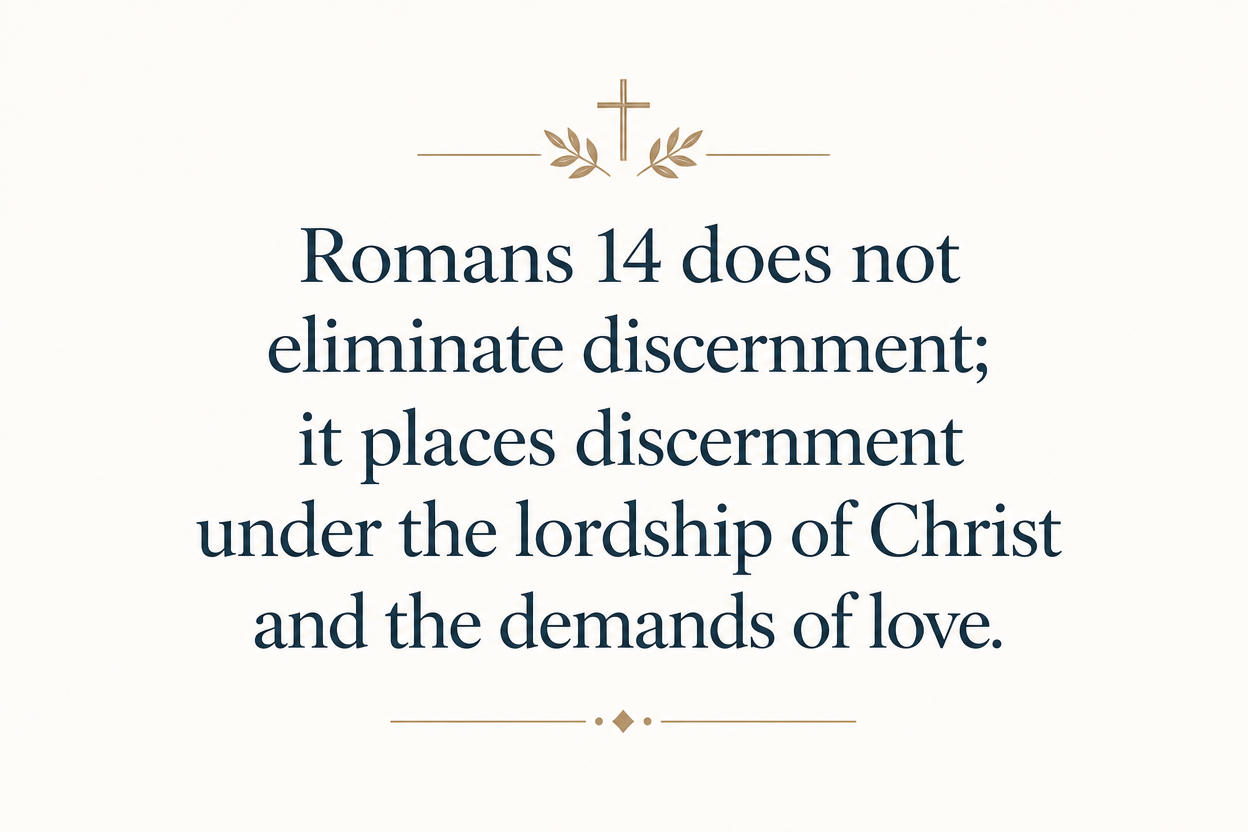
Romans 14 does not eliminate discernment; it places discernment under the lordship of Christ and the demands of love. Some friends will decide that their giving should prioritize local church ministry, frontline mercy work, or global missions. The invitation should leave room for that. The point is not to win an argument for museum giving, but to commend a ministry opportunity honestly and then let faithful conscience respond.
If a friend wants to explore the broader landscape, it can be helpful to point them to Biblical Museum Ministries as a way to think about the category without being captured by a single institution’s narrative.
Make the invitation tangible by tying it to formation outcomes
Frame support as discipleship investment, not cultural consumption
A common failure in Christian fundraising is to treat donors as consumers purchasing experiences. Museums can unintentionally reinforce that pattern: the event, the exhibit, the gift shop, the social media moment. A better invitation frames giving as investment in formation—helping families, students, pastors, and seekers encounter the Bible with greater seriousness.
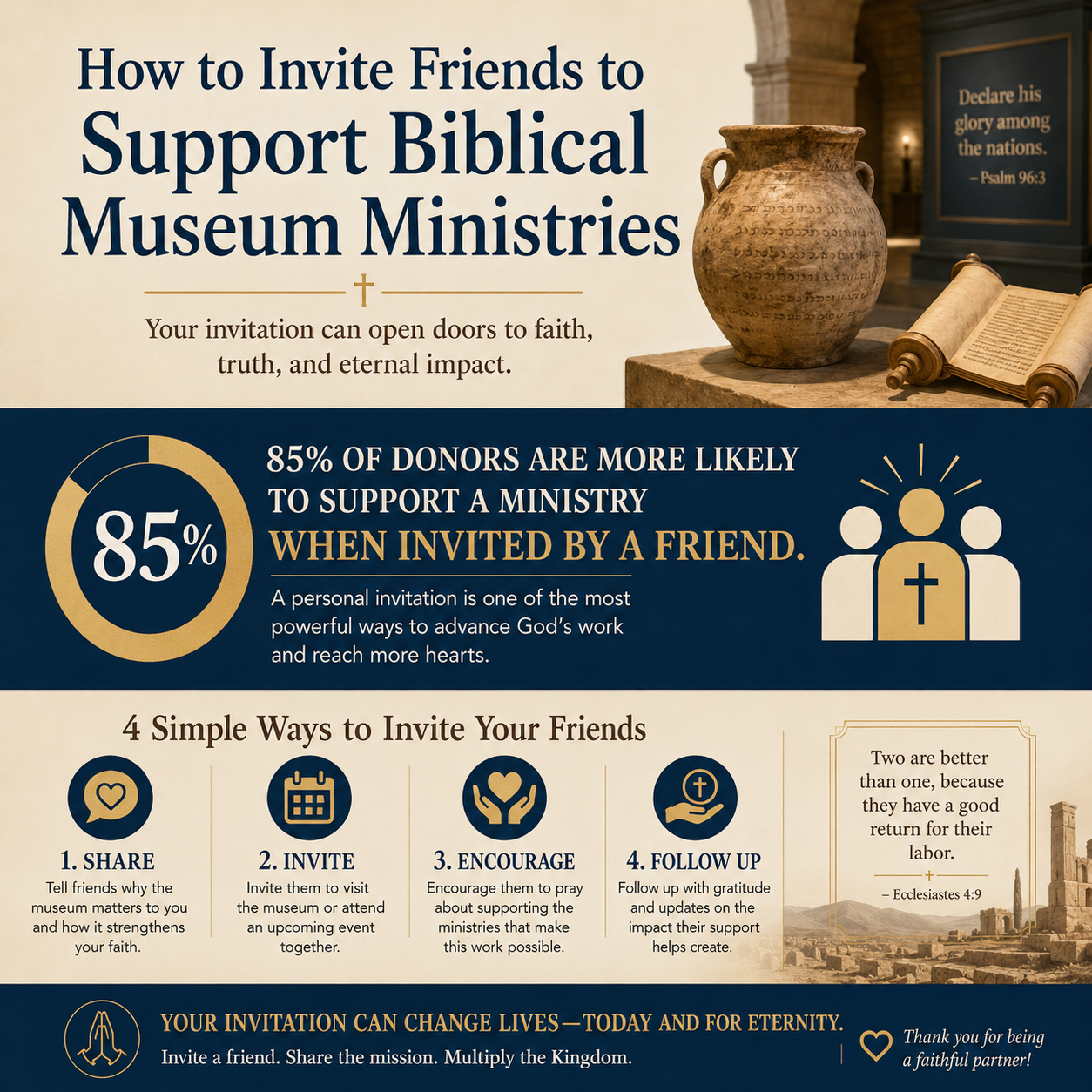
Friends may resonate with concrete outcomes: resources for church groups, curriculum partnerships with Christian schools, scholar-led content that clarifies difficult historical questions, and public exhibits that present the Bible’s world without caricature.
Offer a specific way to participate that fits different capacities
Many donors do not need more options; they need a coherent next step. Keep it concrete and proportionate. A short menu reduces pressure and helps friends act with integrity.
- Invite a couple to attend a lecture or exhibit with you, then discuss what seemed well-supported and what raised questions.
- Suggest a one-time gift designated for educational programming, especially if the ministry reports outcomes from that work.
- Encourage a monthly commitment for a defined period, with a planned review date.
- Offer to share audited financials, board information, and impact reporting before asking for support.
- If appropriate, introduce friends to the ministry’s development or program staff for a substantive conversation.
This approach also respects the reality that American generosity is often constrained by household pressure and debt. Household finances are not merely a matter of willpower. For example, U.S. household debt levels remain historically significant, shaping what many families can do even when they want to be generous (Federal Reserve Bank of New York).
Guard against common errors that erode credibility
Do not substitute spectacle for accountability
Some museum ministries communicate with high production value while remaining thin on verifiable reporting. Sophisticated donors notice. The invitation should normalize questions about audited financial statements, conflict-of-interest policies, executive compensation practices, and board independence. These are not secular distractions; they are basic stewardship responsibilities for any organization that claims to serve Christ in public view.
The sector has also had to reckon with the “overhead” obsession that can punish healthy investment in evaluation and governance. The widely-cited “Overhead Myth” statement by nonprofit evaluators cautioned donors against using simplistic overhead ratios as a proxy for effectiveness (Charity Navigator). Museum ministries, with legitimate facility and curation costs, particularly need donors who can think beyond a single percentage.
Resist the temptation to pressure friends through fear
Some invitations lean on cultural alarm: “If we do not fund this, the next generation will lose the Bible.” There is a grain of truth in generational concern, but fear-driven giving often produces shallow commitment. It also risks turning a complex discipleship problem into a single-institution solution.
Research on religious change in the United States is sobering and should be handled with care. For instance, the share of U.S. adults identifying as Christian has declined over the past decades, while religious “nones” have risen (Pew Research Center). That context can motivate prayerful generosity, but it should not be used as a blunt instrument to override discernment.
Invite friends to partner as co-stewards, not as spectators
Ask for questions you cannot answer and commit to finding them
A credible invitation welcomes scrutiny. If a friend asks how artifacts were acquired, how claims are sourced, what the peer review process is for educational materials, or how leadership handles controversy, that is not opposition. It is stewardship in action.
When friends raise such questions, we recommend responding with a commitment to evidence: “We will look for primary documentation, clear policies, and transparent reporting.” This is where verification work matters. Ministries that meet The Most Trusted Standard tend to treat questions as an opportunity to clarify, document, and improve rather than to deflect.
Connect friends to a wider ecology of faithful giving
Biblical museum ministries should rarely be a donor’s entire discipleship strategy. A healthy giving portfolio for many Christians includes the local church, direct mercy to the vulnerable, and mission beyond one’s community. Museum support can fit within that broader responsibility when it is pursued with honesty about what it can and cannot accomplish.
For donors who want to approach this with category-level discipline rather than impulse, Donor Partnership with Biblical Museum Ministries can help friends think about support as long-term stewardship rather than a single transaction.
FAQs for How to invite friends to support biblical museum ministries
How do we invite friends without making the relationship feel transactional?
We recommend inviting friends first into the underlying conviction: that teaching Scripture faithfully includes helping people understand the Bible’s world and claims responsibly. Then offer a low-pressure next step—attending an event, reviewing documentation, or considering a time-bound gift—while explicitly honoring their freedom to decline. A relationship is protected when the invitation is framed as shared stewardship, not as a test of loyalty.
What should we verify before we recommend a biblical museum ministry?
At minimum, we recommend confirming that the ministry has clear doctrinal commitments, credible governance (including an engaged board and conflict-of-interest practices), transparent financial reporting (preferably audited), and evidence of program effectiveness. If the ministry makes historical or archaeological claims, ask how those claims are sourced and corrected when challenged. Trust is strengthened when the ministry’s public communication matches what its documents and practices demonstrate.
A faithful invitation is rigorous and hopeful
Inviting friends to support biblical museum ministries is an exercise in truthfulness. It is possible to be genuinely enthusiastic about a ministry’s vision while still insisting on documentation, accountability, and measured claims. The friends we hope to serve are not won by pressure; they are persuaded by integrity, and ultimately by a confidence that the truth we commend does not fear the light.



