
Many Christian donors ask how to encourage your sponsored child without turning sponsorship into a fragile pen-pal relationship or a one-directional flow of money and sentiment. The best encouragement is both spiritually serious and developmentally wise: it strengthens a child’s hope, dignity, and agency while honoring the local church and community structures that actually sustain long-term change.
Child sponsorship sits at the intersection of discipleship and international development. Christians genuinely disagree about how much personal connection is appropriate, how explicit faith language should be in letters, and how to avoid creating unhealthy dependence. These are not abstract concerns. They shape a child’s expectations, the ministry’s integrity, and a donor’s stewardship before God.
Encouragement begins with a theology of dignity and place
Encouragement is not merely positive sentiment. Scripture uses the language of strengthening hearts, building up the body, and sustaining the weary. Paul writes, “encourage one another and build each other up” (1 Thessalonians 5:11). In sponsorship, that building up must be tethered to a child’s real life: family, school, church, and local community.
What this means in practice is that the most faithful encouragement is not primarily about creating emotional intensity across distance. It is about affirming that a child is seen by God, gifted for meaningful work, and supported by a community close at hand.
Affirm identity more than outcomes
Many sponsored children live with academic pressure, economic uncertainty, and family stress. Encouragement that hinges on achievement can quietly communicate that a child is valuable only when they perform. A more Christian form of encouragement speaks to identity: beloved by God, capable of learning, able to persevere, and not alone.
Respect the child’s local authority structures
Sponsorship is healthiest when it reinforces, rather than competes with, parents, guardians, teachers, pastors, and program staff. Language that suggests the sponsor is the primary provider or rescuer often undermines the relationships a child needs most. Encouragement should assume that God is already at work in the child’s community and that sponsorship is one part of a larger ministry ecosystem.
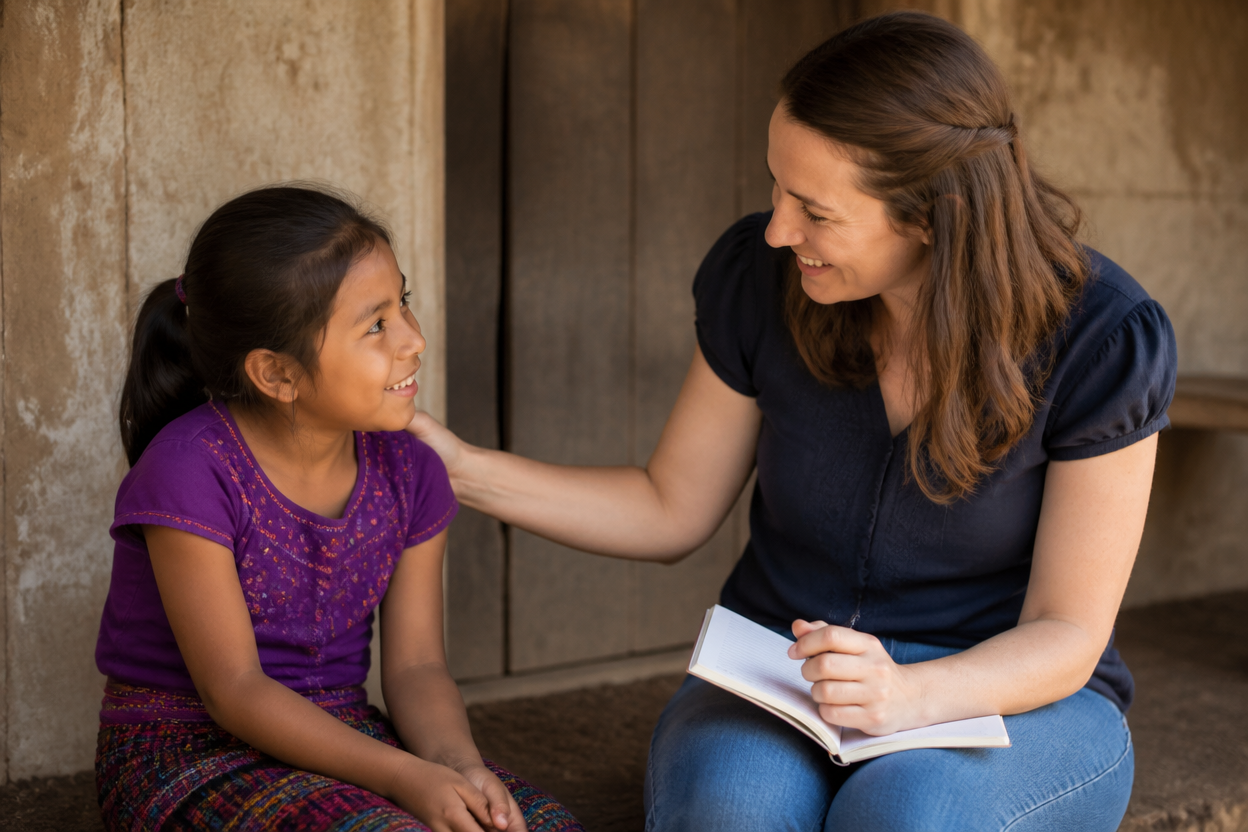
Write letters that build hope without creating pressure
Letters remain one of the most tangible ways to encourage a sponsored child. They can also misfire when they carry adult anxieties, cultural assumptions, or implicit expectations. A letter should be simple, truthful, and steady, communicating consistent care without demanding emotional reciprocity.
Choose words that are clear, gentle, and culturally portable
Most sponsorship programs translate letters. Idioms, sarcasm, and nuanced humor often do not survive translation. Encouragement travels best when it uses plain language and concrete details. Gratitude, prayer, and interest in a child’s everyday life usually translate well across cultures and literacy levels.
Aim for consistency over intensity
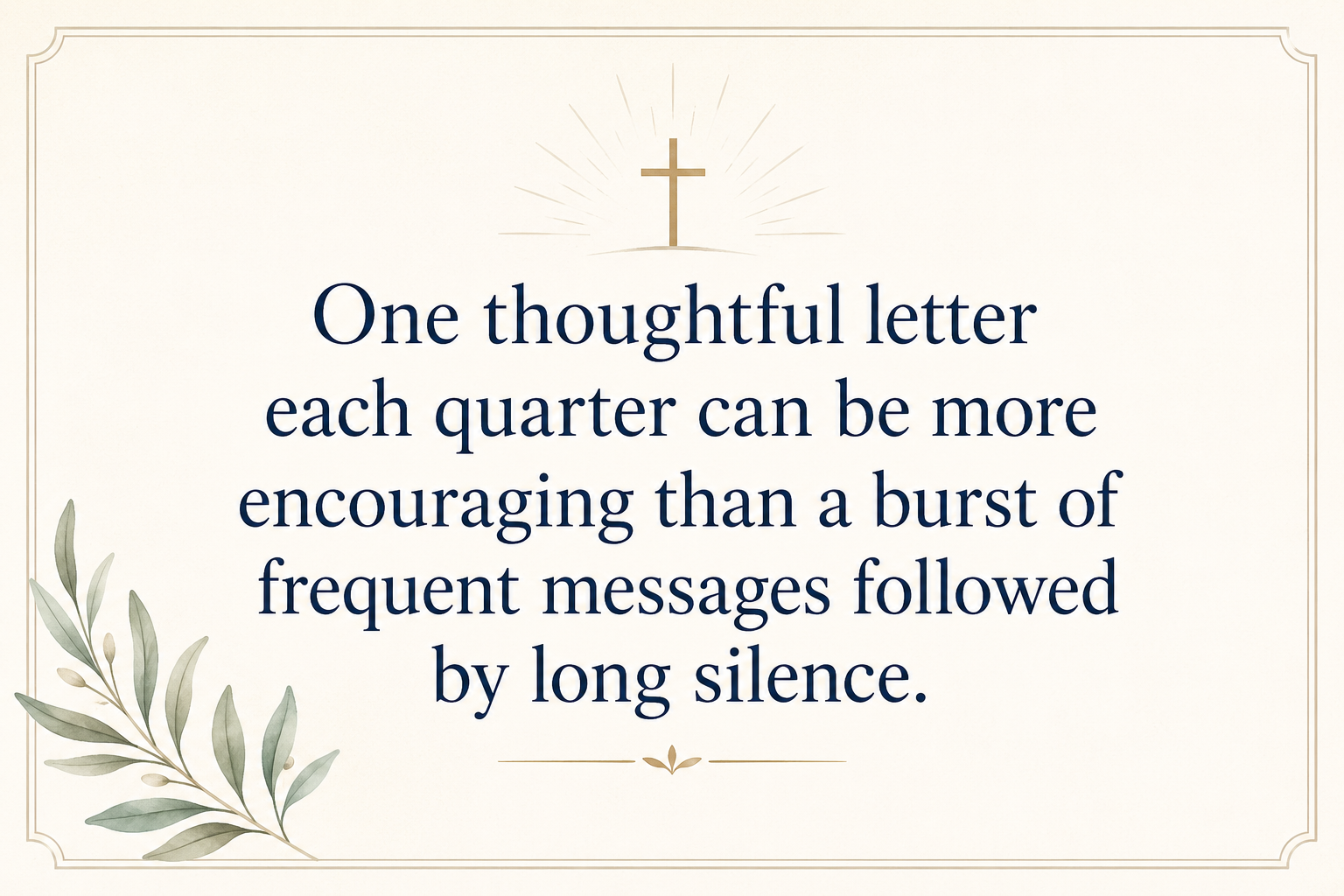
One thoughtful letter each quarter can be more encouraging than a burst of frequent messages followed by long silence. Consistency communicates reliability, and reliability is a form of love. Many ministries also have communication rhythms designed to protect children’s privacy and emotional wellbeing; honoring those rhythms is part of encouragement.
- Ask one or two specific questions a child can answer easily.
- Share a short Scripture that connects to perseverance, wisdom, or God’s care.
- Describe one concrete thing you are grateful for in your own life.
- Express interest in school, friendships, and church without interrogating.
- Promise what you can keep, and avoid promises you cannot control.
Donors who want more guidance on appropriate communication practices often benefit from reviewing the norms common across Communicating with Your Sponsored Child, since programs vary in how they handle translations, photos, and response letters.
Encourage in ways that protect a child’s safety and privacy
Encouragement must be joined to prudence. Sponsored children are minors, often living in vulnerable contexts. Even when a sponsor’s intentions are pastoral and sincere, disclosure can put a child at risk or create unwanted attention within a community.

Keep personal data out of letters and gifts
Many reputable ministries restrict direct contact information, social media connections, and personal addresses. These policies are not bureaucratic obstacles; they are child-protection practices. In our verification work at Most Trusted, we pay close attention to safeguarding controls because strong child protection is a moral requirement, not a public-relations feature.
Be careful with photos and public posts
It is understandable that sponsors want to celebrate the relationship. Yet posting a child’s photo, name, or location can violate privacy and, in some contexts, create safety risks. The better path is to honor the child’s dignity by treating their story as a sacred trust, not as content.
The broader sponsorship field has learned, sometimes painfully, that children can be commodified through fundraising narratives. Responsible ministries have had to reckon with these dynamics, refining policies around image use, consent, and communication. Donors can support this maturity by following program guidance even when it feels restrictive.
Give encouragement that strengthens agency, not dependency
Christian compassion can drift into a subtle paternalism: the sponsor as the capable adult and the child as the passive recipient. The When Helping Hurts framework, articulated by Steve Corbett and Brian Fikkert, has helped many Christian donors name this risk and pursue forms of help that preserve dignity and agency. Encouragement should reinforce that a child can learn, contribute, and lead, even now.
Ask about responsibilities, not only needs
Children often carry real responsibilities: caring for siblings, helping with household tasks, contributing to family income in age-appropriate ways, or supporting schoolwork. Asking about these responsibilities affirms competence. It also avoids the trap of treating a child primarily as a collection of needs.
Support long-term formation more than short-term consumption
Many sponsorship programs focus resources on education, health, nutrition, and spiritual formation. That is generally a stronger development approach than a steady stream of discretionary gifts. Some donors feel tension here because gifts can feel more personal than program funding. But a ministry’s disciplined focus on child development and family stability is often a sign of integrity.
For donors evaluating whether a sponsorship ministry’s model truly strengthens children over time, the conversations within Child Sponsorship Ministries can be useful, especially where programs integrate local church partnership, community development, and clear safeguarding practice.
Encouragement includes discerning the ministry’s credibility
Encouraging a sponsored child also includes encouraging the systems that protect that child. Donors sometimes treat verification as secondary to relationship, but mature stewardship holds both together. A ministry’s theology, governance, financial integrity, and transparency are not administrative details; they are the environment in which children are served.
What to look for in a trustworthy sponsorship program
Across our work at Most Trusted, the ministries that meet The Most Trusted Standard tend to treat sponsorship as one component of a broader child development strategy. They document how funds flow, they set boundaries around communication, and they explain how local staff and partner churches are accountable. They also acknowledge limits honestly: not every child’s circumstances improve quickly, and not every outcome is easily measured.
Transparency matters because child sponsorship has faced public scrutiny over the years, including questions about how sponsorship dollars are allocated and how programs describe the sponsor-child relationship. Some ministries assign sponsorship revenue to community programs rather than to a single child’s direct expenses; this can be legitimate and even preferable when disclosed clearly. The ethical issue is not pooling funds. The ethical issue is ambiguity.
Hold relationship and accountability together
A sponsor’s care should never become a substitute for institutional accountability. Encouragement that is spiritually faithful includes asking whether a ministry has clear child protection policies, independent oversight, and reporting that can be tested. For donors, this is part of loving a child in truth rather than in sentiment alone.
FAQs for How to encourage your sponsored child
Should we share the gospel directly in letters to our sponsored child?
Many Christian sponsors want to be explicit about Christ, and that desire can be faithful. The wiser question is how to do so in a way that respects the child’s context, the program’s safeguarding practices, and the local church’s discipling role. We recommend using Scripture and prayer naturally, avoiding manipulation or pressure, and aligning with the ministry’s guidance. Encouragement is strongest when it points to Christ’s steady care rather than using religious language to force a response.
Are gifts a good way to encourage our sponsored child?
Sometimes. Small, program-approved gifts can communicate thoughtfulness, but frequent or high-value gifts can create comparison, community tension, or dependency. Many ministries restrict gifts for these reasons. We recommend treating gifts as occasional and modest, and prioritizing the sponsorship model the ministry has designed for holistic development. The most durable encouragement is often steady support coupled with letters that affirm dignity, perseverance, and hope.
A steady form of love
Encouraging a sponsored child is not a sentimental exercise; it is a disciplined form of Christian love expressed across distance. When donors write with clarity, respect boundaries that protect children, and support credible ministries with transparent practices, encouragement becomes more than words. It becomes a steady witness that a child’s life is not overlooked, and that Christian generosity can be both tender and trustworthy.



