
How rescue missions address mental health and addiction has become one of the defining questions in homeless outreach, because the needs presenting at the door are rarely limited to a lack of housing. Many men and women arrive with layered trauma, untreated psychiatric illness, substance dependence, and spiritual disorientation that has been reinforced by years of loss. A donor who wants to love neighbor faithfully is right to ask not only whether a mission serves meals and beds, but whether it offers care that is clinically responsible, biblically grounded, and morally serious.
The public health landscape makes that question more urgent. In the most recent national count, the U.S. Department of Housing and Urban Development reported more than 770,000 people experiencing homelessness on a single night in 2024, a historically high level for the Point-in-Time estimate HUD. Numbers alone do not tell a full story, but they underscore that rescue missions are not operating at the margins; they are carrying weight in a system strained by housing costs, behavioral health gaps, and the fragmentation of community life.

Rescue missions face intertwined needs, not separate problems
Mental illness and substance use frequently co-occur
Donors sometimes inherit a false choice: fund “evangelism” or fund “treatment,” fund “beds” or fund “therapy.” On the ground, rescue missions encounter a reality where problems are braided together. The National Institute of Mental Health describes the prevalence of co-occurring mental health and substance use disorders and the clinical need for integrated approaches rather than siloed care National Institute of Mental Health. When missions treat addiction as merely a willpower issue, or mental illness as merely a spiritual issue, people are harmed and trust erodes.
What this means in practice is that a mission’s intake process, staff training, and referral network matter as much as its sermon schedule. The ministries that endure tend to do two things at once: they maintain a clear Christian account of the person as made in God’s image, and they accept that symptoms, cravings, and dysregulation can have medical and psychological dimensions that require competent care.
A Christian anthropology changes the posture of care
Scripture never reduces a person to a diagnosis or an addiction history. The Psalms speak with unusual candor about despair, sleeplessness, and fear; the Gospels show Jesus engaging embodied suffering without contempt. Rescue missions at their best hold together personal responsibility and compassionate realism: people are accountable moral agents, and they are also often wounded, impaired, and in need of patient rebuilding.
Christians genuinely disagree about the degree to which addiction should be described as disease, sin, trauma adaptation, or all of the above. Rescue missions that serve well usually refuse simplistic labels and instead build a disciplined pathway: safety, stabilization, community, and a plan that addresses both spiritual formation and behavioral health.
Effective missions combine triage, stabilization, and longer-term recovery
Crisis response is necessary but not sufficient
Emergency shelter is a work of mercy, but it is not a recovery plan. A person arriving intoxicated, psychotic, or suicidal may need immediate medical attention before any programmatic goals can be responsibly set. Missions with mature practice have clear protocols for overdose risk, psychiatric crises, and violence prevention, including when to involve emergency services and when to require a higher level of care than the mission can safely provide.
For donors, this is a place to ask practical questions without cynicism. Does the mission have written safety policies? Are staff trained in de-escalation? Is there a relationship with local hospitals, detox facilities, and mental health providers? The answers reveal whether the ministry understands the difference between compassion and improvisation.
Residential discipleship programs can create needed structure
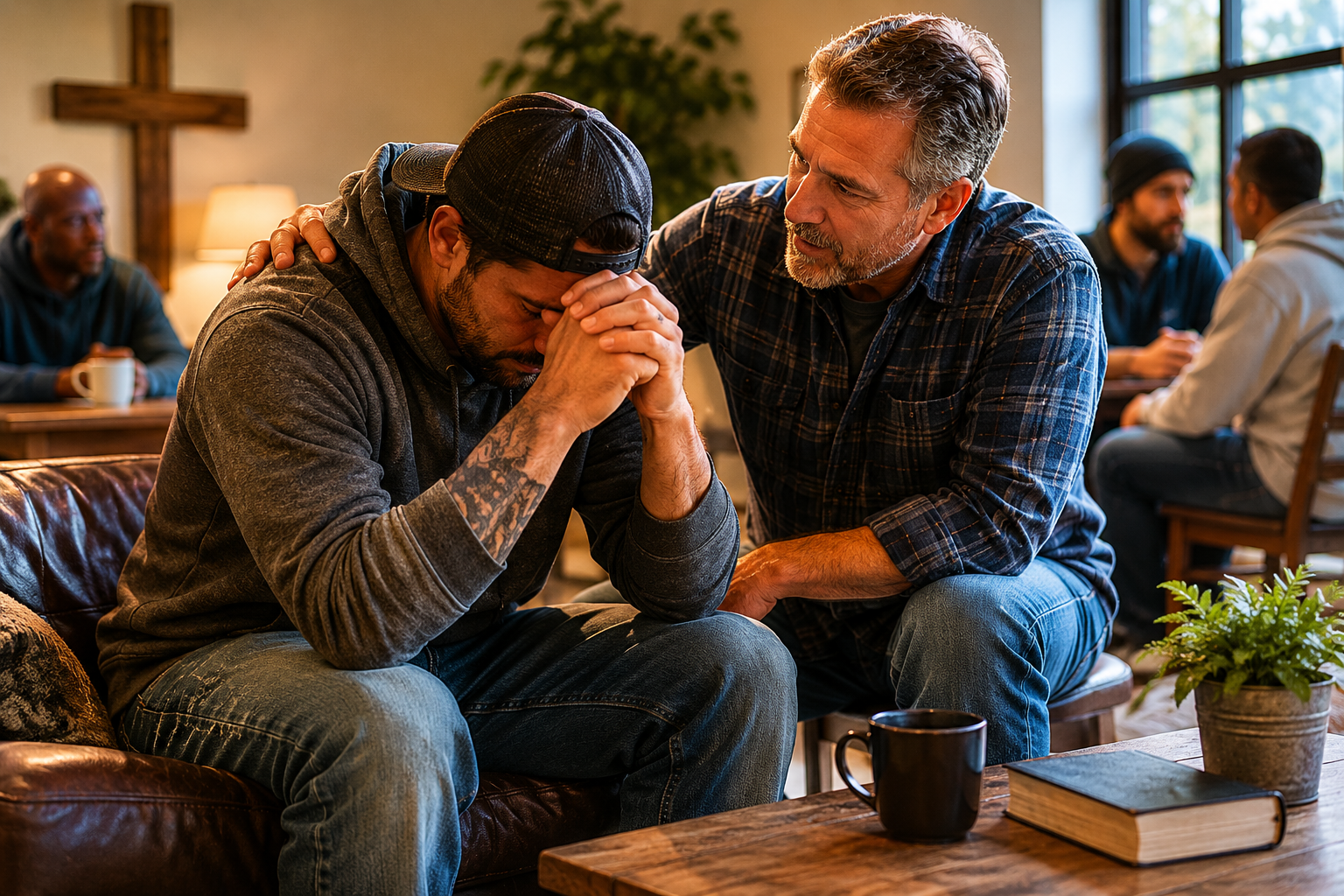
Many rescue missions operate longer-term residential programs that combine spiritual formation, work readiness, counseling, and community life. The best versions are not punitive boot camps and not permissive drop-in centers. They function more like structured communities of recovery: predictable rhythms, meaningful responsibilities, and relational accountability that counteracts the chaos of street life.
Across our verification work at Most Trusted, we observe that missions with consistent outcomes rarely promise instant transformation. They build staged progress: initial sobriety support, clinical screening, relapse-prevention planning, reconciliation where possible, and vocational steps that make housing stability more plausible. For readers tracking the broader field of Rescue Missions and Homeless Outreach, this staged design is one of the clearer markers of maturity.
Clinical care and spiritual care can be integrated with integrity
Evidence-based practices are a form of neighbor love
A mission does not have to become a hospital to take mental health seriously. It does need to be clear about what it can do responsibly and what requires licensed clinicians. Many missions rely on a combination of in-house counseling, partnerships with community mental health centers, and referrals to detox or medication management.
Integrated care often includes practices widely recognized in the field: screening tools at intake, trauma-informed approaches, group support, relapse prevention education, and coordination with medical providers when medication is involved. When missions treat medication as morally suspect, or treat therapy as spiritually irrelevant, they tend to push people into needless crisis cycles. A biblically faithful mission can affirm that God uses ordinary means, including medical treatment, without surrendering spiritual conviction.
Trauma-informed care aligns with a serious view of suffering
The language of trauma can be abused in secular settings as a blanket excuse for every harm. It can also be a truthful description of what repeated violence, neglect, and loss do to the nervous system and to a person’s capacity for trust. Missions that practice trauma-informed care typically emphasize safety, choice, consistency, and clear boundaries. That approach is not sentimental. It is an application of wisdom to the realities of fear, hypervigilance, dissociation, and shame.
Here donors should also name the tension: trauma-informed does not mean consequence-free. It means consequences are administered without humiliation and with an eye toward restoration. The goal is not to eliminate moral language; it is to apply it in a way that does not crush a bruised reed.
Accountability without coercion is where many programs succeed or fail
Program rules can protect the vulnerable or conceal harm
Residential programs require standards: sobriety expectations, curfews, work requirements, and community conduct. Those boundaries often protect residents who are newly stable. But rules can also become instruments of control when they are unclear, inconsistently enforced, or used to silence complaints. Donors do well to ask whether program expectations are written, whether there is an appeal process, and whether residents can report misconduct without retaliation.
This is one reason governance and transparency are not secondary concerns. In Christian ministry, we are not free to excuse poor oversight on the grounds of good intentions. Spiritual authority in a vulnerable setting must be restrained by accountable leadership.
What donors can reasonably look for
When we assess ministries against The Most Trusted Standard, we are not searching for perfection. We are looking for signals that care is responsible and that vulnerable people are treated as neighbors, not projects. The following markers tend to separate credible recovery work from well-meant but unstable practice:
- Clear program model that distinguishes emergency shelter, transitional support, and longer-term recovery
- Clinical partnerships or licensed staff for mental health assessment, detox referral, and medication coordination
- Documented safeguarding policies and pathways for grievances
- Measured outcomes that reflect both stability and long-term discipleship realities
- Financial reporting that makes restricted gifts, program costs, and fundraising practices understandable
The harder question is how a mission speaks about relapse. If every relapse is treated as spiritual failure, residents will hide and spiral. If relapse is treated as inevitable and morally neutral, residents will not be pressed toward change. The strongest programs take relapse with full seriousness: they respond quickly, protect the community, and re-engage the individual with a revised plan rather than a blanket shame response.
Trustworthy donor support requires clarity on outcomes and claims
Outcomes should be honest, not heroic
Addiction and serious mental illness are chronic for many people, even with excellent care. A mission that claims near-total graduation rates or dramatic, immediate transformation may be relying on selective reporting or narrow definitions of success. More credible reporting acknowledges attrition, relapse, and the long timelines required for rebuilding relationships, employment history, and stability.
That does not mean outcomes are impossible to measure. It means the metrics should fit the reality: sobriety milestones, housing stability at follow-up points, employment retention, reconnection with family where appropriate, and participation in ongoing community. Donors should also value qualitative integrity: stories that are offered with consent, without exploitation, and without implying that one person’s path is universal.
Verification serves both donors and the people being served
Most Christian donors are not looking for a ministry that merely “does something.” They are seeking a faithful steward: a mission that proclaims the gospel without manipulation, manages funds without confusion, and serves vulnerable neighbors without avoidable harm. This is the practical reason independent verification exists. Most Trusted evaluates ministries against The Most Trusted Standard across faith foundation, financial integrity, governance and leadership, and transparency and effectiveness, because these are the areas where both spiritual credibility and program reliability tend to rise or fall together.
For donors who want a wider view of how ministries operate within Faith-Based Programs in Homeless Outreach, it helps to remember that rescue missions are one expression of a larger ecosystem. Some organizations specialize in clinical treatment, others in housing placement, others in street outreach. Missions often function as a front door, and the strength of their partnerships can matter as much as their internal services.
FAQs for How rescue missions address mental health and addiction
Should a rescue mission require participation in Christian programming to receive shelter?
Christians genuinely disagree about the best model. Some missions separate emergency shelter from discipleship programming to ensure immediate safety without coercion. Others integrate spiritual practices into the daily rhythm of residential recovery programs, arguing that spiritual formation is part of healing. Donors should look for clarity and consent: transparent expectations, meaningful alternatives for those in crisis, and a posture that proclaims Christ without exploiting vulnerability.
What should donors ask about medication and clinical treatment in a faith-based recovery program?
Donors can ask whether the mission has licensed clinical oversight or established partnerships for psychiatric evaluation, detox, and medication management. A responsible mission will neither shame residents for appropriate treatment nor act as if medication alone resolves the deeper needs of repentance, reconciliation, and community. The question is not whether the program is “spiritual” or “clinical,” but whether it handles both domains with competence and moral seriousness.
Conclusion
How rescue missions address mental health and addiction is ultimately a question about faithful realism: whether a ministry can hold together the gospel’s promise of new life with the patient disciplines required for recovery. Donors serve both the mission and its guests when they fund programs that are clear about their limits, serious about clinical competence, and transparent about outcomes. The ministries most worthy of confidence tend to be those that refuse simplistic answers, and instead build communities where mercy is structured, truth is spoken without cruelty, and stewardship is practiced in the open.



