
How prison discipleship reduces recidivism is not primarily a question of technique; it is a question of what kind of formation can withstand the pressures that made prison likely in the first place. When Christian ministries speak credibly about lower returns to incarceration, they are usually describing sustained moral and relational change, not a moment of inspiration.
For Christian donors, the stakes are both spiritual and public. Scripture names those in prison as neighbors to be visited (Matthew 25:36), and the practical consequences of release without formation are measurable. The U.S. Bureau of Justice Statistics reported that about 68% of released prisoners were arrested within three years and about 83% within nine years in a major multi-state follow-up study; this is the landscape prison ministries enter, and it should discipline our expectations about quick results (Bureau of Justice Statistics).
Recidivism is a discipleship problem before it is a program problem
The patterns that lead to prison rarely dissolve at the gate
Most reentry failures are not caused by a single bad decision. They are driven by layered realities: addiction, untreated mental illness, fractured family systems, shame, antisocial peer networks, and the economic damage of a record. A ministry that reduces recidivism has to contend with that stack honestly. Discipleship, at its best, is precisely the kind of long-range formation that can engage the whole person rather than the presenting crisis.
Christians sometimes speak of incarceration as a consequence of individual sin, and it can be. Yet mature prison ministry also recognizes the weight of trauma and social dislocation. A theology that can name both human moral agency and the distortion of the world by sin’s structures tends to produce ministries that are firm about repentance while also patient, compassionate, and realistic about relapse and regression.
What Scripture means by transformation is more than behavior management
Paul’s language for change is not merely compliance. He speaks of new creation (2 Corinthians 5:17) and the renewal of the mind (Romans 12:2). In carceral settings, where surveillance and incentives can produce performative behavior, this distinction matters. A Bible study that functions as a coping skill can be helpful; prison discipleship that aims at truthful confession, repaired relationships, and a life under Christ’s lordship reaches deeper.
What this means in practice is that the strongest prison discipleship programs are not built around charisma. They are built around Scripture, sacramental life where possible, accountable community, and clear moral teaching. They assume that men and women can change because God changes people, and they assume that change is normally mediated through disciplined practices over time.
How prison discipleship works on the drivers of reoffending
Identity, belonging, and accountability are practical risk factors
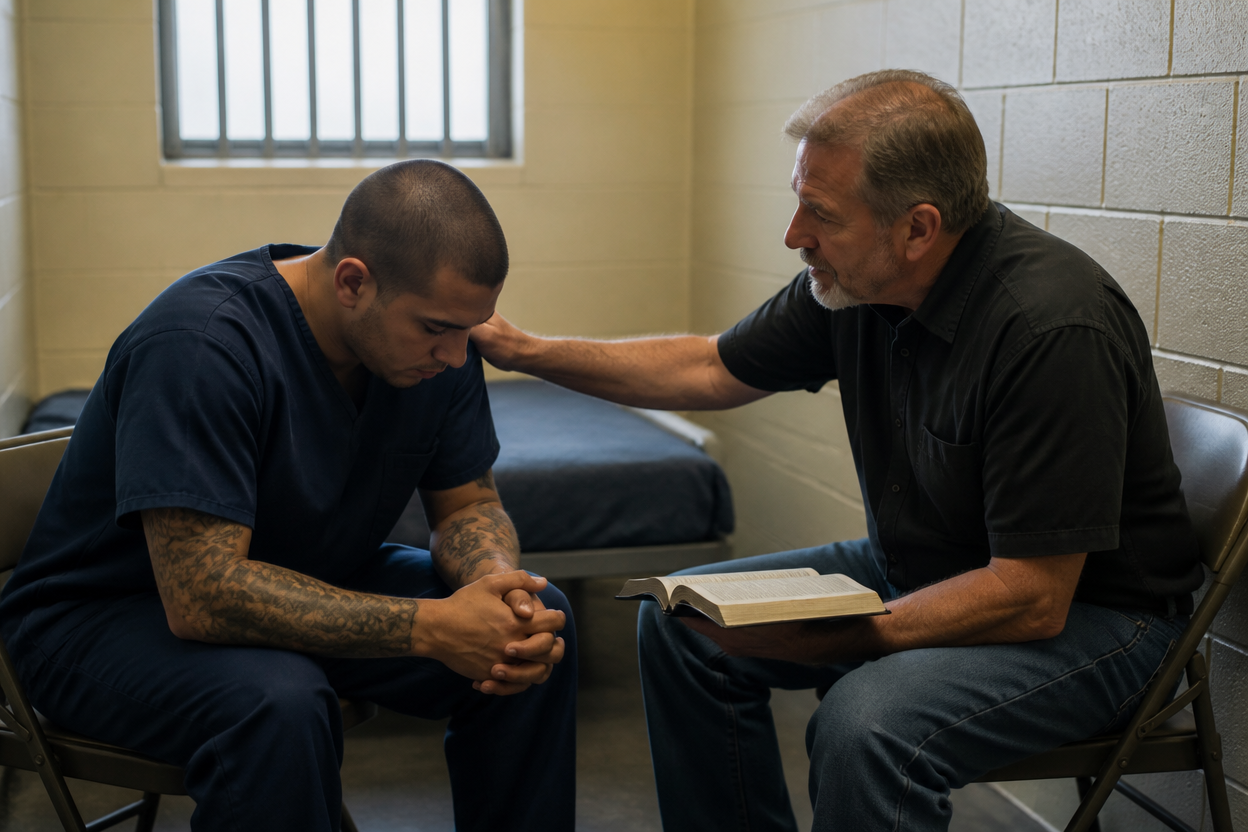
Criminology has long recognized that desistance from crime often correlates with identity shift and new social bonds. Christian discipleship addresses both directly. It offers a coherent identity not grounded in the prison hierarchy or a criminal record but in union with Christ, and it relocates belonging into a community that can outlast incarceration.
That belonging has to be tangible. Programs that connect incarcerated people to trained volunteers, local churches, and post-release mentors are not merely offering friendship; they are changing the person’s relational environment. When those relationships are structured with accountability, they also interrupt the isolation where temptation and anger often grow unchecked.
Spiritual formation intersects with practical reentry needs
Some donors worry that discipleship sounds like “spiritual talk” detached from life skills. The better ministries refuse that false choice. They treat work, family, sobriety, and citizenship as moral arenas where discipleship must take concrete form. When a returning citizen shows up on time, tells the truth about a relapse, pays restitution, or submits to supervision without resentment, those are not merely compliance behaviors; they are fruit consistent with repentance.
We also recommend that donors remember what the best reentry research reinforces: employment and housing stability are protective factors, but they are often downstream of character, relationships, and perseverance. A ministry that can help a person endure frustration, delay gratification, and accept correction without violence is indirectly affecting the same outcomes donors care about.
What credible evidence can and cannot tell donors
The strongest findings show association, not automatic causation
Faith-based programming has been studied for decades, and the results are not uniformly simple. Some studies suggest lower recidivism among participants, but selection effects are real: people who opt into religious programs may already be more motivated to change. Wise donors resist triumphal claims and look for careful evaluation designs, appropriate comparison groups, and transparency about limitations.
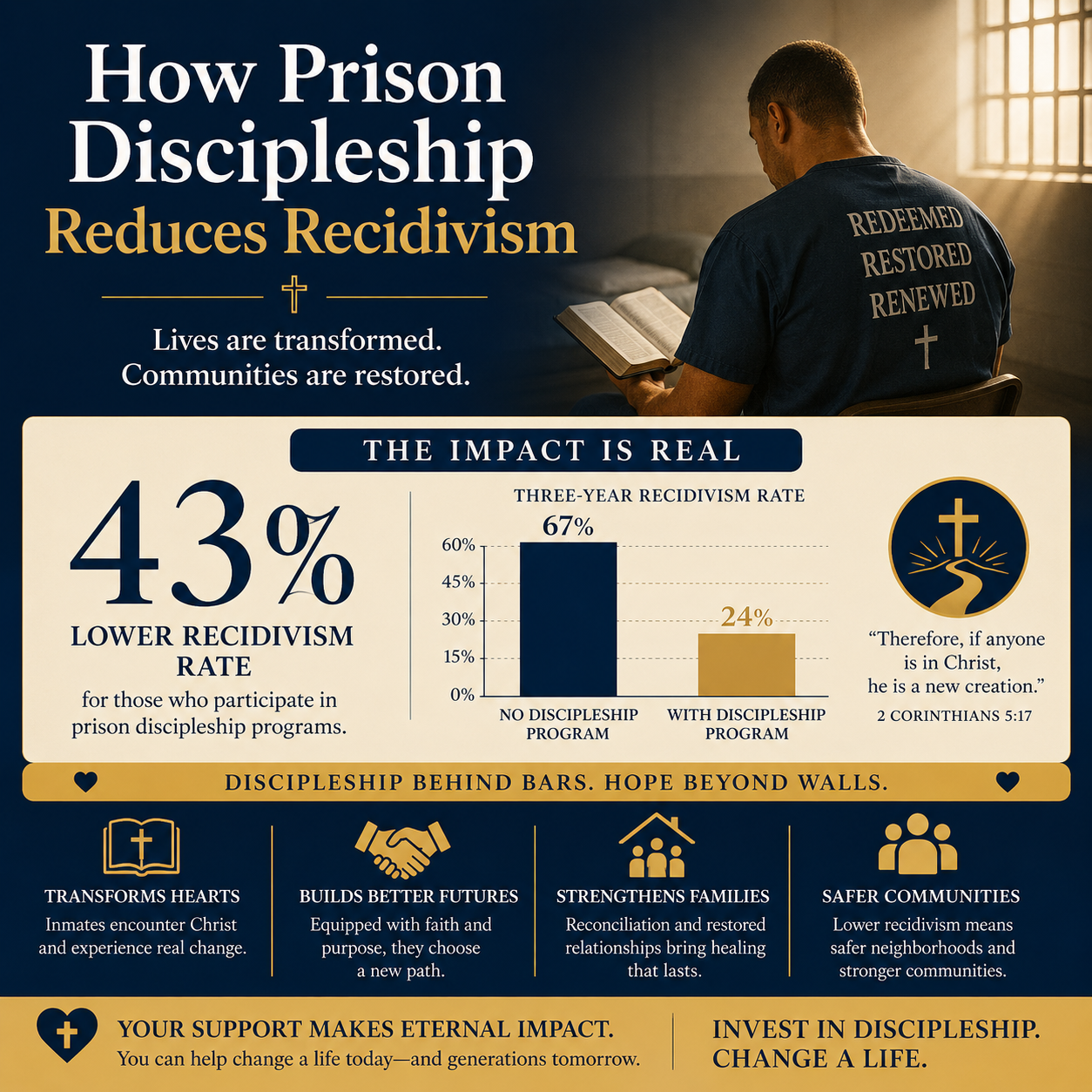
Still, there is credible evidence that well-implemented programs can correlate with improved outcomes. A frequently cited study of the InnerChange Freedom Initiative reported lower recidivism among program participants compared with matched comparison groups, while also noting the importance of post-release support and the limits of what the data can prove (RAND Corporation).
Reduction is not the only outcome that matters
Recidivism is an important public metric, but it is not the only Christian metric. A man who does not return to prison but continues to exploit family members is not a success in any deep sense. Conversely, a woman who returns to prison after a relapse may still be on a genuine trajectory of repentance that requires longer time horizons than a grant cycle can capture.
This is where donor discernment becomes theological. Scripture teaches that some seed bears fruit “thirtyfold and sixtyfold and a hundredfold” (Mark 4:8), and the parable itself is an argument for patience and realism. A ministry’s task is faithfulness with wise stewardship; God’s work is ultimately not reducible to a single metric.
What to look for in a prison discipleship ministry worth funding
Signals of depth rather than publicity
Across our verification work at Most Trusted, we observe that ministries that are serious about reducing recidivism tend to be equally serious about ecclesiology and ethics. They know what church they are trying to connect people to after release. They train volunteers carefully. They protect the vulnerable. They do not treat incarcerated people as content for fundraising.
Donors can ask a short set of questions that reveal whether a ministry’s discipleship is substantive:
- Does the program provide structured, sequential discipleship rather than only occasional services?
- Are mentors trained in boundaries, trauma awareness, and basic reentry realities?
- Is there a clear plan for post-release church connection and ongoing accountability?
- Does the ministry coordinate appropriately with chaplains, supervision requirements, and facility rules?
- Are outcomes reported with humility, including definitions and timeframes?
Alignment with The Most Trusted Standard
Because prison ministry can be emotionally compelling, it can also attract uneven leadership and thin reporting. The Most Trusted Standard exists to help donors distinguish between sincere storytelling and demonstrable credibility. In our view, donors should expect clarity on doctrinal commitments, careful financial oversight, and governance that can withstand the pressures unique to correctional environments.
Transparency is not a bureaucratic preference; it is a moral practice. When a ministry is handling restricted access, volunteer contact with vulnerable people, and sometimes public funds, it owes donors and churches a high standard of truthfulness. Those who want a broader view of the field can begin with Prison and Post-Prison Ministries, where we track how ministries describe their work and how donors can evaluate it with spiritual seriousness.
Why post-release continuity determines whether discipleship endures
The first ninety days expose the fragility of change
Even where prison discipleship is strong, the transition home is a theological and practical crucible. Old neighborhoods, strained marriages, parole requirements, and social media contact with former associates can collapse hard-won stability quickly. Programs that reduce recidivism treat release not as graduation but as a change in mission field.
Continuity typically requires partnerships: churches willing to receive returning citizens, employers willing to take risk, and mentors who can stay present when progress stalls. Donors sometimes underfund this unglamorous work because it produces fewer dramatic stories than prison services. In reality, it is where the discipleship claim is tested.
A church-shaped reentry is different from a service network
Social services matter. Yet discipleship is ultimately ecclesial. The New Testament assumes a people, not merely a provider. When returning citizens are known by name, expected to forgive, corrected when they lie, and invited to serve, the community itself becomes part of the mechanism that reduces reoffending.
Christians genuinely disagree about how to balance grace with safety, especially when offenses involve violence or sexual harm. Serious ministries do not evade that tension. They develop safeguarding policies, respect legal restrictions, and communicate honestly with churches about appropriate roles and boundaries. Those seeking ministries focused specifically on evangelism and outreach in correctional settings can also explore Faith-Based Prison Outreach and Evangelism.
FAQs for How prison discipleship reduces recidivism
Does prison discipleship reduce recidivism more than secular reentry programs?
The evidence does not support a universal ranking across all contexts. Some faith-based programs show promising associations with reduced recidivism, and some secular programs are highly effective, especially when they address addiction and employment. Donors should look for ministries that can explain their theory of change clearly, partner wisely with evidence-based services, and report outcomes with appropriate caution about what their data can prove.
What should donors fund if they want the greatest long-term impact?
Funding that bridges incarceration and reentry often has the highest leverage: trained mentors who continue after release, partnerships with local churches, transitional housing where appropriate, and case management that helps people comply with supervision while pursuing stable work. Donors should also prioritize ministries that demonstrate strong governance, financial integrity, and transparent reporting consistent with The Most Trusted Standard.
A donor’s role in durable change
Prison discipleship reduces recidivism when it forms a different kind of person and sustains that formation through the vulnerabilities of reentry. That work is slow, often hidden, and frequently contested by simplistic narratives on both sides of the political divide. Christian donors can strengthen what is faithful by funding ministries that tell the truth about the difficulty, honor the church’s responsibility to receive repentant sinners wisely, and demonstrate accountability worthy of the gospel they proclaim.



