

How prison chaplain partnerships extend donor impact is not primarily a question of efficiency. It is a question of spiritual authority, institutional access, and durable presence in places most churches cannot enter consistently. Donors who care about prison ministry often assume the decisive variable is the quality of the visiting volunteer. In practice, the decisive variable is frequently the chaplaincy office: who is allowed in, what is permitted, and whether the ministry can remain when leadership changes and policies tighten.
Jesus placed prison visitation alongside feeding the hungry and welcoming the stranger (Matthew 25:36). That command does not erase the realities of correctional systems: security concerns, trauma histories, gang dynamics, contraband risks, and the power differentials that shape every conversation behind the fence. Mature donors want ministry that honors Scripture without romanticizing prisons or treating incarcerated people as projects. Chaplain partnerships, when rightly structured, can help a ministry stay present, accountable, and pastorally responsible in a setting that is easy to misunderstand from the outside.
Why chaplain partnerships matter inside a closed institution
Access is not a tactic, it is stewardship
Prisons are not public forums; they are controlled environments. Chaplains serve as religious program administrators and gatekeepers for outside faith groups, and their decisions shape whether programming is orderly, safe, and consistent. When a ministry builds a credible partnership with the chaplaincy office, donor dollars tend to translate into reliable access: scheduled groups, approved materials, designated spaces, and continuity amid operational disruptions.
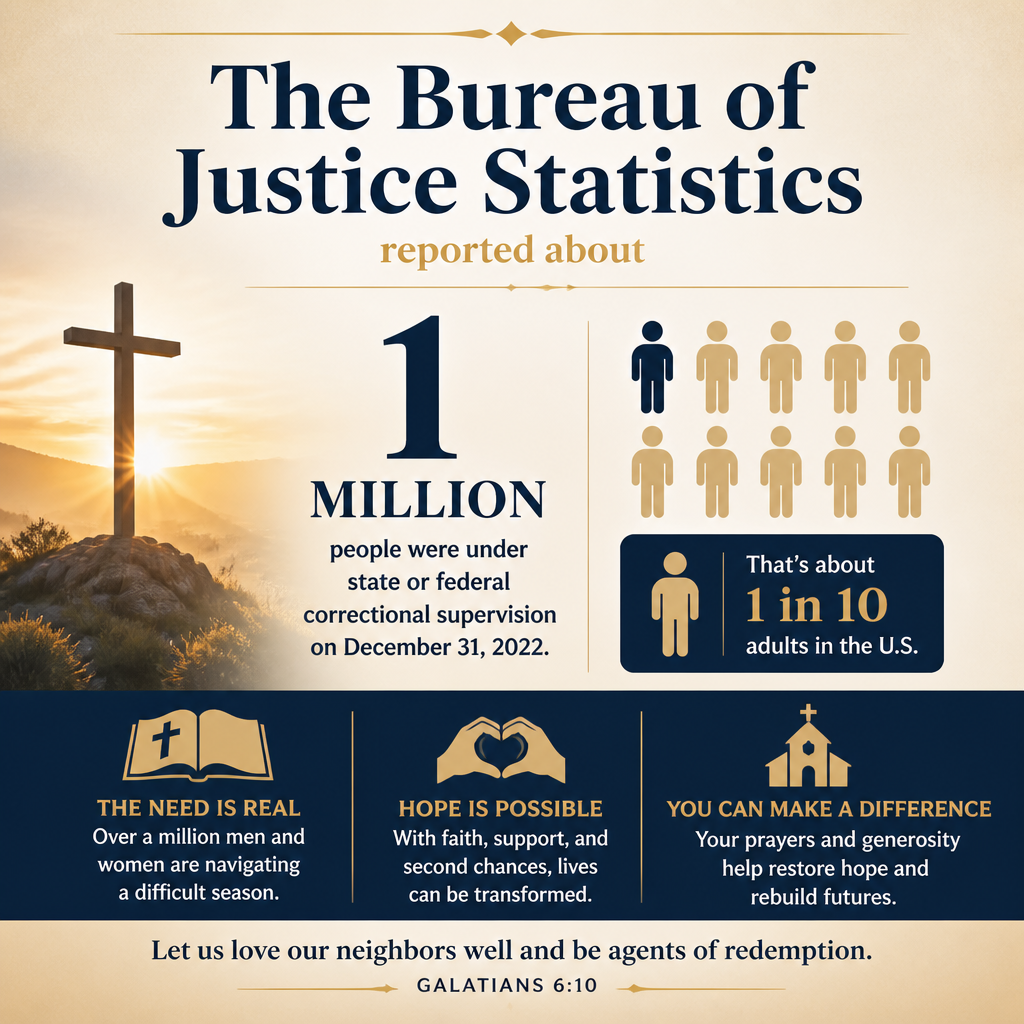
This matters because the incarcerated population is large, and the spiritual need is not marginal. The Bureau of Justice Statistics reported about 1.2 million people incarcerated in state prisons in 2022, with additional populations in federal prisons and jails; the scale alone makes sporadic, uncoordinated ministry inadequate for the task (Bureau of Justice Statistics). Chaplain partnerships are one of the few ways to move from occasional visits to sustained pastoral presence.
Chaplains bring institutional knowledge most volunteers do not have
Even seasoned Christians can underestimate how quickly prison dynamics shift. A chaplain knows which units are volatile, which times of day are workable, which groups have recent conflicts, and which men or women are under restrictions that make certain interactions unwise. Donor-funded ministry that ignores this knowledge can unintentionally increase risk for incarcerated participants and for volunteers.
What this means in practice is that strong partnerships reduce preventable failure: canceled services, misunderstandings with custody staff, or programming that is technically permitted but pastorally irresponsible. Donors often ask how to avoid “performative” prison ministry. One answer is to fund ministries that submit their plans to the wisdom of those tasked with pastoral care inside the facility every day.

What donor impact looks like when partnerships are healthy
Consistency that outlasts individual personalities
Many prison ministries are built around a charismatic leader or a gifted teaching team. Those gifts are real, but prisons are not stable environments for personality-driven work. Transfers, lockdowns, staffing shortages, and leadership changes can dismantle a program that depends on informal permission. Chaplain partnerships create an institutional memory: agreed expectations, written approvals, and rhythms that can survive turnover.
For donors, this is a form of risk management that aligns with Christian stewardship. The parable of the talents assumes that wise servants account for what they are entrusted with. A donor’s responsibility is not only to give, but to give with discernment about what will endure.
Better alignment between evangelism and care
Christians genuinely disagree about emphasis: some prioritize proclamation and decision, others emphasize long-term discipleship and reentry support. Chaplains often insist, rightly, that programs be clear about their aims and respectful of the diverse religious landscape inside a prison. A thoughtful partnership can help a ministry articulate its Christian commitments without coercion or confusion.
The result is often better ministry: evangelism that is explicit rather than manipulative, discipleship that accounts for trauma, and pastoral care that acknowledges the complexity of mental illness, addiction, and grief. Donor impact is not merely “more attendees.” It is a higher likelihood that participants receive teaching and care that is both faithful and appropriate to the setting.
How chaplain partnerships extend impact beyond the prison gate
Reentry planning works when it is coordinated
Post-prison life is often where good intentions fail. Housing constraints, employment barriers, parole conditions, and strained family relationships can overwhelm early spiritual enthusiasm. The best prison ministries treat reentry as part of pastoral care rather than an optional add-on. Chaplains can help identify who is nearing release, what programming is permitted for pre-release preparation, and which community partners are credible.
Donors should also understand the recidivism context without turning it into a simplistic scoreboard. The Bureau of Justice Statistics tracked a large cohort of released state prisoners and found substantial re-arrest rates over time, underscoring how persistent the challenge is (Bureau of Justice Statistics). The point is not to promise outcomes a ministry cannot control, but to fund approaches that address the actual pressures returning citizens face.
Families and churches become part of the care plan
Healthy chaplain partnerships often help ministries move from isolated programming to coordinated support that includes families, mentors, and local congregations. That coordination can protect against two common errors: neglecting family systems entirely, or assuming reconciliation is always immediate and safe. Chaplains frequently know the institutional history and can caution against well-meant but harmful reunification pressure.
For donors exploring the broader landscape of Prison and Post-Prison Ministries, the key question is whether a ministry treats the incarcerated person as embedded in relationships that require patient, accountable care. Partnerships that honor that reality tend to produce more durable fruit than programs that treat the prison event as the whole story.
Due diligence donors should apply to prison chaplain partnerships
Ask for evidence of permission, accountability, and boundaries
Prison ministry can be vulnerable to exaggerated claims because most supporters cannot easily verify what happens inside. Mature donors do not assume misconduct; we assume the need for clear controls. Strong ministries can usually describe their relationship with the chaplaincy office in concrete terms: written approval processes, volunteer clearance, training expectations, and policies for contact outside prison.
A practical set of questions donors can ask includes:
- Is the ministry formally approved by the facility or department, and can it describe the approval process?
- How are volunteers trained in prison rules, trauma awareness, and appropriate spiritual authority?
- What boundaries govern communication, financial assistance, and mentoring relationships after release?
- How does the ministry respond to lockdowns, cancellations, or staff changes without becoming adversarial?
- How are incidents reported, documented, and reviewed with the chaplaincy office?
Look for honesty about outcomes, not promises
The field has had to reckon with the harm caused by overstated impact claims. Some ministries reduce “success” to professions of faith; others reduce it to recidivism reduction. Both can be inadequate. Scripture teaches that God gives the growth (1 Corinthians 3:6–7), yet donors are still responsible to fund programs that are competently managed and truthfully reported.
Across our verification work at Most Trusted, we observe that ministries aligned with The Most Trusted Standard tend to be specific about what they control and what they cannot: the number of services delivered, Bibles or studies distributed where permitted, participation rates tracked with chaplain approval, and the quality of volunteer oversight. They are also clear about limitations: transfers disrupt discipleship; mental illness can complicate participation; and facility policy can change quickly.
How Most Trusted evaluates prison ministries that partner with chaplains
Verification requires both theological clarity and operational competence
Christian donors often feel forced to choose between “deeply biblical” and “well run.” That is a false choice. A ministry that preaches Christ while mishandling funds, governance, or safeguarding is not merely inefficient; it is a stewardship failure that can discredit the gospel before watching eyes.
The Most Trusted Standard evaluates ministries across faith commitments, financial integrity, governance practices, and transparency in reporting. In the prison context, we pay particular attention to whether a ministry can describe its chaplain partnership without vagueness: who approves entry, how volunteers are supervised, how participant data is handled, and how the ministry avoids quid pro quo dynamics that can exploit incarcerated people.
Donor impact grows when trust is earned, not assumed
The stronger the chaplain partnership, the more likely the ministry is to have credible documentation: schedules, memoranda of understanding where applicable, volunteer rosters, training materials, and clearly stated pastoral aims. That documentation is not bureaucracy for its own sake. It is what protects incarcerated participants, correctional staff, volunteers, and donors from avoidable harm.
Donors who want to understand how different programs deploy resources can also review How Prison Ministries Use Donor Gifts and compare how ministries fund chaplain coordination, volunteer training, materials distribution, and post-release mentoring. The pattern we recommend is straightforward: fund what produces faithful presence over time, with clear oversight and honest reporting.
FAQs for How prison chaplain partnerships extend donor impact
Do chaplain partnerships limit a ministry’s ability to preach the gospel?
They can, depending on the facility and jurisdiction, but limits are not always hostility to Christianity. Chaplains are responsible for order, safety, and equitable access for different faith groups, and prisons often require that programming be clearly defined and non-coercive. Strong ministries can usually articulate the gospel plainly within those boundaries, while also providing pastoral care that respects the realities of incarceration and the dignity of the participant.
What is a responsible way for donors to measure impact in prison chaplain partnerships?
Responsible measurement starts with what can be verified: frequency of services and groups, consistency of volunteer staffing and training, documented approval to operate, and transparent accounting of how funds are used. Outcome claims should be made carefully. Recidivism, for example, is shaped by housing, employment, supervision conditions, and family systems as much as by spiritual formation. Donors can ask ministries to report outcomes they can credibly track, while also looking for qualitative evidence of sustained discipleship and reentry support that is coordinated with chaplaincy and community partners.
A partnership model that honors stewardship and mercy
How prison chaplain partnerships extend donor impact becomes clear when donors stop thinking of chaplains as mere gatekeepers and start recognizing their pastoral and institutional role. A credible partnership stabilizes access, strengthens safeguarding, and increases the likelihood that a ministry remains present when prisons become less convenient and more complicated. For Christian donors, that is not a secondary administrative detail. It is part of what it means to visit those in prison with fidelity, humility, and accountable love.



