

How matching gifts work for biblical museum ministries is not a fundraising trick; it is a structured invitation for donors to multiply what they already intend to give. For Christian donors, the question is not only whether a match increases impact, but whether it strengthens faithful stewardship, truthful reporting, and long-term ministry health.
Biblical museums sit at an intersection of evangelism, scholarship, and public witness. They can be deeply fruitful, and they can also be misunderstood or politicized. Matching gifts can help stabilize revenue for exhibitions, conservation, and educational programming, but they also introduce real accountability questions: who is offering the match, what restrictions govern it, and how the ministry reports results.
Matching gifts are a stewardship tool with specific rules
What a matching gift is and what it is not
A matching gift is a second contribution that is triggered by a donor’s first gift, typically provided by an employer, a private foundation, or an individual major donor. The match is usually contingent on documentation: the donor gives, submits a matching request, and the matcher confirms eligibility and sends funds to the same nonprofit.
The match does not usually change the purpose of the original gift. If a donor gives to a biblical museum’s general fund, the match typically follows to the same organization, sometimes to the same designation. But match terms can also be narrower: a matcher may restrict funds to education, collections care, or a specific exhibition. Those restrictions are not inherently problematic; they simply require the museum to track and report appropriately.
What this means for biblical museum budgets
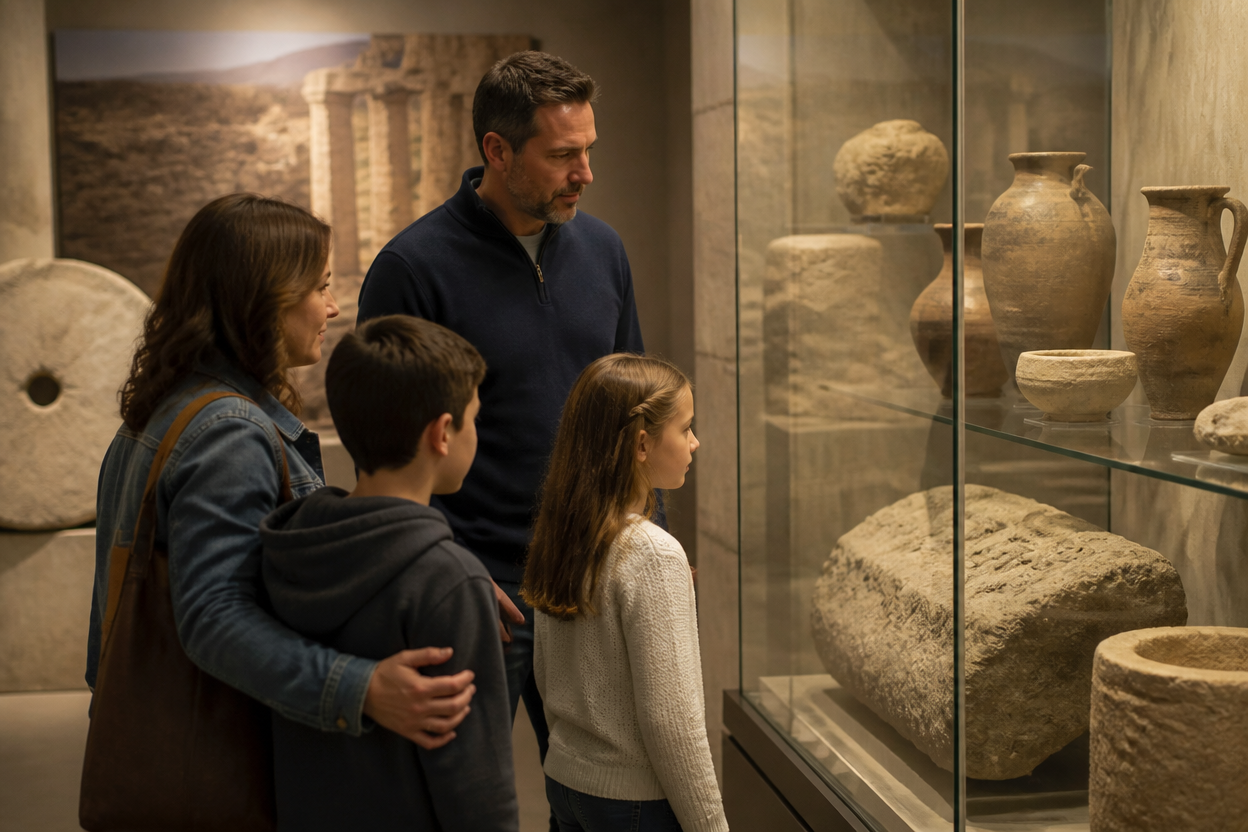
Biblical museum ministries often carry a cost structure that donors do not see: climate-controlled storage, specialized conservation, exhibit fabrication, security, insurance, and the steady staffing required for school programs and visitor engagement. A well-run matching initiative can underwrite those ongoing needs without forcing the ministry into short-term, event-driven fundraising.
Many donors assume “free admission” or “family-friendly ticket prices” means the museum is financially simple. The reality is that museums, including faith-based museums, are capital- and expertise-intensive. Matching gifts can help bridge the gap between public-facing accessibility and the back-of-house costs that make faithful stewardship possible.
Employer matching is the most common pathway and the least understood
How employer matching typically works
Employer matching programs vary, but the dominant pattern is straightforward: the donor gives to an eligible nonprofit, files an online match request, and the employer sends an additional gift after verification. Eligibility rules may include nonprofit status, minimum and maximum match amounts, and exclusions for certain types of organizations.
Many matching programs are underused. A widely cited figure in the fundraising field is that billions in eligible matching funds go unclaimed each year. One commonly referenced estimate is $4–$7 billion in unclaimed matching gifts annually, reported in Double the Donation’s matching gift research https://doublethedonation.com.
Why biblical museum ministries can be eligible yet overlooked
Some donors assume a biblical museum is “too religious” to qualify for employer matches. In practice, many companies match gifts to a broad range of 501(c)(3) organizations, including explicitly faith-based nonprofits, though some exclude religious instruction or churches. Museums that are separately incorporated as educational nonprofits often qualify even when a donor’s local church would not.
For donors, the discipline is simple: verify eligibility rather than guessing. For ministries, the discipline is equally clear: make the process easy, accurate, and respectful—without turning worshipful generosity into transactional pressure.
Major-donor matches can strengthen a museum or distort it
Two common models for major-donor matching
Major-donor matches typically arrive in one of two forms. First, a challenge grant: a donor pledges to match gifts up to a stated amount within a defined period. Second, a conditional grant: a donor releases funds once the museum demonstrates progress toward a goal, such as raising a certain amount for an exhibit or endowment.
Both can be wise. Both can also become a subtle form of control if the museum’s leadership is not clear about mission, governance boundaries, and what it will not do for money. Mature donors understand this tension. Museums exist to serve the truth, not to flatter benefactors.
Questions Christian donors should ask before celebrating a match
Matching campaigns can create urgency, and urgency can blur judgment. A match is a multiplier, not a moral seal of approval. Before giving, donors should be able to answer several questions without relying on vague assurances.
- Who is providing the match, and is the source appropriate for the ministry’s witness?
- Is the match restricted, and if so, does the restriction fit the museum’s stated priorities?
- Is the match truly “new money,” or is it a pre-committed gift being counted as contingent?
- How will the museum receipt and report matching funds in its financial statements?
- What happens if the match goal is not met—does any portion still get paid?
These are not suspicious questions. They are stewardship questions. Scripture commends both generosity and prudence: “The simple believes everything, but the prudent gives thought to his steps” (Proverbs 14:15). Matching gifts reward thoughtfulness, not naiveté.
Verifiable reporting is where matching campaigns often fail
Common reporting problems we see across ministry fundraising
Across our verification work at Most Trusted, we observe that fundraising integrity often breaks down not at the point of solicitation, but at the point of reporting. Matching gifts can tempt ministries to inflate impact language: “Your gift becomes double today,” even when the match is not guaranteed, not immediate, or not actually tied to the donor’s designation.
Another recurring issue is double counting. A museum may report “$500,000 raised” during a campaign and include both donor gifts and matching commitments in the same number, without clarifying whether the match has been received, pledged, or merely potential. This is rarely criminal; it is often sloppy. But sloppiness corrodes trust, and biblical institutions should be allergic to it.
How The Most Trusted Standard clarifies what good looks like
The Most Trusted Standard is our 15-criteria framework for evaluating Christian nonprofits across four areas: Faith Foundation, Financial Integrity, Governance and Leadership, and Transparency and Effectiveness. Matching gifts touch all four. A ministry can be theologically clear and still mishandle restricted funds. It can be financially solvent and still communicate in ways that are misleading. This is why verification must be multidimensional.
For donors seeking deeper due diligence on the broader landscape of Biblical Museum Ministries, the key is not only asking whether a museum attracts visitors, but whether it tells the truth about money, outcomes, and claims. Museums are public-facing institutions. When their financial and interpretive credibility weakens, their witness weakens with it.
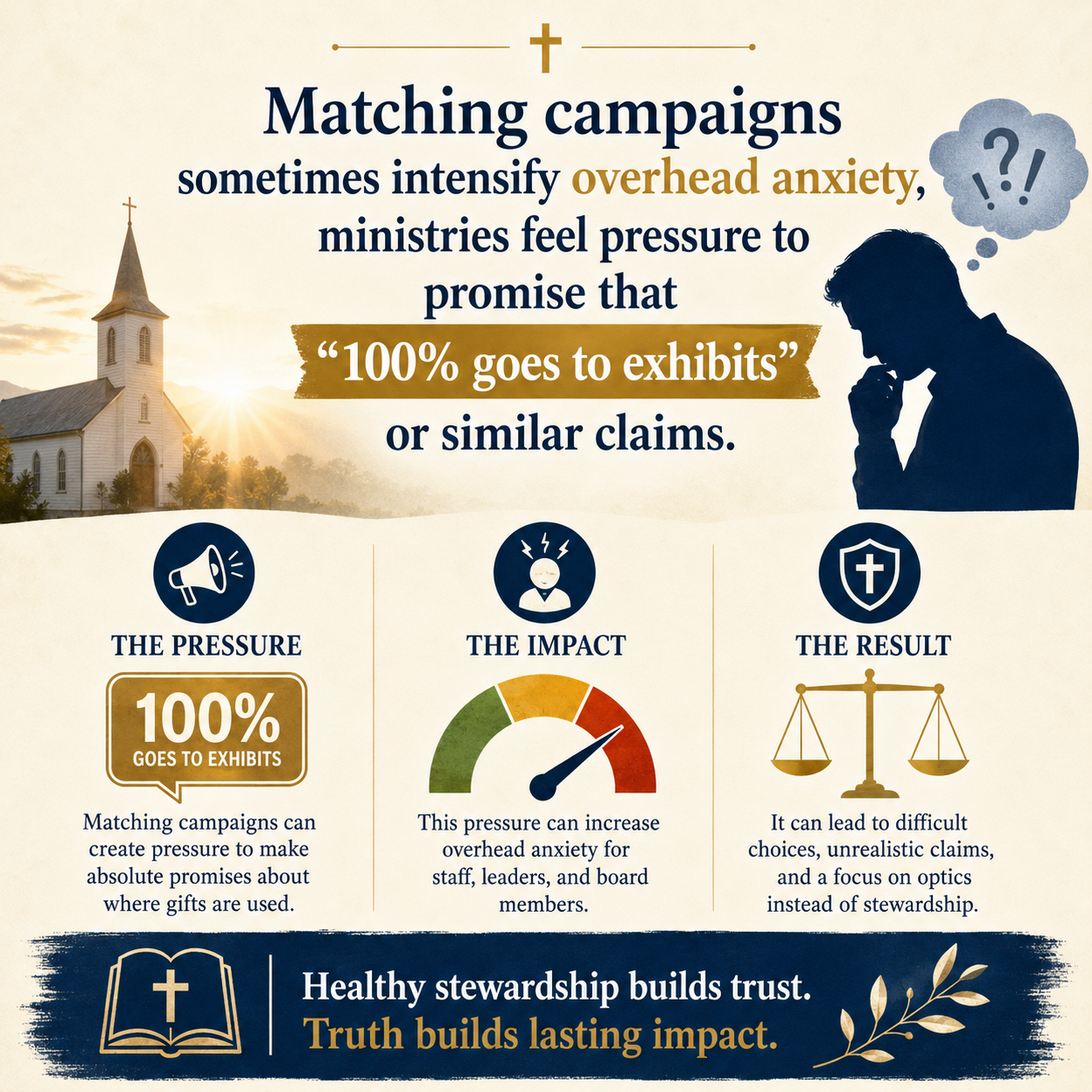
Independent standards can help donors avoid simplistic proxies. The “Overhead Myth” letter, signed by GuideStar (now Candid), BBB Wise Giving Alliance, and Charity Navigator, warned donors not to treat overhead ratios as the primary measure of a charity’s worth, emphasizing context, governance, and results instead https://www.guidestar.org. Matching campaigns sometimes intensify overhead anxiety, as ministries feel pressure to promise that “100% goes to exhibits” or similar claims. Wise donors resist that false precision and instead look for clear, audited reporting and honest program accounting.
Practical guidance for donors who want matches without compromise
How to give in a way that honors both mission and accountability
Christian donors do not give primarily to “a building” or “an experience.” We give to a form of witness: the truthful proclamation of God’s acts in history, the credibility of Scripture’s world, and the formation of faith in families, churches, and seekers. When matching gifts are available, donors can pursue the multiplier without surrendering discernment.
Several practices tend to keep giving aligned with both conviction and clarity.
First, confirm whether your employer matches gifts to the museum’s legal entity, not merely to “religious causes” in general. Second, keep your documentation: match confirmation emails, receipts, and any designation language. Third, do not let a deadline force you to ignore basic questions about governance, financial transparency, or interpretive integrity.
How to evaluate matching campaigns in the context of donor partnership
Matching gifts are one moment in a longer relationship between donors and ministries. The most faithful donors are not only reactive; they are covenantal in posture, even when they are appropriately businesslike in expectations. For donors considering sustained support, it is worth learning how the museum treats partners over time: whether it reports consistently, whether it corrects errors publicly, and whether it treats questions as an inconvenience or as a form of stewardship.
Many donors want to participate in a ministry’s life without becoming a back-seat board member. That is a sound instinct. Yet donor partnership is not passive. It includes asking for audited financials when appropriate, reading annual reports carefully, and understanding how restricted gifts are handled. For additional context on Donor Partnership with Biblical Museum Ministries, donors should expect ministries to welcome clarity, not manage perception.
FAQs for How matching gifts work for biblical museum ministries
Do matching gifts count as part of my charitable deduction?
In most cases, your charitable deduction is limited to the amount you personally donate; the matching contribution is typically deductible by the entity that makes the match, not by the employee-donor. Donors should confirm their specific situation with a qualified tax professional and consult IRS guidance on charitable contributions https://www.irs.gov.
Should a museum promise that every gift will be matched?
A museum should only make matching claims that are strictly true. Employer matches depend on donor eligibility and completion of the process, and major-donor matches often have terms and caps. Credible ministries state the conditions plainly: match limits, timelines, whether funds are already pledged, and whether the match applies to designated gifts.
A faithful match multiplies impact and demands truthful speech
Matching gifts can be a gift of common grace in the philanthropic economy, allowing Christian donors to extend their stewardship beyond what they could carry alone. For biblical museum ministries, the deeper question is whether the match strengthens the ministry’s witness through transparency, disciplined governance, and careful reporting. Donors should welcome multipliers, and also insist on clarity worthy of the Name those museums bear.



