
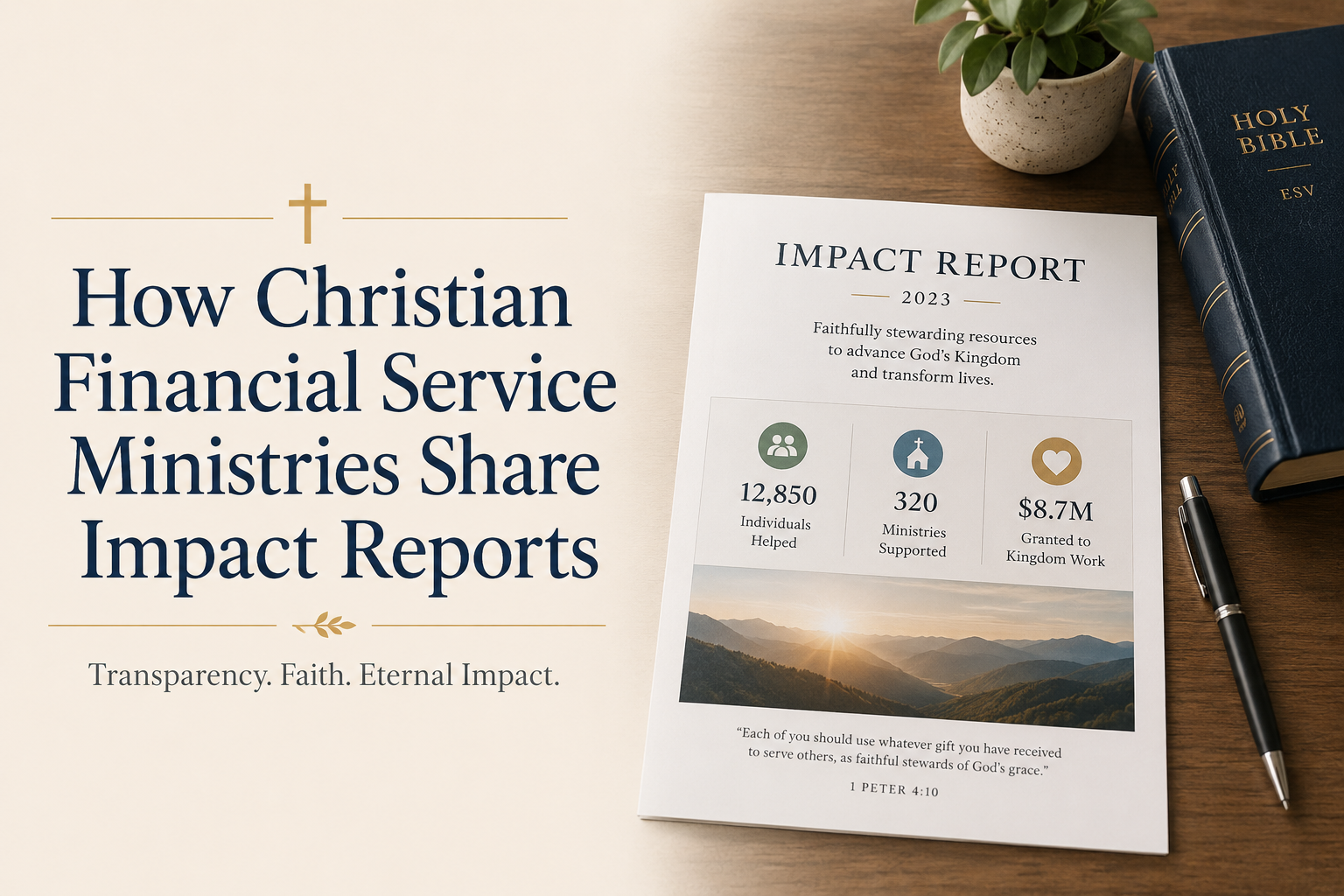
How Christian financial service ministries share impact reports is not a cosmetic communications question. It is a theological and fiduciary question about stewardship, truthfulness, and the obligations that come with handling other people’s money in the name of Christ. Donors are not merely purchasing outcomes; they are entrusting resources that Scripture treats as weighty, accountable, and spiritually formative.
Serious donors also know the field is complex. Some Christian financial ministries are structured as nonprofits; others operate through regulated financial products, membership models, or hybrid structures. Some serve vulnerable households where privacy is essential; others fund global programs where verification is difficult and local partners carry real risk. The harder question is not whether an impact report exists, but whether it is credible, understandable, and disciplined enough to withstand scrutiny.
Impact reporting is a stewardship practice before it is a fundraising practice
Scripture sets a truth and accountability frame for financial claims
The New Testament does not treat financial administration as spiritually neutral. When Paul organized a large relief gift for Jerusalem, he emphasized shared oversight: “We want to avoid any criticism of the way we administer this liberal gift” (2 Corinthians 8:20). That principle—transparent administration to protect the gospel’s credibility—belongs in modern impact reporting for ministries that touch people’s finances.
This is also why mature donors often ask for more than encouragement stories. Christian financial service ministries frequently speak about freedom from debt, provision in hardship, or generosity unleashed. Those themes can be true, but they become fragile when they are presented without definitions, evidence, and boundaries. When impact reporting becomes primarily a vehicle for inspiration, it quietly shifts from accountability to marketing.
Christian donors carry legitimate skepticism in a crowded marketplace
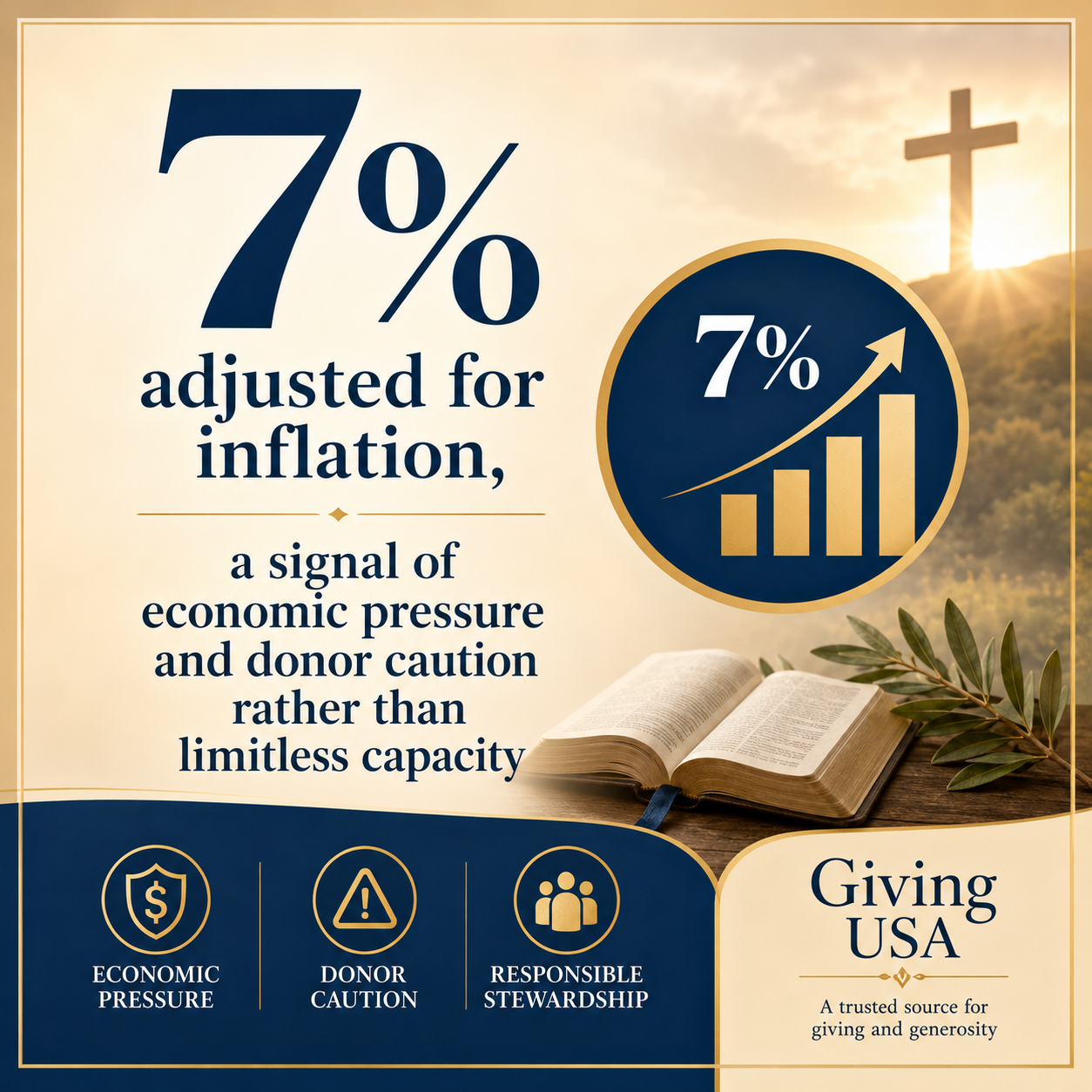
Giving patterns in the United States reflect both generosity and fatigue. Americans gave an estimated $557.16 billion to charity in 2023, but total giving declined 2.1% in current dollars and 5.7% adjusted for inflation, a signal of economic pressure and donor caution rather than limitless capacity Giving USA. In that environment, impact reports are increasingly the place where ministries either earn trust through clarity or lose it through ambiguity.
Our work at Most Trusted begins with the conviction that donors deserve verifiable confidence. We evaluate ministries against The Most Trusted Standard, a 15-criteria framework spanning faith commitments, financial integrity, governance and leadership, and transparency and effectiveness. An impact report will not, by itself, demonstrate that a ministry meets that standard, but it is often the public artifact that reveals whether the underlying disciplines exist.

What strong impact reports include for Christian financial service ministries
Clarity about what the ministry does and does not claim
Credible impact reporting starts with definitions. “Financial discipleship,” “stewardship coaching,” “debt relief,” “microenterprise,” and “financial literacy” are not interchangeable. A strong report explains the ministry’s theory of change: what services are provided, to whom, through what channels, and what near-term outcomes are realistically expected.
It also states what is not being claimed. If a ministry cannot attribute long-term wealth changes to its intervention, it should not imply it. If a program includes pastoral care alongside budgeting instruction, it should describe the integration honestly instead of implying that spiritual formation can be reduced to a financial metric.
A disciplined approach to outcomes, not just activity
Many reports major on activity because activity is easy to count: classes delivered, members enrolled, calls answered, loans issued, scholarships provided. Outcomes require harder work: behavior change, stability, savings resilience, reduced delinquency, improved giving habits, or sustained employment. The strongest reports show both, with careful language about what is measured and over what time frame.
When a ministry does use research terms, it should do so precisely. “Pre-post survey” is not the same as “controlled study.” “Self-reported improvement” is not the same as “verified reduction in debt.” Neither category is worthless, but they should not be blended. Donors who are capable of discernment should not be treated as if they need simplification; they need honesty.

In practice, we look for a small set of indicators that are stable over time and defined consistently. A report that changes its metrics every year may be energetic, but it is difficult to trust because it cannot establish a pattern.
How ministries handle the hardest part of impact reporting
Attribution, privacy, and the limits of measurement
Christian financial service ministries often serve people in financial distress, including those facing eviction, medical debt, predatory lending, or family breakdown. The ethical duty to protect beneficiaries is not an obstacle to transparency; it is part of transparency. Strong reports explain how privacy is protected, how testimonials are obtained, and what data is collected without creating new risk for the people the ministry exists to serve.
These constraints shape what can be measured. A ministry may have high confidence that coaching contributes to improved decisions, but it may not have lawful access to credit files or bank account data. The solution is not to avoid measurement; it is to name the limitations, show what is measured, and describe the safeguards. Sophisticated donors generally accept limits when the ministry is candid about them.
Negative results, mixed outcomes, and mission drift
The field has had to reckon with a familiar temptation: reporting only the “wins” and hiding the “losses.” Yet financial ministry involves real human complexity. Some households relapse into debt. Some clients disengage. Some programs work well in one context and poorly in another. Impact reports that never mention setbacks often read as if the ministry is either not learning or not telling the truth.
Christians genuinely disagree about how much “failure” a donor-facing report should include. Some leaders fear it will undermine confidence and reduce support. Others argue that candor is itself a testimony to integrity. We find that the ministries most worth trusting tend to report both progress and constraints in a measured way—without spectacle, without defensiveness, and without implying that donor money guarantees a particular personal outcome.
Connecting impact to financial integrity and governance
Outcomes without financial clarity are not sufficient
Impact reporting is often separated from financial reporting, but donors experience them as one question: did resources reach the intended mission with appropriate oversight? Mature ministries show a coherent line from mission, to programs, to spending, to results. They also address administrative costs without apologizing for competent operations.
Many donors have absorbed the “overhead” narrative as a proxy for virtue. That view has been widely critiqued by sector leaders, including the joint “Overhead Myth” letter signed by Charity Navigator, GuideStar, and the BBB Wise Giving Alliance Charity Navigator. Christian financial service ministries should not evade cost questions, but they should educate donors toward more faithful discernment: governance quality, financial controls, and program effectiveness matter more than simplistic ratios.
Board oversight and internal controls should be visible, not assumed
Because these ministries touch money directly, donors should expect clear disclosures on safeguards: independent audits when appropriate, conflict-of-interest policies, board independence, and disciplined reserve practices. A report that features compelling stories but omits the basics of governance invites unnecessary risk.
In our verification work, we often see donors underestimate governance because it feels “corporate.” Scripture does not share that instinct. Paul’s insistence on credible administration in 2 Corinthians 8 is governance language, even if it is not modern nonprofit jargon. The spiritual aim does not remove the need for controls; it increases it.
What donors should look for and how Most Trusted fits
A short checklist for evaluating an impact report
Donors can read an impact report as a form of due diligence rather than a devotional. The following questions tend to separate substantive reporting from promotional reporting:
- Are outcomes defined clearly, with time frames and consistent metrics year over year?
- Does the ministry distinguish between activity counts and measured results?
- Are methods explained plainly, including limitations and what cannot be attributed?
- Is financial reporting connected to program claims in a coherent way?
- Are governance safeguards described with enough detail to be accountable?
When these elements are missing, it does not automatically mean a ministry is untrustworthy. It may mean they have not built the internal capacity to report well, or that they have prioritized fundraising over accountability. Either way, donors should treat the gaps as information.
Where deeper verification becomes necessary
Impact reports are public documents. They are not the same as verification. When donors are making significant commitments—or when a ministry’s model carries heightened risk—independent evaluation is appropriate. That is where Most Trusted serves donors: we assess ministries against The Most Trusted Standard and publish our findings so givers can move from impression to evidence.
Donors who want to understand the broader landscape of Christian Financial Service Ministries should also consider how differing models affect reporting. A debt-management ministry, a microloan ministry, and a benevolence fund may all use financial language, but their accountability requirements and realistic outcomes differ.
Likewise, donors comparing ministries within The Mission and Impact of Christian Financial Service Ministries should expect the best reports to show learning over time. A static story is not the same as a maturing program. The goal is not perfection; it is faithful stewardship that can withstand the light.
FAQs for How Christian financial service ministries share impact reports
What is the difference between an impact report and an audited financial statement?
An impact report describes what a ministry did and what results it believes occurred—program outputs, outcomes, stories, and learning. An audited financial statement is a formal assessment by an independent auditor of whether the financial statements are fairly presented under applicable accounting standards. Both matter, but they answer different questions: impact reports address mission effectiveness; audits address financial reliability and controls.
Should donors trust testimonials in impact reports from Christian financial service ministries?
Testimonials can illuminate a ministry’s work, but they are not evidence by themselves. Donors should look for how stories are selected, whether permission and privacy safeguards are described, and whether the report pairs stories with clearly defined measures. A credible report uses testimonials to humanize verified patterns, not to substitute for them.
A faithful impact report invites scrutiny rather than managing impressions
Christian financial service ministries operate at a spiritually sensitive intersection of money, vulnerability, and discipleship. Impact reporting that is worthy of the Church’s trust will be clear about claims, disciplined in measurement, candid about limits, and anchored in visible financial and governance practices. Donors should not settle for inspiration without accountability, because the name of Christ deserves better, and because faithful stewardship requires truth in the light.



