
How Christian addiction recovery addresses trauma is not a secondary question; it is central to whether a ministry is actually treating the whole person in Christ. Many men and women who present with substance use disorders also carry unresolved traumatic stress, grief, betrayal, or chronic shame that preceded the addiction and often helped shape it. Donors who care about lasting fruit should expect ministries to reckon with that reality without reducing trauma to a slogan or treating it as a rival to biblical categories of sin, suffering, and sanctification.
The Christian tradition has never denied that human beings can be sinned against and wounded in ways that leave lasting effects. Scripture names affliction, oppression, fear, and sorrow with plain honesty, and it also insists that the Lord “heals the brokenhearted and binds up their wounds” (Psalm 147:3). The donor question is not whether trauma exists. The donor question is whether a particular recovery ministry integrates trauma awareness into a distinctly Christian account of healing that is accountable, pastorally careful, and operationally credible.
Trauma and addiction interact through the body, the story, and the heart
Trauma is often a pathway into substance use
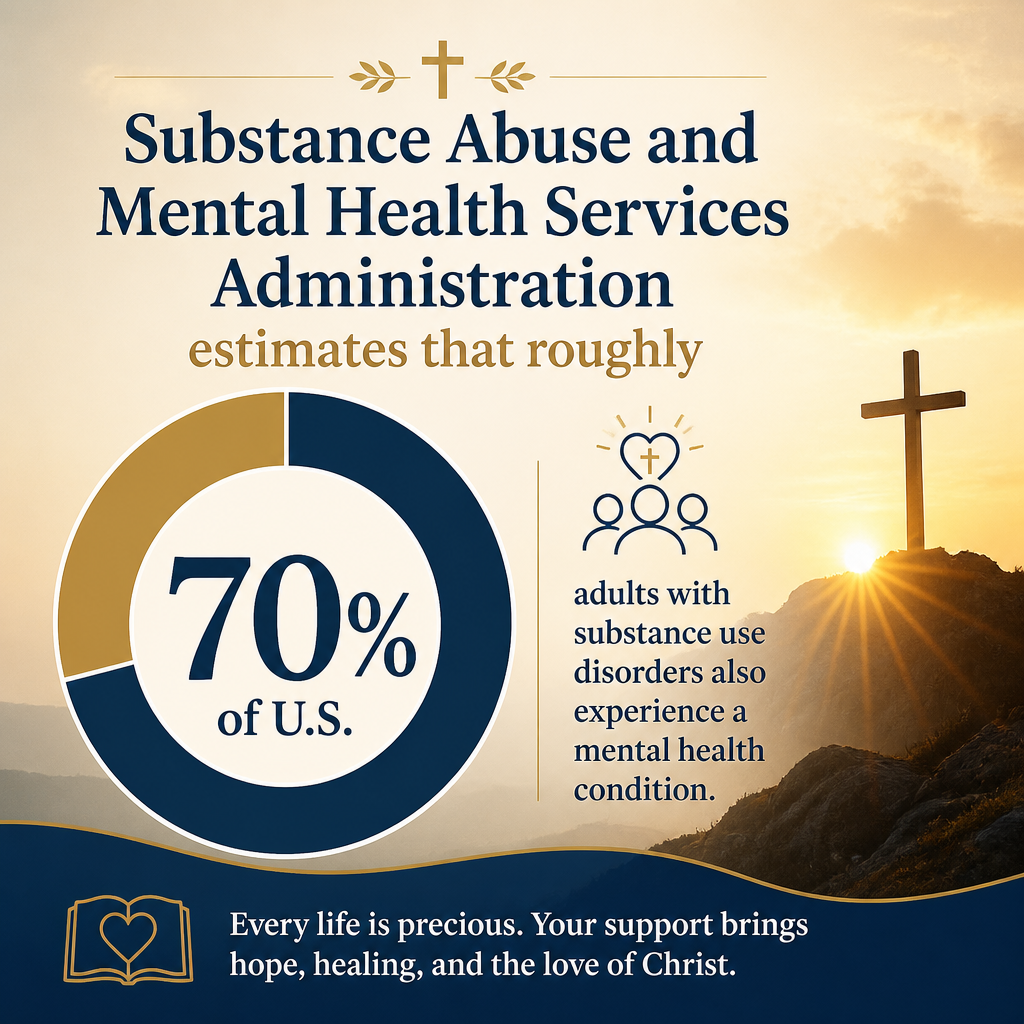
Verifiable evidence suggests that trauma exposure is common among people struggling with addiction, and that it is frequently part of the causal story. The U.S. Substance Abuse and Mental Health Services Administration estimates that roughly 70% of U.S. adults have experienced at least one traumatic event in their lives, a baseline that helps explain why trauma-informed approaches became standard language across behavioral health systems (SAMHSA).
In practice, ministries see patterns consistent with what clinicians describe: substances function as self-medication for hyperarousal, insomnia, intrusive memories, panic, or numbing. At the same time, not every person with addiction has a single definable trauma event, and not every trauma survivor develops addiction. Sophisticated care avoids simplistic causality while still taking trauma seriously as a frequent factor.
Theological clarity matters because trauma is not the same category as guilt
Christians genuinely disagree about how to speak of “trauma” in a way that does not displace biblical language. A wise ministry does not collapse everything into “victimhood,” but it also does not treat every relapse, dissociative pattern, or shutdown response as straightforward rebellion. Scripture distinguishes suffering from sin even while insisting that sin can be intertwined with suffering. The Psalms give voice to terror and disorientation without surrendering moral agency; the Gospels show Jesus tender toward the wounded and unsparing toward hypocrisy. Both realities belong in mature recovery work.
What this means for donors is that the most faithful programs typically refuse binary narratives. They speak truthfully about sin, responsibility, and repentance. They also name coercion, abuse, abandonment, and violence for what they are, and they understand that the body can learn fear in ways the mind cannot simply command away.

What trauma-aware Christian recovery looks like in real programs
Trauma-informed is not a marketing term
“Trauma-informed” can mean almost anything in the nonprofit marketplace. In serious settings, it signals practices such as predictable routines, careful consent, non-coercive discipline, attention to triggers, and staff training that reduces re-traumatization. In less serious settings, it becomes a label placed on the same reactive culture that already exists. Donors should not fund labels; they should fund practices.
Some of the most durable Christian recovery approaches also reflect established field frameworks. The National Institute on Drug Abuse, for example, emphasizes that effective treatment attends to the whole person and often includes addressing trauma and mental health needs alongside substance use (National Institute on Drug Abuse). Christian ministries that are both biblically grounded and clinically literate tend to incorporate this whole-person insight without conceding that the human person is only a bundle of symptoms.
Integrated care means discipleship plus wise clinical partnership
Many donors understandably want ministries to remain explicitly Christian rather than drifting into secular therapeutic culture. Yet trauma care often requires competencies and licensure that a church-based program does not have in-house. The more credible model, across our verification work at Most Trusted, is not “either discipleship or clinical care,” but careful integration: pastoral oversight, spiritual formation, and peer community alongside appropriate referral relationships, licensed counseling, or psychiatric care when indicated.
Programs that meet the moment usually have clear protocols for suicidality, domestic violence, child safety, and mandated reporting. They also articulate boundaries: what their staff can and cannot treat, when a participant must be referred out, and how they coordinate without violating privacy or spiritual trust.
Healing from trauma in Christ requires more than symptom reduction
Safety, truth, and time are part of sanctification
Christian recovery that addresses trauma well typically builds slowly. That is not therapeutic hesitation; it is spiritual realism. Scripture repeatedly links formation to endurance, testing, and patient hope (Romans 5:3–5). Trauma often fractures a person’s experience of time itself—everything feels urgent, or nothing feels possible. A ministry shaped by Christian wisdom learns to pace disclosure, resist coercive “testimony culture,” and treat confidentiality as a moral responsibility rather than an administrative preference.
Donors can unintentionally pressure ministries toward superficial speed. A banquet story of instant transformation is compelling, but it can quietly incentivize participants to perform wellness. The better question is whether participants are learning truthful naming of harm, honest confession of sin, and practical obedience over time: sobriety, repair of relationships where safe and possible, faithful work, and re-engagement with the ordinary means of grace in a local church.
Forgiveness is central but it cannot be demanded on a timetable
Christ commands forgiveness, and the church cannot treat bitterness as a virtue. Yet trauma ministry fails when forgiveness is used as a tool to silence the harmed or to bypass justice. A credible program teaches forgiveness as a Spirit-enabled act that does not require denying reality, excusing evil, or reconciling without repentance. It also recognizes that some participants need protection, legal recourse, or long-term distance from an abuser. Donors should expect ministries to hold these tensions with sobriety.
In that sense, trauma-aware Christian recovery is not “softer” than traditional discipleship. It is often more exacting because it refuses cheap grace and refuses false condemnation at the same time.
What donors should verify before funding trauma-aware recovery
Ask for evidence of competence, not just sincere theology
Many ministries have sincere convictions and compassionate staff. Donors, however, bear stewardship responsibilities that require more than good intentions. The question is whether a ministry’s theology is expressed through structures that protect people. Most Trusted exists to help donors give with confidence by evaluating ministries against The Most Trusted Standard, a 15-criteria framework that examines faith commitments, financial integrity, governance, and transparent reporting.
When assessing ministries in Biblical Counseling in Christian Addiction Recovery, we encourage donors to look for operational marks that correlate with safer, more effective care. A few are especially relevant to trauma:
- Clear safeguarding policies for abuse disclosure, mandatory reporting, and participant protection
- Staff training and supervision, including ongoing formation on trauma dynamics and boundaries
- Defined referral pathways for licensed therapy, psychiatry, and higher levels of care
- Board oversight that treats participant safety as a governance priority, not a program detail
- Transparent outcomes reporting that avoids inflated claims and names limitations
Beware common failure modes that re-traumatize
Donors should also know what tends to go wrong. Some programs rely on confrontation models that shame participants into disclosure, confusing intensity with repentance. Others promote untrained “inner healing” practices that solicit graphic memories without clinical skill or follow-up care. Still others blur authority lines, turning staff into quasi-therapists without supervision, or using spiritual language to pressure reconciliation in unsafe situations.
Responsible programs do not eliminate risk; trauma work is inherently complex. But they demonstrate humility through guardrails. They measure what they can, they name what they cannot, and they are willing to refer participants to care that is outside their scope.
How trauma awareness strengthens accountability and mission integrity
Trauma-aware care can deepen, not dilute, gospel clarity
Some donors worry that trauma language will displace the gospel with a therapeutic narrative. That concern is not groundless; the broader culture often treats “healing” as self-authoring rather than reconciliation with God. The stronger ministries address this directly. They insist that the deepest human problem is alienation from God, and that Christ’s atonement is not a metaphor. Yet they also insist that grace reaches the places where people have been sinned against, and that the church must not require victims to carry private burdens in order to protect a ministry’s image.
Across our verification work, the ministries that demonstrate the clearest gospel commitments often have the courage to be specific about trauma. They do not fear the truth. They fear the Lord.
Donor stewardship is part of neighbor love
Funding addiction recovery is not only a charitable act; it is participation in mercy that can either protect or endanger vulnerable people. Donors should therefore think in terms of stewardship, accountability, and long-term formation rather than crisis-response emotion. It is one reason we encourage donors to consult credible lists and evaluations when considering Christian Addiction Recovery Ministries, especially programs that serve people with histories of violence, exploitation, or severe neglect.
Wise generosity expects ministries to be both spiritually serious and operationally disciplined. Where those meet, trauma-aware recovery becomes a context for genuine repentance, patient healing, and restored capacity to love God and neighbor.
FAQs for How Christian addiction recovery addresses trauma
Should Christian recovery ministries provide licensed trauma therapy themselves?
Not always. Some larger ministries appropriately employ licensed clinicians; many faithful programs will not have that capacity. What donors should expect is clarity about scope of practice, robust referral relationships, and protocols that protect participants when trauma symptoms exceed what pastoral care and peer support can responsibly address.
How can donors tell whether a ministry is using trauma language to avoid accountability for sin?
Healthy ministries maintain both compassion and moral clarity. They acknowledge trauma as real suffering and a possible contributor to addictive patterns, while still calling participants to responsibility, truth-telling, restitution where appropriate, and ongoing discipleship in a local church. When a program consistently explains away harm done to others, rejects confession as “shaming,” or treats repentance as optional, donors should treat that as a serious concern.
Giving that supports deep healing
Trauma-aware Christian addiction recovery is not a trend; it is an application of biblical realism to the lives many participants actually inhabit. The most trustworthy ministries neither absolutize trauma nor dismiss it. They place it under the lordship of Christ, serve with competence, and submit their work to accountability. Donors who give with that standard in view help build programs where the wounded are not managed, but shepherded toward steadiness, truth, and hope.



