
How biblical counseling works in Christian addiction recovery is a question of both theology and care: what do we believe about sin and suffering, and what kind of help do we offer when a person’s body, relationships, and spiritual life are entangled in compulsive use. Donors who support recovery ministries are often trying to fund more than “programming.” They are trying to fund repentance, endurance, reconciliation, and a credible hope that does not collapse under relapse or grief.
Christian addiction recovery has learned to speak carefully here. Addiction is not only a moral category, and it is not only a medical category. Scripture gives language for both culpability and affliction, for bondage and brokenness. Ministries that practice biblical counseling responsibly tend to hold those realities together rather than reducing a complex human crisis to a single cause.
What biblical counseling is and what it is not
Biblical counseling is a discipleship form of soul care
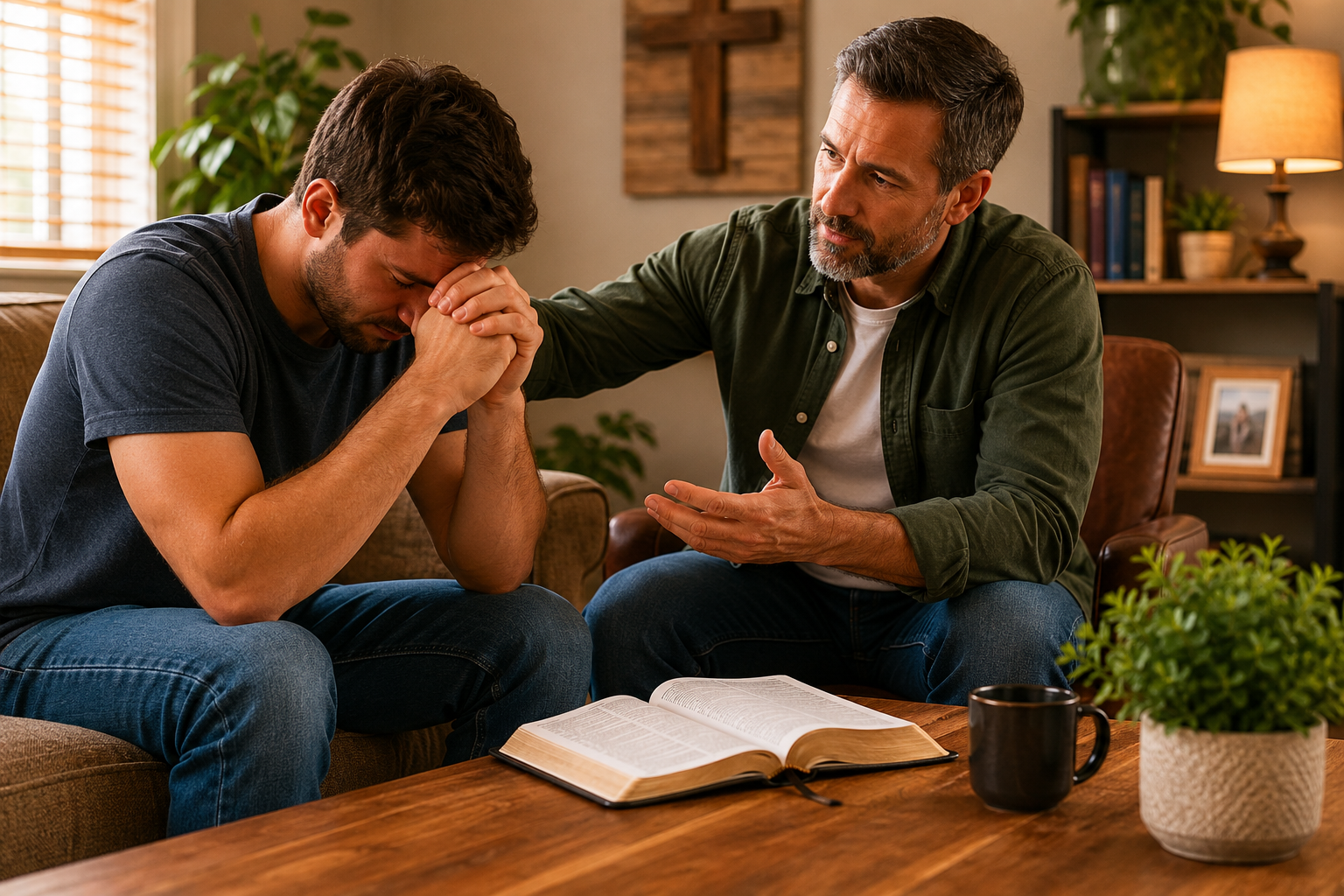
Biblical counseling begins with the conviction that God speaks with authority and compassion about the human person. The counselor is not a detached technician; the counselee is not a case. The counseling relationship aims at wise, Scripture-shaped help applied to a particular person’s loves, fears, habits, relationships, and history.
In addiction recovery, that means addressing more than substance use. It means understanding the heart’s patterns of worship and escape, the conscience’s burdens, the relational fallout, and the practical disciplines that support sobriety and stability. Counseling draws from the church’s long tradition of pastoral care, while also engaging contemporary realities such as trauma exposure, psychiatric comorbidity, and the social fragmentation that often surrounds addiction.
What biblical counseling is not
Biblical counseling is sometimes caricatured as simplistic proof-texting or denial of medical care. That version exists in the world, and donors are right to be cautious. Responsible biblical counseling does not claim that Scripture replaces every medical judgment, nor does it treat suffering as a mere moral failure to be scolded away.
Christians genuinely disagree about some boundaries: when medication is appropriate, how to interpret addiction’s disease language, and how to integrate 12-step approaches. Yet the best ministries tend to share a common humility: they refuse to promise quick fixes, and they do not confuse spiritual maturity with the absence of struggle.
The theological engine behind addiction recovery
Bondage, idolatry, and the promise of freedom
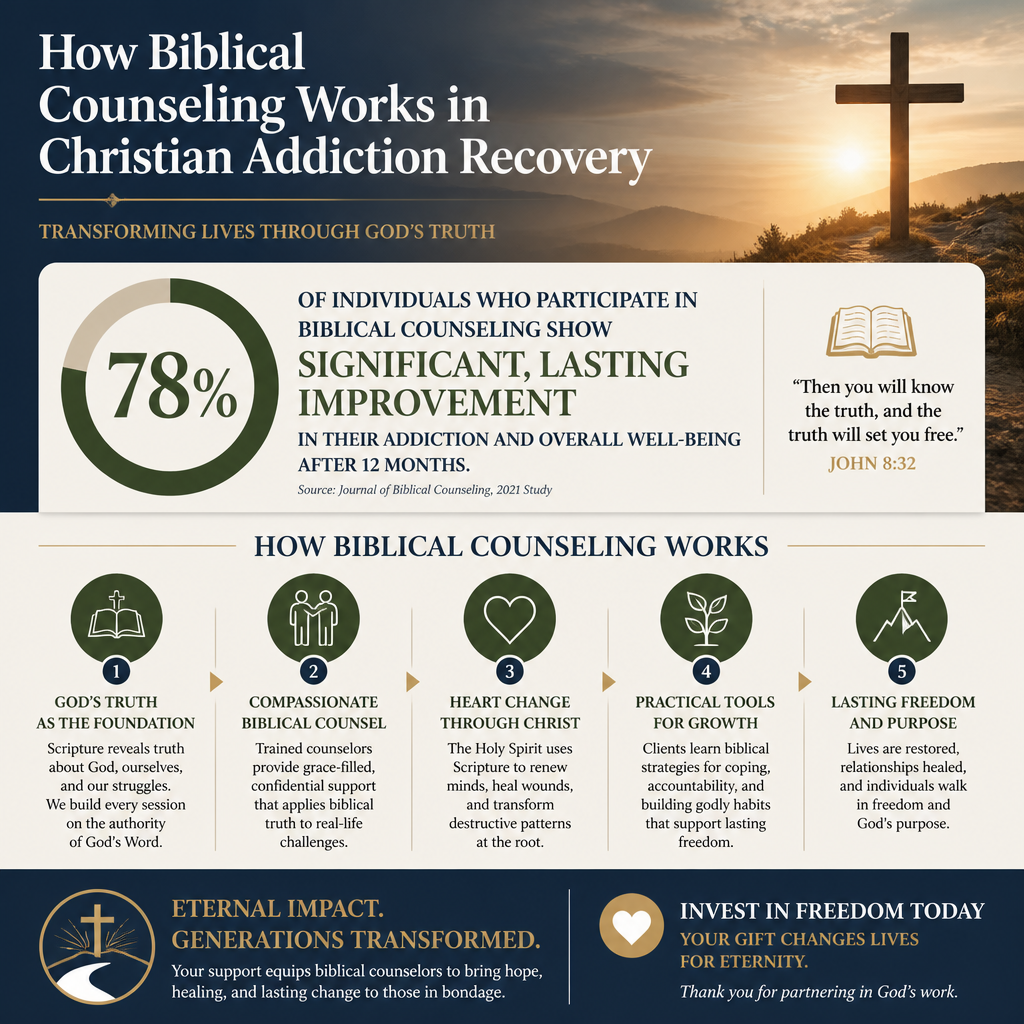
Scripture describes sin as both chosen and enslaving. Paul’s language of being “slaves to sin” and then “slaves to righteousness” provides a framework for addiction’s felt compulsions without excusing personal agency. Biblical counseling takes bondage seriously because Scripture does. It also takes redemption seriously because Christ does.
This is where donors often sense the difference between a Christian recovery ministry and a merely therapeutic program. The goal is not only harm reduction, though harm reduction can be a merciful interim step. The goal is a re-ordered life: worship redirected toward God, loves reshaped, and daily obedience practiced in community.
Suffering, trauma, and the long work of sanctification
Many who struggle with addiction also carry histories of trauma, grief, or chronic anxiety. The biblical categories of lament, affliction, and comfort matter here. A ministry that treats every relapse as simple rebellion will often lose credibility with the very people it intends to help. Conversely, a ministry that treats every failure as only a symptom can hollow out responsibility and repentance.
Biblical counseling works when it can say, with equal clarity: “You are responsible,” and “You are not alone.” It can call for confession without making shame the primary motivator. It can place hope where Scripture places it—on Christ’s finished work and the Spirit’s power—without presenting recovery as a straight line.
What the counseling process typically looks like
Assessment and wise care planning
In practice, biblical counseling in addiction recovery usually begins with a careful assessment: substance history, relapse patterns, co-occurring mental health symptoms, family system dynamics, legal constraints, medical risks, and the person’s spiritual background. Some ministries use standardized screening tools alongside pastoral interviews. The aim is not bureaucracy; it is clarity about what the person needs and what the ministry can and cannot provide.
When risk is high—withdrawal danger, suicidality, psychosis, domestic violence—the ethical move is referral and coordination, not spiritual bravado. Competent ministries build relationships with local clinicians, detox facilities, and crisis resources. Donors should see this as a strength. It signals maturity about limits and a commitment to life-preserving care.
Counseling practices that form new habits and new hope
Once care is underway, biblical counseling often combines instruction, confession, skill-building, and relational repair. The content may include theology of the body, repentance and faith, temptation dynamics, anger and anxiety, peacemaking, restitution, and boundaries. It is usually paired with concrete planning: avoiding high-risk environments, building accountability, practicing sleep and nutrition habits, and restoring a workable rhythm of work and worship.
Many effective ministries emphasize that addiction is not only an individual problem; it is a relational rupture. Counseling often includes spousal support, family meetings, and guidance for church leaders who want to help without enabling. When done well, the counsel given to families is neither naive trust nor permanent suspicion, but a measured posture shaped by truth, prudence, and mercy.
- Truth-telling that refuses denial while guarding against humiliation
- Relapse planning that anticipates triggers rather than being surprised by them
- Accountability anchored in relationship, not surveillance
- Practices of grace such as prayer, Scripture meditation, and confession
- Restitution and reconciliation pursued with safety and wise pacing
For donors trying to understand impact, this process can feel less “countable” than bed nights or meals served. Yet it addresses the deeper issue: whether a person is being re-formed into integrity, stability, and faithful presence—before God and before family and community.
The role of the church, community, and accountability
Why isolation is not a neutral condition
Addiction thrives where secrecy is protected and where a person’s life can be divided into compartments. Christian recovery ministries that practice biblical counseling typically aim to reunite what addiction fractures: the inner life, the outer life, and the public life of the church. This is not a demand for instant transparency. It is a deliberate move away from isolation, undertaken with care for privacy and safety.
Community support is also a practical necessity. A 2023 survey from Pew Research Center found that about one-third of U.S. adults reported knowing someone close to them who is or has been addicted to drugs, and about one-quarter reported knowing someone who has died of a drug overdose or addiction-related causes Pew Research Center. That breadth of impact means a local church is rarely untouched; it also means recovery ministry is often helping an entire network of relationships, not only an individual.
Accountability without coercion
Accountability is a contested word. In some settings it becomes control; in others it becomes a slogan with no practice. Biblical counseling tends to frame accountability as mutual help ordered toward holiness, not as punishment. The goal is to cultivate honest living before God and others, with appropriate boundaries.
Donors should pay attention to how a ministry handles power. A recovery program may require structure—curfews, drug testing, community rules—but it should never confuse compliance with sanctification. The healthiest ministries combine clear expectations with patient, dignifying care, recognizing that trauma histories and mental illness can complicate how a person responds to authority.
For those exploring the landscape of ministries doing this work, Christian Addiction Recovery Ministries is a useful place to see the breadth of approaches and the questions donors should bring to each.
What discerning donors should look for in recovery ministries
The difference between spiritual language and accountable practice
Christian donors often assume that biblical language guarantees trustworthy operations. It does not. Recovery ministry places unusual demands on governance, safeguarding, and financial integrity because it works with vulnerable people in high-stakes situations. Good theology should produce good practice, but donors should verify rather than presume.
Across our verification work at Most Trusted, we find that ministries meeting The Most Trusted Standard tend to show consistency between their stated theology and their operational decisions. They can explain how they handle confidentiality, mandated reporting, relapse response, counseling supervision, staff training, and referral relationships. They treat participants as image-bearers rather than as marketing proof.
Verification questions aligned with The Most Trusted Standard
Responsible donors can ask questions that honor the ministry’s calling while also demanding clarity. Several are especially relevant in addiction recovery:
Faith foundation: Is the ministry’s counseling approach clearly articulated, biblically grounded, and applied with humility? Does it acknowledge suffering and mental illness without abandoning moral responsibility?
Financial integrity: Are program costs and fundraising claims honest? Donors should remember the “Overhead Myth” consensus that simplistic overhead ratios are not reliable indicators of effectiveness; Charity Navigator, Candid, and the BBB Wise Giving Alliance jointly warned that under-investing in administration can undermine mission Charity Navigator.
Governance and leadership: Who supervises counselors? What safeguards exist to prevent spiritual abuse, boundary violations, or coercive practices? Is there an independent board with real oversight?
Transparency and effectiveness: How does the ministry define success—sobriety duration, church re-engagement, family stability, employment, reduced legal involvement—and what evidence can it provide without breaching privacy?
Discernment here is not suspicion. It is stewardship. Addiction recovery ministry can be profoundly fruitful, but it can also be harmed by exaggerated claims or unaccountable leaders. Donors have the standing and the responsibility to ask for the kind of clarity that protects participants and honors the gospel.
For donors focused specifically on counseling approaches within recovery work, Biblical Counseling in Christian Addiction Recovery is where we track the common models, safeguards, and evaluation questions that distinguish mature ministries.
FAQs for How biblical counseling works in Christian addiction recovery
Does biblical counseling treat addiction as sin or as disease?
Biblical counseling typically treats addiction as involving both moral agency and real bondage, and it often acknowledges physiological dependence and psychiatric comorbidity. Scripture’s categories allow ministries to speak about responsibility, temptation, and repentance, while also recognizing the realities of suffering, trauma, and the body. Donors should look for ministries that avoid reductionism and that have clear referral pathways for medical detox and acute psychiatric care when needed.
How can donors evaluate whether a biblical counseling recovery program is safe?
Donors can ask about counselor training and supervision, boundaries and confidentiality practices, relapse response policies, safeguarding and mandated reporting, and governance oversight. Programs working with vulnerable adults should be able to explain how they prevent coercion and spiritual abuse, how they coordinate with clinicians when risks are high, and how they report outcomes honestly without marketing pressure. Verification against The Most Trusted Standard provides a structured way to assess these issues without relying on impressions.
A sober hope worth funding
Biblical counseling works in Christian addiction recovery when it applies the gospel to the whole person with truth and mercy: calling sin what it is, naming suffering for what it is, and insisting that neither has the final word. Donors serve this work best by funding ministries that combine theological seriousness with accountable practice, because the credibility of Christian hope is tested most severely where relapse, loss, and long rebuilding are part of the story.



