
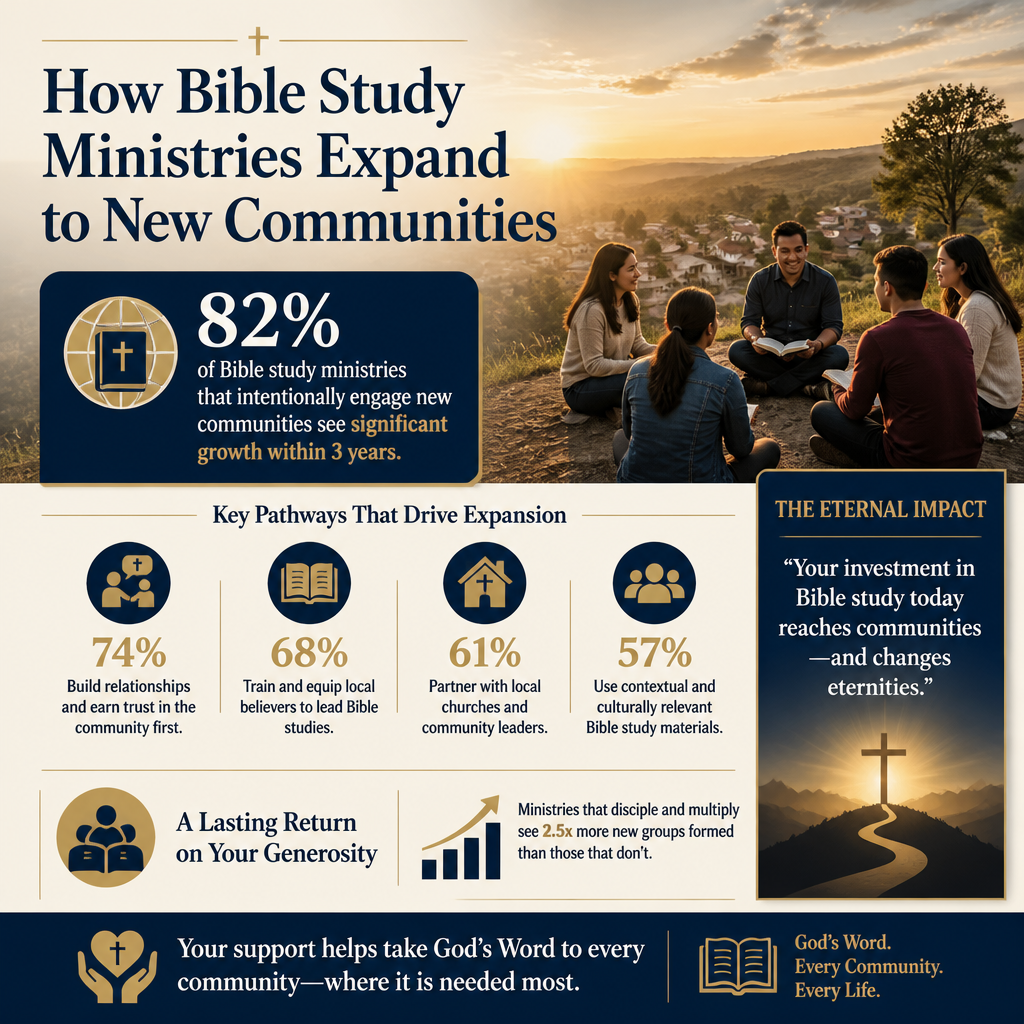
How Bible study ministries expand to new communities is not primarily a question of marketing reach. It is a question of ecclesial faithfulness: whether the Word is being carried into real places with humble dependence on the Spirit, accountable leadership, and love for neighbors who do not share our assumptions. Donors tend to fund what scales, but Scripture repeatedly commends what takes root—seed in soil, Word received and obeyed, disciples formed in ordinary life.
The opportunity is significant. Many Americans still express spiritual openness while remaining disconnected from a church that can sustain long-term formation. Pew Research Center reports that roughly three in ten U.S. adults now identify as religiously unaffiliated, including a sizable share who nonetheless say they believe in God or a higher power (Pew Research Center). Bible study ministries that expand well do not ignore those realities; they build patiently for durable engagement rather than short-lived activity.
Expansion begins with a theological rationale, not a growth strategy
The Word creates a people before it builds a program
In Acts, the Word spreads as the Spirit gathers a people across language and social boundaries. The early church’s expansion was not an exercise in institutional ambition; it was the fruit of witness, repentance, and the ordinary means God uses to form disciples. Bible study ministries that expand with integrity take their cues from that pattern. They ask first what faithfulness looks like in a specific community, not what a transferable template can reproduce.
For donors, this is a first-order discernment issue. A ministry can report impressive participation and still fail to cultivate the church’s basic marks: sound teaching, accountable leadership, and lives shaped toward holiness and neighbor-love. Across our verification work at Most Trusted, ministries that meet The Most Trusted Standard tend to articulate a clear theological purpose for expansion, with explicit guardrails against reducing Scripture engagement to content consumption.
Christians genuinely disagree about contextualization and control
Expansion inevitably raises contested questions: How much should curriculum be standardized? What authority should a central office hold over local leaders? When does contextualization become doctrinal drift, and when does central control become cultural blindness? Thoughtful ministries name these tensions openly. They build mechanisms for theological oversight while granting real space for local believers to teach and apply Scripture in culturally intelligible ways.
New communities are reached through relationships, not distribution
The local bridge is rarely a platform
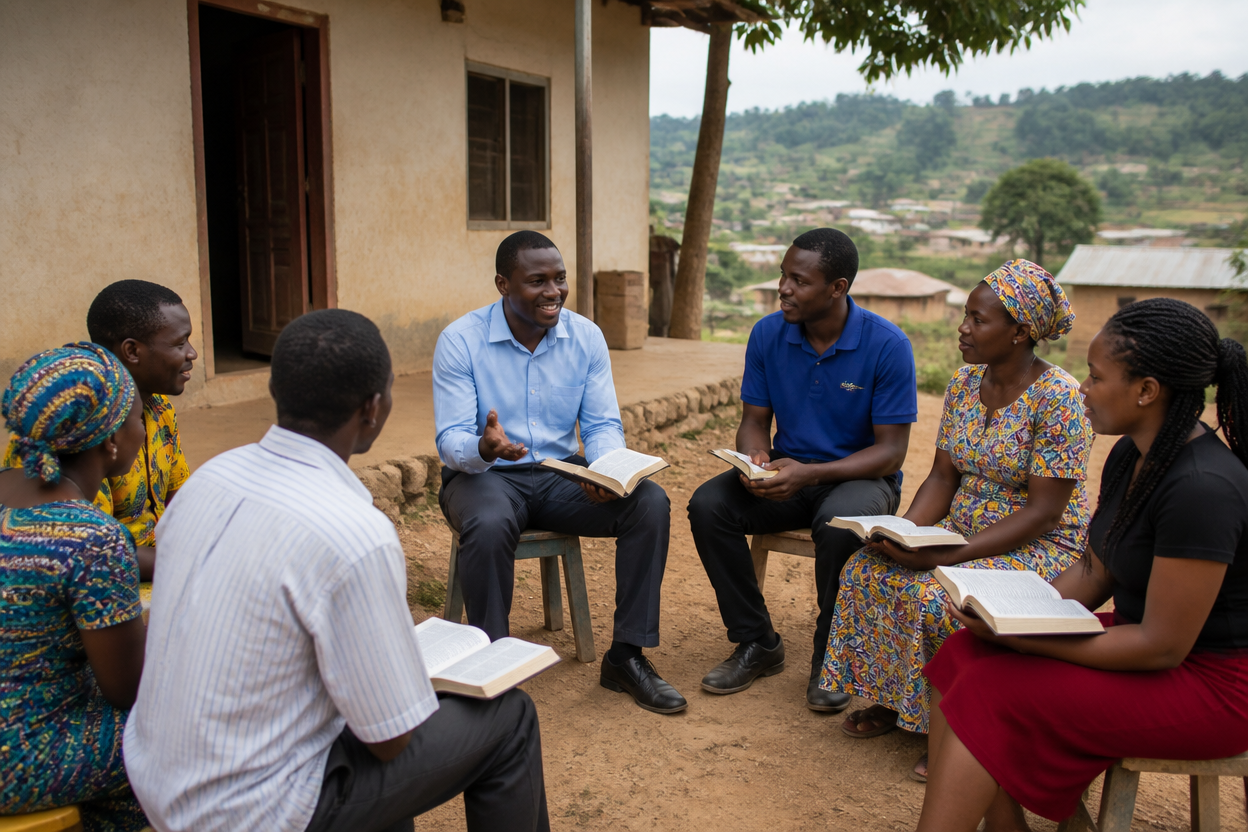
Bible study expansion often fails when it assumes that distributing materials is equivalent to making disciples. Materials matter, but they do not shepherd people through doubt, trauma, family pressures, or spiritual opposition. Ministries expand sustainably when they identify local “bridges”—pastors, chaplains, immigrant congregations, community leaders, campus ministers—who can situate Bible study within trusted relationships.
What this means in practice is that the earliest investments in a new community are often unglamorous: time to listen, translation work, leader development, safeguarding protocols, and patient partnership. Donors can rightly ask whether a ministry’s expansion plan is resourced for these realities, or whether it assumes that a new site will run on enthusiasm alone.
Digital Bible engagement helps, but it does not replace embodied formation
Digital access can lower barriers for first contact and early learning, especially where transportation, work schedules, or social risk make in-person gathering difficult. At the same time, Scripture’s vision of Christian life is not disembodied. The New Testament’s “one another” commands presume real community with real accountability. The most credible expansion models treat digital engagement as a doorway, then build pathways toward local community where Scripture is read, confessed, prayed, and obeyed together.
Donors evaluating this balance may find it helpful to understand how a ministry connects online participation to local pastoral care. Within How Bible Study and Engagement Ministries Reach Communities, the strongest expansion narratives are typically those that can show a coherent discipleship pathway rather than isolated points of contact.
Scaling requires governance that can carry spiritual and operational weight
Volunteer-led growth can be faithful and fragile
Many Bible study movements are volunteer-led, and that can be a strength: it honors the priesthood of believers and often keeps ministry close to everyday life. It is also fragile. Rapid replication can outrun training, oversight, and safeguarding—especially in environments involving minors, vulnerable adults, prisons, or trauma-affected populations.
Donors should not assume that a low-cost model is automatically efficient. Responsible expansion builds “costs of faithfulness” into the plan: screening, training, supervision, and clear reporting lines. Those investments are not overhead in the pejorative sense; they are part of the ministry’s duty of care.
What mature governance looks like when a ministry multiplies
We recommend donors look for a few governance signals that tend to predict whether expansion will remain spiritually credible and operationally stable:
- Clear doctrinal commitments and a process for handling theological disputes
- Defined authority for local leaders and transparent accountability to central leadership
- Documented safeguarding policies and training expectations for leaders
- Financial controls that can handle new sites, restricted gifts, and partner funding
- Board oversight that remains engaged as complexity increases
These are not merely technical considerations. Scripture holds leaders accountable for how they shepherd (1 Peter 5) and warns against partiality and self-dealing. Expansion that dilutes accountability often undermines the very credibility the gospel requires.
Financial integrity and transparency determine whether expansion is trustworthy
Donor trust is built with disclosure, not reassurance
Expansion campaigns frequently promise new communities reached, leaders trained, or studies launched. Mature ministries can show how dollars translate into specific activities, what those activities cost, and what success would look like over time. They also acknowledge what they cannot yet measure. For donors, transparency is not a preference; it is a stewardship obligation.
The nonprofit sector has had to reckon with how distorted incentives can be when donors treat “low overhead” as the primary indicator of health. The well-known “Overhead Myth” statement, signed by major evaluators, argued that overhead ratios alone are a poor measure of nonprofit performance and can pressure organizations to underinvest in capacity (Charity Navigator). Bible study ministries are not exempt. Underfunded training and accountability is a predictable pathway to harm.
What donors can request before funding a new geography
Responsible ministries welcome informed questions. Donors can ask for budget-level clarity without requiring that ministry be reduced to a spreadsheet. Examples include:
Cost structure: What does it cost to launch and sustain a study group in a new community for 12–24 months?
Revenue assumptions: Is the expansion dependent on a few large gifts, or does it include diversified support?
Partner economics: If the ministry works through churches or local organizations, who carries which costs and liabilities?
Transparency: Are audited financials, annual reports, and program outcomes available without special access?
At Most Trusted, our evaluations against The Most Trusted Standard attend closely to these questions—not to burden ministries, but to strengthen donor confidence that expansion is funded honestly, governed well, and executed with care.
Effectiveness must be measured as formation, not only reach
Counting participants is not the same as making disciples
Expansion reporting often defaults to the easiest numbers: attendance, downloads, groups launched, or studies completed. Those metrics are not meaningless, but they can reward shallow engagement. Christian donors frequently feel the tension here: they want accountability for results, yet they know spiritual growth cannot be reduced to a simple KPI.
A more credible approach uses layered measures. Early-stage indicators may include leader retention, consistent participation over time, and increased Scripture literacy. Later measures might include integration into local church life, growth in prayer and evangelistic witness, reconciliation in relationships, and service to neighbors. The point is not to quantify the Spirit; it is to avoid confusing activity with fruit.
Community expansion should strengthen the local church
Bible study ministries expand most faithfully when they refuse to become a parallel church for people who can remain indefinitely uncommitted to a local body. There are contexts where parachurch Bible studies are the only accessible entry point—campuses, workplaces, prisons, refugee communities. Even then, the healthiest ministries maintain a doctrine of the church that aims toward worship, sacraments, and pastoral care where possible.
For donors, one practical question is whether the ministry’s expansion strategy includes a church-affirming posture: formal partnerships with congregations, referral pathways, and a willingness to celebrate outcomes that do not enlarge the ministry’s own brand. Within Bible Study and Engagement Ministries, this church-strengthening posture is one of the more reliable signals that growth is being pursued for kingdom ends rather than organizational self-preservation.
FAQs for How Bible study ministries expand to new communities
What should donors look for first when a Bible study ministry announces expansion?
Start with theological clarity and accountable leadership. Ask whether the ministry can explain why expansion serves its mission, how local leaders will be trained and supervised, and what safeguarding policies govern work with vulnerable people. Then examine transparency: accessible financial reporting, a realistic budget for oversight, and a plan for measuring formation rather than only participation.
Is it better to fund curriculum distribution or leader development in a new community?
Both matter, but leader development usually determines whether curriculum becomes discipleship. Scripture is taught most effectively through trusted relationships where questions can be faced and obedience encouraged. Donors should be cautious of expansion plans that treat materials as the primary engine of growth while underfunding training, supervision, and pastoral connection.
A faithful expansion is recognizable by its weight and its patience
Bible study ministries expand well when they treat new communities as places to be served, not markets to be captured. The Word can travel quickly, but healthy discipleship ordinarily grows at the pace of trust, training, and accountable love. Donors who fund that kind of expansion may see fewer dramatic announcements, but they will more often see what Scripture commends: endurance, integrity, and fruit that lasts.



