
How rescue mission donations make impact is not a sentimental question; it is a stewardship question. Christian donors are not only funding services. We are participating, however indirectly, in an answer to Christ’s call to feed the hungry, welcome the stranger, and clothe the naked (Matthew 25:35–36).
Rescue missions sit at a demanding intersection of mercy and order. They often serve men and women in acute crisis—hunger, exposure, addiction, domestic instability, untreated mental illness—while also being asked to demonstrate measurable outcomes, prudent financial management, and theological clarity. Wise giving does not reduce this work to a single metric, but it does insist on evidence that resources are translated into tangible care and durable change.
Impact begins before the front door and continues long after
Many donors picture impact as a meal served or a bed provided. Those are real outcomes, and they matter. Yet mature rescue mission leadership typically describes a continuum: street outreach and referral networks, immediate shelter and stabilization, and then a longer arc of restoration that can include recovery, employment readiness, spiritual formation, and reintegration into community.
The field has had to reckon with a central tension: emergency care can be both necessary and insufficient. A warm bed tonight may not change the conditions that make tomorrow precarious. At the same time, insisting on long-term change as the only meaningful “impact” can become a moral luxury when someone is cold, hungry, or in danger. Faithful missions hold both realities without losing rigor.
Street-level contact is often the decisive first step
Rescue missions frequently work with people who are disconnected from institutions and wary of systems. Outreach teams, crisis lines, partnerships with police and hospitals, and coordination with other ministries often determine whether a person reaches safety quickly or cycles through danger for months. Impact here is measured less by dramatic stories and more by responsiveness: number of engagements, successful referrals, and the reliability of follow-up.
Donors should also understand that homelessness is not a monolith. Federal definitions distinguish “sheltered” and “unsheltered” homelessness, and the needs differ sharply across those groups. The U.S. Department of Housing and Urban Development’s annual Point-in-Time count is imperfect, but it remains the most standardized national snapshot available, and it documents both the scale of the challenge and the diversity of living situations missions face (U.S. Department of Housing and Urban Development).
Stabilization requires competent operations, not only compassion
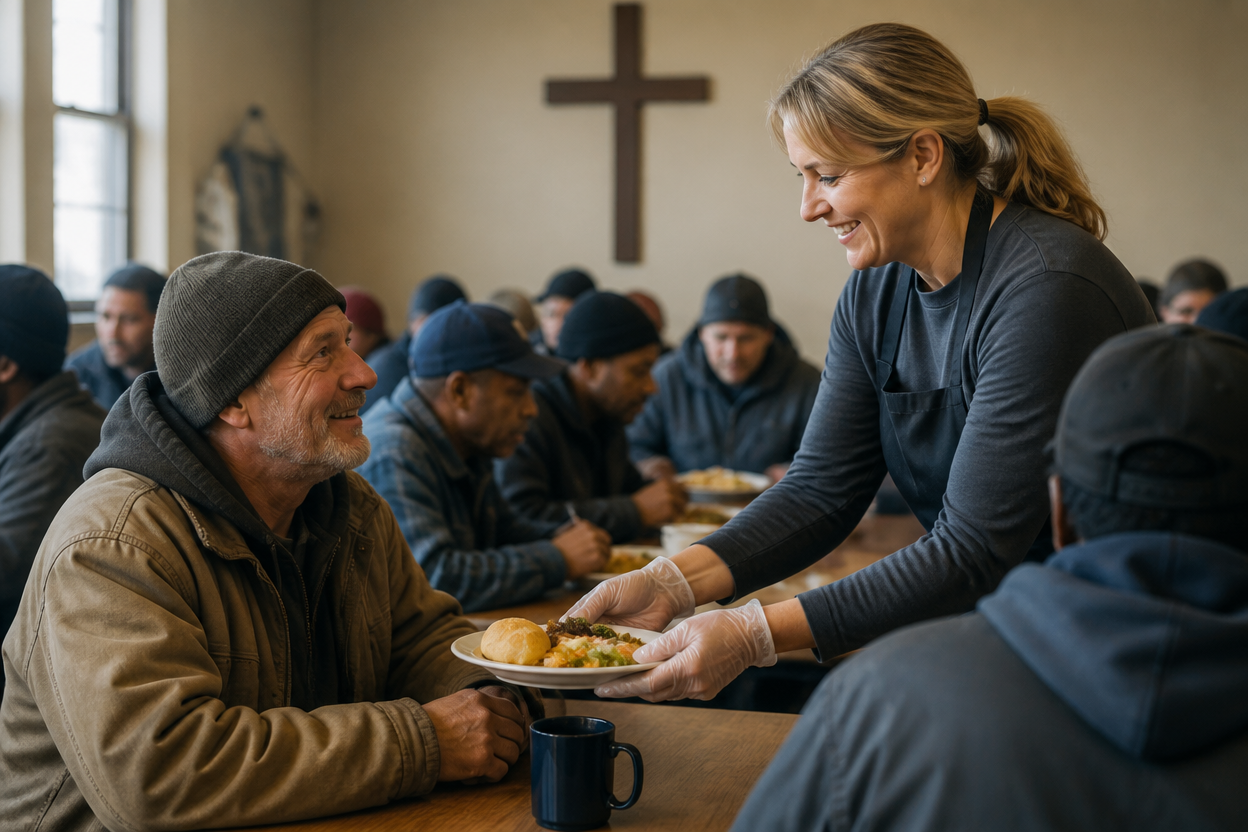
Emergency shelter is a ministry of presence, but it is also a ministry of logistics: staffing, food service, facility maintenance, safety protocols, and case documentation. Donors sometimes underestimate how operational competence protects guests. A well-run intake process can reduce conflict in dorms. Thoughtful security practices can protect vulnerable women and men without turning a shelter into a punitive environment. Strong volunteer systems prevent inconsistency and burnout.
What this means in practice is that some of the most spiritually serious work a mission does is unglamorous: training, supervision, policies, and a culture of accountability. The alternative is not “lean.” The alternative is fragile service.
Long-term restoration is rarely linear
When missions pursue recovery and life rebuilding, progress often comes with setbacks. Relapse, legal complications, family conflict, and untreated trauma can interrupt forward movement. Donors sometimes ask for certainty: “How many people permanently change?” Responsible ministries do not promise a straight line. They describe what they can control: faithful programming, qualified staff, transparent data, and a consistent invitation to repentance, dignity, and community.
Christians genuinely disagree about the right balance between requirements and low barriers. Some missions require sobriety for certain programs; others accept guests where they are. The question is not whether a policy sounds compassionate, but whether it is coherent, humane, and demonstrably protective of both the guest and the broader community within the shelter.
What donations pay for and why overhead is not the enemy
Donors often want their gift to “go straight to the people.” The instinct is understandable. Scripture condemns self-serving leadership and careless stewardship. Yet mature evaluation recognizes that people are served through systems—staffing, compliance, internal controls, training, and reporting. Underfunding those systems can create the conditions for waste, harm, or scandal.
Program expense is not the same as impact
Financial statements classify expenses as program, administrative, and fundraising. Those categories are useful, but they do not automatically indicate effectiveness. A mission can spend heavily on “program” and still fail to deliver durable outcomes if its programming is poorly designed or poorly supervised. Conversely, strong administrative functions can increase program impact by improving safety, staff retention, and accountability.
This is why the sector has increasingly pushed back against simplistic overhead ratios. Major evaluators have publicly stated that overhead alone is an inadequate measure of a charity’s performance (Charity Navigator). Donors should not ignore financial efficiency, but we should resist using a single percentage as a moral verdict.
Case management and recovery services are labor-intensive by design
Many of the interventions associated with long-term stability require trained staff: case managers, licensed counselors, recovery coaches, employment specialists, and program directors. If a mission offers addiction recovery programming, job readiness, or trauma-informed care, payroll will often be the largest expense. That is not inherently a problem; it is often a sign that the ministry understands that personal restoration is not produced by facilities alone.
In homeless services, the broader research landscape also underscores how complex the drivers of homelessness are, including housing costs, health, family disruption, and substance use. The National Academies’ major consensus study on homelessness details the multiple pathways into homelessness and the need for varied interventions (National Academies of Sciences, Engineering, and Medicine).
Capital costs and deferred maintenance affect guests directly
Donors sometimes prefer to fund “programs” rather than buildings. But a mission’s facility is often a front-line tool of care. A safe dorm, functional showers, secure storage, and clean kitchens are not luxuries. Deferred maintenance can become a safety risk and a dignity issue. In climates with severe heat or cold, HVAC reliability becomes a life issue, not a comfort issue.
When a mission asks for capital support, discerning donors ask for specifics: the condition assessment, project scope, contractor bids, timeline, and how leadership will avoid turning a one-time upgrade into an ongoing budget strain. Serious ministries welcome these questions.
How to recognize credible impact without demanding theatrical reporting
Christian donors rightly want evidence. The challenge is that rescue missions work with people whose lives are unstable, whose data is hard to track ethically, and whose success cannot be reduced to a single outcome. A mission’s reporting should be sober and concrete without turning neighbors into marketing assets.
Start with clear definitions and realistic outcomes
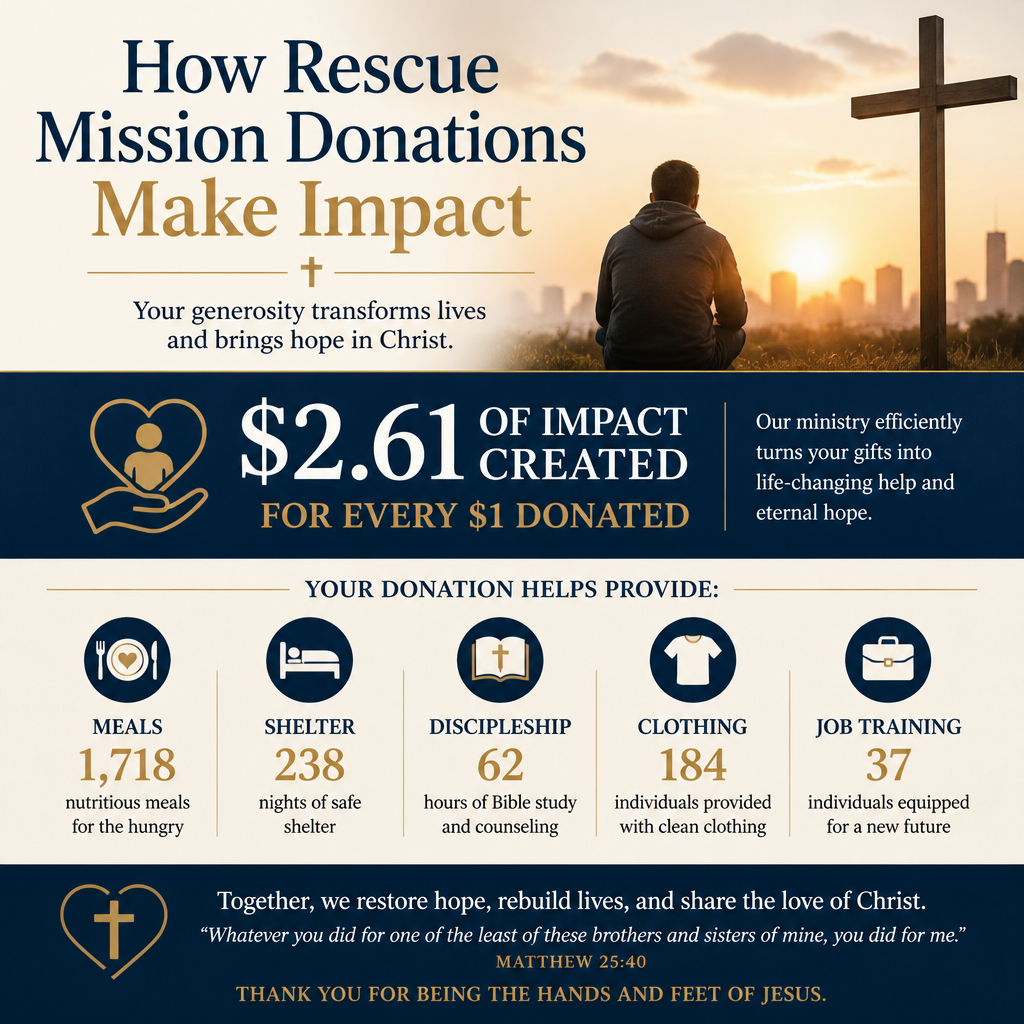
Impact claims should be stated plainly: “meals served,” “nights of shelter,” “unique guests served,” “completion of a recovery program,” “job placements,” “housing placements,” and “recidivism reductions” if measured responsibly. Each of these requires a definition. For example, is a “job placement” a part-time position held for one week, or employment retained for 90 days? Is a “housing placement” a lease signed, or stable housing maintained for six months?
We find that ministries with durable credibility tend to publish their definitions, explain their limitations, and avoid inflated language. They also distinguish outputs (services delivered) from outcomes (changes experienced), and they do not treat one as a substitute for the other.
Watch for program coherence and referral integrity
Impact is not only what happens inside the mission’s walls. It is also how the mission coordinates with churches, detox providers, mental health systems, workforce agencies, and housing partners. Effective missions typically have referral protocols that prevent “warm handoffs” from becoming “cold drops.” They can name their partner ecosystem and explain how decisions are made when beds are full or a guest’s needs exceed the mission’s capacity.
The harder question is whether the mission’s program model matches its theology of the person. If every neighbor is made in the image of God, then programming should neither infantilize nor abandon. It should combine mercy with agency: real expectations, meaningful relationship, and patient support. This aligns with the concerns raised in the When Helping Hurts framework articulated by Steve Corbett and Brian Fikkert, which warns that well-intentioned aid can unintentionally reinforce dependency or undermine dignity when it is not designed around wise forms of help (Moody Publishers).
Look for ethical storytelling and privacy protection
Donors are moved by testimonies, and testimony is a biblical pattern. Yet rescue missions should not require public disclosure as the price of receiving care. Ethical communications practices include informed consent, avoidance of exploitative imagery, and careful handling of sensitive histories. A mission can communicate impact through aggregated results and anonymized stories without putting vulnerable people on display.
Where transparency is strongest, donors can see the ministry’s restraint. Stories are offered as witness, not as spectacle.
How Most Trusted evaluates stewardship in rescue missions
Christian donors often carry a burden of discernment: we want to give freely, yet we have also seen moral failure, financial opacity, and inflated claims harm the witness of the church. The appropriate response is neither cynicism nor naivete. It is verification that honors both faith and evidence.
Most Trusted exists to help donors give with confidence by evaluating ministries against The Most Trusted Standard, a 15-criteria framework across four domains: Faith Foundation, Financial Integrity, Governance and Leadership, and Transparency and Effectiveness. For donors exploring Rescue Missions and Homeless Outreach, our approach aims to make the essential questions answerable.
Faith Foundation that is more than branding
Many organizations use Christian language. Donors should ask what form of Christian discipleship the mission actually practices. Is the gospel proclaimed with clarity? Are services conditioned on conversion, or offered as an expression of love of neighbor with an open invitation to faith? Christians disagree about the best approach, but a mission should be honest about its posture and consistent in its practice.
We look for confessional clarity, ecclesial humility, and evidence that spiritual care is handled responsibly—neither coerced nor marginalized.
Financial Integrity that can be examined, not merely asserted
Serious ministries make it easy to understand how money flows. Donors should expect accessible financial statements, a credible approach to budgeting and reserves, and appropriate internal controls. When an audit is relevant to the size and complexity of the organization, donors should expect an independent audit and a board that knows how to read it.
We also examine whether fundraising practices are truthful and proportionate. Restricted gifts should be honored. Appeals should not promise what the program model cannot deliver. Transparency here is not a public-relations strategy; it is obedience to truthfulness.
Governance and leadership that can withstand pressure
Rescue missions often operate in environments of crisis: guest conflicts, staff turnover, facility emergencies, and local political pressures around homelessness policy. A mission’s governance structures matter precisely because stress is normal. Donors should look for an active, independent board, clear conflict-of-interest policies, and leadership accountability that does not collapse into personality-driven control.
Where governance is mature, donors will also see succession planning and a culture that does not treat questions as disloyalty.
Transparency and effectiveness that welcomes evaluation
Claims of impact should be tied to reporting that is consistent over time. Ministries that meet The Most Trusted Standard tend to share both the fruit and the friction: what improved this year, what did not, and what they learned. They also avoid manipulating results through selective reporting. A mission can be genuinely faithful and still face disappointing metrics in a given season; the question is whether leadership responds with honesty and disciplined adaptation.
For donors, this kind of transparency is not merely informative. It is a sign that the ministry is willing to be known as it is, not as it wishes to appear.
Giving that honors mercy, truth, and long obedience
Rescue mission donations make impact when they fund immediate mercy without abandoning the longer work of restoration, and when they strengthen the systems that keep care safe and accountable. Christian donors are not purchasing outcomes as consumers; we are practicing stewardship as disciples. The most reliable ministries welcome scrutiny, tell the truth about complexity, and persevere in patient love for neighbors whose lives cannot be fixed on a fundraising calendar.



