
What a pastor retreat from a pastoral support ministry includes is not primarily a vacation package. It is a structured intervention for a vocation that exposes a man or woman to chronic spiritual pressure, relational strain, and moral risk, often while carrying the expectations of an entire congregation. For Christian donors, the question is not whether pastors “deserve a break,” but whether the church is willing to fund credible forms of care that protect the long-term health of shepherds and, by extension, the health of the people they serve.
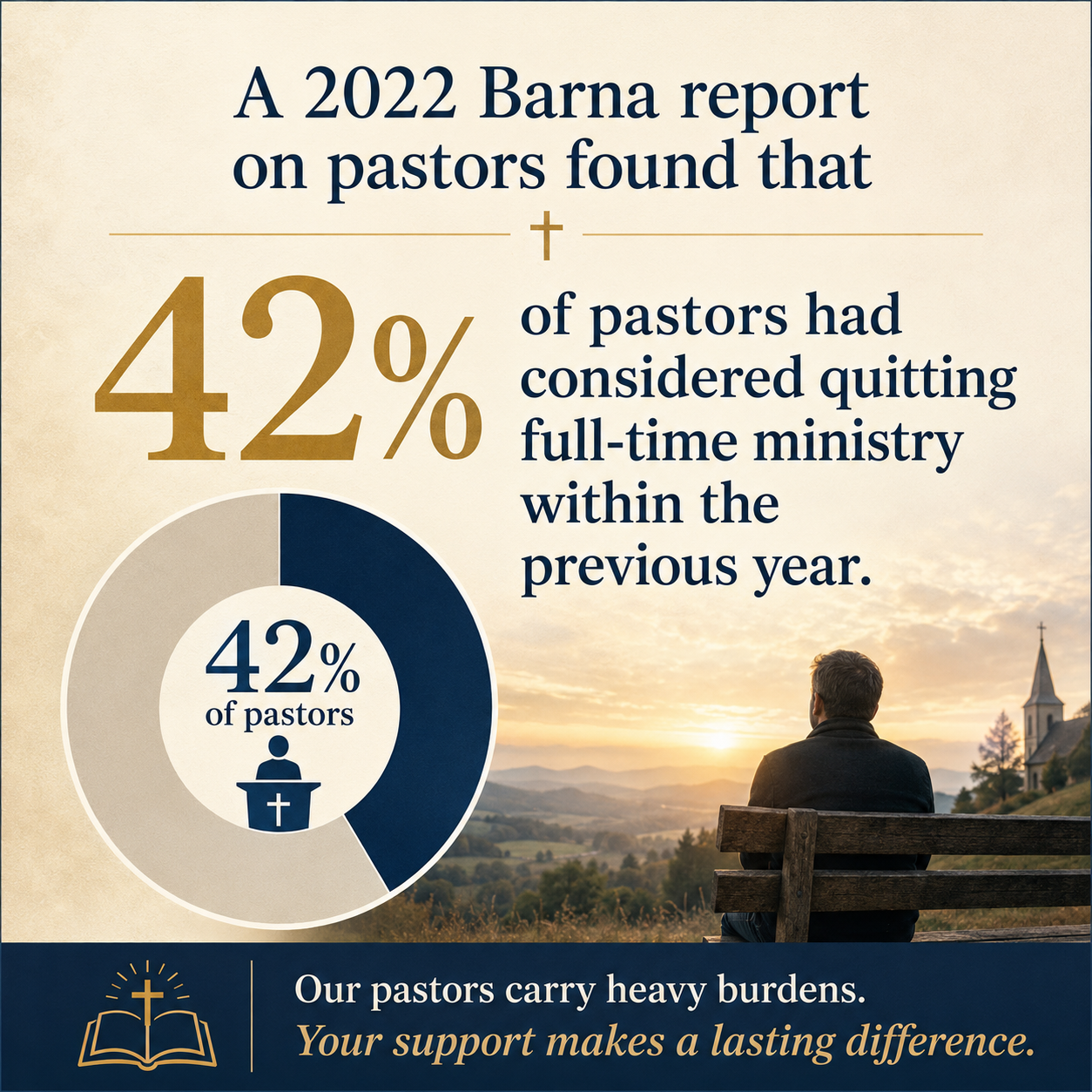
The need is widely recognized, even if the data is imperfect and sometimes contested. A 2022 Barna report on pastors found that 42% of pastors had considered quitting full-time ministry within the previous year.Barna That figure is not a diagnosis of a single cause; it reflects a convergence of burdens: congregational conflict, financial pressure, loneliness, blurred boundaries, and the cumulative effects of trauma exposure through counseling and crisis response.
Pastoral retreats are designed for restoration, not escape
A retreat becomes meaningful when it treats pastoral exhaustion as more than fatigue. Scripture speaks of weary laborers (Galatians 6:9) and of shepherds accountable to God for the care of souls (Hebrews 13:17). A wise pastoral support ministry does not sentimentalize either reality. It creates space for rest and also for truth-telling, repentance where needed, and renewed clarity about calling.
Time away is necessary, but it is not sufficient
Some retreat models assume that what pastors lack is quiet. Quiet helps. But pastoral burnout often involves moral injury, chronic conflict, and the corrosion of hope. A retreat that consists only of scenery and free time may offer temporary relief while leaving core dynamics untouched. Effective programs build in guided reflection, pastoral counseling, and re-entry planning so that rest becomes durable.
The retreat should protect the pastor and the congregation
When a pastor is depleted, the congregation frequently experiences it as diminished preaching, reactive leadership, or emotional distance. The retreat, then, serves both the shepherd and the flock. Donors sometimes hesitate to fund “internal care” rather than outward ministry outcomes. Yet Paul’s instruction to Timothy assumes that integrity and endurance in ministry are part of the mission itself: “Keep a close watch on yourself and on the teaching” (1 Timothy 4:16). The church’s external witness is not strengthened by privately collapsing leaders.

Most retreats include three kinds of rest: physical, relational, spiritual
Across pastoral care programs we evaluate, the strongest retreats treat a pastor as a whole person. They attend to the body, the marriage and family system, and the pastor’s communion with God. This is not therapeutic fashion; it is basic Christian anthropology.
Physical rest and a humane schedule
Many pastors live with irregular sleep, frequent evenings out, and a pace that never truly ends. A credible retreat establishes a rhythm: reasonable wake times, unhurried meals, limited programmed sessions, and protected quiet. Some ministries also include exercise, time outdoors, and guidance on sustainable routines. The point is not self-improvement. It is recovery of creaturely limits before God.
Relational rest that addresses marriage and friendships
Pastoral loneliness is not merely an introversion problem; it can be structural. A pastor may have many relationships but few peers who can speak candidly without consequences. Some retreats incorporate spouse participation, not as a token “couples getaway,” but as a serious investment in the marriage that often bears the hidden weight of ministry life. When spouses attend, wise programs provide private time together and also facilitated conversation that makes room for grief, fatigue, and forgiveness.
Spiritual rest grounded in the ordinary means of grace
Many pastors can preach the gospel fluently while struggling to receive it as personal consolation. Retreats that serve pastors well usually include guided prayer, Scripture meditation, worship, and, when appropriate, confession and communion. The aim is not emotional intensity. It is renewed attentiveness to Christ as the true Shepherd, the one who restores souls (Psalm 23:3) and who does not break bruised reeds (Isaiah 42:3).
Healthy retreats add skilled care, not just encouragement
Encouragement is necessary but can become evasive if it functions as denial. Pastors are not helped by platitudes or by a retreat culture that rewards performance spirituality. Strong pastoral support ministries combine warmth with expertise and appropriate clinical and pastoral competencies.
Professional counseling and trauma-informed support
Pastors often carry secondary trauma through counseling those in crisis, responding to abuse disclosures, walking with families through suicide, or navigating intense conflict. Research has documented that clergy can experience compassion fatigue and secondary traumatic stress, especially when supports are thin.American Psychological Association Not every retreat needs a clinical program, but many pastors benefit from sessions with a licensed counselor or therapist who understands ministry dynamics and confidentiality constraints.
Peer cohorts with carefully designed confidentiality
Group settings can be either healing or harmful. The best retreats form small cohorts with clear agreements: confidentiality, non-competition, no public ministry “networking,” and no pressure to disclose beyond wisdom. When done well, peer community interrupts isolation without turning the retreat into a group therapy experiment. It allows pastors to name the reality of their burdens without fear that honesty will be weaponized.
Practical tools for returning to a difficult context
A retreat that ends with “go back refreshed” may be setting a pastor up for a predictable crash. A more mature approach includes concrete planning: boundaries on availability, sabbath practices, sermon preparation rhythms, dealing with chronic critics, and aligning expectations with elders or boards. Some retreats facilitate a structured conversation with the pastor’s leadership team after the retreat, with the pastor’s consent, to reduce the likelihood that the same pressures immediately reassert themselves.
For donors, the hardest question is accountability without intrusion
Pastoral care is intimate work. It must protect privacy. Yet donors rightly ask whether a retreat ministry is responsible, well-governed, and effective. Mature Christian giving is not suspicion; it is stewardship. We see this tension repeatedly in verification: the most faithful ministries are both discreet about individuals and transparent about organizational integrity.
What responsible retreat ministries can report publicly
Even when individual stories must remain confidential, a ministry can still provide meaningful, verifiable information: the qualifications of counselors and facilitators, safeguarding and mandatory reporting policies, an explanation of the retreat model, governance practices, and financial statements. Donors can also look for clarity about who the retreats serve, how pastors are referred, and how the ministry avoids conflicts of interest with referring churches.
- Clear eligibility and referral criteria for participating pastors
- Documented safeguarding policies and complaint pathways
- Qualified facilitators with disclosed training and oversight
- Financial reporting that distinguishes program costs from fundraising
- Evidence of follow-up care after the retreat ends
How Most Trusted evaluates ministries that offer retreats
At Most Trusted, we evaluate Christian nonprofits against The Most Trusted Standard, a 15-criteria framework that examines faith commitments, financial integrity, governance and leadership, and transparency and effectiveness. In the pastoral support space, we pay particular attention to governance safeguards, confidentiality and safeguarding practices, and whether outcomes are framed responsibly. Pastors are not “units served”; they are shepherds and fellow image-bearers. A ministry can respect that dignity while still giving donors credible signals that resources are stewarded with care.
Donors who want to understand the broader ecosystem of care and where retreats fit within it can orient themselves through Pastoral Support Ministries. The field includes retreats, coaching, counseling, spiritual direction, and emergency relief. Not every pastor needs the same intervention, and not every context can support the same kind of follow-up.
Retreats work best when they are integrated into a longer care pathway
A retreat is often a turning point, but rarely a complete solution. If a pastor returns to an unchanged environment, old patterns tend to reappear. Some churches also unintentionally treat a retreat as a substitute for structural repentance: unrealistic expectations, poor elder functioning, under-resourcing of staff, or toleration of chronic conflict. A mature retreat ministry does not take responsibility for what only a church can address.
Follow-up coaching and local support
Many pastoral support ministries provide several months of coaching after the retreat, helping the pastor establish sustainable practices and address particular leadership challenges. Others coordinate with local counselors, peer groups, or denominational resources. The quality of follow-up matters because burnout is often cyclical: a pastor improves, then re-enters the same stressors and loses traction. Donors should ask what aftercare is offered and how the ministry ensures continuity without creating dependence.
Church leadership alignment and realistic expectations
Some retreats include a parallel track for spouses or a short consultation with elders, focusing on healthy expectations and communication rhythms. This is not always feasible, and it can be delicate. Churches vary widely in polity, culture, and openness to outside counsel. Christians genuinely disagree about how much external input is appropriate for a local congregation. Still, a retreat ministry can encourage basic principles that are difficult to argue with: sabbath is not optional, pastoral work has limits, and shepherds are not omnipresent.
For donors interested in the broader question of preventing collapse rather than responding after the fact, How Pastoral Support Ministries Prevent Pastor Burnout is the most direct lens. Prevention is less dramatic than crisis response, but it is often more faithful stewardship.
FAQs for What a pastor retreat from a pastoral support ministry includes
Should donors prefer retreats that include licensed counseling?
Not in every case, but counseling capacity is a meaningful indicator of seriousness when a retreat serves pastors in acute distress or long-term exhaustion. Some pastors primarily need sleep, prayer, and a reset of rhythms; others are carrying trauma, depression, anxiety, or marital fracture that requires clinical competence. Donors can ask whether the ministry has access to licensed professionals, how they supervise care, and what referral pathways exist when needs exceed the retreat’s scope.
How can a retreat ministry show effectiveness without violating confidentiality?
Responsible ministries avoid publishing identifiable stories without explicit permission, but they can still report credible indicators: participation numbers, retention in follow-up programs, aggregate survey results, governance practices, audited or reviewed financials, and clearly stated policies. The most trustworthy organizations distinguish between spiritual claims they cannot quantify and operational claims they can document. Donors do not need voyeuristic detail; they need evidence of integrity.
A retreat is a stewardship investment in the church’s future
What a pastor retreat from a pastoral support ministry includes should reflect a sober view of ministry: the calling is holy, the burdens are real, and the consequences of neglect are costly for families and congregations. Donors who fund pastoral care are not diverting resources from mission; they are strengthening the human instruments through whom much mission is carried. The most credible retreat ministries combine rest with skilled care, confidentiality with accountability, and spiritual depth with practical wisdom.



