

How to support discipleship ministries in missions work is ultimately a question about the church’s long obedience: the kind of ministry that forms people to obey everything Christ commanded, across cultures and over time. Donors often feel the weight of competing appeals—urgent physical need, evangelistic opportunity, institutional sustainability—and wonder what “faithful support” looks like when discipleship is slower, less visible, and harder to measure than many mission outputs.
Scripture does not treat discipleship as an optional add-on to gospel proclamation. Jesus’ final charge in Matthew 28 is not only to baptize, but to “make disciples… teaching them to observe all that I have commanded you” (Matthew 28:19–20). The giving question is therefore not whether discipleship matters, but how donors can strengthen discipleship ministries without rewarding unhealthy dependency, inflating claims, or funding programs disconnected from the local church.
Begin with a biblical definition of discipleship and a realistic account of formation
Discipleship is obedience-based formation, not content delivery
Many mission reports unintentionally treat discipleship as curriculum distribution, conference attendance, or a short follow-up sequence after conversion. Those tools can be useful, but they are not the substance. In the New Testament, discipleship is a relationship of teaching, imitation, and perseverance under the Word of God, carried into ordinary life. Paul’s language—“what you have heard from me… entrust to faithful men” (2 Timothy 2:2)—assumes multiplication through embodied leadership, not merely information transfer.
What this means for donors is straightforward: programs that only count inputs (books shipped, seminars held) are easy to fund but may not represent spiritual formation. We recommend looking for ministries that can describe how their discipleship actually reaches character, practices, and community life: worship, repentance, reconciliation, stewardship, family life, and mission.
Healthy discipleship ministries name the tensions donors often feel
Christians genuinely disagree about the best sequence of mission priorities: proclamation, compassion, church planting, theological education, economic development, trauma care, leadership training. The better ministries do not flatten these debates. They state their theological commitments, their place in a broader ecosystem, and what they will not claim to do. Donors should be wary of organizations that present discipleship as a simple product with guaranteed outcomes, especially in contexts shaped by persecution, low literacy, instability, or deep poverty.
Across our verification work at Most Trusted, we observe that ministries that meet The Most Trusted Standard tend to define discipleship with theological clarity and operational specificity. They can articulate the chain from resources and mentoring to local leaders and churches, while acknowledging where results are hard to quantify without pretending the work is unknowable.
Fund local church capacity rather than donor-facing activity
Prioritize indigenous leadership and accountable authority
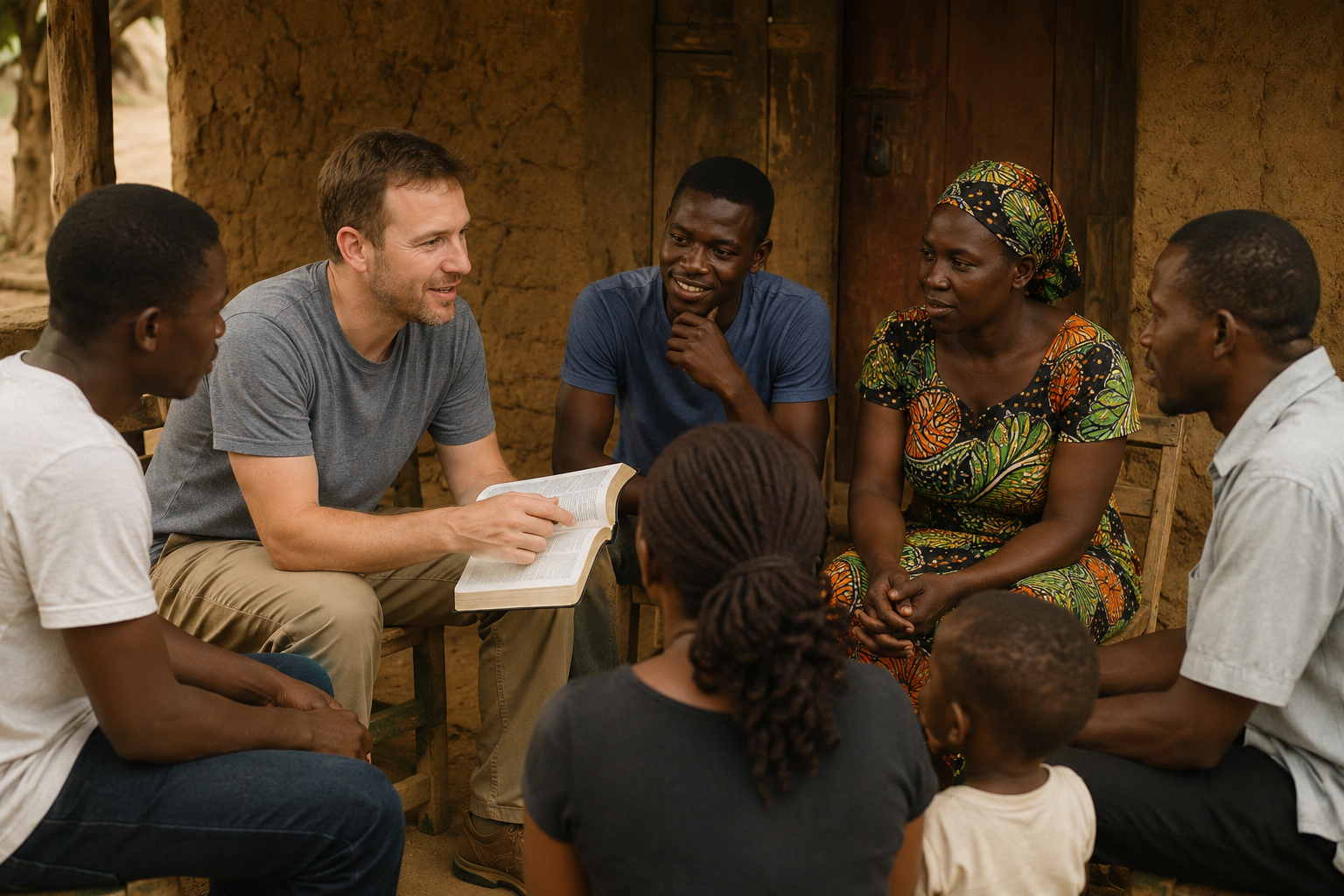
Discipleship ultimately resides in local spiritual authority—elders, pastors, and mature believers who can teach, correct, and shepherd with cultural and linguistic fluency. Donor money can either strengthen this authority or unintentionally bypass it by creating parallel structures accountable primarily to outsiders. The question is not whether cross-cultural workers matter; it is whether their work produces durable local leadership rather than permanent foreign dependence.
One practical test is governance and decision rights. Who decides the discipleship pathway? Who can correct a leader who drifts theologically or fails morally? Who controls key assets and budgets? A healthy missions partnership will show a credible line of accountability, not merely warm relationships.
Invest in the “boring” systems that make discipleship endure
Donors sometimes hesitate to fund what appears administrative: translation, training materials that require contextual review, safeguarding policies, secure communication in hostile environments, financial controls, or member care that prevents burnout. Yet discipleship ministries collapse when these supports are absent. The Apostle Paul’s mission work included logistics, sending networks, and careful collection practices (2 Corinthians 8:20–21). Mature donors can treat this as biblical stewardship, not overhead embarrassment.
The contemporary nonprofit sector has also had to correct simplistic “overhead” thinking. The joint “Overhead Myth” statement signed by GuideStar, Charity Navigator, and the BBB Wise Giving Alliance argues that administrative and fundraising ratios alone are poor proxies for effectiveness and can even damage organizations by pressuring them to underinvest in capacity and evaluation (GuideStar).
Give in ways that reduce harm and increase dignity
Apply the When Helping Hurts framework to discipleship funding
The When Helping Hurts framework, articulated by Steve Corbett and Brian Fikkert, has reshaped many mission conversations by naming how outside resources can undermine local initiative and relationships when they are not paired with dignity and mutuality. Discipleship ministries are not immune. If outside donors consistently pay for what local believers could sustain, or if they subsidize leaders without accountability to local congregations, the long-term effect may be fragility rather than maturity.
Donors can respond by asking whether the ministry’s funding model reinforces local responsibility. Are churches and participants contributing meaningfully, even if modestly? Are leaders trained to mobilize local generosity? Are subsidies time-bound and transparent? The goal is not to abandon the poor, but to support the kind of strengthening that aligns with the New Testament vision of mature churches that can give as well as receive (2 Corinthians 8).
Safeguarding and spiritual authority require discipline, not sentiment
Discipleship work often happens in close proximity: mentoring relationships, youth gatherings, counseling, residential training, and pastoral care. These are high-trust spaces, and therefore high-risk spaces. Donors should require clear safeguarding policies, background checks where feasible, training on power dynamics, and reporting pathways that do not route allegations solely to the accused leader’s friends. This is not a concession to secular compliance; it is love of neighbor, and it is consistent with Scripture’s concern for the vulnerable and for leaders’ accountability (James 3:1).
We recommend treating safeguarding as a discipleship issue in itself. A ministry that cannot articulate how it prevents abuse, handles accusations, and cares for survivors is not prepared to shape others in holiness.
Insist on verifiable integrity, not only compelling stories
Ask for transparency that matches the spiritual seriousness of the work
Discipleship ministries often communicate through testimonies, and testimonies can be truthful and edifying. But donors are stewards, and stewardship requires more than inspiration. When ministries ask for major gifts, they are requesting trust that has moral weight. At minimum, donors should expect accessible financial statements, a clear board structure, conflict-of-interest controls, and a transparent explanation of how funds move across borders.
U.S.-based ministries that are tax-exempt typically file IRS Form 990, which provides baseline visibility into governance, executive compensation, and spending categories (IRS). Form 990 does not prove faithfulness, but it does provide verifiable data that can corroborate or challenge a ministry’s narrative.
Use a disciplined framework for evaluation
Most donors do not have the time to conduct investigative due diligence across theology, governance, financial controls, and program integrity for every organization that appeals for support. That is one reason Most Trusted exists. We evaluate Christian nonprofits against The Most Trusted Standard, a 15-criteria framework across Faith Foundation, Financial Integrity, Governance and Leadership, and Transparency and Effectiveness. The goal is not to reduce ministry to metrics, but to help donors give with confidence—especially when discipleship outcomes are slower and harder to summarize in a quarterly update.
When donors adopt a common set of questions, they become less vulnerable to emotional manipulation and more able to recognize faithful patterns: honest reporting, sober claims, credible local partnerships, and spending that matches stated priorities.
- Theology and ecclesiology: Is discipleship anchored to Scripture and the local church, or treated as generic leadership training?
- Accountability: Who has authority to correct leaders, and how is discipline handled when sin or abuse occurs?
- Financial clarity: Are audited statements or reviewed financials available where appropriate, and are cross-border transfers documented?
- Safeguarding: Are policies, training, and reporting pathways clear, and are they actually implemented?
- Evidence of fruit: Are outcomes described with sobriety—stories supported by patterns, and patterns supported by data where feasible?
Support long-term formation with patient capital and aligned expectations
Discipleship requires time horizons most donors are not trained to hold
Many donors are accustomed to crisis-response giving, where rapid outputs are appropriate. Discipleship, by contrast, looks more like cultivation. It involves repetition, relapse, repentance, and perseverance. A donor who expects immediate, linear progress will pressure ministries toward superficial reporting or short-term programming that produces the appearance of activity without the substance of formation.
Patient support can take several forms: multi-year commitments, funding for leader development pipelines, support for theological education tied to church planting, and assistance for translation and contextualization efforts that are slow but foundational. Where security concerns prevent public reporting, donors can still ask for private documentation, third-party oversight, and clear guardrails on what can and cannot be verified.
Align giving with a coherent missions theology
Donors are not merely funding projects; they are participating in the church’s mission through financial stewardship. That requires coherent convictions about the relationship between evangelism and discipleship, word and deed, church and parachurch, local agency and outside assistance. If those convictions are unclear, donors will be pulled by whichever story is most moving that month.
Many donors find it helpful to keep their giving tethered to a defined set of commitments: local church health, leadership multiplication, protection of the vulnerable, and integrity in financial practice. For readers assessing ministries in this space, our coverage of Discipleship Ministries provides broader context on how these commitments function across different forms of Christian work.
FAQs for How to support discipleship ministries in missions work
Should donors prioritize evangelism over discipleship in missions giving?
Scripture binds them together. The Great Commission calls the church to make disciples, baptizing and teaching obedience to Christ (Matthew 28:19–20). Evangelism that is not followed by formation tends to produce vulnerable converts and unstable churches, while “discipleship” severed from the gospel easily becomes moral improvement. Donors can support ministries that integrate proclamation with accountable community life in the local church.
What should we ask a discipleship ministry for beyond stories and photos?
We recommend requesting verifiable information: governance structure, financial statements and how funds move to field partners, safeguarding policies, and a clear description of the discipleship pathway and who owns it locally. Where appropriate, ask for evidence of leader multiplication over time and honest reporting on setbacks. Readers comparing ministries across this field may also benefit from our editorial work on Discipleship Ministries in Missions and Community, which addresses recurring integrity and effectiveness questions donors face.
A faithful approach to funding discipleship in missions
Supporting discipleship ministries well requires more than generosity; it requires disciplined trust. Donors honor Christ when they fund what strengthens the local church, protects the vulnerable, and sustains long-term formation with transparent integrity. The work is rarely quick, often contested, and sometimes difficult to verify—but it is central to the mission Jesus gave his people, and it merits support that is as thoughtful as it is sacrificial.



