
What questions donors should ask disability ministry leaders is not a matter of suspicion; it is a matter of stewardship. Disability ministry sits close to the heart of God because it deals directly with human dignity, dependence, and belonging in the body of Christ. The same proximity that makes this work holy also makes it vulnerable to sentimentality, vague promises, and unexamined power.
Christian donors do not give merely to fund activity. We give to participate in love of neighbor ordered by truth. The leaders you support should welcome careful questions because clarity protects families, volunteers, staff, and the witness of the church. Across our verification work at Most Trusted, the healthiest ministries tend to be the ones most willing to be measured—spiritually, ethically, and operationally—against what they say they believe.
Ask whether the ministry understands disability theologically and ecclesially
Disability ministry is not simply a set of accommodations. It is discipleship and ecclesiology: who belongs, who leads, and what the church believes about weakness and glory. Donors should listen for a theology that honors the imago Dei without romanticizing suffering or treating disabled people as props for inspiration.
What is your doctrine of human dignity in practice
A ministry’s stated beliefs are important, but donors should press for how those beliefs show up in decisions. Ask how the ministry speaks about disability from the pulpit, in marketing, and in volunteer training. Ask whether their language treats people primarily as “special needs,” “clients,” or “friends and members,” and how they guard against reducing a person to a diagnosis.
Scripture gives donors categories that are both tender and bracing. Paul does not deny weakness; he locates God’s power there (2 Corinthians 12). James warns the church against dishonoring the poor in the gathering (James 2). Those themes should shape whether the ministry’s programs foster belonging and mutuality rather than a one-directional “service” posture.
How do you define success for disabled people in your care
Many disability ministries serve families carrying chronic fatigue, social isolation, and financial strain. Some leaders are tempted to define success as attendance, volunteer hours, or emotional “impact” moments. We recommend asking how the ministry measures success in terms of faith formation, safety, family resilience, and durable inclusion in the local church.
Christians genuinely disagree about how much specialized programming is helpful versus how quickly a church should move toward full integration. Donors should not demand uniform answers. They should demand that leaders have thought carefully, consulted families, and can articulate trade-offs without defensiveness.
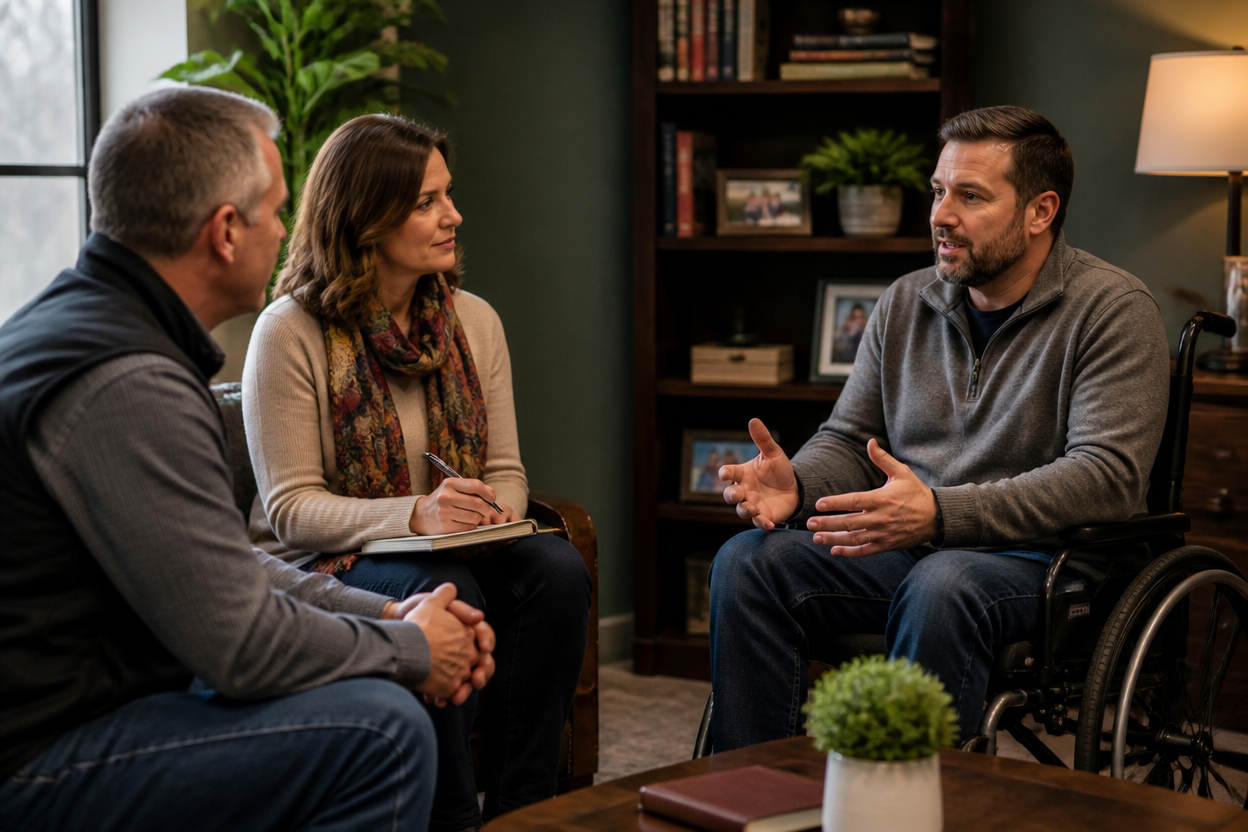
Ask how the ministry protects people from harm and respects agency
Disability ministry frequently involves minors, vulnerable adults, intimate care needs, and complex behavioral situations. That reality requires more than good intentions. Donors should prioritize ministries that treat safety, consent, and dignity as non-negotiables.
What safeguards govern volunteers and staff
Ask about background checks, two-adult policies, incident reporting, and how the ministry documents care plans. Ask what happens when a volunteer oversteps boundaries or when a family reports a concern. A mature leader will describe process, accountability, and follow-through rather than relying on relational trust alone.
Child protection and abuse prevention have become clearer across the sector because the costs of failure have been devastating. For donors who want broader context on disability-specific programming and oversight, we track patterns and expectations across How Disability Ministries Use Donations, including the kinds of expenses that indicate serious investment in training and risk management.
How do you honor consent and communication differences
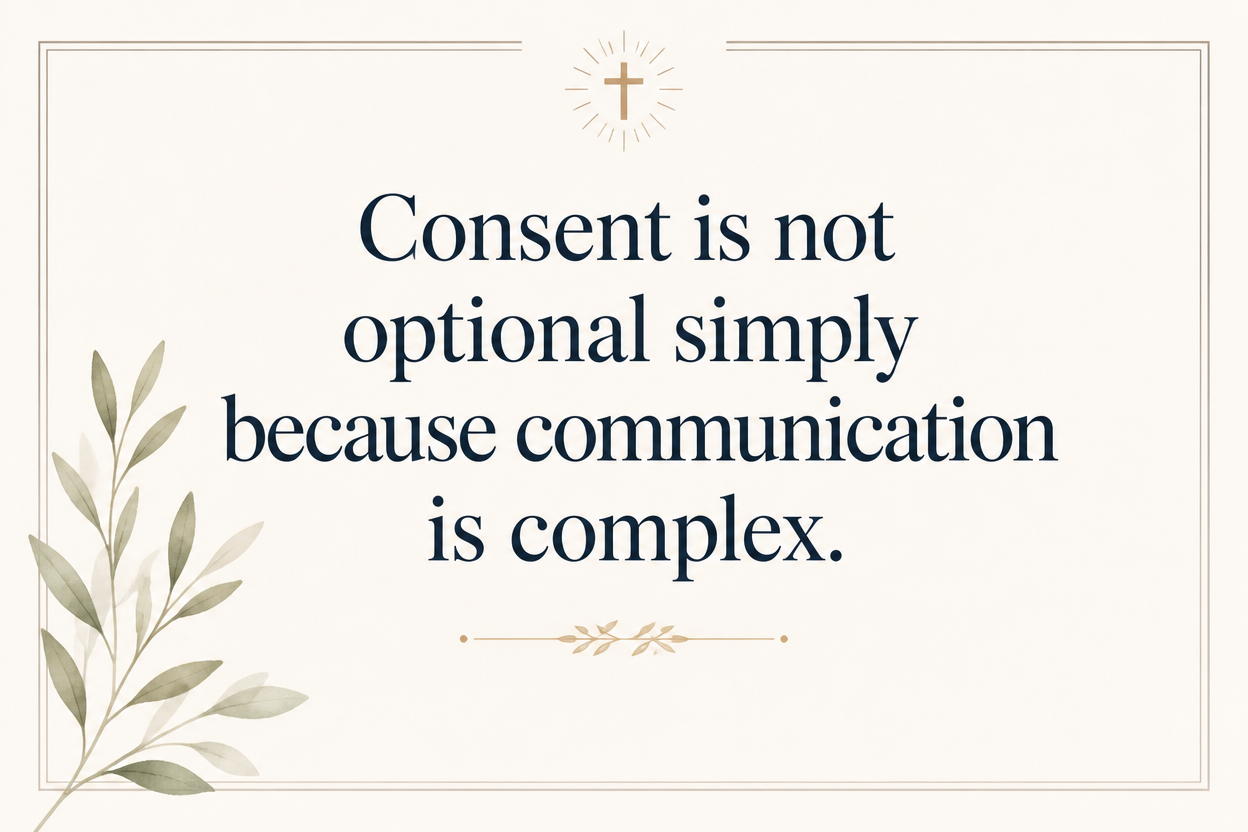
Consent is not optional simply because communication is complex. Donors should ask how the ministry supports choice-making for non-speaking participants, people with intellectual disabilities, or adults under guardianship. Ask whether they use supported decision-making practices, visual supports, or communication devices when needed, and how they avoid treating compliance as spiritual maturity.
Where personal care is involved, donors should press for clear dignity standards: privacy, same-gender care when appropriate, and policies that prevent unnecessary physical contact. The goal is not bureaucratic control. The goal is protection of the vulnerable and a culture where people are treated as neighbors, not projects.
Ask what inclusion looks like beyond events and programming
Many churches can host a respite night. Fewer can sustain a culture of belonging that endures when the ministry is tired, when a participant’s needs are disruptive, or when the person has little to “give back” in obvious ways. Donors should ask leaders whether their vision is occasional access or full participation in the life of the church.
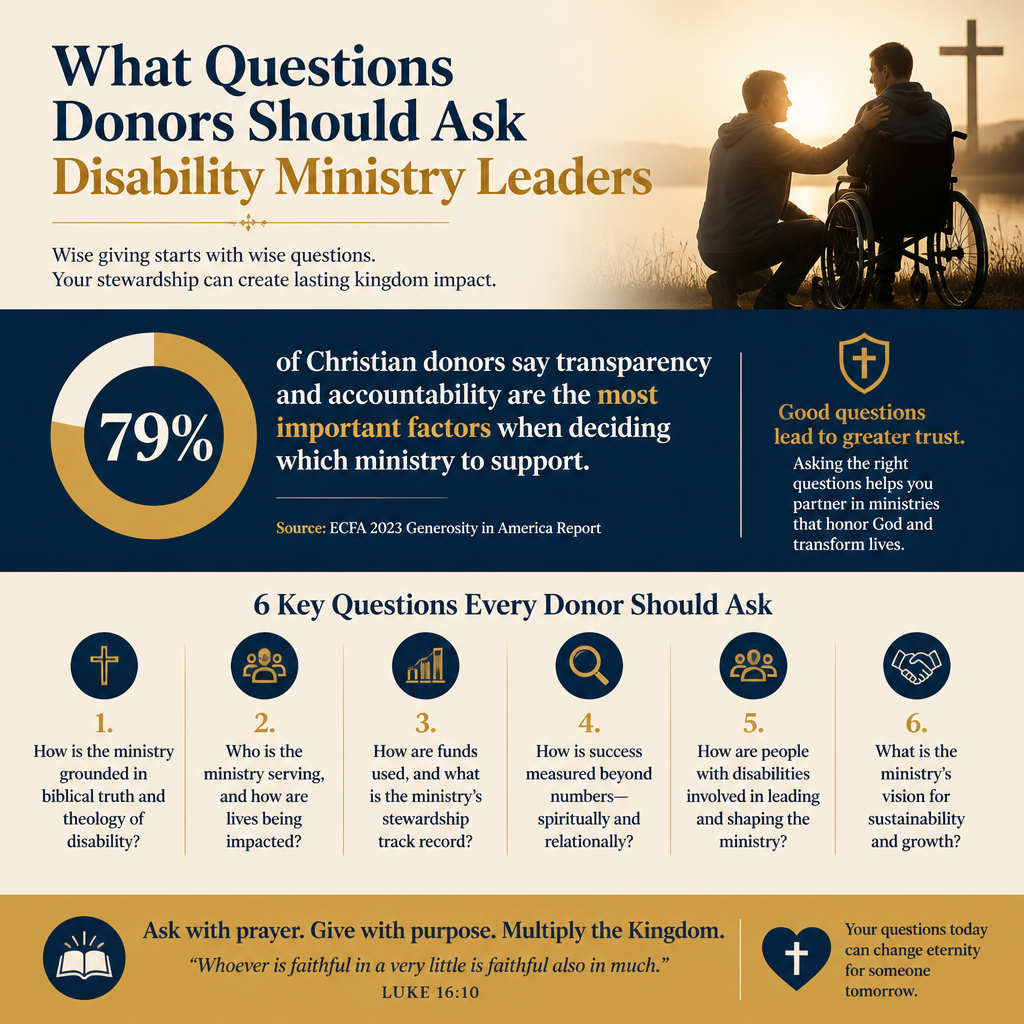
How does your ministry move people toward membership and discipleship
Ask how disabled children and adults are included in worship, prayer, sacraments, small groups, and service. Some ministries excel at parallel programming but never connect participants to the wider congregation. Others integrate quickly but fail to provide the supports that make participation realistic. Wise leadership names both risks and builds bridges gradually.
Ask whether the ministry equips the entire church—greeters, ushers, student ministry leaders, small-group hosts—not just the disability team. Inclusion that relies on a single coordinator is fragile. Inclusion that is shared across the body becomes part of the church’s ordinary life.
How do you partner with families without displacing them
Families are often the long-term caregivers, advocates, and spiritual companions of their loved ones. Donors should ask how the ministry listens to families, includes them in planning, and avoids paternalism. Strong leaders will describe concrete feedback channels and patterns of responsive change.
- How do you gather and act on family feedback across the year?
- What supports do you offer caregivers beyond childcare or respite?
- How do you serve siblings who may carry overlooked burdens?
- How do you handle disagreements about behavior plans or participation?
- What is your policy when a family’s expectations and the church’s capacity do not match?
These questions press toward a central issue: whether the ministry sees families as partners with expertise or merely as recipients of charity.
Ask for financial and governance clarity without using simplistic ratios
Donors routinely ask, “How much goes to programs?” That question is understandable, but it can be misleading. Disability ministry requires staff time, training, safety infrastructure, transportation, and adaptive materials. Underfunding these “non-program” costs can create real harm. The more faithful question is whether spending aligns with mission, safeguards people, and can be explained transparently.
How do you budget for safety, training, and accessibility
Ask leaders to name the major cost drivers of their work and to explain why they matter. Accessibility is not only ramps and elevators. It can include sensory-friendly spaces, adaptive curriculum, professional consultation, and staff development. If a ministry seems proud of operating “on a shoestring,” donors should ask what is being deferred and who bears the cost.
We also recommend learning from the sector-wide correction to fixation on overhead. The joint statement known as the Overhead Myth—signed by Charity Navigator, Candid, and the BBB Wise Giving Alliance—argues that simplistic overhead ratios can mislead donors and punish investments in effectiveness and governance Charity Navigator. Disability ministry often exposes why that warning matters: the most protective practices are not always the cheapest.
Who holds authority and how is it accountable
Ask about board composition, conflict-of-interest policies, executive compensation review, and how the ministry handles related-party transactions. These are not distractions from spiritual work. They are the structures that keep power from becoming corrosive. When leaders resist basic accountability, donors should treat that resistance as a signal.
For donors who want a broader map of what healthy accountability tends to look like across this field, our topic work in Disability Ministries compares common models and highlights questions that repeatedly separate mature organizations from fragile ones.
Ask for evidence of impact that respects the person, not just the story
Disability ministry fundraising can drift toward the emotionally compelling story. Stories are not wrong; Jesus himself taught with parables. But stories can also become a substitute for truth. Donors should ask for evidence of effectiveness that respects privacy and avoids exploiting someone’s vulnerability to generate donations.
What outcomes do you track and why
Not every ministry can run formal studies. Still, leaders should be able to describe what they measure, what they learn, and how they improve. Ask whether they track volunteer retention, family satisfaction, incident reports, discipleship milestones, and integration into broader church life. Ask what they have stopped doing because it did not work.
Where the ministry serves children with disabilities in partnership with schools or provides educational supports, donors can reasonably ask whether leaders understand the legal and practical realities families face. In the United States, roughly 7.5 million students ages 3–21 received special education services under IDEA in 2022–23, which illustrates the scale of disability-related educational need that many families navigate National Center for Education Statistics.
How do you communicate impact without violating dignity
Ask whether the ministry has policies for photographs, testimonials, and medical information. Ask whether participants can opt out without losing access to programs. Ask whether the ministry’s communications portray disabled people as full members of the church rather than as objects of pity or occasions for others to feel compassionate.
Leaders should also be able to explain how they handle complex situations that do not fit a clean narrative: a family in crisis, an adult participant with repeated safety incidents, or a volunteer team stretched beyond capacity. Truthful reporting honors donors and protects the people the ministry exists to serve.
FAQs for What questions donors should ask disability ministry leaders
Is it appropriate to ask about theology when evaluating a disability ministry?
Yes. Disability ministry inevitably expresses theological commitments about human dignity, weakness, belonging, and the church’s responsibilities. Donors are not asking for abstract statements; we are asking whether the ministry’s practice aligns with historic Christian conviction that every person bears God’s image and should be treated with honor. A leader who cannot articulate this connection will often default to sentimentality or pragmatism when difficult decisions arise.
What financial documents should a donor request from a disability ministry?
At minimum, donors should be able to review recent financial statements and an annual report or similar disclosure that explains programs and governance. In the United States, many nonprofits also provide the IRS Form 990 when applicable. The goal is not to micromanage, but to confirm that leadership can explain how resources are governed, how conflicts of interest are handled, and how spending decisions protect participants and advance the mission.
A donor’s questions can be an act of love
Disability ministry is often where the church’s stated convictions meet costly reality: time, patience, training, facilities, and a willingness to be interrupted. The questions donors should ask disability ministry leaders are ultimately questions about truthfulness, safety, and whether the ministry’s work makes durable space for disabled people to belong as fellow heirs in Christ. When leaders answer with clarity and humility—and when donors respond with faithful generosity—the church’s care becomes more than an event. It becomes a credible witness.



