
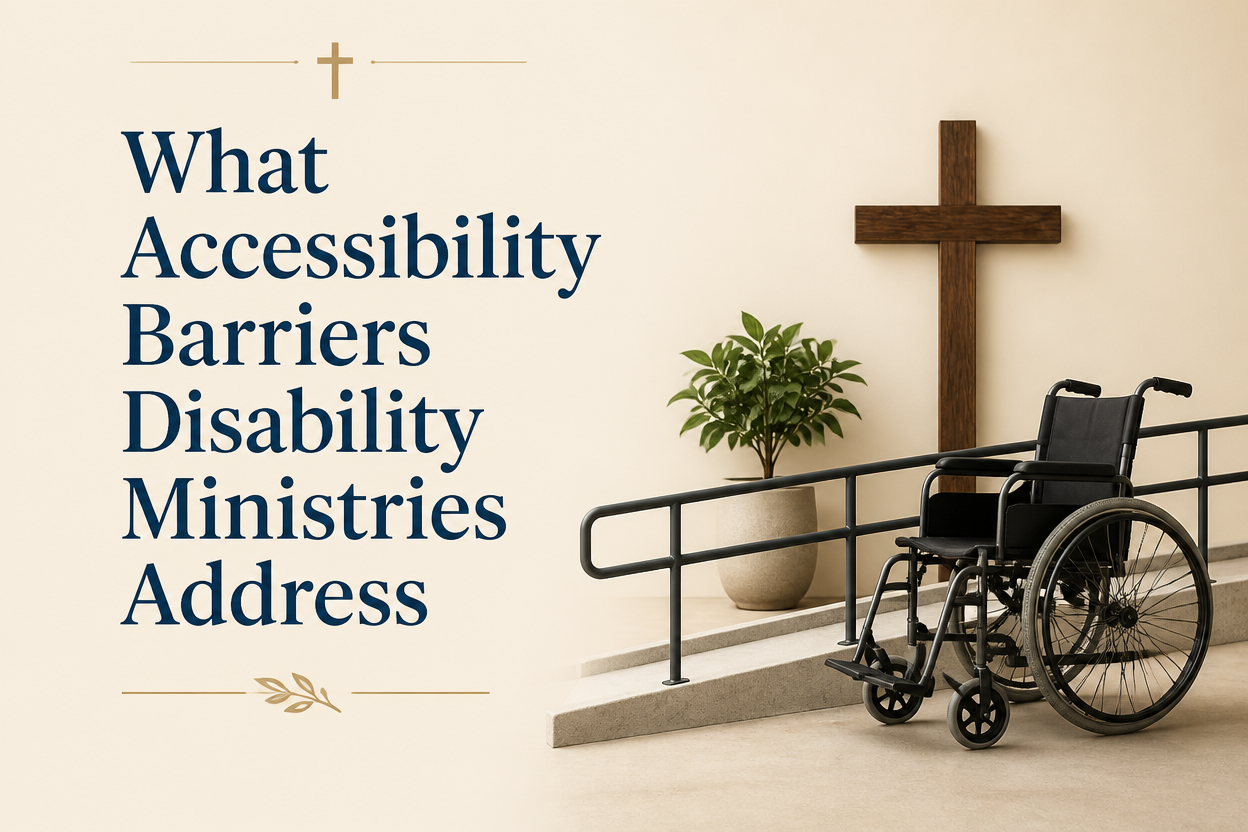
What accessibility barriers disability ministries address is ultimately a discipleship question before it is an architectural one. If the church is Christ’s body, then exclusion—whether by stairs, stigma, or silence—contradicts what we confess about belonging, honor, and mutual care (1 Corinthians 12).
Donors often meet disability ministry through a compelling story: a child finally able to participate, a family relieved to worship without fear, a congregation learning to see more clearly. The harder work is less visible. Accessibility is not a single project but a set of barriers—physical, communicative, sensory, attitudinal, programmatic, and digital—that accumulate over time. Wise giving asks which barriers a ministry is addressing, how it measures progress, and whether its practices reflect durable Christian accountability.
Physical access is the beginning, not the whole
The most familiar barriers are architectural: stairs without ramps, narrow doorways, inaccessible restrooms, poor lighting, uneven flooring, or a lack of designated seating that does not isolate. These matters can sound mundane until we name what is at stake: a person’s ability to enter the assembly and remain there with dignity.
Disability ministries frequently begin by helping churches see physical access as hospitality rather than compliance. It is also a matter of justice. The New Testament assumes that the gathered church will include the vulnerable and the poor, not merely as recipients of charity but as co-heirs and contributors (James 2:1–7).
Common physical barriers ministries address
- Entrances, ramps, and door hardware that are difficult for wheelchair users or those with limited grip strength
- Restroom access that forces families to leave early or avoid attendance altogether
- Seating layouts that segregate or place people where they cannot see, hear, or participate
- Parking and drop-off patterns that assume mobility, speed, and low fatigue
- Stages and platform access that quietly prevent disabled believers from serving visibly
Many donors underestimate the cost and complexity of this work. Construction can be expensive, and older buildings pose real constraints. Yet the moral logic is straightforward: when the ordinary pathway into worship excludes some of Christ’s people, the church must consider whether it is treating the “weaker” members as less necessary, the very error Paul corrects (1 Corinthians 12:22–26).
Where donor discernment matters
Physical modifications are measurable, which is both strength and temptation. A ministry can point to a ramp and still neglect deeper barriers that keep families away. Across our verification work at Most Trusted, we observe that stronger ministries treat physical access as a baseline commitment accompanied by training, policies, and pastoral practice that sustain inclusion over time.
Communication barriers isolate people even when they can enter the room
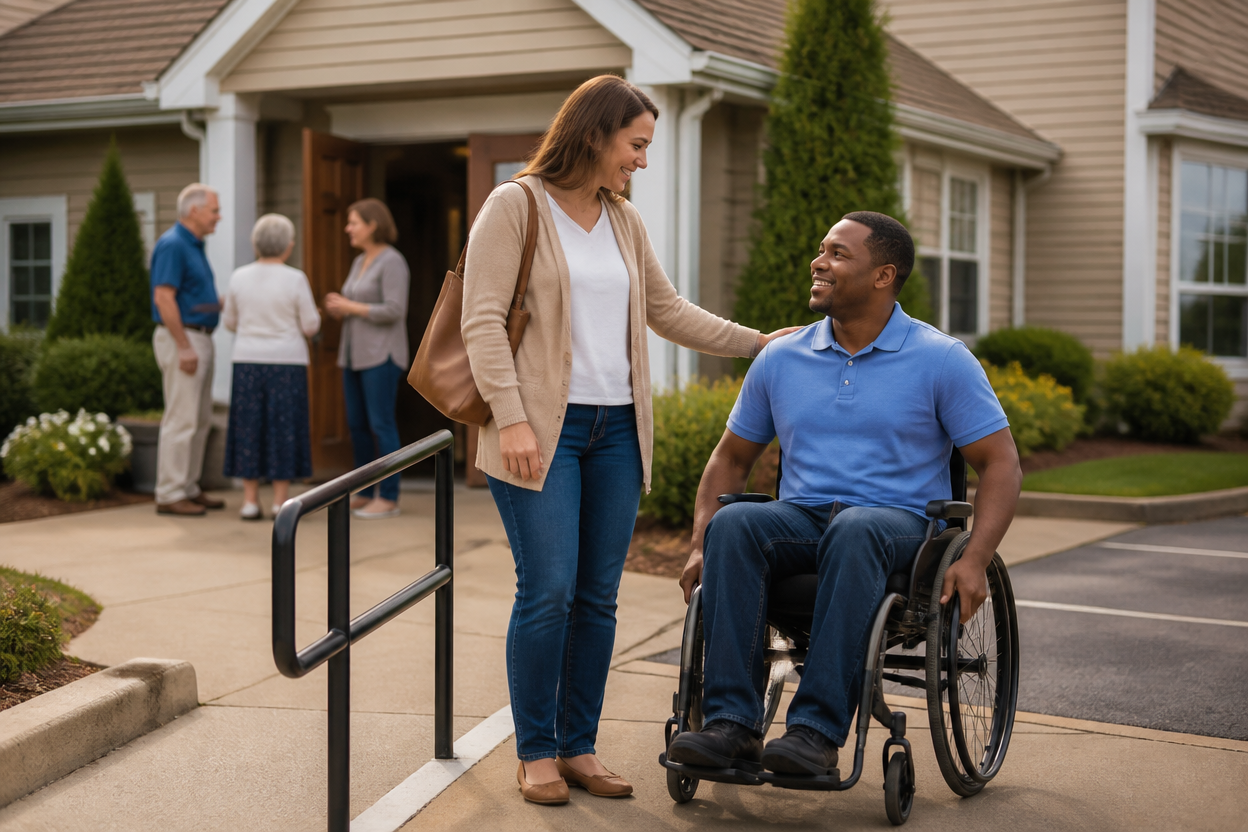
A church may be physically accessible and still effectively inaccessible if people cannot understand what is said, express needs, or be understood without shame. Communication barriers include hearing loss, speech disabilities, aphasia after stroke, intellectual disability, traumatic brain injury, and the needs of Deaf congregants whose primary language is sign.
Hearing and language access in worship
Disability ministries address communication barriers through assistive listening systems, captioning, ASL interpretation, clear sightlines, and written materials that match reading levels. They also coach leaders to speak into microphones consistently, to provide slides with sufficient contrast, and to avoid rapid unstructured transitions that leave some behind.
For donors, this is a key principle: accessibility is not only about the body’s movement through space. It is also about the Word being proclaimed and received. Scripture’s vision of the church presumes intelligibility and mutual upbuilding (1 Corinthians 14:26). When some consistently cannot hear or process what is happening, the gathered church is diminished.
Information that families can trust
Communication barriers often begin before a family ever arrives. If a church website lacks clear information about accommodations, parents are forced into an awkward negotiation at the door. Disability ministries frequently help churches publish accessibility information plainly and accurately, including who to contact, what supports exist, and what limitations remain.
Digital access is increasingly part of this equation. The U.S. Department of Justice has emphasized that web accessibility is expected under the Americans with Disabilities Act for public-facing services, including many entities that serve the public, which has pushed many organizations to treat accessibility as a standard operating practice rather than a special project (U.S. Department of Justice ADA).
Sensory and neurodiversity barriers affect whether families can remain
Many families describe the decisive moment not as getting into the building, but as whether they can stay without crisis or humiliation. Neurodiversity and sensory differences—common in autism, ADHD, trauma histories, and some intellectual disabilities—interact with typical church environments: bright lights, unpredictable noise, crowded hallways, strong smells, and lengthy services with few breaks.
Predictability, regulation, and the ethics of belonging
Disability ministries address these barriers through sensory-friendly spaces, predictable routines, visual schedules, trained volunteers, and de-escalation practices that avoid punitive assumptions. The goal is not to eliminate difference but to remove unnecessary obstacles to worship and fellowship.
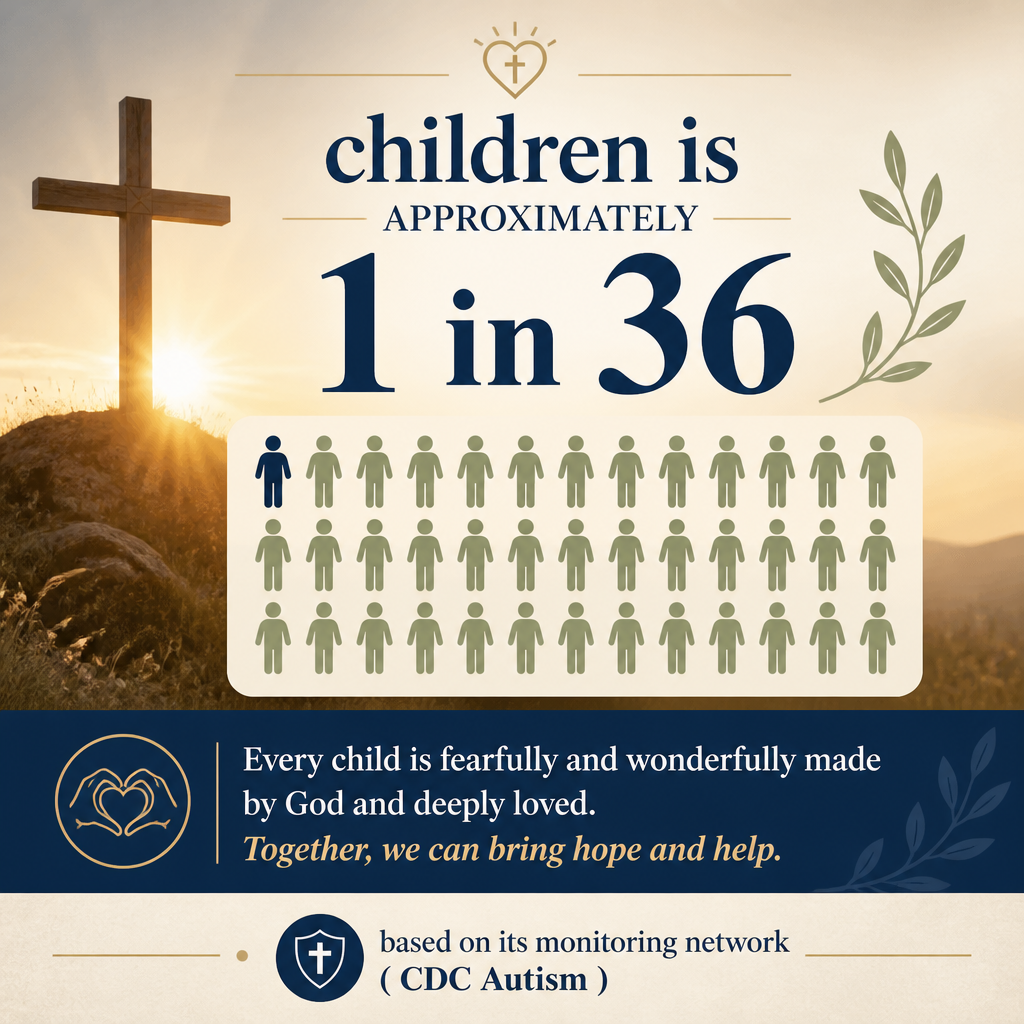
The need is not marginal. The Centers for Disease Control and Prevention reports that autism prevalence among U.S. children is approximately 1 in 36, based on its monitoring network (CDC Autism). Families affected by disability are present in virtually every congregation. When churches cannot receive them, the practical message is that “normal” is the price of admission.
Respite and family support as accessibility
Sensory accessibility also includes care for caregivers. Disability ministries often create respite rhythms: trained buddy programs, structured Sunday supports, or midweek gatherings that give parents time to worship, serve, or simply breathe. This form of accessibility can feel less “official” than construction, but it is often the decisive factor for sustained church participation.
When donors evaluate this work, it is fair to ask how a ministry trains volunteers, screens workers, and handles safeguarding. A well-intentioned buddy program that is under-supervised can expose vulnerable participants to harm. Responsible ministries build their programs with governance, policy, and transparency equal to the sensitivity of the population served.
Attitudinal and spiritual barriers can be the most entrenched
Some barriers are built into the assumptions congregations carry: that disability is primarily a problem to be fixed, that certain behaviors are always “disruptive,” or that disabled people are objects of compassion rather than full participants in the church’s mission. Disability ministries often spend as much effort on culture as on accommodations.
Theology that strengthens rather than sentimentalizes
Christian traditions genuinely disagree about healing, suffering, and the meaning of disability. Serious disability ministry does not pretend those tensions do not exist. It teaches a theology of the body that can hold both prayerful expectation and patient endurance, without making a person’s faith the explanation for whether their disability changes.
Paul’s “thorn in the flesh” remains a difficult text precisely because it resists simplistic conclusions (2 Corinthians 12:7–10). Disability ministries that mature the church tend to use Scripture to widen the community’s moral imagination: God’s power is not threatened by dependence, and honor is not reserved for the visibly strong.
From inclusion to belonging and contribution
Many churches can name inclusion as a value while still treating disabled believers as perpetual recipients. Disability ministries address this by creating pathways for service: greeting, prayer, music, tech, teaching with supports, and leadership roles that fit gifts rather than stereotypes. This is not tokenism; it is ecclesiology.
This is also where donors should read carefully. A ministry’s public messaging may center families served, but its internal practice should show whether disabled believers are treated as agents with voice. The most trustworthy work is often quieter: listening processes, advisory councils that include disabled adults, and leadership development over years rather than a single awareness weekend.
Program and policy barriers determine whether accessibility endures
Accessibility fails most often through inconsistency. A church may have a ramp, a sensory room, and kind volunteers, but still collapse under volunteer burnout, unclear expectations, or crisis moments handled improvisationally. Disability ministries therefore address program design, training systems, and policies that protect both participants and volunteers.
Practices that reduce harm and increase stability
Disability ministry sits close to vulnerable people. That requires safeguarding discipline: screening, two-adult policies, incident reporting, medication protocols when relevant, and clear escalation plans. It also requires coordination with parents and caregivers who know triggers, communication needs, and health concerns.
Program barriers also include the quiet friction that wears families down: a check-in system that cannot record accommodations, classrooms that change weekly without notice, or leaders who treat disability supports as exceptions granted begrudgingly. Ministries that address these barriers are usually building repeatable systems rather than heroic one-off efforts.
What donors can verify before funding
Donors are right to ask for evidence that a ministry’s accessibility work is more than aspirational. At Most Trusted, our verification work evaluates ministries against The Most Trusted Standard, a 15-criteria framework across Faith Foundation, Financial Integrity, Governance and Leadership, and Transparency and Effectiveness. In disability ministry, those criteria matter in concrete ways: whether training is documented, whether leadership oversight is real, whether finances match stated priorities, and whether outcomes are described with clarity rather than sentiment.
For donors who want a broader view of how these issues intersect in church life, we track patterns and resources across Church Accessibility and Disability Inclusion. The field is developing quickly, and credibility increasingly belongs to organizations that can demonstrate both theological seriousness and operational competence.
When selecting partners, it is also prudent to ask what a ministry means by “success.” Accessibility is not always a simple metric, and ministries should avoid treating families as numbers. Still, the absence of any measurable commitments—training completion, volunteer retention, family feedback loops, accommodations delivered as promised—often signals fragility.
FAQs for What accessibility barriers disability ministries address
Do disability ministries primarily address physical barriers like ramps and elevators?
They address physical barriers, but durable disability ministry goes further. Communication access, sensory and neurodiversity supports, volunteer training, safeguarding policies, and pathways for disabled believers to contribute are often more determinative for whether families can worship consistently. Physical access is a baseline; belonging requires a more comprehensive view of what prevents participation.
How can donors evaluate whether a disability ministry is trustworthy?
Donors can ask for clear descriptions of programs, training, and safeguards; evidence of leadership oversight; and transparent financial reporting that matches stated priorities. Ministries that meet The Most Trusted Standard tend to show disciplined governance, credible theology, and effectiveness communicated without exaggeration. They also typically demonstrate that disabled people are listened to and included in shaping programs, not only served by them.
A Christian account of accessibility is an account of the church
Accessibility barriers are rarely only technical problems. They reveal what a congregation assumes about whose presence is expected, whose needs are legitimate, and whose gifts are worth receiving. Disability ministries at their best do not merely add accommodations; they help the church become more recognizably itself.
For donors, the goal is not to fund a trend but to underwrite faithful, accountable work that removes unnecessary obstacles to worship and witness. For those seeking a fuller picture of the ministry landscape, our coverage of Disability Ministries is designed to support giving that is both compassionate and verifiable.



