
Christian stewardship services and planned giving raise a question that mature donors do not evade: how do we order our assets so that they serve the Kingdom without neglecting family obligations, tax realities, and the long moral shadow that money can cast? Planned giving is not a sentimental add-on to annual generosity. It is a disciplined way of ensuring that what God has entrusted to us continues to bear fruit after our hands can no longer manage it.
Scripture’s clarity is bracing. “Moreover, it is required of stewards that they be found faithful” (1 Corinthians 4:2). That faithfulness includes prudence: the Proverbs commend foresight and provision, even as Jesus warns against the illusion that life consists in abundance of possessions (Luke 12:15). Planned giving sits in that tension. Done well, it resists both anxiety-driven hoarding and impulsive generosity that creates disorder for heirs, churches, and ministries.
Planned giving is about lordship before it is about instruments
Most Christians encounter planned giving through a particular tool—a bequest, a charitable gift annuity, a donor-advised fund, or a charitable remainder trust. The more foundational question is worship. Whose priorities will govern the distribution of assets when emotions, health, and clarity are diminished? Jesus’ teaching on treasure is not an occasional admonition; it is a repeated diagnostic of the heart (Matthew 6:21). A Christian estate plan is one way of putting that diagnostic to work before a crisis forces rushed decisions.
Christians genuinely disagree about how much to leave children, when to prioritize church and ministry, and whether significant “dynastic” wealth is ever wise. These are not purely technical disputes; they are competing moral intuitions about responsibility, formation, and freedom. In our observation, the strongest stewardship conversations begin by naming those convictions explicitly, then translating them into a plan that can withstand both time and relational pressure.
The moral logic of bequests and end-of-life gifts
A bequest is simple in form but weighty in meaning. It is often the largest single gift a donor makes, and it arrives when the donor can no longer clarify intent. That is why the spiritual logic matters: a bequest can function as a final act of worship, or as an afterthought that reflects no coherent theology of money. Christian stewardship services at their best help donors articulate what they hope their assets will say—about God’s provision, about the mission of the church, and about the kind of adults they want their heirs to become.
Many donors also underestimate how contested estates can become. Even modest estates can fracture along family fault lines when expectations were never discussed. Wise planning does not eliminate grief or conflict, but it can reduce ambiguity. Written intent statements, transparent conversations with adult children, and clear beneficiary designations are pastoral as well as legal goods.
Annual giving and planned giving belong together
Planned giving should not be used to substitute for present-day generosity that ministries depend on to do real work. A will can promise tomorrow while today goes underfunded. Conversely, some donors give heavily now and never make a plan, leaving the largest pool of assets to be distributed by default patterns rather than Christian conviction. The tighter integration is healthier: annual giving sustains ongoing mission; planned giving extends the same commitment into the future.
Complexity is not a sign of compromise
Some Christians fear that planned giving is a polite form of wealth preservation. Sometimes it is. But complexity can also be a form of honesty. Taxes exist; family needs exist; the law shapes what is possible. The question is not whether an estate plan is complex, but whether it is transparent, just, and aligned with Christian purpose. A charitable remainder trust, for example, can produce income for a surviving spouse while securing a future gift to ministry. That is not necessarily evasive; it can be a disciplined way of keeping multiple obligations intact.

Stewardship services should serve donors with clarity and restraint
Christian stewardship services range from church-based counsel to ministry gift planning departments to independent advisors who specialize in charitable planning. The best of these services share a recognizable posture: they clarify options, quantify implications, and refuse manipulative urgency. Donors should expect patient explanation, plain-language illustrations, and written proposals that can be reviewed alongside professional advisors.
Planned giving is a field where incentives can distort counsel. Some ministries are ethical and careful; others are less so. It is not uncharitable to say that gift planning can be used to advance an organization’s revenue goals at the expense of a family’s clarity. Mature donors protect themselves by requiring written documentation, seeking third-party review, and treating any pressure to “act now” as a warning sign rather than a prompt to accelerate.
When gift annuities and trusts make sense
Charitable gift annuities and charitable trusts can be appropriate, particularly for retirees who want to convert appreciated assets into income while supporting ministry. They can also be inappropriate when liquidity is needed for long-term care, when heirs are likely to face sudden burdens, or when the donor does not fully understand the irrevocability of certain arrangements. The discipline here is simple: every proposal should be stress-tested against realistic scenarios—medical costs, market volatility, and the possibility that family circumstances will change.
Because these tools can create predictable cash flow, they can appeal to donors who want to give without fearing financial instability. That is not ignoble. Scripture commends prudence. The ethical question is whether the plan is candid about downside risk and whether it is designed for the donor’s good rather than the ministry’s convenience.
Bequests require more than good intentions
Even the simplest planned gift—naming a ministry in a will—can fail if the legal details are incorrect or if beneficiary designations elsewhere override the will. Retirement accounts and life insurance policies pass by beneficiary form, not by will, in many cases. Donors should confirm that beneficiary designations match their stated intent and are reviewed whenever there is a major life change.
For many households, the most practical step is also the most neglected: updating a will. A significant share of American adults do not have an estate plan at all, a gap that creates confusion and unnecessary cost for families. Caring.com’s annual estate planning survey has repeatedly documented this pattern across recent years, underscoring how normal the omission has become in American life. Caring.com
Privacy, disclosure, and spiritual discretion
Some donors prefer anonymity in planned giving, and that preference can be wise. Jesus cautions against performative giving (Matthew 6:1–4), and discretion can protect family relationships. Yet secrecy can also conceal confusion. Christian stewardship services should help donors distinguish between humble privacy and avoidant silence. The goal is not public recognition; it is faithful execution of intent.
Verification matters because planned gifts magnify trust and risk
Planned giving often creates long time horizons. A bequest may not mature for decades. A trust may commit assets irrevocably. The donor’s capacity to change course later may be limited, and the ministry may change leadership, strategy, or even theological direction over time. That makes verification and governance questions more than administrative concerns; they become stewardship essentials.
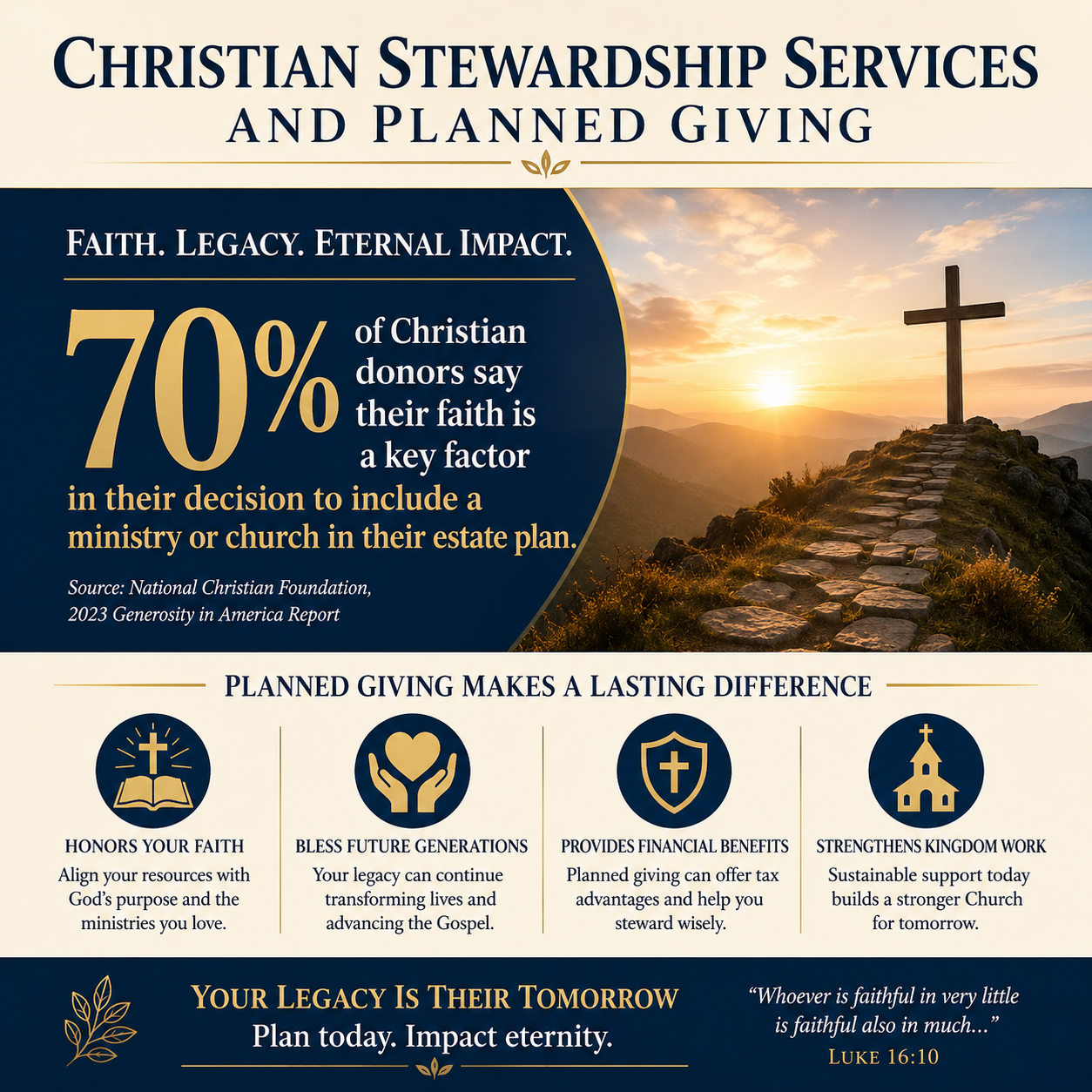
Across our verification work at Most Trusted, we see that the ministries that meet The Most Trusted Standard tend to be unusually consistent in four areas that matter acutely for planned gifts: theological accountability, financial integrity, governance discipline, and public transparency about results and use of funds. Donors do not need perfection. They need a ministry that can be examined with sober criteria and that welcomes examination as part of Christian integrity.
How to evaluate a ministry for a long-term gift
For planned giving, donors should ask questions that go beyond today’s program appeal:
- Do governing documents and leadership practices protect mission drift? A faithful ministry will have clear doctrinal commitments and accountable governance.
- Is financial reporting accessible and intelligible? Donors should be able to locate current audited financial statements or reviewed statements, annual reports, and clear explanations of reserves and major revenue streams.
- Is fundraising truthful? Appeals should not exaggerate outcomes, use manipulated images, or imply guarantees the ministry cannot control.
- Is impact communicated with evidence rather than spectacle? Mature reporting includes limitations, context, and learning—not only celebration.
The nonprofit sector has had to reckon with simplistic metrics, especially the idea that low overhead is the primary sign of virtue. Sector leaders at Charity Navigator, Candid (formerly GuideStar), and the BBB Wise Giving Alliance publicly challenged this reductionism, arguing that overhead ratios alone are a poor proxy for effectiveness and can even incentivize unhealthy underinvestment in accountability systems. Charity Navigator
Planned giving and the problem of permanence
A difficult question is whether a ministry receiving a bequest today will remain faithful tomorrow. Donors cannot control the future, but they can set guardrails. Some donors address this through contingency clauses in wills or trusts, directing assets to an alternative ministry if the original recipient no longer exists or no longer aligns with stated doctrinal commitments. Others prefer to name a vetted intermediary—such as a trusted church foundation or donor-advised fund sponsor—that can evaluate recipients at the time of distribution.
These decisions are not merely legal devices. They are attempts to honor Paul’s insistence that gifts be handled “not only in the Lord’s sight but also in the sight of man” (2 Corinthians 8:21). Planned giving requires that kind of double-honesty: spiritual sincerity paired with public accountability.
What donors should expect from stewardship teams
When a ministry offers planned giving support, donors should expect:
- Written illustrations with clear assumptions and caveats
- Encouragement to consult an attorney and tax professional
- Disclosure of how the ministry manages endowment-like funds or restricted gifts
- Policies that protect donor intent and clarify what happens if a program closes
Restraint is a sign of seriousness. Any ministry that presents planned giving as a frictionless path to “tax-free” outcomes, or that minimizes the permanence of irrevocable gifts, is not serving donors well.
How donors can begin with confidence
Many Christian donors delay planned giving because the decision feels final. Others delay because the options are unfamiliar. The practical way forward is to start with decisions that clarify intent without forcing complexity: establish or update a will, review beneficiary designations, document charitable priorities, and identify which ministries have earned long-term trust.
What this means in practice is sequencing. First, secure basic family protections: guardianship provisions where relevant, clear executors, updated powers of attorney, and realistic long-term care planning. Second, define a charitable aim that is coherent: which areas of Christian mission are central to your calling—local church, global missions, theological education, mercy ministries, evangelism, Bible translation. Third, choose recipient ministries with verifiable integrity, because a planned gift is only as faithful as the stewardship that receives it.
Donors who want a deeper framework for evaluating ministries often begin with Christian Stewardship Services, then apply The Most Trusted Standard as a disciplined way to assess faith foundation, financial integrity, governance and leadership, and transparency and effectiveness. That kind of evaluation does not replace prayer or pastoral counsel. It does help donors act with the sober confidence that Scripture commends.
Planned giving is ultimately a confession about God. It declares that the Kingdom outlasts our lifetime, that our assets are not self-originating, and that we can make decisions now that will bless others later without presuming control over tomorrow. When Christian stewardship services keep that theological center, donors can plan with both humility and resolve.



