
What legal counsel churches need most is rarely a single heroic attorney arriving at the moment of crisis. It is steady, competent, mission-aware guidance that keeps the church faithful to its calling while meeting real civil obligations. Mature donors understand the tension: the church is not a corporation, yet it operates in a regulated environment, handles other people’s money, cares for vulnerable people, and carries reputational weight that can either adorn the gospel or needlessly discredit it.
The New Testament’s insistence on integrity is not abstract. Paul calls the church to take pains to do what is right “not only in the eyes of the Lord but also in the eyes of man” (2 Cor. 8:21). Legal counsel, at its best, helps churches honor that dual witness—guarding ministry so that energy goes to worship, discipleship, and mercy rather than preventable conflict, confusion, or scandal.
1. Governance counsel that protects both mission and people
Many church crises begin not with malice but with unclear authority: who can hire, fire, discipline, sign contracts, or spend restricted funds. Churches need counsel that understands nonprofit governance and the unique ecclesial realities that affect it, including bylaws, membership authority, and the spiritual dimensions of leadership accountability.
In our verification work at Most Trusted, governance clarity is one of the most reliable predictors of whether a ministry can weather conflict without fracturing. When roles are defined, decisions are documented, and boards or elder teams know their fiduciary duties, the congregation is less likely to experience power struggles that become public and damaging.
Bylaws, policies, and the quiet work of prevention
Legal counsel should help churches keep core documents current and internally coherent: articles of incorporation, bylaws, conflict-of-interest policies, and written delegations of authority. The point is not paperwork for its own sake. The point is that clarity in governing documents can prevent last-minute improvisation under pressure—especially in pastoral transitions, discipline cases, or unexpected financial strain.
Employment and volunteer governance that reflects Christian ethics
Churches also need counsel that takes employment law seriously while respecting legitimate religious distinctives. There are real legal and theological complexities around ministerial roles, nondiscrimination, and discipline. Christians genuinely disagree about where prudence ends and compromise begins in contested cultural areas. Competent counsel does not resolve every disagreement, but it can keep a church from making preventable errors that harm staff, volunteers, and ultimately the congregation’s witness.

2. Legal counsel for safeguarding and mandated reporting
Of all areas where churches need legal counsel most, safeguarding children and vulnerable adults is among the most urgent. A church can have sincere intentions and still fail to build systems that protect people. The stakes are moral, pastoral, and legal.
Clear reporting pathways and compliance with state law
Counsel should help churches understand mandated reporting requirements, documentation practices, and how to coordinate with law enforcement and child protective services when allegations arise. Many failures in this area come from internal uncertainty: staff and volunteers do not know what to do, who decides, or what must be reported. Legal counsel should help establish written procedures that are trained, rehearsed, and reviewed.
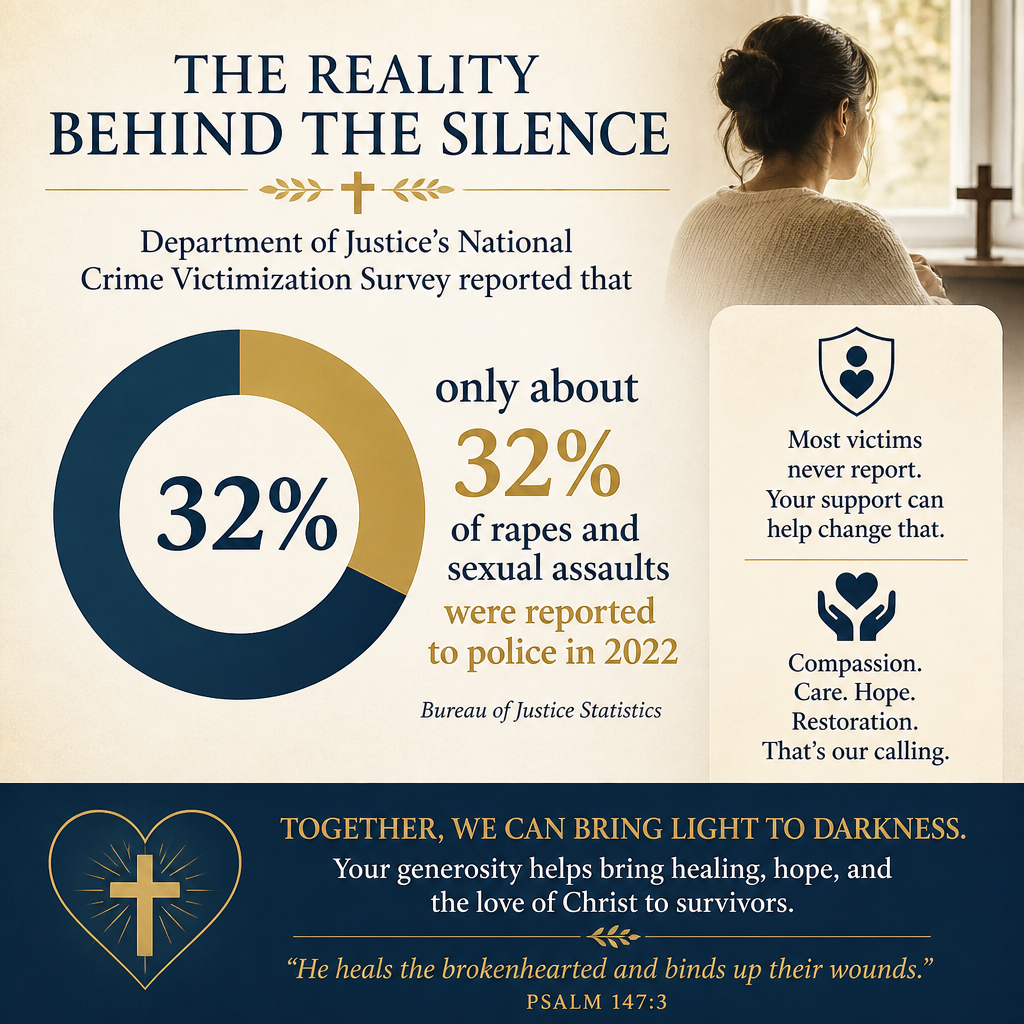
Verifiable evidence suggests many survivors never disclose abuse to a professional authority. The U.S. Department of Justice’s National Crime Victimization Survey reported that only about 32% of rapes and sexual assaults were reported to police in 2022 Bureau of Justice Statistics. Churches should not assume that “no one reported it” means “it did not happen,” and counsel should help leaders build systems that do not depend on ideal conditions.
Independent investigations and conflicts of interest
When allegations concern staff, leaders, or prominent donors, conflicts of interest are not hypothetical. Counsel should advise on when to retain independent investigators, how to preserve evidence, how to communicate with insurers, and how to avoid retaliation. Donors are often among the first to see the moral cost when institutions default to self-protection, and churches need counsel that insists on transparency with appropriate confidentiality rather than secrecy.
3. Financial and compliance counsel that honors donor intent
Churches do not exist to satisfy regulators, yet financial compliance is a form of neighbor-love when it protects congregants and donors from misuse. Donors give because they believe the mission is real; counsel should help ensure that restricted gifts are used as promised and that financial practices can withstand scrutiny.
Restricted gifts, designated funds, and clear documentation
Many churches casually use the language of “designated giving” without appreciating the legal and ethical responsibilities it creates. Counsel can help draft gift acceptance policies, donor agreements for large gifts, and clear internal rules for restricted funds. This is particularly important for capital campaigns, missions support, benevolence funds, and scholarship-like assistance programs.
The legal terrain can be complex even for sophisticated ministries. Donors often assume that a church’s good intentions are enough; counsel helps churches match intention with enforceable clarity. What this means in practice is fewer disputes, less internal distrust, and greater confidence that gifts accomplish what donors believe they will accomplish.
Tax and regulatory counsel for multi-state and online ministry
Even ordinary church operations can trigger tax and regulatory questions: unrelated business income, housing allowances, sales tax exemptions, and payroll compliance. For churches with schools, counseling centers, media operations, or multi-site campuses, the complexity rises. Churches increasingly reach across state lines through online giving, events, and digital content, and counsel should help leaders understand where state registrations or charitable solicitation rules may apply.
Donors who support church-adjacent initiatives often ask where a ministry sits on the spectrum from “church” to “charity.” The legal answer varies by structure and jurisdiction, but the pastoral question remains consistent: does leadership take compliance seriously enough to protect the mission and the people it serves? Our work at Most Trusted evaluates ministries against The Most Trusted Standard, and financial integrity tends to show up in consistent, documentable habits—not in promises.
4. Counsel for risk management, insurance, and contracts
Churches sign contracts constantly: facility leases, construction agreements, vendor services, event venues, technology platforms, and employment arrangements. Too often, churches treat contracts as mere formality. Legal counsel should help leaders read agreements with sober realism: contracts allocate risk, and risk is a stewardship issue.
Construction and capital projects
Building projects can unite a congregation around vision, but they also create legal exposure: change orders, scope disputes, lien claims, and safety obligations. Counsel should be involved early—before signatures—especially when donors are funding a project with restricted gifts or when the project is tied to debt financing.
Facility use, third-party groups, and security planning
Many churches open their facilities to community groups, weddings, and outside ministries. Counsel should advise on facility use policies, indemnification, background check requirements, and insurance certificates. Security planning can be spiritually uncomfortable for some congregations, yet it is part of a church’s duty of care toward those who gather. Competent counsel can work with insurers and leadership to reduce exposure without turning the church into a fortress.
A practical checklist donors can ask about
- Does the church have written contracts for major vendors and facility users, reviewed by counsel?
- Are insurance coverages reviewed annually with documented decisions?
- Is there a written incident reporting process for injuries, allegations, and security concerns?
- Are background checks and training required for those serving minors?
- Are waivers used appropriately for higher-risk activities, and are they legally sound?
These questions are not cynical. They are a way of loving the church enough to ask whether it is prepared to bear predictable burdens without improvisation.
5. Counsel that understands disputes, discipline, and the church’s public witness
Church conflict is unavoidable in a fallen world. The harder question is whether conflict is handled in a way that is both legally prudent and recognizably Christian. Legal counsel can either inflame a dispute by treating it as pure combat, or it can help leaders pursue peace with clear boundaries and truthful communication.
Internal disputes and alternative paths to resolution
Scripture’s call to seek peace among believers is clear, even as Paul acknowledges the necessity of public justice in some cases (1 Cor. 6; Rom. 13). Legal counsel should help churches understand when internal reconciliation efforts are appropriate, when mediation is wise, and when external reporting or litigation is required. This is not an area for simplistic formulas.
Defamation, confidentiality, and communications that do not deceive
When churches face allegations, staff terminations, or public controversy, leaders often fear saying either too much or too little. Counsel should help craft communications that are truthful, restrained, and legally sound—avoiding both reckless disclosure and misleading vagueness. Donors can accept that some matters require confidentiality; they are less likely to accept a pattern of secrecy that treats the congregation as a problem to manage rather than a body to shepherd.
For donors who support legal and accountability efforts in the broader ministry ecosystem, the field of Christian Legal Services Ministries includes organizations that provide counsel, training, and sometimes direct representation. Wise giving here is often preventative: supporting ministries that help churches build systems before crisis arrives.
How donors can evaluate whether a church takes legal counsel seriously
Donors are rarely positioned to audit a church’s legal posture, and they should not try to function as amateur attorneys. Yet donors can observe governance maturity through the questions leaders welcome and the documentation they can provide without defensiveness. A church that refuses accountability language altogether is usually not “more spiritual.” It is usually less prepared.
Across our verification work, the ministries that most consistently meet The Most Trusted Standard tend to treat legal counsel as part of stewardship rather than as a grudging cost. They budget for it, document decisions, and seek specialized advice when a matter exceeds internal competence. They also avoid the opposite error: outsourcing moral responsibility to attorneys. Counsel should inform leadership, not replace it.
Donors who give beyond a single congregation often ask where to find comparable benchmarks. In practice, looking at how ministries that serve churches handle accountability can be instructive. The broader space of Christian Legal Services for Churches and Ministries includes ministries whose effectiveness depends heavily on governance, transparency, and financial clarity—the very areas where donor confidence is built or lost.
FAQs for What legal counsel churches need most
Do churches really need an attorney on retainer?
Not always. Many churches can begin with a relationship with a qualified local attorney who can be consulted as needed, supplemented by specialized counsel for employment, safeguarding, or construction matters. The key is not the billing arrangement; it is whether leadership has timely access to competent advice before decisions are finalized.
How can donors ask about legal accountability without sounding adversarial?
Donors can frame questions as stewardship: whether the church has updated bylaws, written safeguarding policies, documented conflict-of-interest practices, and a process for reviewing major contracts. Mature leaders will usually understand the premise. When leaders treat ordinary accountability questions as hostility, donors should pause and consider whether the church has confused trust with the absence of oversight.
A church’s legal posture is a stewardship question
Legal counsel is not a substitute for holiness, wisdom, or pastoral courage. Yet it is often one of the means God uses to restrain harm, clarify responsibility, and protect the vulnerable. For donors, the question is not whether a church can avoid every risk. The question is whether it pursues integrity with enough seriousness that gifts can be received, governed, and deployed in ways that honor Christ and protect his people.



