

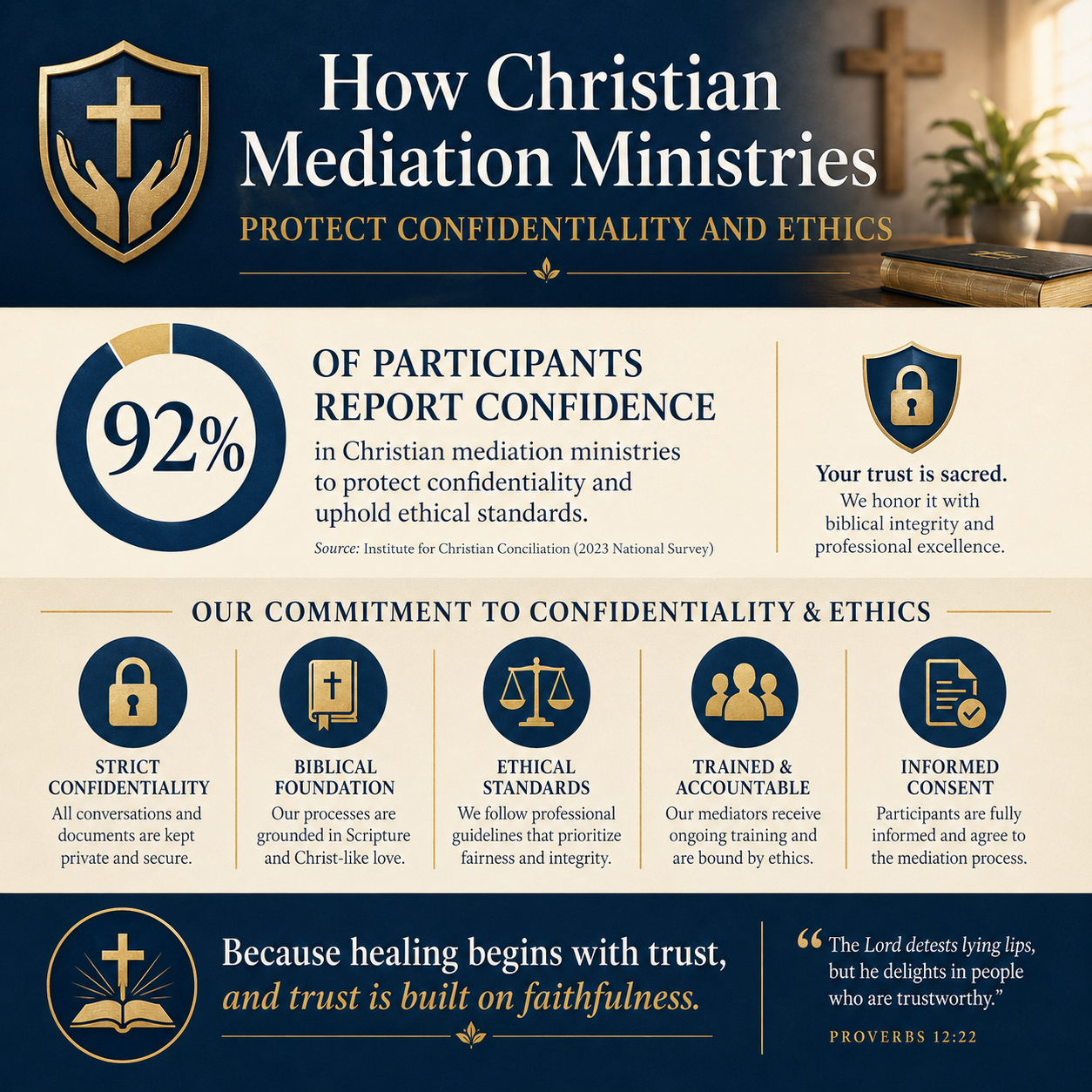
How Christian mediation ministries protect confidentiality and ethics is not a secondary operational question; it is the difference between a ministry that heals and a ministry that unintentionally harms. When people bring conflict to Christian mediators, they are often entrusting information that could cost them a job, a reputation, a marriage, a congregation, or their peace of conscience if mishandled.
For donors, confidentiality is also a governance question. A ministry may say the right things about reconciliation, but its actual practices—case notes, intake forms, volunteer screening, reporting to church leaders, and handling of abuse allegations—reveal whether its ethics are mature. Across our verification work at Most Trusted, we observe that ministries with durable credibility treat confidentiality as a spiritual obligation, a legal exposure, and a pastoral responsibility at the same time.
Confidentiality is a moral duty before it is a policy manual
The biblical shape of truthful speech
Christian mediation is anchored in the conviction that words can build or destroy. Scripture repeatedly binds truth-telling to love and restraint: “speaking the truth in love” (Ephesians 4:15) and guarding the tongue from reckless harm (Proverbs 12:18). Confidentiality sits inside that moral universe. It is not secrecy for its own sake. It is disciplined stewardship over speech so that truth can be surfaced without turning vulnerable people into collateral damage.
Donors sometimes assume confidentiality exists mainly to protect the ministry. The deeper reason is to protect the parties so they can be honest. If participants believe private disclosures will be repeated in elder meetings, staff chat threads, or donor updates, mediation becomes performative. People posture, withhold, and arm themselves, and the ministry becomes another arena of conflict rather than a refuge for repentance and repair.
Confidentiality is not absolute
Christians genuinely disagree about how far confidentiality should extend, especially when mediation is conducted under church authority. Some traditions place strong weight on pastoral oversight; others emphasize the autonomy of the parties. A credible ministry does not pretend the tension does not exist. It states clearly, in writing and in the intake conversation, what confidentiality means and where it ends—particularly regarding imminent harm, child abuse, mandatory reporting, and court orders.
Ethical confidentiality also requires refusing the false comfort of vague assurances. Promises like “everything here is completely private” may sound compassionate, but they are not honest if the ministry has any mandatory reporting duties or if it anticipates sharing information with referring pastors. Mature ethics begin with truthful expectations.

The architecture that protects confidentiality is mostly unseen
Intake, consent, and who the mediator serves
Many confidentiality failures occur before mediation even begins. A strong ministry uses a structured intake process, usually with written informed consent, that answers three questions: Who is the client (the individuals, the church, or both)? What information will be shared with any referring authority? What records will exist and who will control them?
Donors should be attentive to whether mediators clarify dual roles. If a mediator is also a pastor, elder, HR leader, or denominational official, they may carry obligations that conflict with the neutrality required for mediation. Ethical ministries either avoid these dual relationships or name them candidly and obtain explicit consent with real alternatives for the parties.
Data handling is now part of pastoral care
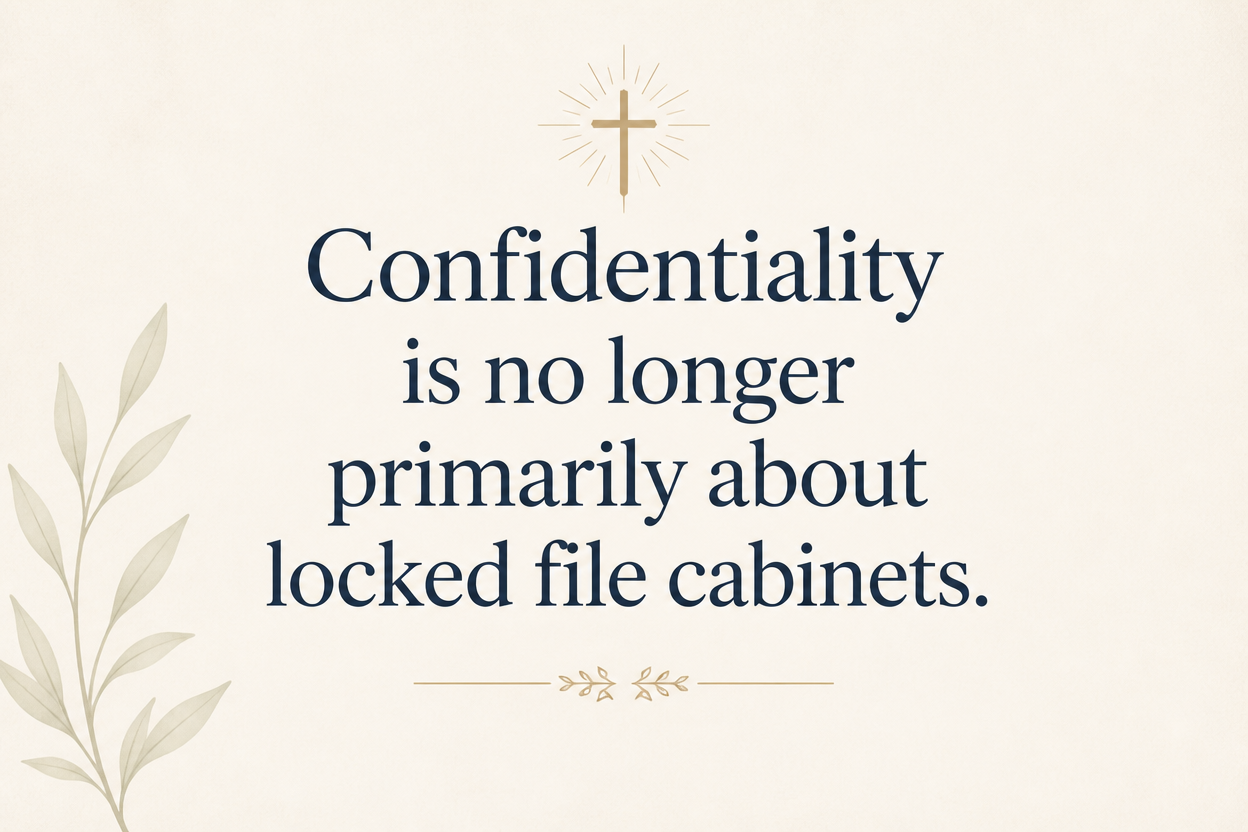
Confidentiality is no longer primarily about locked file cabinets. It is about email, cloud storage, texting, video sessions, electronic signatures, and case management systems. The best ministries build “privacy by design” into their operations: limiting what they collect, restricting who can access it, and setting retention policies that do not preserve sensitive information indefinitely.
This is not bureaucratic scrupulosity. It is care for neighbor in a world where a forwarded email or a compromised account can re-open wounds. The Federal Trade Commission’s guidance on safeguarding sensitive data captures the basic reality that data security is an organizational discipline, not a one-time promise.Federal Trade Commission
Ethics in Christian mediation requires independence and accountability
Neutrality is not moral indifference
Christian mediators are often asked to do two difficult things at once: remain impartial between parties while still being morally serious. Ethical neutrality does not mean treating sin and suffering as symmetrical. It means refusing favoritism, refusing coercion, and refusing to turn mediation into a prosecution without due process.
The ministries that tend to be most trustworthy distinguish facilitative mediation (helping parties reach their own agreements) from advisory or evaluative approaches (where the mediator offers opinions or recommendations). Each model carries different risks. Donors should expect ministries to name which model they use and why, especially when power imbalances are present.
Accountability structures reduce quiet conflicts of interest
Confidentiality and ethics fail most often under institutional pressure: a prominent donor is involved; a staff member is the accused party; a church leader wants “closure” quickly; a ministry fears reputational fallout. In those moments, written standards matter, but governance matters more.
At Most Trusted, we assess ministries against The Most Trusted Standard, a 15-criteria framework across Faith Foundation, Financial Integrity, Governance and Leadership, and Transparency and Effectiveness. For mediation ministries, governance and leadership safeguards often determine whether confidentiality is protected when it becomes costly. Policies without accountability are aspirational; accountability without clarity becomes arbitrary.
Church-connected cases demand special care and clarity
When a church is the referral source
Many mediation ministries serve churches that request help with congregational conflict, staff disputes, elder disagreements, or discipline processes. In those cases, confidentiality is frequently negotiated, not assumed. The church may want a report; the parties may want privacy; the mediators may need the freedom to speak hard truths without having every word replayed in a board meeting.
A credible ministry will specify in advance whether it will provide: (a) a simple confirmation that mediation occurred, (b) a summary of agreements only, (c) thematic observations without attribution, or (d) a full report. The more detailed the reporting, the greater the risk of weaponizing disclosure. Donors should not treat this as an administrative footnote. It is often the hinge point for whether mediation builds trust or deepens suspicion.
Abuse, coercion, and the limits of mediation
One of the most serious ethical questions is whether a ministry will mediate cases that involve abuse, credible threats, or severe coercive control. Some conflicts are not “two sides needing to meet in the middle.” In those situations, confidentiality can become complicity if it is used to keep victims quiet or to manage reputational risk.
Mature ministries have clear screening protocols, defined disqualifiers for mediation, and referral relationships with victim advocates, trauma-informed counselors, and legal resources. They state plainly that reconciliation is not the same as reunification, and forgiveness is not the same as removing consequences. When safety is at stake, ethical mediation prioritizes protection and truth over a superficial appearance of peace.
What donors can verify before funding a mediation ministry
Questions that reveal whether ethics are operational
Donors are rarely present in actual cases, and they should not be. The path forward is to verify the structures that predict integrity under pressure. The ministries that meet The Most Trusted Standard tend to welcome serious questions, provide written documentation, and describe their safeguards without defensiveness.
- Confidentiality policy: Is it written, case-specific, and explained in plain language during intake?
- Mandatory reporting: Are staff and volunteers trained on reporting duties and escalation procedures?
- Recordkeeping: What is collected, where is it stored, who can access it, and when is it destroyed?
- Conflicts of interest: Are mediators screened for dual relationships and recusal expectations?
- Supervision and complaint process: Is there a documented pathway for ethical concerns, including external review when needed?
Credentials help, but they are not the whole story
Professional mediation credentials, licensure, and affiliations can be meaningful indicators, but donors should be careful about outsourcing discernment to acronyms. A credential can indicate training; it cannot guarantee theological maturity, courage under pressure, or healthy governance. The better question is how the ministry builds competence over time: continuing education, case consultation, and structured oversight.
For church settings, donors should also pay attention to whether mediators understand ecclesiology and pastoral dynamics. A mediator who treats a church like a generic civic association will miss key realities; a mediator who treats governance as purely “spiritual” may neglect legal and ethical exposure. The intersection is where good mediation is either refined or compromised.
Those seeking a broader view of the field can begin with Christian Conflict Resolution Ministries, where the underlying purpose and typical models of these ministries come into clearer focus. Donors who want a giving-oriented lens can also consult How to Give Wisely to Christian Conflict Resolution Ministries for what strong oversight tends to look like in practice.
FAQs for How Christian mediation ministries protect confidentiality and ethics
Are Christian mediators ever allowed to share information with church leaders?
They may be, but only with clear, written expectations established before mediation begins. Ethical practice requires informed consent that specifies what will be shared, with whom, and in what form. Ministries should avoid open-ended “updates” that invite selective disclosure or the use of private statements in governance disputes.
Does confidentiality mean a mediation ministry should never report abuse?
No. Confidentiality is not a shield against legal and moral obligations to protect the vulnerable. Ministries should screen cases carefully, follow mandatory reporting laws where applicable, and maintain protocols that prioritize safety. If a ministry treats abuse as merely “a conflict to mediate,” donors should treat that as a serious warning sign.
Why confidentiality and ethics are central to reconciliation
Christian mediation is a ministry of truth and peace, but it is never a ministry of shortcuts. Confidentiality creates a space where truth can be told without needless exposure, and ethical accountability ensures that the space is not manipulated by power, fear, or institutional self-protection. Donors serve the church well when they fund ministries that are structurally prepared to do hard work with clean hands, even when doing so is slow, costly, and unpopular.



