
How planned giving supports Christian peacemaking ministries is ultimately a question of moral time horizon. Peacemaking work is rarely linear, rarely fast, and rarely photogenic, yet it sits close to the heart of the gospel: “Blessed are the peacemakers, for they shall be called sons of God” (Matthew 5:9). A planned gift allows donors to strengthen ministry work that requires patient presence, trained leadership, and durable institutional integrity.
Many donors have learned that conflict does not yield to slogans. Church splits can take years to heal. Community violence reduction can regress with one catalytic event. A ministry that helps reconcile divided families or mediate ethnic tensions must often fund training, safeguarding, and careful follow-up long after a headline passes. Planned giving is one of the few philanthropic tools that can match that long arc without asking donors to deplete present cash flow.
Planned giving fits the spiritual and practical realities of peacemaking
Peacemaking is not simply a set of techniques; it is a form of discipleship that touches sin, suffering, power, and repentance. Ministries that help people confess wrong, tell the truth, and seek restitution are often working at the level of moral formation, not merely dispute settlement. That kind of work does not always scale neatly, and donors should not demand that it does.
Planned giving creates a different posture than crisis-driven funding. It can underwrite the unglamorous essentials: staff supervision, case documentation, survivor care, legal consultation when needed, and training that reduces harm. These are not overhead in the dismissive sense; they are the structures that keep ministry faithful and safe.
Why peacemaking ministries struggle with short-term funding cycles
Many Christian donors are accustomed to “project” giving: a well-defined need, a clear deliverable, a measurable output. Peacemaking often involves confidential cases, multi-party dynamics, and outcomes that are difficult to quantify without violating privacy or reducing reconciliation to a metric. Even when a ministry publishes strong reporting, much of the most faithful work remains intentionally quiet.
The field has also had to reckon with the reality that conflict mediation, trauma-informed care, and restorative processes require professional competence. Volunteer enthusiasm is not enough. A planned gift can fund the slow formation of skilled practitioners who can serve churches and communities over decades.
Stewardship across generations is a biblical theme, not a fundraising trope
Scripture repeatedly frames stewardship as intergenerational responsibility. “A good man leaves an inheritance to his children’s children” (Proverbs 13:22). That inheritance is not only financial; it includes durable institutions, faithful teaching, and patterns of justice and mercy. Planned giving is one way donors can leave a spiritual inheritance that strengthens Christian witness in divided places.
What planned giving actually funds in peacemaking work
Planned giving is not a single product; it is a category of commitments that typically take effect at death or through long-term arrangements. The most common is a bequest in a will, but some donors use beneficiary designations, charitable gift annuities, or trusts. The instrument matters less than the purpose: creating dependable capacity for the ministry’s mission.
Because peacemaking often requires continuity, planned gifts tend to be most effective when they are integrated into clear, board-approved priorities rather than treated as a general windfall. Donors should ask ministries how they plan for restricted versus unrestricted legacy gifts, and what governance controls determine use.
Capacity that protects both truth and people
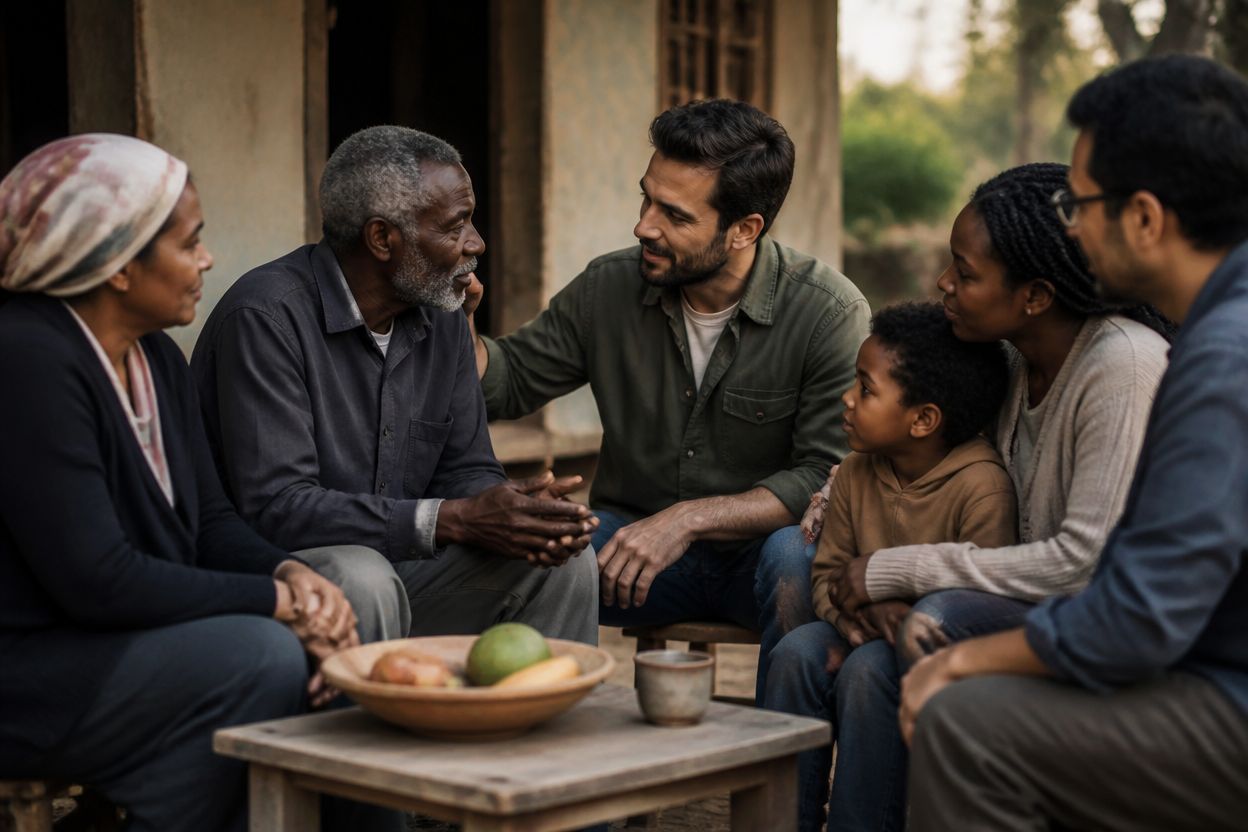
Christian peacemaking ministries often operate in the tension between truth-telling and the protection of vulnerable people. In cases involving abuse, coercive control, or credible threats, reconciliation language can be misused to pressure victims into unsafe situations. A ministry committed to faithful peacemaking must build safeguards: screening protocols, partnerships with professional counselors, mandatory reporting compliance where applicable, and a theology that does not confuse forgiveness with the absence of consequences.
Planned giving can fund the infrastructure that keeps this work from becoming sentimental or dangerous. It can also support the training that helps pastors and lay leaders identify when “mediation” is inappropriate and when church discipline, legal action, or separation is necessary.
Long-term formation, not episodic interventions
The ministries that endure tend to invest in formation: training cohorts, apprenticeships, and continuing education. They also invest in the slow work of rebuilding trust after failure. Where a conflict has public consequences, leaders may need help learning how to speak truthfully without inflaming a situation, and how to establish restitution plans with credible accountability.
When donors want to understand the practical outworking of these commitments, it can help to situate legacy giving within the broader landscape of Christian Conflict Resolution Ministries and the different ways ministries approach prevention, intervention, and restoration.
Planned giving and the ethics of donor influence
Planned gifts can be profoundly constructive, but they can also distort a ministry if they become an instrument of control. Mature donors should name the tension directly: conflict resolution work is uniquely vulnerable to donor pressure because it touches contested theological and social questions. Christians genuinely disagree about how to respond to certain kinds of conflict, what reconciliation requires in public life, and how to weigh justice and mercy in complex cases.
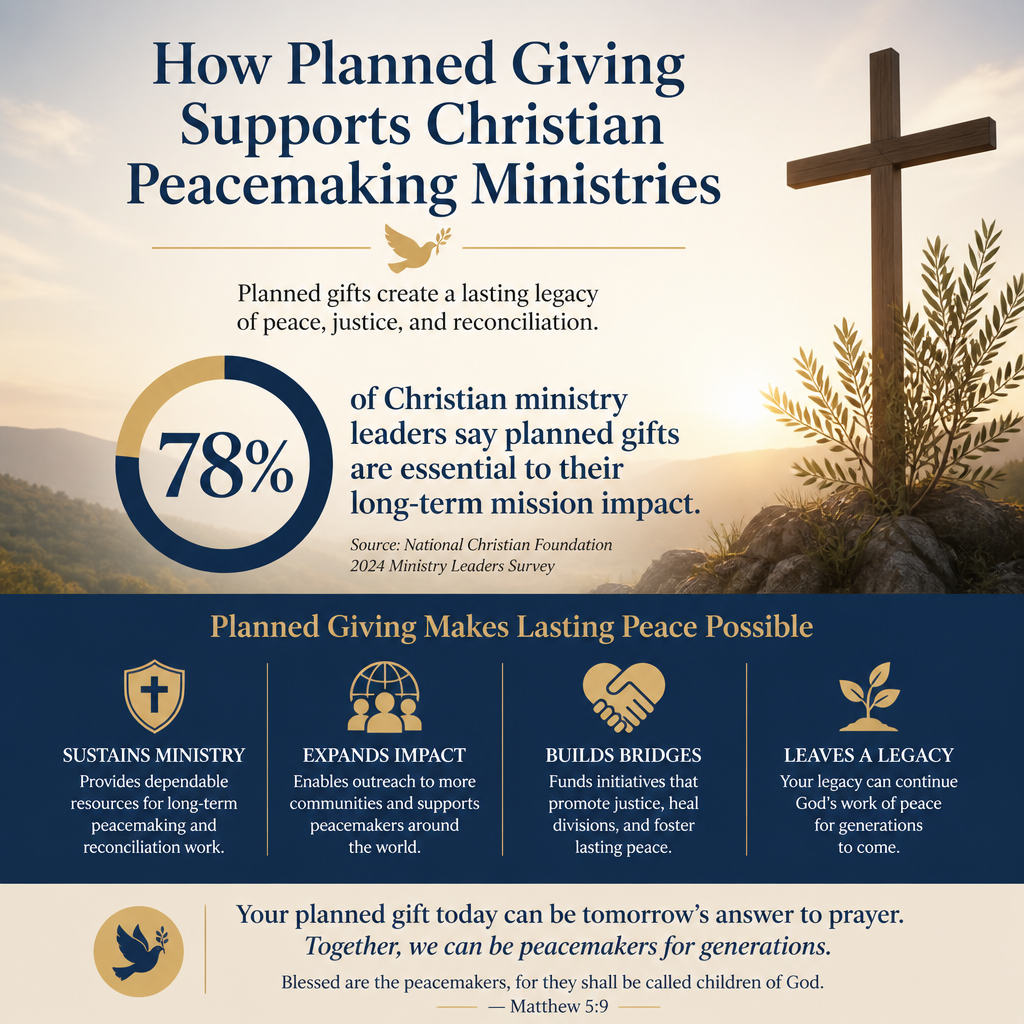
A wise planned gift strengthens mission clarity rather than bending it. It supports a ministry’s biblically grounded commitments and competent practice, while leaving decisions to accountable leadership and governance structures.
Restricted gifts can help or harm depending on governance
Restrictions are not automatically virtuous. A restriction can protect a donor’s intent and ensure money is used for a genuinely strategic purpose. It can also become a time bomb if it funds an activity the ministry can no longer do responsibly or legally, or if it bypasses leadership’s discernment. Donors considering restrictions should ask whether the ministry has a process for reviewing legacy restrictions over time, including board oversight and legal counsel.
For some peacemaking ministries, a well-constructed restriction might fund training scholarships for church leaders, restorative justice programming in a specific region, or survivor support services adjacent to reconciliation efforts. The key is that the restriction aligns with the ministry’s stated mission and its capacity to execute faithfully.
Unrestricted legacy gifts often serve the mission more faithfully than donors expect
Many donors have been trained to distrust unrestricted giving. Yet the most credible nonprofit research in recent years has pushed back against simplistic overhead narratives. The “Overhead Myth” letter, signed by GuideStar, Charity Navigator, and BBB Wise Giving Alliance, argues that overhead ratios are a poor measure of nonprofit performance and can incentivize unhealthy underinvestment in effectiveness and accountability GuideStar.
Peacemaking ministries often need flexible funding to respond to sudden crises, invest in staff care to prevent burnout, and improve reporting systems. When governance is strong, unrestricted planned gifts can be one of the most mission-faithful forms of generosity.
How Most Trusted evaluates legacy-ready peacemaking ministries
Planned giving presumes trust. Donors are not only funding a program; they are making a long-range claim about an institution’s future integrity. Across our verification work at Most Trusted, we observe that legacy-ready ministries tend to treat accountability as part of their discipleship, not merely compliance. They can explain what they do, how they do it, who holds power, and how they handle failure.
Most Trusted evaluates ministries against The Most Trusted Standard, a 15-criteria framework across four domains: Faith Foundation, Financial Integrity, Governance and Leadership, and Transparency and Effectiveness. Planned giving is not a separate category in that framework; it is an area where weaknesses in any domain become more consequential because gifts are often irrevocable.
What donors should look for before naming a ministry in a will
Legacy gifts can arrive years after a donor’s last conversation with a ministry. That makes present-day governance and documentation especially important. A ministry should be able to provide clear policies, audited or reviewed financial statements where appropriate, and meaningful reporting that respects confidentiality without becoming opaque.
- Clear mission and theological commitments that shape peacemaking as discipleship, not mere conflict avoidance
- Board oversight that is active, documented, and capable of challenging leadership when needed
- Financial practices that demonstrate restraint, internal controls, and credible outside review
- Safeguarding and case-handling protocols appropriate to the kinds of conflicts the ministry engages
- Transparent communication about outcomes, limitations, and what confidentiality requires
Why transparency matters more in peacemaking than in many other fields
Peacemaking ministries often cannot publish case-level detail, which can create a credibility gap for donors accustomed to stories and numbers. The response should not be secrecy; it should be mature transparency: anonymized reporting, third-party evaluation where feasible, and clear articulation of what cannot be shared and why.
Donors who want to approach this with care often find it helpful to frame planned giving within a broader discipline of accountability, including the norms and cautions in Donor Partnership and Legacy Giving in Christian Conflict Resolution.
Designing a planned gift that strengthens peace without naïveté
Planned giving is most faithful when it faces the world as it is. Reconciliation is a Christian imperative, but it is not the same thing as excusing evil, minimizing harm, or demanding proximity where safety is at stake. Ministries that do this work well are often clear that peacemaking includes truth, repentance, restitution where possible, and protection of the vulnerable.
Donors can support that maturity by crafting planned gifts that encourage faithful practice rather than simplistic outcomes. The harder question is not whether peace is good; it is whether a particular institution has the theological clarity, governance strength, and practical competence to pursue peace without causing secondary harm.
Practical steps donors can take with their advisors
Because planned gifts involve legal and tax considerations, donors should coordinate with qualified attorneys and financial advisors. From a ministry due diligence standpoint, donors can also request documentation: a gift acceptance policy, clarity on how endowments are managed, and whether the ministry can receive complex gifts.
Where donors want their legacy to endure, it can be prudent to include contingency language in case a ministry merges, dissolves, or changes mission. This is not cynicism; it is sober stewardship. Many faithful ministries have closed over the decades for reasons unrelated to scandal, including demographic shifts and leadership transitions.
A theological rationale for patience in outcomes
Christian donors often want to see fruit, and Scripture commends discernment. Yet Scripture also frames some fruit as generational. Paul describes planting and watering, with God giving the growth (1 Corinthians 3:6). In peacemaking work, donors may fund the planting of structures and habits that bear visible fruit long after a donor’s lifetime.
Planned giving can be a disciplined way to affirm that peace is not merely the absence of conflict but the presence of righteousness, rightly ordered relationships, and credible repair. It funds the patient work of making reconciliation more than a sentiment.
FAQs for How planned giving supports Christian peacemaking ministries
Is planned giving appropriate if a ministry cannot report detailed outcomes because of confidentiality?
It can be, provided the ministry practices mature transparency. Donors should expect clear governance, documented policies for case handling and safeguarding, and reporting that communicates what can be known without exposing vulnerable people. Credible third-party review, board minutes that reflect real oversight, and financial statements with appropriate external scrutiny become even more important when case details cannot be shared publicly.
Should a planned gift to a peacemaking ministry be restricted to a specific program?
Sometimes, but restrictions should be used with restraint. A well-designed restriction can protect donor intent and fund a strategic priority that leadership and the board have affirmed. Poorly designed restrictions can trap a ministry in obligations that become unwise or impracticable over time. Many donors serve the mission best by giving unrestricted legacy gifts to ministries that demonstrate strong governance, sound finances, and faithful theological commitments.
A legacy that funds the slow work of reconciliation
Planned giving supports Christian peacemaking ministries by matching the time scale of the work. It funds training, safeguards, governance, and long-term presence in places where quick wins are rare and faithful perseverance is essential. When donors pair planned gifts with rigorous verification and accountable trust, they help sustain a witness that treats peace not as a slogan, but as a costly obedience to Christ.



