
Why Christian camp staff fundraising affects ministry impact is not primarily a question of efficiency; it is a question of spiritual formation, credibility, and long-term effectiveness. When camp counselors and program staff raise support, donors are not merely underwriting a seasonal payroll line. They are participating in the conditions that shape whether a camp’s ministry is faithful, stable, and durable.
Christian donors generally want the same outcome: children and teenagers encountering the gospel through a community that is safe, competent, and spiritually serious. The harder question is how a camp’s staffing model either strengthens or weakens that outcome over time. Staff fundraising can be a means of disciple-making and shared ownership. It can also become a source of instability or pressure if governance is weak or expectations are unclear. Wise giving requires distinguishing between those possibilities.
Fundraising shapes who can serve and how they serve
Support raising is an access issue as well as a spirituality issue
A camp’s decision to require or encourage staff fundraising influences who can afford to serve. On the one hand, fundraising can open the door for gifted young leaders without personal resources. On the other hand, it can unintentionally privilege those with larger social networks, higher-income churches, or prior donor access. That is not an argument against staff fundraising; it is an argument for naming the trade-off plainly.
For donors, this matters because ministry impact is never only program design. It is also the composition of the team: who is recruited, who persists through the summer, and who returns for multiple seasons. A camp that depends heavily on support-raised labor may need stronger coaching, clearer role definitions, and more intentional retention practices than a camp running on fully salaried staffing.
Stability is a ministry outcome, not a bureaucratic preference
Programs with high turnover are typically more vulnerable to inconsistent camper care, uneven discipline, and diluted spiritual leadership. Research in the broader nonprofit sector has consistently found that staff turnover is costly, both financially and operationally; for example, the Society for Human Resource Management estimates that replacing an employee can cost six to nine months of that employee’s salary, depending on role and wage level Society for Human Resource Management. Camps are seasonal and unique, but the underlying principle remains: instability drains attention from discipleship toward constant onboarding.
When staff fundraising leads to mid-season attrition or last-minute staffing gaps, the downstream effects are not abstract. They show up in counselor-to-camper ratios, supervision quality, and the emotional bandwidth available for spiritual conversations. Donors who care about ministry fruit should care about staffing structures that help leaders stay present to campers.

Staff fundraising can form disciples when it is governed well
A biblical pattern of shared support requires integrity
Christian ministry has long recognized that gospel laborers are ordinarily sustained by the gifts of God’s people. Paul defends this in 1 Corinthians 9 while also modeling restraint and transparency. That combination matters: the legitimacy of receiving support does not eliminate the obligation to handle support with careful ethics.
In practice, the question is whether a camp treats fundraising as an instrument of formation or merely a mechanism for reducing expense. The two can look similar on a spreadsheet. They diverge in the training offered, the pastoral oversight provided, and the standards for donor communication.
Done well, fundraising trains emerging leaders in stewardship and humility
Many camps serve as leadership pipelines. For a twenty-year-old counselor, learning to ask for support can become a serious exercise in dependence on God, clarity of calling, and respectful communication with older believers. It can also expose unexamined assumptions about money and entitlement. That kind of formation can strengthen a counselor’s future ministry, whether in the church, missions, education, or family life.
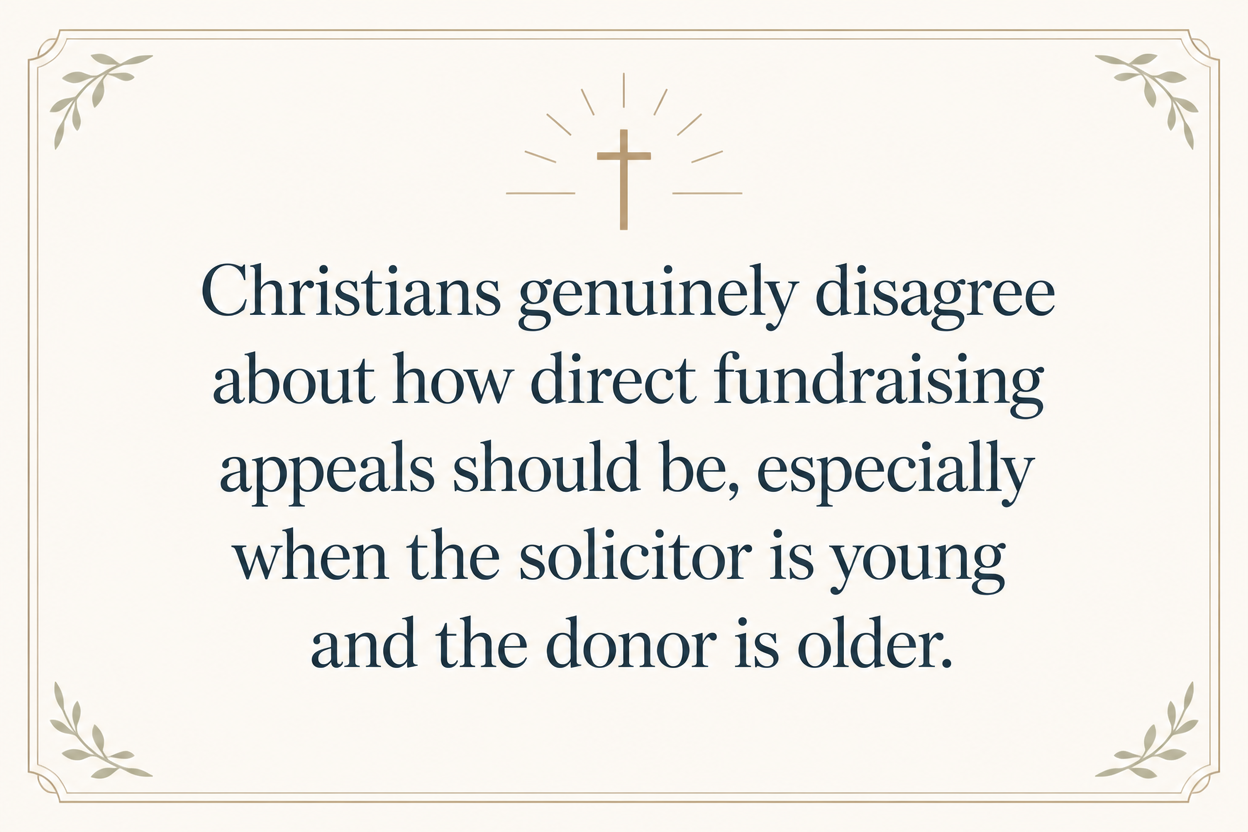
Yet the same process can deform character if it is framed as a numbers game, if manipulation is tolerated, or if staff are trained to exaggerate “life change” to close gifts. Christians genuinely disagree about how direct fundraising appeals should be, especially when the solicitor is young and the donor is older. But there is little disagreement that truthfulness, restraint, and gratitude are nonnegotiable.
Donors should evaluate the hidden costs and incentives
Fundraising shifts costs to staff time and relational capital
When staff raise support, camps often reduce cash outlays. But the total cost of ministry does not disappear; it shifts. Time spent building support letters, follow-up calls, and thank-you notes is time not spent in training, rest, study, or preparation. For some roles, that trade-off is reasonable. For others, it can be damaging, especially when staff arrive exhausted from a months-long scramble to become “fully funded.”
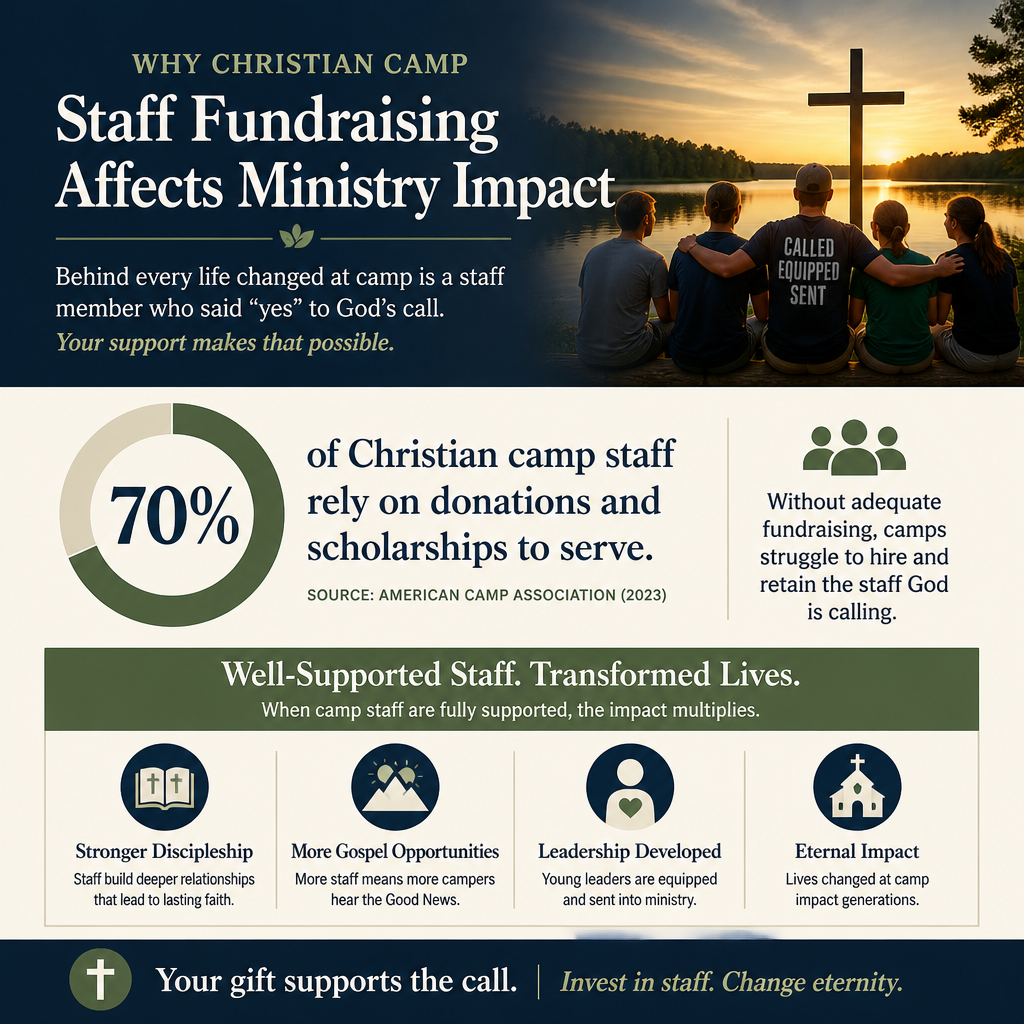
Fundraising also draws on relational capital. A young staff member may feel pressure to ask a small group, a youth pastor, or extended family for repeated gifts year after year. If the camp provides clear expectations and coaches staff to communicate with honor, these relationships can deepen. If not, the process can strain them, and the staff member bears the relational cost.
Incentives can drift unless leadership names them
Every funding model creates incentives. A fully salaried model can drift toward professionalization and detachment if spiritual accountability is thin. A support-raised model can drift toward performance pressure, overpromising impact, or treating donors as a personal revenue stream. Neither is inevitable, but both are common enough to require sober attention.
This is where our work at Most Trusted becomes practically relevant for donors. Across our verification work, we look for signs that the ministry has internal controls, donor communication standards, and leadership oversight that match the spiritual claims being made. In camp settings, those controls often include how staff are trained to solicit funds, how gifts are receipted, and whether a camp’s board can articulate the ethical boundaries of fundraising.
- Clear, written expectations for staff support raising and timelines
- Training that prohibits exaggeration and emotional manipulation
- Policies for receipting, restricted gifts, and designated staff accounts
- Pastoral care for staff under financial stress
- Transparent reporting to donors about what gifts do and do not accomplish
What to look for in a camp ministry before funding staff
Trustworthy fundraising depends on governance and transparency
Christian donors often ask whether administrative “overhead” is low. The more important question is whether the ministry is governed well enough to be safe and truthful. The nonprofit sector has increasingly recognized that the simplistic “low overhead equals effectiveness” metric misleads donors and can incentivize unhealthy underinvestment in staff and systems. Charity Navigator, Candid, and the Better Business Bureau issued a joint letter warning against the “overhead myth” and urging donors to focus on results and transparency rather than overhead ratios Charity Navigator.
For camps, underinvestment can show up as thin supervision, inadequate background checks, weak incident reporting, or insufficient training. Those are not minor details. They shape whether a camp can keep children safe and whether its gospel message is credible to parents and churches.
Ask questions that connect funding to formation and safety
When donors consider supporting staff fundraising, the aim is not to interrogate young workers. The aim is to understand whether the camp has built a structure that makes integrity likely. The ministries that meet The Most Trusted Standard tend to treat donor trust as a stewardship responsibility, not a marketing asset.
Questions that often clarify the picture include: Who oversees staff fundraising practices? What training is required before a counselor solicits gifts? How are designated gifts handled in accounting? What happens if a staff member is not fully funded? And how does the camp report outcomes without turning spiritual fruit into a sales pitch?
Donors who want broader context on how camps fit within the Christian ministry landscape often begin with Christian Camps and Conferences, especially when comparing models across traditions and regions.
How donors can give in ways that strengthen long-term impact
Fund staff in ways that reduce distortion and increase stability
Donors sometimes default to either/or thinking: either fund the program or fund the person. In camp ministry, the healthiest support patterns often integrate both. Funding staff can be wise when it is paired with attention to the camp’s training, supervision, safety standards, and financial controls. Funding the camp’s staff development systems can also be wise, even if it feels less emotionally immediate than a counselor’s personal letter.
What this means in practice is that donors can choose to give in ways that reduce pressure on young staff to overperform. Multi-year commitments, modest but consistent monthly gifts, and gifts that include budgeted training or staff care can create conditions where counselors serve with steadiness rather than anxiety.
Support raising should not replace responsible wages without explanation
Some camps have compelling theological and practical reasons for support-raised roles. Others use support raising as a blanket solution to wage constraints without confronting what fair pay and staff care require. The field has had to reckon with the reality that chronic undercompensation can harm retention and reduce the maturity of the staff team.
Donors can respectfully ask whether the camp’s staffing model reflects a coherent theology of work and stewardship. Supporting a camp staff member can be an act of partnership in the gospel. It should not become a way to normalize avoidable financial fragility.
Donors who want to think more specifically about the ethics and practicalities of supporting individual camp workers may find Supporting Christian Camp Staff and Counselors helpful as a category of issues and decisions.
FAQs for Why Christian camp staff fundraising affects ministry impact
Is supporting a camp staff member less effective than giving to the camp general fund?
Not necessarily. Supporting a staff member can strengthen ministry impact when the camp has clear oversight, ethical fundraising training, and sound financial controls for designated gifts. A general fund gift can strengthen impact when it supports core needs such as training, supervision, facilities, and safety. The question is not which feels more spiritual; it is which funding path best supports faithful operations and credible discipleship in that specific camp.
What signs suggest a camp’s staff fundraising model may be unhealthy?
Common warning signs include unclear expectations, pressure to report inflated spiritual outcomes, inconsistent receipting or accounting for designated gifts, and a culture where staff financial stress is treated as a private problem rather than a leadership responsibility. Donors should also be cautious when a camp cannot explain who sets fundraising policies, how appeals are reviewed, and what safeguards protect both donors and staff.
A donor’s role in sustaining credible camp ministry
Christian camp staff fundraising affects ministry impact because money is never only money in Christian ministry; it is a form of trust and a mechanism of formation. When donors support camp staff within a framework of integrity, they help create stable teams, healthier incentives, and more credible witness.
When donors give without asking basic questions about governance, transparency, and staff care, they may unintentionally reinforce instability or pressure that weakens the very ministry they hope to strengthen. Faithful generosity is not suspicion. It is stewardship practiced in the light.



