
How Christian camp scholarships work is, at its core, a question about access and stewardship. Camps are often among the few environments where a child receives sustained biblical teaching, embodied Christian community, and attentive adult discipleship away from daily pressures. For many families, however, the tuition required to make that week possible competes with rent, groceries, medical bills, and transportation.
Donors generally want two things at once: to remove financial barriers for children who would benefit from camp, and to give in a way that strengthens a ministry rather than creating hidden fragility. Across our verification work at Most Trusted, we see that scholarship programs can do both when they are designed with clear theology, careful administration, and transparent reporting consistent with The Most Trusted Standard.
Scholarships are a ministry decision before they are a financial tool
Christian camp scholarships are not merely a discount program. They are a theological statement about who belongs in the life of the church and who gets access to formative spaces. Scripture’s insistence that the poor are not to be sidelined is not sentimental; it is structural. James warns against showing partiality to the wealthy in the assembly (James 2:1–7). Camps that take this seriously tend to treat scholarships as part of their discipleship mission, not as a marketing tactic.
What this means in practice is that a camp’s scholarship policy reveals priorities. Some camps anchor scholarships in outreach to unchurched families. Others place the emphasis on serving church families facing temporary hardship. Still others use scholarships to support foster and adoptive families, or to help send children from partner ministries in under-resourced communities. Christians genuinely disagree about which of these should be most central. A donor’s role is not to impose a single model, but to fund a coherent model that is honestly stated and competently executed.
Need-based, referral-based, and partnership-based models
Most scholarship programs fall into three broad patterns.
- Need-based scholarships reduce tuition for families who demonstrate financial hardship through an application. This model requires discretion, data handling, and consistent criteria.
- Referral-based scholarships allocate funds through pastors, school counselors, caseworkers, or ministry partners who vouch for need. This can reduce paperwork for families but increases reliance on external gatekeepers.
- Partnership-based scholarships fund a cohort from a specific church network, urban ministry, foster care agency, or missionary sending community. This can deepen discipleship continuity but requires clear agreements and follow-up.
A well-run camp will articulate which model it uses and why, and it will show evidence that the scholarship dollars are aligned with its stated mission and theology.
Scholarships are rarely the only access barrier
Tuition is often the largest obstacle, but it is not the only one. Transportation, required gear, medical forms, and missed wages for caregivers can keep a child from attending even when tuition is covered. Donors sometimes assume “full scholarship” solves the problem. In reality, many camps need a modest “wraparound” fund for bus rides, luggage, prescription storage needs, or last-minute essentials purchased with dignity rather than with public embarrassment.

What a Christian camp scholarship typically covers and why it varies
Donors often ask what a Christian camp scholarship usually covers because they want their gift to be concrete. The honest answer is that coverage varies by program design, camp facilities, and financial structure. A scholarship may cover a set dollar amount, a percentage of tuition, or the full fee. The crucial question is whether the camp has defined costs clearly and applies scholarship funds consistently.
Common coverage categories
Most scholarships are applied to the “direct camp fee,” which typically includes lodging, meals, programming, and staff supervision. Some camps include activities (ropes course, waterfront, off-site trips) within tuition; others treat them as add-ons. It is reasonable for scholarships to be restricted to core participation rather than every elective expense, but the camp should say so explicitly.
Donors should also distinguish between resident camps (overnight) and day camps. Overnight camps typically carry higher staffing, safety, and food service costs. Day camps may have lower tuition but can still present access barriers for working parents who need extended care.
Administrative realities donors should not dismiss as “overhead”
Scholarships require real administration: application review, payment posting, refund rules, donor receipting, and privacy protections for minors. In addition, camps operate in a regulatory environment that requires careful attention to safety, background checks, health protocols, and insurance. Donors sometimes push scholarship funds as if every dollar should go “straight to the camper.” The field has had to reckon with the harm caused by that instinct.
The broader nonprofit sector has addressed this directly. The “Overhead Myth” letter—signed by leading charity evaluators—argues that unrealistic pressure to minimize administrative costs can undermine effectiveness and long-term outcomes, including safety and accountability (Charity Navigator). A mature donor funds both access and the systems that keep access responsible.
Partial scholarships, copays, and the dignity question
Many camps require a family copay even when need is clear. The rationale is often twofold: to preserve family buy-in and to stretch limited scholarship dollars. That can be wise, but it can also become a barrier when a $50 or $100 payment is simply not available. The better approach is a flexible policy that protects dignity: a standard copay expectation paired with a clear, non-stigmatizing option to waive it when necessary.
When camps most need scholarship funding and how donors can respond wisely
Scholarship needs are not evenly distributed across a year. Camps carry fixed costs—facility maintenance, year-round leadership salaries, licensing, insurance—while much revenue arrives in a short summer window. This creates predictable pressure points that sophisticated donors can address without destabilizing a ministry.
Early-season deposits and the registration gap
Many camps require deposits months in advance to hold a spot. Families requesting scholarships often cannot front those deposits. A scholarship fund that can be applied early—before tuition deadlines—can prevent a child from losing access due to timing. This is one reason some camps ask donors to fund scholarships in late winter or spring rather than mid-summer when slots are already filled.
Late-season cancellations and the ethics of waitlists
Another pressure point is late cancellations. When a camper cancels close to the session start date, the camp may not be able to refill the bed, but it still bears the cost of staffing and food purchasing commitments. Camps vary in whether they refund tuition, roll it forward, or convert it into a charitable gift. Donors should ask how scholarship dollars are treated when a scholarship recipient cancels. The policy should be written, consistent, and fair to families facing emergencies.
Economic volatility and increased requests
Scholarship demand often rises during periods of economic stress. Food, housing, and transportation costs can compress family budgets quickly, and churches often see higher benevolence needs simultaneously. The U.S. Department of Agriculture has documented the persistence of food insecurity in American households, which is one indicator of family-level fragility that can spill into discretionary spending like camp tuition (USDA Economic Research Service). A camp scholarship fund that is flexible enough to respond to surges—without improvising eligibility rules midstream—tends to serve families more justly.
Some donors prefer funding only scholarships because it feels direct. Others prefer funding a camp’s general operating budget because it strengthens the whole ministry. The more responsible stance is often a blended approach: designated scholarship funding paired with unrestricted support that keeps the program stable, safe, and honest about true costs.
What donors should ask before sponsoring a camper
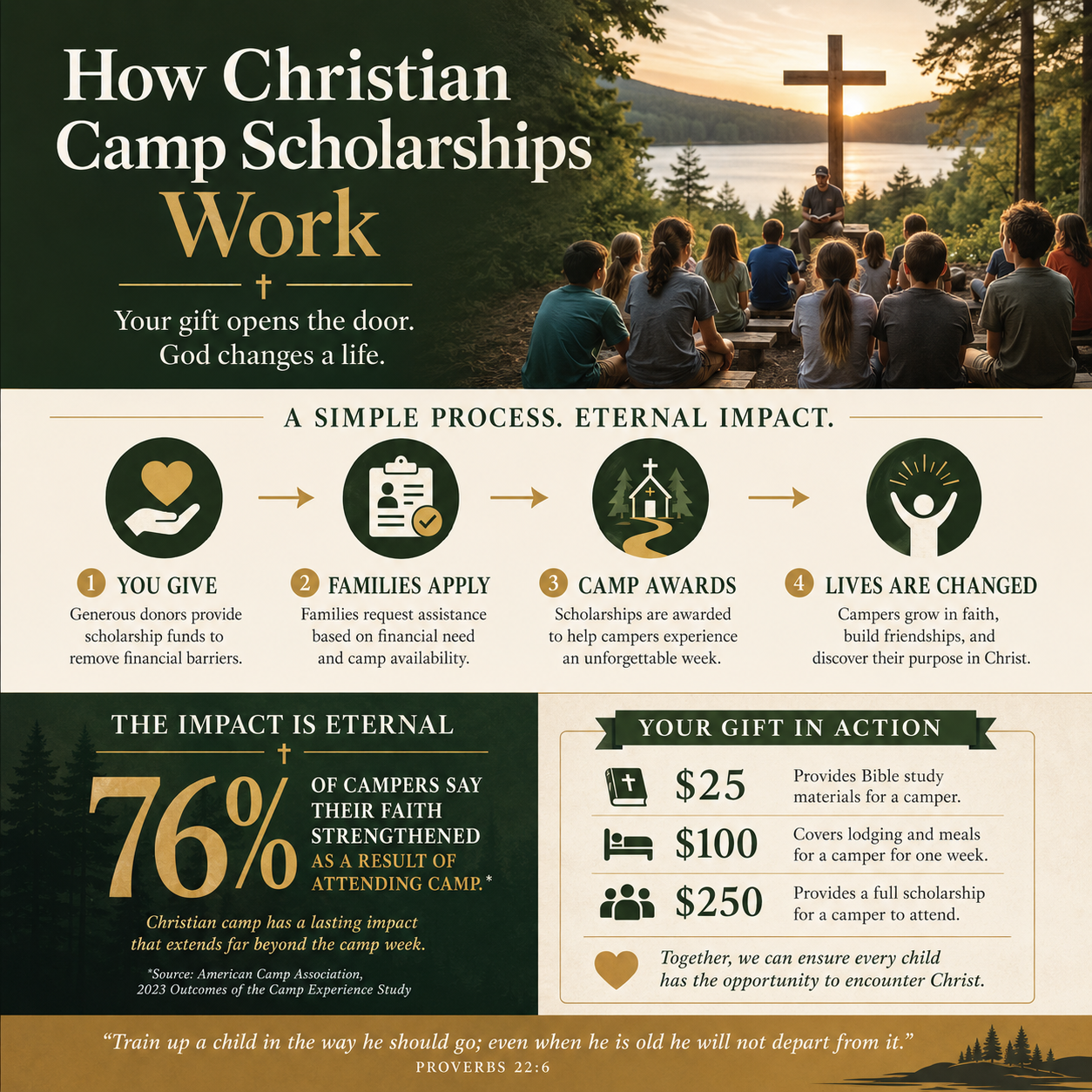
Donors who want to know how much it costs to sponsor a Christian camper are usually trying to estimate impact and plan their giving. The more reliable approach is to ask questions that reveal whether the camp’s scholarship program is durable, not merely whether a sponsorship figure sounds compelling. A $300 sponsorship number can represent excellent stewardship or a fragile story, depending on how the camp prices tuition, accounts for subsidies, and reports restricted gifts.
These questions fit naturally within The Most Trusted Standard, which evaluates ministries across Faith Foundation, Financial Integrity, Governance and Leadership, and Transparency and Effectiveness.
Scholarship policy and theological clarity
- Who is eligible? Is need defined, and is the model consistent with the camp’s discipleship purpose?
- How are referrals handled? If pastors or partners recommend campers, what safeguards prevent favoritism or misuse?
- How is dignity protected? Are families required to disclose unnecessarily personal details, or is the process proportionate?
Financial integrity and restricted fund handling
- How are scholarship gifts recorded? Are restricted gifts tracked and honored in practice?
- What happens if scholarships exceed demand for a session? Are funds carried forward, re-designated with donor permission, or absorbed into general revenue?
- What is the true cost per camper? Tuition often does not equal cost. Does the camp understand its unit economics, including staffing ratios and facility costs?
Safety, staffing, and governance
- What screening and training is required for counselors? Scholarship dollars should never be used to increase attendance while cutting corners on safety.
- What are the camp’s child protection policies? Are they written, practiced, and overseen?
- Who is accountable? Is there an independent board with real oversight, and are key policies reviewed regularly?
Donors who want broader context on how camps operate and how to evaluate them will find it helpful to engage our wider coverage of Christian Camps and Conferences. The objective is not to become suspicious donors. It is to become faithful stewards who fund ministries in ways that protect children, strengthen families, and honor Christ.
Faithful access requires both generosity and verification
Christian camp scholarships work well when they are treated as a form of hospitality ordered by the gospel: opening the life of the Christian community to those who would otherwise be absent. They work poorly when they are treated as a fundraising story disconnected from careful policies, cost realities, and accountability.
Serious donors are not being difficult when they ask how scholarship funds are awarded, tracked, and reported. They are honoring the trust implicit in giving, and they are acting on the biblical insistence that stewardship is spiritual work. When camps pair that seriousness with transparent practice, scholarship funding becomes more than a transaction; it becomes a credible, durable channel of formation for the next generation.



