
When Christian anti-trafficking ministries need funding most is rarely when the need is most visible. The field’s most urgent moments often occur in the quiet intervals: the weeks between a law-enforcement operation and a survivor’s stable housing, the months of staff turnover after repeated trauma exposure, the long compliance work that keeps a shelter open.
Christian donors usually understand urgency as a crisis to be met. Anti-trafficking work requires a second category of urgency: the long obedience that sustains safety, dignity, and faithful presence over years. Scripture honors both. The Good Samaritan did not only bind wounds; he also paid for ongoing care (Luke 10:34–35). In trafficking response, that second payment is often where ministries are most vulnerable.
1. When rescues create a surge of needs the public never sees
Many donors first encounter trafficking through news headlines or rescue narratives. Those moments can be real, and they can also distort what “need” looks like. In most cases, the most expensive and staffing-intensive work starts after the initial intervention, when a survivor’s safety must be stabilized and a life rebuilt.
When immediate safety becomes long-term complexity
A single referral can require medical care, trauma-informed counseling, substance-use treatment, legal advocacy, language services, transportation, and secure housing coordination. If children are involved, the complexity multiplies. Ministries that over-promise in the first 72 hours often pay for it later in burnout, ethical compromise, or avoidable breakdowns in care.
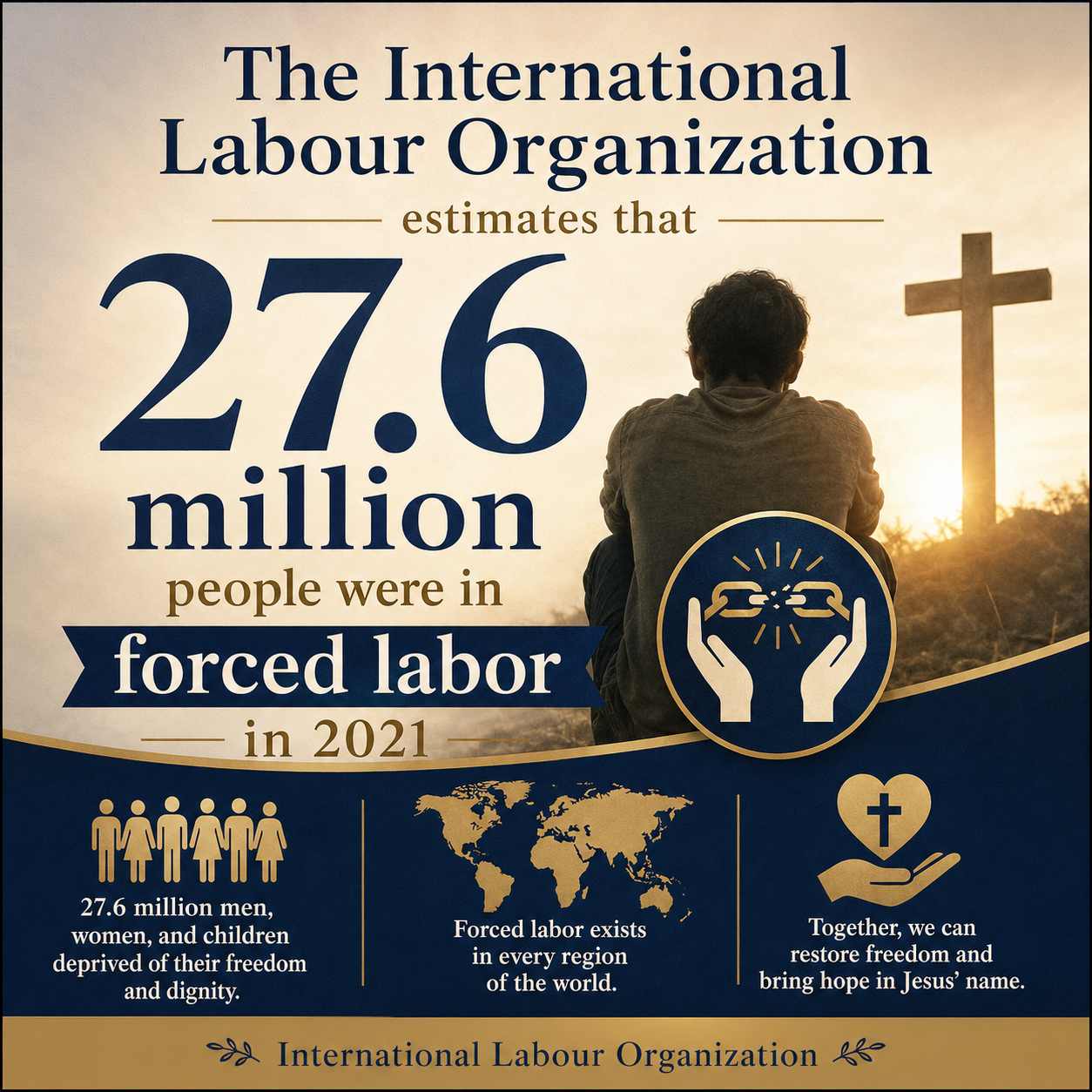
Reliable evidence suggests trafficking is both more prevalent and more hidden than many assume. The International Labour Organization estimates that 27.6 million people were in forced labor in 2021 International Labour Organization. That estimate does not tell a donor what to fund tomorrow, but it does clarify why capacity matters: the pipeline of need is not occasional.
When ministries must surge without destabilizing their standards
After a law-enforcement operation, ministry leaders often face a moral and operational tension: respond quickly without lowering screening, safety protocols, or staff-to-client ratios. Housing is a common choke point. When a ministry does not have flexible funds to cover temporary lodging, added security, or emergency staffing, it may have to turn away survivors it is called to serve.
What this means in practice is that “rescue season” should trigger donor attention to unglamorous line items: overtime pay, clinical supervision, security systems, emergency placements, and legal fees. These are not distractions from mission; they are part of loving the vulnerable with competence.

2. When survivor care shifts from emergency response to durable restoration
Christian anti-trafficking ministries that endure tend to distinguish between immediate crisis care and the slower work of restoration. Both are spiritual work, and both require funding patterns that match reality rather than rhetoric.
When housing transitions are the ministry’s most fragile moment
A survivor leaving an emergency shelter for transitional housing, or leaving transitional housing for independent living, often faces heightened risk: unstable employment, threats from traffickers, immigration complications, family pressure, or relapse into coercive relationships. Ministries need discretionary support precisely because each case is different and because rigid funding can force one-size-fits-all decisions.
Government funding and restricted grants can help, but they often lag behind actual needs and may exclude faith-explicit components that are central to Christian discipleship and pastoral care. Donors are frequently the only funding source that can support the whole-person approach many Christian ministries see as non-negotiable.
When the work requires clinically competent, spiritually grounded staff
Trauma care is not merely compassionate; it is technical. Many ministries employ licensed counselors, social workers, case managers, and program directors with specialized training. Retaining that talent requires predictable revenue, benefits, and healthy supervision structures. When funding arrives only for programs and not for the people who run them, ministries drift toward chronic vacancy and thin coverage.
Christians genuinely disagree about how explicitly Christian anti-trafficking programs should be in settings that include public funds or pluralistic partnerships. But there is little disagreement that survivors should not be used as means to an end, including fundraising. Serious ministries protect dignity by treating survivors as image-bearers, not content.
3. When staff and volunteers reach the limits of secondary trauma
The hidden emergency in anti-trafficking work is not only in survivors’ lives. It is in the lives of the staff who absorb a steady stream of coercion, betrayal, and violence through disclosures, investigations, and crisis calls. If donors want ministries to be stable, donors must fund stability.
When retention becomes a protection issue
High turnover is not just an HR problem. It can compromise continuity of care, weaken safety protocols, and increase the risk of boundary violations. Trauma-exposed teams need regular clinical supervision, professional development, and sabbath rhythms that are organizationally protected rather than personally improvised.
Research on secondary traumatic stress and burnout among helping professionals is extensive, even if findings vary by population and setting. The National Child Traumatic Stress Network maintains a substantial body of training and resources on secondary traumatic stress and organizational responses National Child Traumatic Stress Network. Donors do not need to become clinicians to take the implication seriously: sustaining caregivers is part of caring for survivors.
When donors can fund the uncelebrated protections
Some of the most responsible uses of donor funds are also the least visible. We recommend asking ministries how they protect staff health and program integrity over time. A mature organization can answer without defensiveness because it has already decided that longevity and holiness matter more than constant expansion.
- Clinical supervision and trauma-informed training for staff and key volunteers
- Retention costs, including benefits, reasonable caseloads, and development pathways
- Security and safeguarding systems for facilities, data, and survivor confidentiality
- Legal and compliance support for licensing, mandatory reporting, and immigration complexities
- Emergency funds that keep a survivor safe when a plan collapses
4. When the ministry must choose between growth and governance
Anti-trafficking organizations often experience donor-driven pressure to scale quickly. Growth is not inherently suspect, but speed can become a spiritual and operational temptation. Scripture’s warnings about haste apply to institutions as well as individuals (Proverbs 19:2). In this field, haste can produce preventable harm.
When safeguards and transparency are the real test of readiness
Across our verification work at Most Trusted, we observe that responsible ministries treat governance and financial controls as part of their duty of care. Boards that understand trauma work, strong conflict-of-interest policies, audited financials when appropriate, and clear outcome reporting are not administrative add-ons. They are structures that help ensure power is not misused and that funds entrusted by donors are handled with integrity.
Many donors have absorbed simplistic narratives about overhead. The sector has pushed back for good reason. Charity Navigator, Candid (GuideStar), and BBB Wise Giving Alliance jointly warned against equating low overhead with effectiveness and called donors to consider broader measures of impact Charity Navigator. In anti-trafficking work, a ministry that refuses to fund qualified staff, compliance, and evaluation may be cheaper, but it may not be safer or more effective.
When restricted giving can unintentionally weaken the mission
Donors often prefer restricted gifts: “Only for beds,” “Only for rescues,” “Only for programs.” In some cases, restricted giving is appropriate and even necessary. But if every gift is restricted, leaders can be forced to underfund core functions and to chase program activity that photographs well but cannot be sustained.
What this means in practice is that the times ministries need funding most include the times they are making prudent investments: hiring a compliance director, upgrading data security, building a reserve, or slowing intake to rebuild staff capacity. Those decisions can disappoint an audience conditioned to constant visible growth. They are often the decisions that keep a ministry faithful.
5. When donors can give with both urgency and discernment
The moral weight of trafficking can pressure donors into impulsive giving. Yet Christian stewardship is not impulsive. It is purposeful, patient, and accountable. Discernment does not reduce compassion; it guards it.
When verifying ministries protects survivors and strengthens witness
Trafficking work attracts sincere servants and also opportunists. The field has had to reckon with exaggerated claims, unverifiable “rescue” numbers, and marketing that trades in sensationalism. Donors who ask hard questions are not cynical; they are protecting the vulnerable.
Most Trusted exists to help donors give with confidence by evaluating Christian nonprofits against The Most Trusted Standard, a 15-criteria framework covering faith foundation, financial integrity, governance and leadership, and transparency and effectiveness. The point is not perfection. The point is verifiable trustworthiness that honors both donors and those served.
When funding timing matters as much as funding amount
Many ministries can raise money in a crisis. Fewer can fund the next 18 months of case management, counseling, job placement, and housing stabilization. The times they need funding most often include:
When a shelter is full and must place survivors in temporary safe lodging; when a key counselor resigns and caseloads threaten to become unsafe; when a grant ends but services cannot ethically stop; when a new safeguarding requirement demands immediate compliance spending; when a survivor’s legal process stretches far longer than anticipated.
For donors seeking context on responsible approaches in this space, Christian Anti-Trafficking Ministries is a useful starting point for understanding the kinds of programs, claims, and accountability signals that deserve attention. For donors comparing how different funding categories function, How Christian Anti-Trafficking Ministries Use Donations offers clarity about what ministry leaders are actually paying for when they ask for general support.
FAQs for When Christian anti-trafficking ministries need funding most
Is it better to give to rescue operations or long-term survivor care?
Both can be faithful, but long-term survivor care is often the more consistent funding gap. Rescue and identification frequently depend on public-sector and law-enforcement activity, while months and years of stabilization and restoration depend on a durable network of housing, counseling, case management, and discipleship. Donors who value lasting freedom should ensure that survivor care is not treated as an afterthought.
What should donors ask before making a significant gift to an anti-trafficking ministry?
We recommend questions that surface safeguarding, integrity, and realism: How does the ministry define and document outcomes without exaggeration? What are its safeguarding policies for survivors and minors? How are finances overseen, and does the organization provide accessible reporting? How does the ministry care for staff exposed to trauma? And how does it collaborate with local authorities and other providers without claiming ownership of complex, multi-agency results?
Funding the moments that determine whether freedom holds
Anti-trafficking work tempts donors toward the dramatic. Christian love calls for something steadier: funding the hard, quiet moments when safety must be maintained, trust rebuilt, and staff sustained. These are the moments that determine whether freedom holds.
When donors align their giving with the true timeline of restoration, they participate in the kind of mercy Scripture commends: compassionate, accountable, and durable. The ministries most worthy of confidence will not only welcome that posture; they will depend on it.



