
What Scripture says about caring for vulnerable children is both plain and demanding: God identifies himself with the weak, commands his people to defend them, and measures the integrity of worship by whether it yields protection for those at risk. For Christian donors, that clarity brings a second question that Scripture also forces into view: whether our compassion is ordered by truth, accountability, and outcomes that actually serve children.
The Bible does not treat vulnerable children as an optional cause, nor does it permit sentimental charity that ignores injustice, harms families, or rewards exploitation. The field of child sponsorship and child protection has matured in the last two decades, learning to distinguish between child-centered intentions and child-safe practice. Across our verification work at Most Trusted, we see that the ministries most aligned with The Most Trusted Standard tend to pair explicit biblical conviction with verifiable safeguarding, transparent finances, and measurable child and family outcomes.
God reveals himself as defender of children and the vulnerable
The fatherhood of God has social consequences
In the Old Testament, God’s own character is offered as the starting point for ethical obligation: “Father of the fatherless and protector of widows is God in his holy habitation” (Psalm 68:5). Scripture ties God’s holiness not only to ritual purity but to protection. When the church speaks of God as Father, it is not only speaking of comfort; it is speaking of a God who acts for those without social power.
This is why Israel’s covenant life consistently addresses those most at risk: the sojourner, the widow, and the orphan. “You shall not pervert the justice due to the sojourner or to the fatherless” (Deuteronomy 24:17). Justice is not presented as a competing priority with mercy. It is mercy made durable in law, courts, and economic life.
True worship includes material protection
The prophets are unsparing on the gap between public religion and the treatment of vulnerable people. Isaiah condemns fasting and worship that leaves oppression intact, calling God’s people to “bring justice to the fatherless” (Isaiah 1:17). In other words, care for children in crisis is not merely a private virtue. It is a public witness about whether a community’s worship is truthful.
For donors, this reframes giving as more than generosity. It becomes participation in a form of public righteousness. The question is not simply whether a ministry moves us, but whether it embodies the kind of justice the prophets describe: protection that is enforceable, not performative.
Jesus receives children and warns those who harm them
The kingdom places children near the center
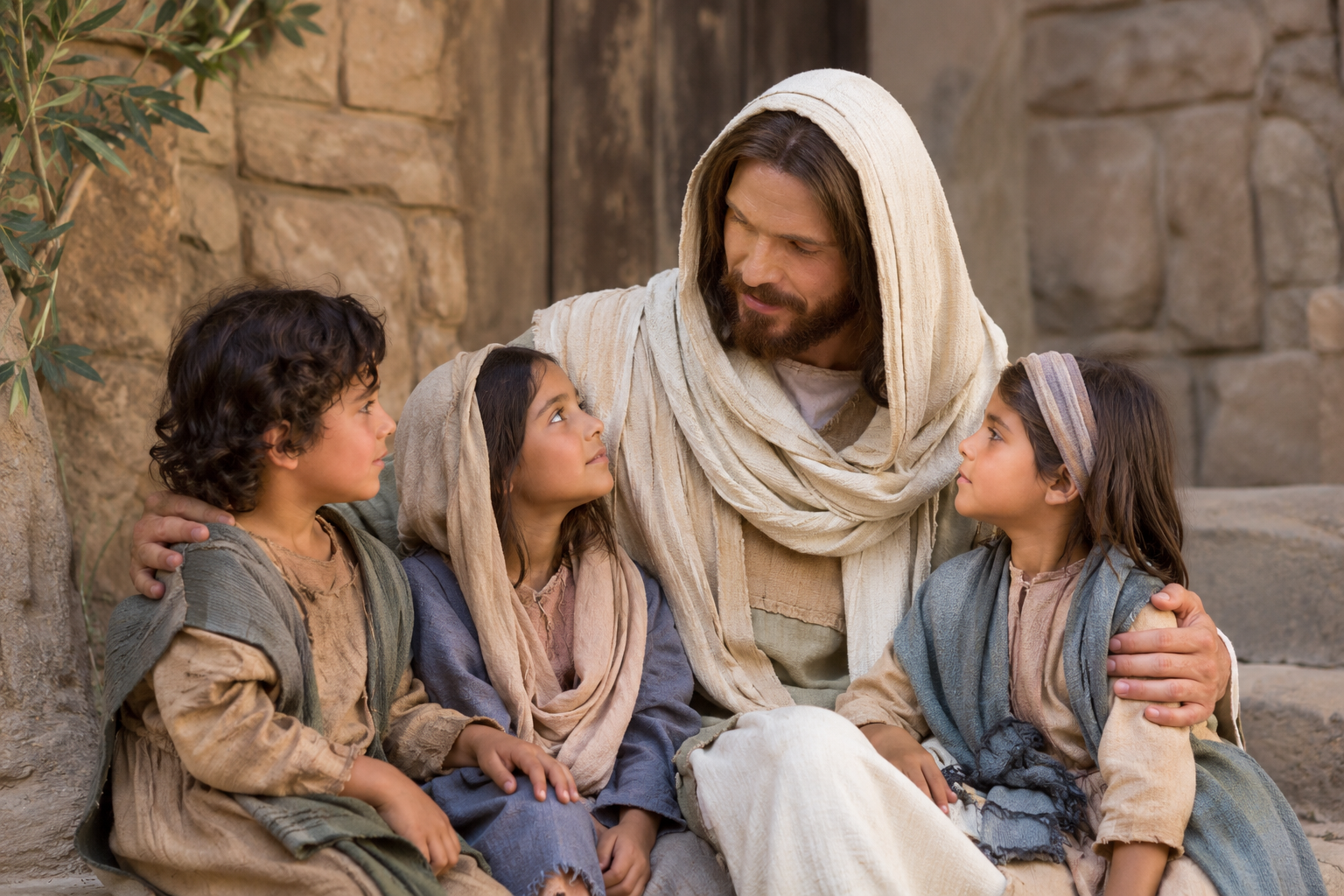
Jesus does not treat children as an interruption. When disciples try to manage access, Jesus rebukes them: “Let the children come to me; do not hinder them” (Mark 10:14). He places a child in the midst of his followers and makes the child a living parable of the kingdom (Matthew 18:2–5). This is not merely about innocence. It is about status. In a world where children had little social standing, Jesus centers them.
Christian support for vulnerable children is therefore not a niche interest. It is aligned with the way Jesus orders his community: the least are received, and the strong are restrained from using power against them.
Scripture’s moral severity toward exploitation
Matthew 18 does more than commend childlike humility. It warns with unusual severity about causing little ones to stumble: “It would be better for him to have a great millstone fastened around his neck and to be drowned in the depth of the sea” (Matthew 18:6). The church is not permitted to be neutral about harm to children, including the kind of harm that can be concealed under religious language.
What this means in practice is that child-serving ministries must be judged not only by their stated intentions, but by their safeguarding, boundary practices, reporting procedures, and willingness to submit to scrutiny. Sentiment cannot be allowed to create moral immunity.
Scripture’s command is care that strengthens families and community
Orphan care in Scripture is not a campaign for institutions
James’s well-known summary—“religion that is pure and undefiled before God… is this: to visit orphans and widows in their affliction” (James 1:27)—is often cited in conversations about child sponsorship. But James is not advocating a particular program model. He is describing a people whose faith expresses itself in faithful presence, protection, and practical help for those who cannot secure their own wellbeing.
The harder question is how to translate that obligation into forms of care that prioritize long-term stability. Scripture consistently treats the family as a primary context for formation and protection. That does not solve every case—some homes are dangerous, and some children truly are without parental care—but it does establish a bias toward strengthening families when possible rather than substituting for them.
Vulnerability is often economic and social before it is parental absence
In many contexts today, a child becomes “vulnerable” because of preventable pressures: illness, job loss, displacement, debt, or local violence. Scripture’s concern for gleaning, debt restraint, and honest courts signals that vulnerability is frequently created by systems, not only by personal tragedy (Leviticus 19:9–10; Proverbs 31:8–9). For donors, that widens the moral frame. Caring for vulnerable children includes addressing drivers that push families toward separation.
Where child sponsorship is at its best, it serves this biblical logic: keeping children in families, stabilizing households, improving access to education and healthcare, and mobilizing local churches for pastoral care and protection. For readers weighing ministry options within Biblical Foundations for Child Sponsorship, the central question becomes whether the model reinforces family and community integrity or unintentionally weakens it.
Wise compassion requires scrutiny, not suspicion
Scripture commends discernment in giving
The Bible does not set generosity against prudence. It praises openhanded care for the poor (Deuteronomy 15:7–11), and it also commends wisdom, honesty, and good administration (Proverbs 11:1; 2 Corinthians 8:20–21). Paul takes pains to avoid any appearance of mishandling funds, recognizing that financial integrity is part of ministry credibility. Donors who ask careful questions are not stepping outside Scripture; they are acting in line with it.
Christians genuinely disagree about how much scrutiny is “too much,” especially when the need is urgent. Yet the New Testament expectation is not naïve trust. It is accountable love—love that refuses to enable sin, manipulation, or negligence toward those it claims to serve.
Modern risks Scripture would require us to name
The child sponsorship and orphan care movement has had to reckon with documented harms: the incentives that can draw children into residential care unnecessarily, the damage of repeated short-term attachments, and the reputational power of stories that donors cannot verify. Serious donors should not treat these concerns as cynical. They are the natural fruit of taking Matthew 18 seriously.
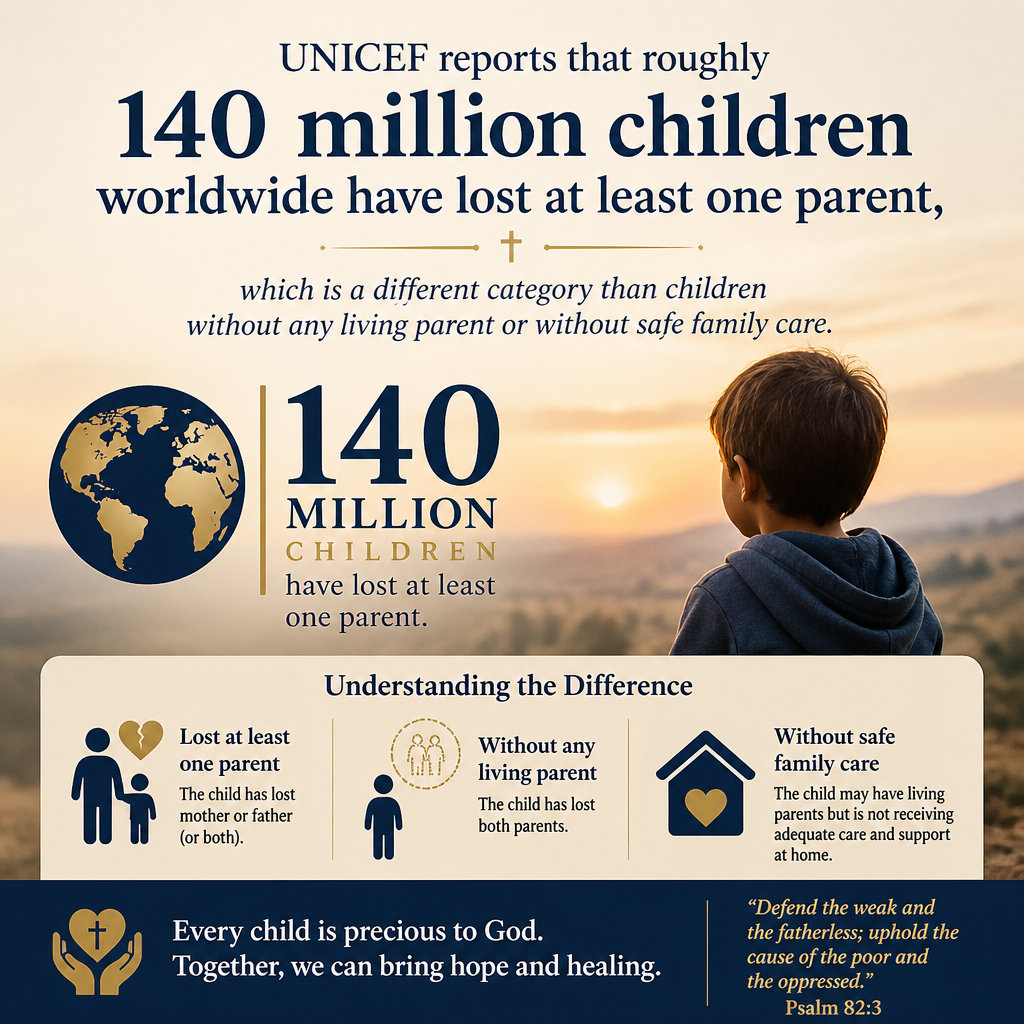
We also need a clear baseline about the global orphanhood picture. UNICEF reports that roughly 140 million children worldwide have lost at least one parent, which is a different category than children without any living parent or without safe family care. See UNICEF’s orphan estimates and definitions at https://www.unicef.org/children-orphanages. This distinction matters because ministries can unintentionally build models around the wrong problem statement.
For donors seeking faithful action without avoidable harm, these questions are not peripheral:
- Does the ministry prioritize family preservation and kinship care when safe and possible?
- Are child safeguarding policies public, specific, and enforced, including reporting and training?
- Is the sponsorship model honest about what funds do and do not directly support?
- Does the ministry avoid child profiling, exploitative imagery, and incentives that separate families?
- Are outcomes tracked beyond participation, including school retention, protection indicators, and family stability?
In our work at Most Trusted, we evaluate ministries against The Most Trusted Standard, which includes faith commitments, financial integrity, governance, and transparency and effectiveness. That approach is not a substitute for biblical discernment; it is one practical way donors can honor Scripture’s demand that care be truthful as well as compassionate.
Child sponsorship can reflect biblical care when it is accountable and church-rooted
The strength of sponsorship is long-term, relational support
At its best, child sponsorship channels a donor’s long-term commitment into predictable, locally administered support around education, health, and spiritual formation. The long-term horizon matters. Scripture’s vision of neighbor-love is not a single transaction but a steady posture of responsibility (1 John 3:17–18). Vulnerable children are not served well by episodic concern.
For donors, sponsorship also offers a disciplined alternative to reactive giving. The regularity can function as a stewardship practice: a chosen obligation that competes with consumption and keeps the needs of the vulnerable close to our household budgets.
The most contested questions are about implementation
The research and practitioner debate is not whether children should be helped, but how. Critics of some sponsorship models argue that individualized “my child” framing can distort reality, create pressure to produce marketable stories, or risk misleading donors about the directness of the financial transfer. Others point out that community-based models can drift into vagueness if outcomes are not tracked and communications are unclear. These are legitimate tensions, and mature ministries address them rather than dismissing them.
Evidence also suggests sponsorship can have meaningful benefits when implemented well. A widely cited long-term study of Compassion International’s program by economists at the University of San Francisco found positive associations with education and adult leadership outcomes for sponsored children. See the University of San Francisco Economics Department research summary at https://www.usfca.edu/arts-sciences/academic-departments/economics. Donors should still ask careful questions about generalizability and causality, but the study underscores that program design and consistency can matter over decades.
Many donors begin with the larger landscape of Child Sponsorship Ministries and then narrow to specific organizations. The ministries most worthy of sustained support tend to communicate plainly about model limits, local church partnerships, safeguarding, and the difference between sponsorship as donor relationship and the actual program economics on the ground.
FAQs for What Scripture says about caring for vulnerable children
Does the Bible command Christians to sponsor a child?
Scripture commands God’s people to defend and provide for the vulnerable, including fatherless children, but it does not mandate a single modern mechanism such as sponsorship. The obligation is clear; the method requires wisdom. Donors can honor the biblical command through sponsorship when the ministry’s model protects children, strengthens families when possible, and is transparent about finances and outcomes.
How should donors think biblically about orphanages and residential care?
Scripture does not address modern orphanages directly, but it does establish principles: protection of children, restraint of power, honesty, and preference for stable family life where possible. Residential care may be necessary in some cases, especially when reunification is unsafe. Donors should ask whether residential care is used as a last resort, whether reunification and kinship placement are actively pursued, and whether safeguarding and oversight are strong enough to meet Scripture’s moral seriousness about harm to children.
Giving that reflects God’s character
What Scripture says about caring for vulnerable children is not merely that we should feel compassion, but that we should enact protection that is truthful, accountable, and durable. The church is called to receive children as Jesus received them, to defend them as God defends the fatherless, and to refuse any ministry practice that treats a child’s vulnerability as a means to another end.
For donors, the faithful path is rarely the simplest. It requires generosity joined to discernment: supporting ministries that can demonstrate safeguarding, transparent stewardship, and child and family outcomes consistent with the moral weight Scripture assigns to the care of the vulnerable.



