
Why Christian camp scholarships shape young faith is not a sentimental question. It is a stewardship question about access to formative Christian community, and about whether the church will leave spiritual formation to the households most able to pay for it. Donors sense what is at stake: a week at camp can concentrate Scripture, worship, mentoring, and peer accountability in a way that ordinary schedules rarely sustain.
At the same time, the field has had to reckon with legitimate concerns. Emotional intensity can be mistaken for conversion. Some programs promise transformation without the slower work of discipleship. And scholarships can drift into a consumer benefit if they are not tethered to a ministry’s theological aims and accountable practices. Mature giving names these tensions and still acts decisively, because the Christian obligation to nurture the next generation is not optional.
Scholarships widen access to the church’s formative spaces
Christian camps were not designed as luxuries; historically, they have functioned as concentrated discipleship environments. When scholarships are strong, camps remain ecclesial spaces rather than niche experiences for families with disposable income. That matters because Christian formation is not merely informational. It is embodied: worship with others, submitting to trusted authority, confessing sin, making restitution, serving, and learning to pray when one would rather withdraw.
Formation often requires removal and return
Scripture regularly depicts God’s people being drawn away for instruction and then sent back: Israel in the wilderness, Jesus drawing the disciples aside, and the early church gathering for teaching, prayer, and mutual care before scattering in witness. A week at camp is not the wilderness, but the pattern is recognizable: removal from habitual inputs can expose what ordinarily remains hidden, and it can create space for repentance, clarity, and new practices that follow a student home.
Access is a theological issue, not only a budget line
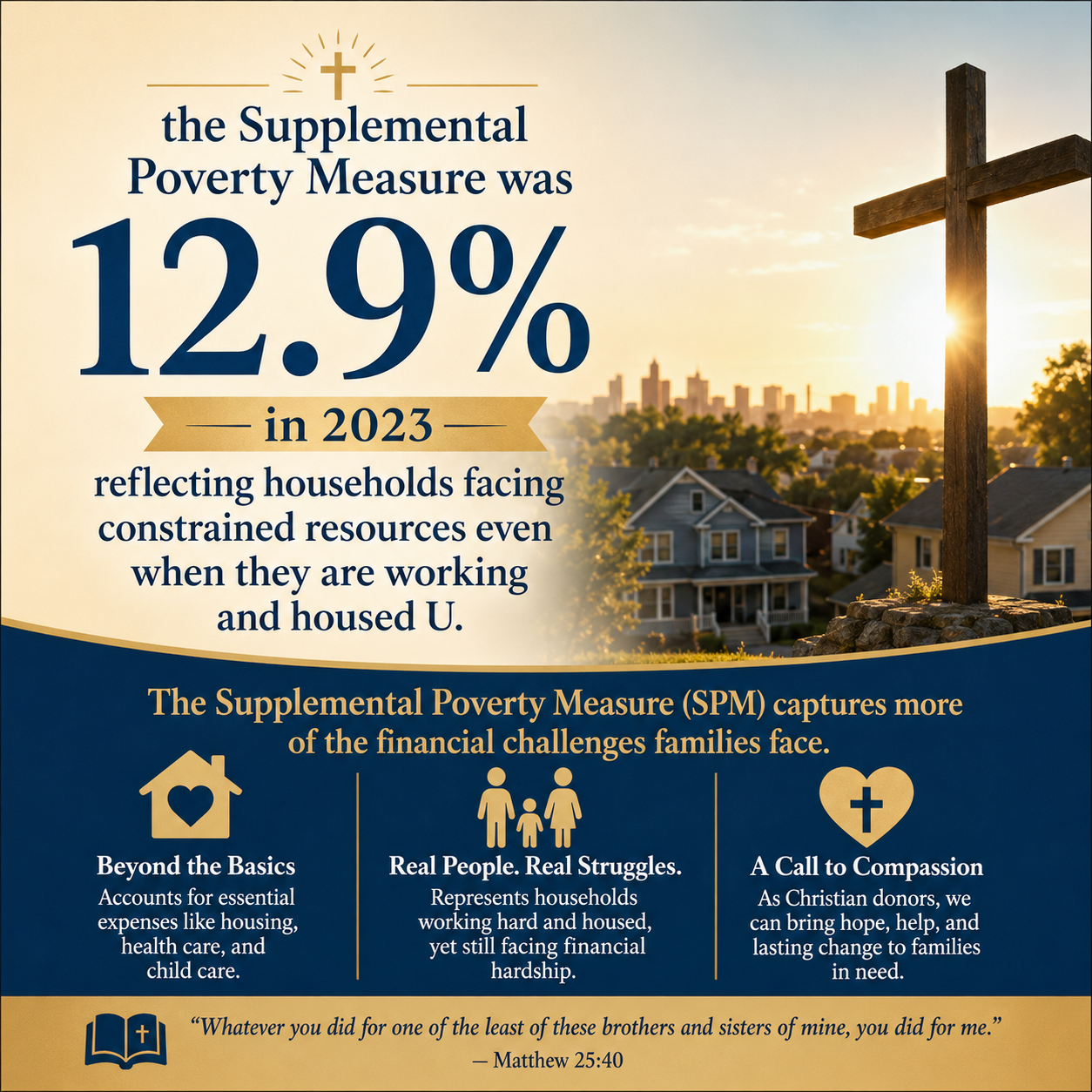
When scholarships are scarce, the children most likely to benefit from stable Christian adults and a structured spiritual environment are often the ones least able to attend. Many congregations have learned that economic fragility is more common than public signals suggest. In the U.S., the Supplemental Poverty Measure was 12.9% in 2023, reflecting households facing constrained resources even when they are working and housed U.S. Census Bureau.
What this means in practice is that scholarship policies become a ministry’s de facto doctrine of access. Donors are not merely “helping a kid go to camp.” They are underwriting the church’s capacity to form young believers across socioeconomic lines.
Camp scholarships can catalyze durable faith when discipleship is real
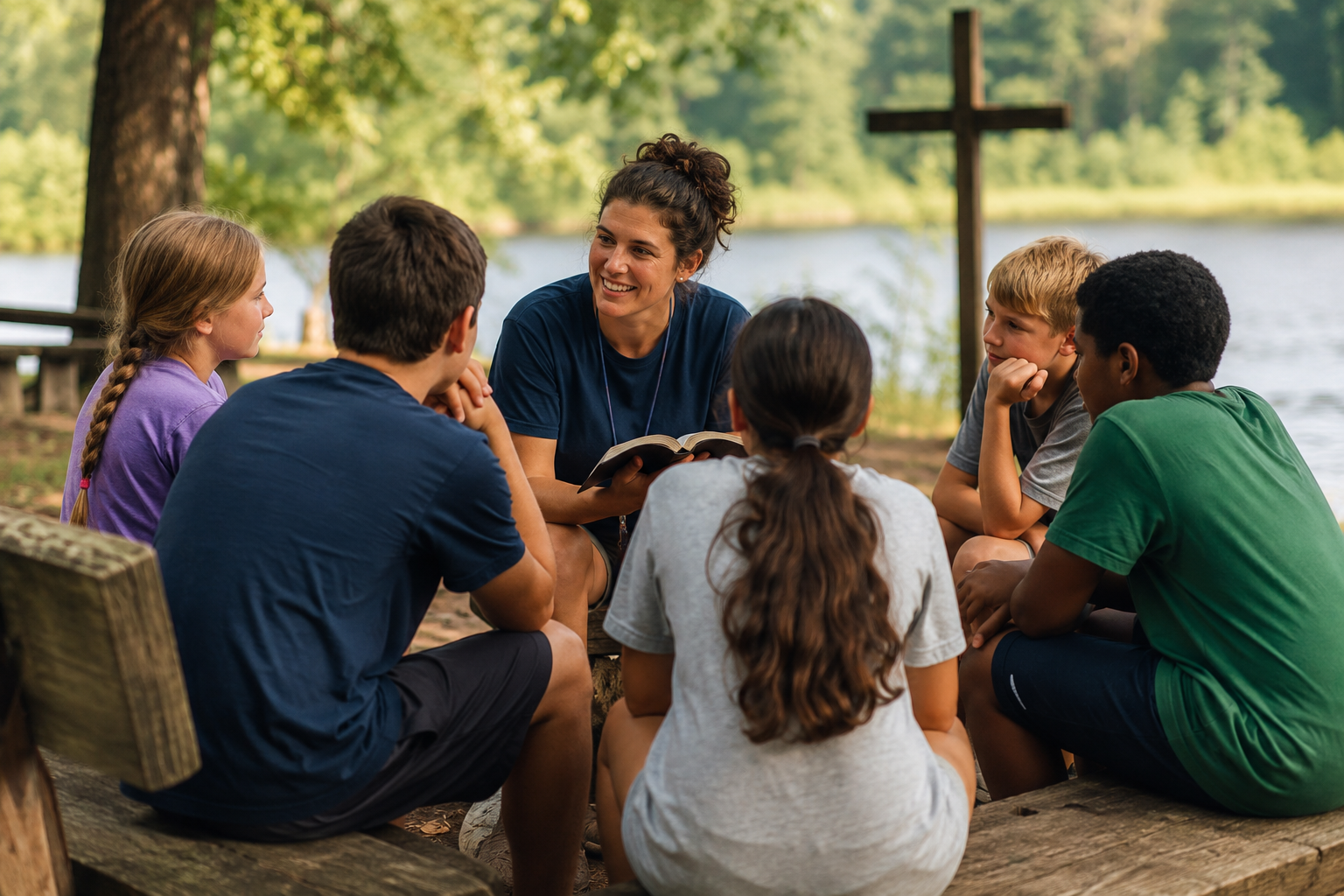
Donors often ask whether camp “works.” That question deserves a careful answer. The research on short, intensive spiritual experiences is mixed because outcomes depend heavily on the ecosystem that surrounds them: the theological depth of teaching, the quality of mentoring, the presence of ongoing local church connection, and the seriousness with which leaders shepherd students after emotional highs fade.
Spiritual intensity is not the same as spiritual maturity
Scripture distinguishes between immediate response and enduring fruit. Jesus’ parable of the soils warns that early enthusiasm can wither when tested. Mature camps know this and plan accordingly: they do not treat the altar call as a finish line, and they do not pressure staff to count “decisions” as proof of impact. They take formation seriously enough to build follow-up pathways, not merely memorable moments.
Relational discipleship is the mechanism, not the setting
Many donors intuitively value “a week away,” but the deeper mechanism is relational discipleship. When teenagers experience credible Christian adults who are consistent, sober-minded, and attentive, they encounter a lived apologetic. This is especially significant because religious disaffiliation has become a defining reality among younger Americans. The share of U.S. adults who identify as Christian has declined over time, while those identifying as religiously unaffiliated has risen, reshaping the context in which adolescents interpret faith claims Pew Research Center.
Scholarships matter here because they fund access to those relationships. A scholarship is often a donor-funded transfer of social capital: it places a student in a setting where they can be known, challenged, and prayed for by believers who take their baptismal identity seriously, even if the student’s home life is unstable.
Scholarships are strongest when they protect dignity and strengthen families
Christians genuinely disagree about how financial assistance should be administered: discreetly through pastors, directly through camp offices, through churches with matching requirements, or through needs-based applications. The harder question is not which mechanism feels generous; it is which mechanism forms gratitude without shame and avoids unintended harm.
Aid that humiliates undermines the ministry it funds
Young people are acutely sensitive to status. If scholarship recipients are publicly identified, separated, or treated as objects of charity, the scholarship becomes a spiritual liability. Biblically, giving is meant to protect the recipient’s dignity and direct glory to God rather than to the benefactor. Camps that handle scholarships well often build quiet, standardized processes that communicate: “You belong here without qualification.”
Healthy scholarship design avoids dependency and consumer expectations
The When Helping Hurts framework, articulated by Steve Corbett and Brian Fikkert, has reshaped how many Christian ministries think about assistance: help can unintentionally communicate inferiority or create patterns of dependency when it is not paired with agency and community When Helping Hurts. Camp scholarships are not poverty alleviation, but the principle still applies. A recurring “free week” with no relational connection to a local church can become a disconnected service rather than a component of discipleship.
In our work at Most Trusted, we find that the ministries most worthy of confidence treat scholarships as part of a broader pastoral ecosystem: coordination with parents and guardians when possible, clear behavioral expectations, and follow-up that encourages church involvement rather than substituting for it. Donors can also broaden their understanding of camps through the wider landscape of Christian Camps and Conferences, where scholarship design varies widely in theology, oversight, and program intent.
What donors should verify before funding camp scholarships
Scholarships are easy to market and easy to mishandle. Donors who care about young faith should therefore give with the same seriousness they would bring to supporting a seminary, a youth pastor, or a church planting effort. The stakes are spiritual, and the risks are managerial: inadequate screening, weak child-safety practices, financial opacity, and inflated impact claims.
Child safety and staff training are non-negotiable
Any scholarship fund is only as trustworthy as the camp’s policies for protecting minors and responding to allegations. This is not merely compliance. It is Christian moral seriousness. Donors should expect documented background checks, two-adult rules, clear reporting pathways, staff training, and board-level oversight. These are the kinds of controls that reveal whether leaders understand their responsibility before God and the watching world.
Financial integrity and truthful storytelling honor the donor and the student
The charitable sector has had to correct donor habits that fixate on simplistic ratios. The Overhead Myth letter, signed by leaders at GuideStar (now Candid), Charity Navigator, and the BBB Wise Giving Alliance, clarified that administrative and fundraising costs can be essential to effectiveness and that donors should ask better questions about outcomes and governance Candid. For camp scholarships, the better questions include: What portion of a gift actually reduces a camper’s cost? How are scholarship awards approved? Are restricted funds honored? Are scholarship appeals accurate, or do they trade in vague urgency?
- Written scholarship criteria that are applied consistently and reviewed periodically
- Clear safeguarding policies, including training requirements and incident response protocols
- Transparent budgeting for scholarship funds and a credible explanation of per-camper costs
- Documented follow-up plans that connect campers to churches, mentors, or year-round discipleship
- Governance practices that prevent conflicts of interest in awarding aid
Most Trusted evaluates Christian nonprofits against The Most Trusted Standard, a 15-criteria framework spanning Faith Foundation, Financial Integrity, Governance and Leadership, and Transparency and Effectiveness. For scholarship-focused camps and camp-adjacent ministries, this framework helps donors move from goodwill to warranted confidence. Many donors also prefer to focus on ministries that have clearly articulated their scholarship approach within How Christian Camp Scholarships Work, because clarity is often a proxy for disciplined leadership.
Scholarships shape faith by shaping belonging and vocation
Camp is frequently remembered as “fun,” but the spiritual mechanism is belonging: a young person experiences the church as a people, not an audience. That belonging can become the seedbed for vocation. A student who has never been asked to lead prayer, serve quietly, reconcile with a peer, or listen carefully to Scripture may discover capacities that are not cultivated elsewhere.
The church forms disciples through shared practices
Christian identity is strengthened not only by private conviction but by shared worship and obedience. Camps at their best provide repeated exposure to basic disciplines: reading Scripture in community, learning to confess sin without theatrics, serving without applause, and submitting to correction. Those practices are ordinary, but they are also countercultural, especially for adolescents trained by algorithmic media toward self-definition and instant feedback.
Scholarships can reframe what a young person believes is possible
For some students, a scholarship is the first time an adult outside their family has invested in their spiritual growth without demanding something in return. That can reframe how they view God: not as a distant taskmaster or a vague comfort, but as the One who provides through his people. This is not automatic. It requires careful pastoral leadership so that gratitude is directed toward God, and so that the student is invited into the life of the church rather than left with a single intense memory.
FAQs for Why Christian camp scholarships shape young faith
Do camp scholarships actually lead to lasting faith?
They can, but durability is not produced by scholarships alone. Lasting fruit is more likely when a camp’s teaching is theologically serious, when relationships with trained Christian adults are central, and when there is clear follow-up that connects students to ongoing discipleship in the local church. Donors should be wary of ministries that equate emotional response with long-term formation.
What is the most responsible way to give toward camp scholarships?
The most responsible giving is targeted and verified: fund scholarships at ministries with strong safeguarding, accountable governance, and transparent financial practices. Favor scholarship programs that protect student dignity, apply criteria consistently, and coordinate with families and churches. Where possible, give through organizations whose policies and reporting enable donors to see how scholarship funds are awarded and what pastoral care surrounds the camp experience.
Scholarships are a form of discipleship infrastructure
Christian camp scholarships shape young faith because they fund access to formative community, sustained teaching, and relationships that can anchor a teenager to the gospel. They also test a ministry’s integrity: whether it will protect children, tell the truth, handle money cleanly, and resist manipulating donors with inflated claims. Donors who give with verification and theological clarity do more than send students to camp. We strengthen the church’s capacity to form disciples who can endure beyond a single summer week.



