
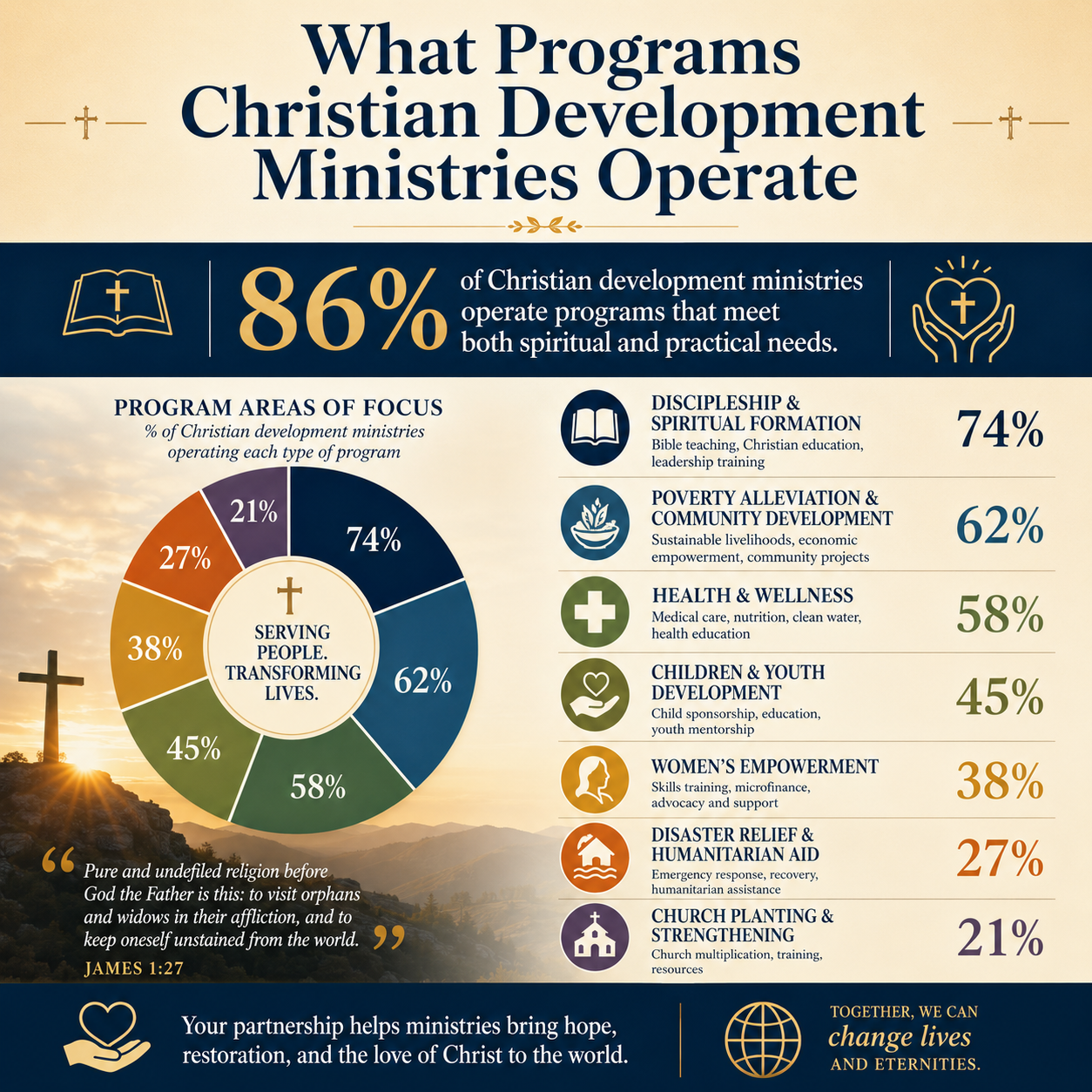
When Christian donors ask what programs Christian development ministries operate, they are usually asking a deeper question: what kinds of work actually help neighbors move from crisis to stability without compromising the gospel or dignity. Christian development is not a single program type. It is a family of interventions that range from emergency relief to long-term livelihood formation, and the moral burden of choosing well is real.
The category also carries unresolved tensions. Christians genuinely disagree about the proper relationship between evangelism and humanitarian service, about what “success” should mean, and about how to measure outcomes without reducing people to metrics. Donors do not need slogans. They need clear categories, credible evidence, and ministries that can explain why they do what they do.
Emergency relief programs that keep people alive
Emergency relief is the most visible face of Christian development, and for good reason. Famine, conflict, and disasters create needs that are immediate and morally uncomplicated at the level of first response: food, water, shelter, medical care. Scripture’s insistence that faith expresses itself in concrete mercy does not wait for perfect conditions (James 2:15–17).
Relief, however, is not the same as development. The field has had to reckon with the ways ongoing relief can undercut local markets, weaken community initiative, or create dependency when it becomes a default rather than a time-bound response. The When Helping Hurts framework, articulated by Steve Corbett and Brian Fikkert, shaped a generation of Christian thinking by naming that even sincere help can do damage when it replaces rather than restores God-given agency.
What relief programs typically include
Relief programs usually focus on essential goods and services delivered quickly and safely: emergency food distributions, therapeutic feeding for malnutrition, clean water access, temporary shelter, and mobile health services. Many ministries also provide protection services for vulnerable groups during displacement, including children and those at risk of exploitation.
What donors should ask in crisis response
Responsible relief ministries can explain their targeting, their accountability for distributions, and their transition plan out of relief mode. They should also be able to describe coordination with local churches, community leadership, and other responders, because uncoordinated generosity can overwhelm fragile systems.
Health and nutrition programs that strengthen communities
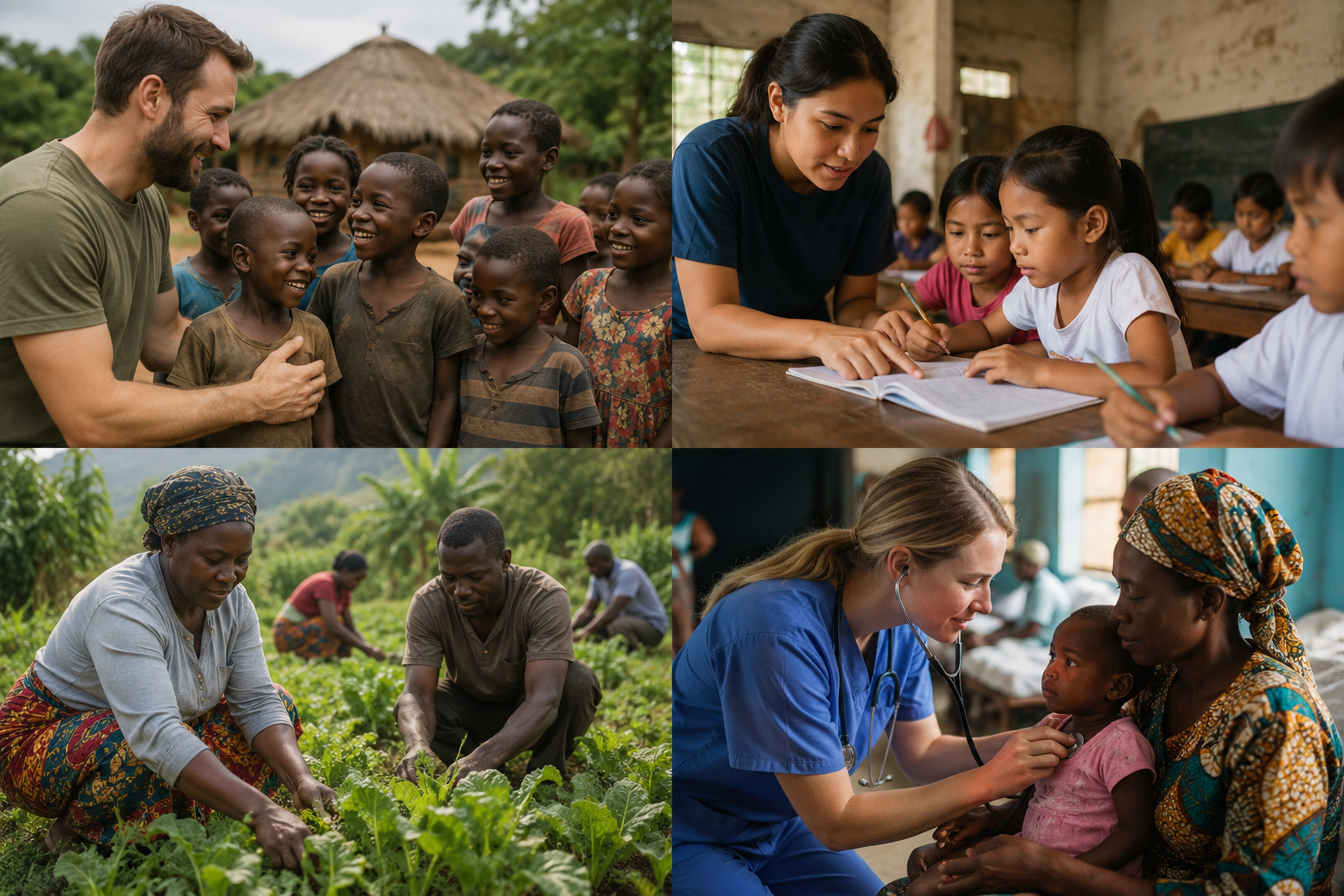
Health work sits at the intersection of mercy and systems. Christian development ministries operate community health programs because illness is both suffering and an economic trap: a preventable disease can wipe out a harvest, a business, or a child’s education. Many ministries therefore invest in primary care, maternal and child health, nutrition, and clean water and sanitation where public infrastructure is weak.
In the last generation, global progress in child survival has been substantial, though uneven and fragile in conflict settings. Under-five mortality fell significantly between 1990 and 2022, a trend documented by UNICEF and partners, even as millions of children still die from preventable causes each year (UNICEF under-five mortality).
Common health program models
Many ministries support clinics and hospitals, but increasingly the emphasis is on community-based approaches: training community health workers, supporting vaccination outreach, prenatal care, safe delivery referrals, and nutrition education paired with supplementation when needed. Water, sanitation, and hygiene programs often run alongside health work because the pathways of disease are environmental as well as medical.
The measurement challenge in health ministries
Health outcomes can be measurable, but attribution is difficult. A decline in disease incidence may reflect many actors, not one nonprofit. Mature ministries avoid inflated claims and instead report what they can verify: service volume, coverage, adherence to clinical standards, and independent evaluations where feasible. Across our verification work at Most Trusted, ministries that meet The Most Trusted Standard tend to distinguish clearly between what they delivered, what changed, and what they believe contributed to that change.
Education and child development programs that protect long-term potential
Education is often framed as opportunity, but in many communities it is also protection. School attendance can reduce vulnerability to early marriage, exploitative labor, and trafficking. Christian development ministries operate education programs not only to raise literacy, but to keep children safe and to increase a household’s long-term resilience.
In settings where public education is underfunded, ministries may provide teacher training, school supplies, scholarships, tutoring, and remedial learning. Some operate schools directly; others strengthen existing local schools or partner with churches to support after-school programs.
What effective child-focused programs tend to do
Programs with durable impact usually address the barriers that keep children out of school: fees, distance, safety, disability access, nutrition, and household economic pressure. The best work treats a child as a whole person in a web of relationships, rather than a standalone beneficiary.
Orphan care and family preservation within development
Child development work frequently intersects with “orphan care,” a field that has matured significantly. Many Christian donors are motivated by clear biblical commands to care for the fatherless (Psalm 68:5; James 1:27). Yet modern research and on-the-ground realities have shown that institutionalization can harm children, and that many children in residential care have living relatives. That has pushed many Christian ministries toward family preservation, kinship care support, and reintegration rather than building or expanding orphanages.
Donors who want a broader view of ministry models and debates in this space can situate these questions within Christian Relief and Development Ministries, where the same theological commitments meet complex field realities.
Economic development programs that build livelihoods and resilience
Economic development is often where donors’ discernment is most tested. The desire is clear: households should be able to provide for themselves with dignity. The risk is also clear: income-generation programs can become donor-pleasing stories that overpromise, ignore market realities, or burden the poorest with debt.
Christian development ministries operate livelihood programs because poverty is rarely only a lack of money. It is commonly a lack of assets, skills, access to markets, savings mechanisms, and stable institutions. Many ministries therefore pair training with capital, mentoring, and community support.
Typical livelihood and agriculture program types
- Village savings and loan associations and savings groups
- Microenterprise training paired with coaching and market linkages
- Agriculture extension, improved seeds, and post-harvest storage
- Water access and irrigation improvements tied to local management
- Vocational training and job placement partnerships
A major category within economic development is agriculture, because many of the world’s poorest households depend on smallholder farming. The World Bank has long argued that agriculture-driven growth can be especially powerful for poverty reduction in certain contexts (World Bank). Donors should still expect careful contextualization: what works in one region’s markets, soils, and rainfall patterns may fail in another.
Microfinance and savings programs require moral clarity
Microfinance remains contested. Some programs have helped households smooth consumption and invest in productive assets; others have produced cycles of debt or social pressure. A ministry’s posture matters as much as its product: transparent pricing, borrower protection, and a preference for savings-led models where appropriate are often marks of greater prudence. The Christian commitment is not merely to “include the poor” in financial systems, but to refuse forms of inclusion that become extraction (Proverbs 22:7).
Church and community development programs that address systems
Development is not only a set of services; it is a set of relationships and local capacities that endure after outside funding leaves. Many Christian development ministries therefore invest in community organizing, leadership development, and local institution strengthening. This is one reason partnerships with local churches can be decisive: churches are often present before a project begins and after it ends.
At the same time, donors should not romanticize the local church. Churches vary widely in capacity, integrity, and community trust. Healthy partnerships require clarity about roles, safeguards against favoritism, and a shared commitment to serve the whole community without coercion.
Program areas that often sit in this category
Common approaches include training for community leaders, conflict resolution and peacebuilding in divided regions, child protection committees, and initiatives that strengthen local governance and accountability. Some ministries also incorporate biblical worldview formation for church leaders to resist corruption and to cultivate public integrity, recognizing that “development” can be blocked as much by predatory systems as by material scarcity.
How donors can evaluate durability and integrity
Durability is rarely proven by a single story. It is indicated by handoff plans, local ownership structures, realistic budgets for maintenance, and evidence that communities are contributing time, resources, or leadership rather than being treated as passive recipients. Within How Christian Development Ministries Create Long-Term Change, donors can compare how different ministries describe that arc from outside input to local sustainability.
This is also where governance and transparency become non-negotiable. In our work at Most Trusted, we evaluate ministries against The Most Trusted Standard, including faith commitments, financial integrity, governance and leadership, and transparency and effectiveness. Donors who care about outcomes should care equally about whether leadership structures, related-party policies, and reporting practices are strong enough to protect both beneficiaries and donor intent.
FAQs for What programs Christian development ministries operate
Do Christian development ministries focus more on evangelism or humanitarian work?
Faithful Christian ministries take different approaches, and Christians genuinely disagree about the best model in different contexts. Some ministries integrate explicit gospel proclamation alongside service; others prioritize compassionate presence and local church partnership while avoiding activities that could be perceived as coercive in humanitarian settings. Donors should look for theological clarity, respect for human dignity, and a refusal to make aid contingent on religious response.
What should donors look for when a ministry claims long-term impact?
Donors should expect clear definitions, credible measurement, and honest limits. Strong ministries distinguish outputs from outcomes, avoid inflated attribution, and publish evaluation methods or external assessments where feasible. They also show how programs relate to local systems, including who maintains infrastructure, who funds ongoing costs, and how leadership is transferred to communities and local institutions.
Giving that fits both mercy and truth
Christian development ministries operate a wide range of programs because poverty and crisis are multifaceted, and love of neighbor must be concrete. The donor’s task is not to find the most emotionally compelling category, but the ministry that combines theological seriousness with operational integrity: relief that transitions wisely, health work that follows standards, child programs that protect families, livelihoods that respect markets and agency, and community development that strengthens local ownership. That combination is rare enough to require verification, but common enough to justify disciplined hope.



