
Learning how to evaluate Christian camp building campaign plans is no longer a niche concern. Across American Christianity, camps and conference centers are being asked to carry more spiritual formation weight than ever: retreat-based discipleship, leadership development, trauma-informed care, and church renewal efforts that depend on safe, well-designed spaces. For donors, the question is not simply whether a new dining hall or cabin loop is inspiring. It is whether the plan represents faithful stewardship, honest governance, and ministry fruit that can be credibly expected.
Capital campaigns also concentrate risk. A camp can build something it cannot afford to operate, or it can fund a project in a way that weakens staff morale, strains local relationships, or compromises mission focus. Christians genuinely disagree about how much money should go into facilities versus direct programming, and the debate is not new. Scripture does not give a line-item budget, but it does give non-negotiable moral guidance: “Moreover, it is required of stewards that they be found faithful” (1 Corinthians 4:2). Faithfulness is measurable in plans, not only in intentions.
Start with mission clarity and theological coherence
Buildings are never neutral in ministry strategy
Well-designed facilities can serve the gospel. They can also quietly reframe a ministry’s identity around hospitality, prestige, or growth for its own sake. A building campaign plan worth supporting should state, in plain language, what spiritual work the camp believes God has called it to do, and how the proposed project strengthens that calling without displacing it.
We recommend reading the campaign materials with a simple test: could a donor infer the camp’s discipleship theology from the plan? Camps often operate with an implicit theology of formation—how Scripture, worship, peer community, outdoor challenge, and mentoring work together. If the plan does not name what it is forming in campers and leaders, the project can become an expensive answer to an unasked question.
Capacity claims should be disciplined and verifiable
Many plans justify expansion by appealing to demand: “We are full every summer,” “Retreats are turning away groups,” or “Families want year-round programming.” These statements may be true, but donors should ask for data in context: occupancy by season, program utilization, retreat mix, and constraints that are not solved by construction (staffing, marketing reach, transportation access, or permitting limits).
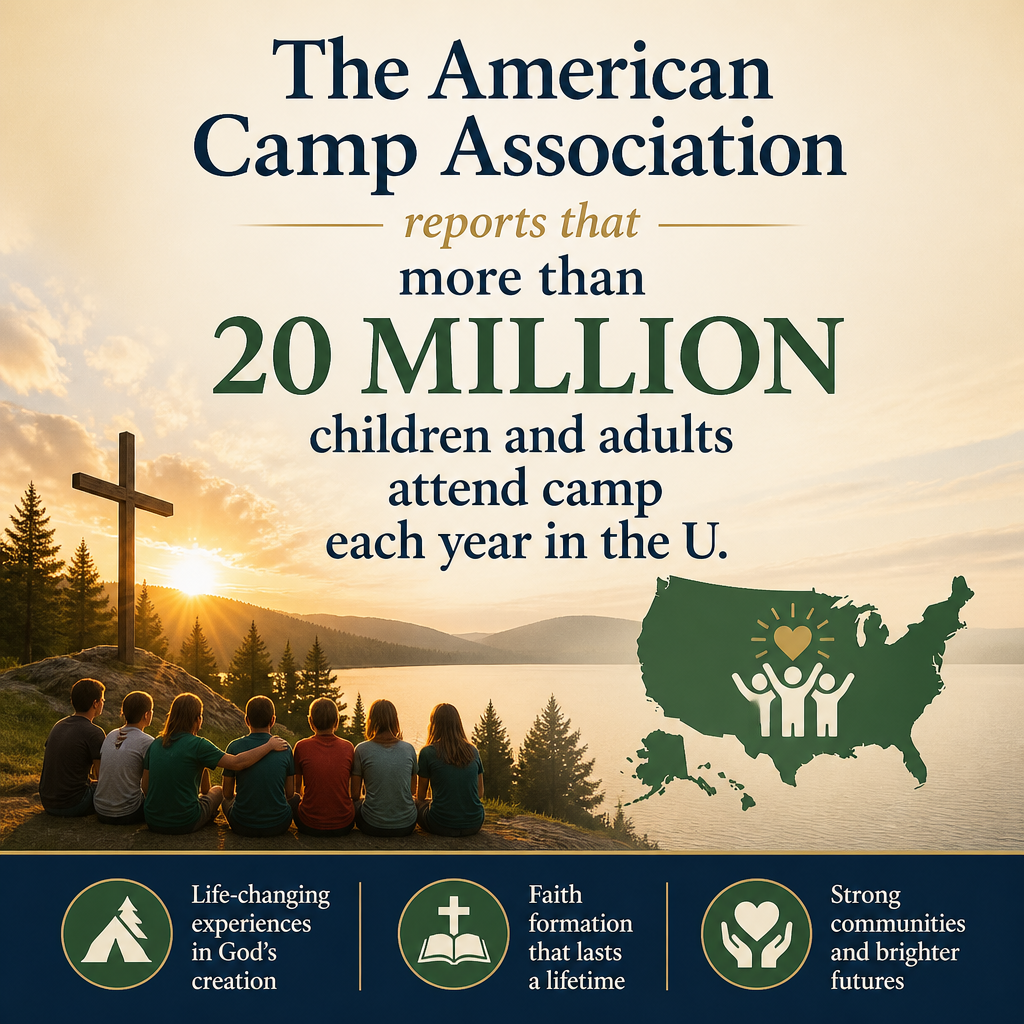
Where camps cite broader participation trends, donors should expect careful reasoning rather than vague cultural references. For example, organized camping remains widespread in the United States, but scale alone does not validate a particular project. The American Camp Association reports that more than 20 million children and adults attend camp each year in the U.S. (American Camp Association), but the donor question is whether this camp’s program model and market realistically support the proposed footprint.
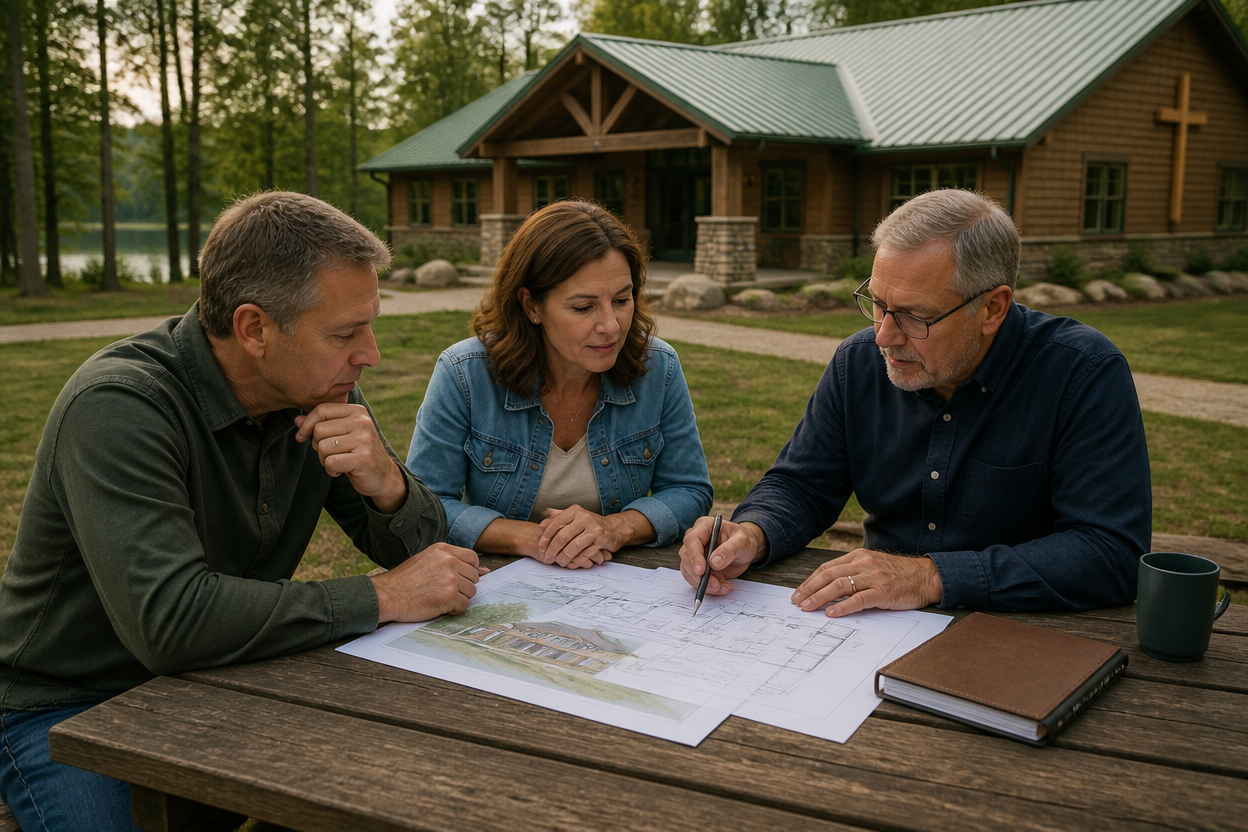
Examine the financial model beyond construction costs
Every capital project has a second budget
Construction is only the first budget. The second budget is operations: staffing, utilities, insurance, deferred maintenance, and program delivery in the new space. Mature campaign plans name the full cost of ownership over time and show how the camp will sustain it without robbing other core ministries. A camp that can raise capital but cannot fund operations is not a rare story in the sector.
We recommend asking for a multi-year pro forma that includes conservative assumptions: realistic enrollment growth, pricing sensitivity, wage pressure, and maintenance reserves. A credible plan will also name the camp’s break-even occupancy for retreats, the dependence on summer revenue, and the stress points that could arise from a poor weather year, wildfire smoke, or regional economic slowdown. Camps are uniquely exposed to these kinds of shocks.
Avoid the two common distortions donors unintentionally reward
Two donor instincts can lead a camp into unhealthy financial patterns. First, donors may demand that “every dollar go to the building,” leaving no room for training, safety systems, program design, or staff housing that makes the ministry sustainable. Second, donors may reward low reported overhead, pushing camps to underinvest in competent finance leadership and maintenance planning.
What this means in practice is that a wise donor will not treat administrative spending as morally suspect by definition. The sector has had to reckon with the “Overhead Myth” correction, which argued that overhead ratios alone do not indicate nonprofit effectiveness and can pressure organizations into damaging underinvestment (Charity Navigator). For a camp, the analog is straightforward: a beautiful lodge without strong financial controls and preventive maintenance is not stewardship; it is deferred crisis.
Campaign plans should also show gift mix and financing assumptions. If debt is involved, donors should request terms, covenants, and contingency plans. Debt can be prudent, but it narrows margin for ministry and can create pressure to monetize the property in ways that dilute mission. A plan that treats debt as invisible is not serious.
Assess governance, decision rights, and accountability
Capital campaigns reveal whether boards are functioning as boards
A building campaign is often the most consequential decision a camp board will make in a decade. It exposes whether the board is independent, financially literate, and willing to ask hard questions of leadership. Donors should look for evidence that the board has done more than approve architectural drawings. Healthy governance shows up in documented feasibility work, a realistic timeline, and clear decision rights for scope changes and cost overruns.
Across our verification work at Most Trusted, the ministries that meet The Most Trusted Standard tend to show a disciplined relationship between executive leadership and board oversight: neither captured boards nor performative boards. Donors evaluating a camp campaign should ask who is accountable for outcomes, how conflicts of interest are disclosed, and whether major vendors have relationships with board members or staff that require formal recusal and documentation.
Transparency is a spiritual practice before it is a communications strategy
Christian donors are sometimes asked to treat questions as distrust. That posture is not biblical. Scripture commends careful administration of funds given for ministry: Paul describes taking precautions “so that no one should blame us about this generous gift that is being administered by us” (2 Corinthians 8:20). A campaign plan should welcome scrutiny because it protects the ministry’s witness.
We recommend requesting recent audited financial statements, a current budget, and a written campaign case statement that matches the numbers. If the camp does not have audited statements, donors should ask why and what alternative accountability is in place. For larger campaigns, independent audits are a basic mark of seriousness.
Donors who want broader context on how camps function within the Christian nonprofit landscape may also find it helpful to track patterns across Christian Camps and Conferences, especially around governance, safety, and year-round sustainability.
Test whether the plan protects people, not only property
Safety and child protection must be explicit
Facility upgrades are often framed in terms of comfort and capacity. Wise donors expand the frame to safety and care. A campaign that includes new housing, bathrooms, program areas, or transportation infrastructure should name how the design improves child protection, supervision, accessibility, and emergency response. This is not merely legal prudence; it is neighbor-love expressed in operational decisions.
Donors should ask whether the camp has written child safety policies, background screening practices, incident reporting procedures, and training requirements for seasonal staff. Plans that rely on moral language while remaining vague about safeguards deserve careful scrutiny. Camps are uniquely dependent on young seasonal teams; the difference between good intentions and competent systems matters.
Staffing realities are part of the capital plan
Many camp expansions presume that staffing will scale effortlessly. It rarely does. The plan should address where additional counselors, maintenance staff, program directors, and health personnel will come from, and how they will be trained and retained. If the campaign includes staff housing, donors should treat it as a mission-critical investment, not a peripheral amenity. Camps that cannot house staff safely and affordably often end up short-staffed or forced into constant turnover, both of which harm campers.
A concise set of donor questions can clarify whether a plan is rooted in reality:
- What operational costs increase in year one, and how will they be funded without future emergency appeals?
- What metrics define success beyond “we built it,” and who reports them to donors?
- What decisions require board approval if costs rise or timelines slip?
- What child protection and safety improvements are embedded in the design?
- What happens if enrollment or retreat demand does not grow as projected?
Evaluate effectiveness claims with evidence and humility
Spiritual outcomes can be honored without being fabricated
Camps often tell powerful stories: a teen baptized, a pastor restored, a family reconciled. Donors should receive these testimonies with gratitude while also asking for disciplined thinking about outcomes. Spiritual fruit is not always quantifiable, and Christian donors should resist importing a purely corporate measurement mindset. Yet it is equally problematic when ministries use spiritual language to avoid accountability.
A credible campaign plan will connect facilities to ministry outcomes through a plausible chain: new program space enables year-round retreats; retreats enable sustained mentoring; mentoring contributes to leadership development and church engagement. The plan should also acknowledge limits: no building guarantees revival, and a camp can become busy without being formative.
Evidence should include third-party indicators where appropriate
Donors can reasonably ask whether the camp’s approach aligns with what we know about adolescent development and faith formation. Research in this area is complex and contested, and Christian leaders interpret it through theological commitments about the work of the Holy Spirit and the role of the church. Still, it is relevant that a widely cited longitudinal study found that regular participation in religious services during adolescence was associated with a range of later outcomes, including lower rates of certain risk behaviors and higher reported well-being (Harvard Medical School). A camp that claims to shape lifelong disciples should be able to describe how it connects campers to local church life and ongoing relationships rather than treating the summer week as the whole story.
Donors interested in how facility funding intersects with broader capital needs across ministries may also benefit from reviewing Funding Christian Camp Facilities and Capital Needs to compare common financing models, governance expectations, and accountability practices.
FAQs for How to evaluate Christian camp building campaign plans
What documents should donors request before giving to a Christian camp building campaign?
We recommend requesting the campaign case statement, project budget with contingencies, multi-year operating pro forma, recent audited financial statements if available, and board-approved governance documents that clarify decision rights for scope changes. If the camp cannot provide these, donors should ask what alternative accountability systems exist and why transparency is limited.
Is it wise for a Christian camp to take on debt to build new facilities?
Debt can be prudent when it is modest, clearly governed, and paired with a credible operating plan that preserves ministry flexibility. It can also create pressure to prioritize revenue generation over discipleship, especially in downturns. Donors should ask for loan terms, covenants, and a downside scenario plan that explains what the camp will cut, delay, or fund differently if demand projections fall short.
A faithful campaign plan is one that can withstand light
The most reliable Christian camp building campaign plans are not the most emotional or the most ambitious. They are the plans that integrate mission clarity, conservative financial assumptions, accountable governance, and explicit protections for the people the camp serves. Donors do not honor Christ by suspending judgment; we honor him by practicing stewardship that is truthful, careful, and ordered toward love of God and neighbor.
Most Trusted exists to help donors give with confidence by evaluating ministries against The Most Trusted Standard. Whether a donor is considering a first-time gift or a significant leadership commitment, the central question remains the same: does this plan represent faithfulness that can be verified, not merely asserted?



