
How military outreach ministries support recovery after combat is not primarily a question of programming sophistication. It is a question of whether the Church will bear faithful witness to Christ among those who have seen, done, and endured what most civilians cannot imagine. Recovery after combat often requires clinical competence, patient community, and moral seriousness about guilt, grief, fear, and the search for meaning.
Christian donors tend to feel two competing impulses here: urgency to help and caution about harm. Both are warranted. Some ministries offer credible pathways of care that coordinate chaplains, clinicians, and congregations. Others unintentionally confuse spiritual counsel with mental health treatment, or raise funds with dramatic stories that do not honor dignity. Wise giving starts with a clear picture of what recovery actually entails and what ministry faithfulness looks like under pressure.
Recovery after combat is both spiritual and clinical
Trauma is not only fear
Combat stress is often discussed as anxiety and hypervigilance, but many veterans describe a deeper wound: the burden of moral injury. The phrase is used in clinical and military contexts to describe distress after perpetrating, failing to prevent, or witnessing acts that transgress one’s moral beliefs. That distress can include shame, anger, estrangement, and loss of trust in authority and even in God. A ministry that treats recovery as “just talk about it and pray harder” will miss the reality in front of them.
At the same time, the Church does not outsource the care of souls. Scripture takes seriously both the body and the inner life. The Psalms give language for numbness and terror. Christ meets people in shame without reducing them to their worst day. When military outreach ministries are healthy, they do not collapse spiritual care into therapy, nor do they treat therapy as a rival to faith.
PTSD is real, and it is not the whole story
Many post-combat struggles fall under the broad umbrella of post-traumatic stress, but donors should resist a single-diagnosis lens. Traumatic brain injury, depression, substance misuse, chronic pain, family disintegration, and the stress of repeated moves can all be present at once. The U.S. Department of Veterans Affairs reports that PTSD affects a substantial portion of veterans from recent conflicts, but prevalence varies by era and measurement approach; donors should treat headline numbers with care and insist on context from credible providers. U.S. Department of Veterans Affairs
What this means in practice is that effective ministries usually focus less on labels and more on coherent pathways: safe relationships, appropriate clinical referral, sustained discipleship, and family-centered support.
What faithful military outreach looks like on the ground
Chaplains, congregations, and clinicians each have a proper role
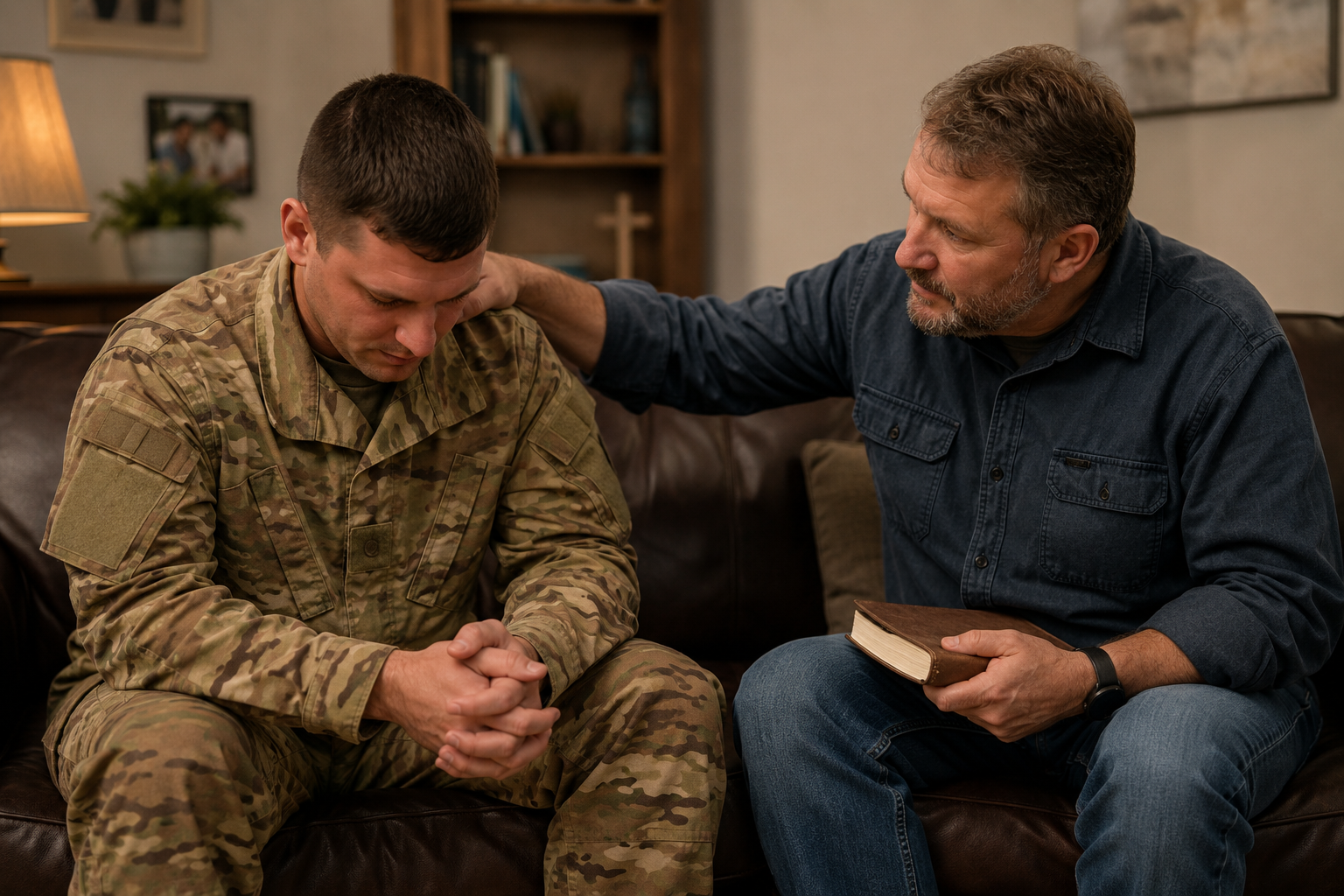
The strongest military outreach ministries understand the difference between spiritual authority and clinical scope. Chaplains can provide pastoral care inside military systems; local churches can offer belonging and long-term community; licensed clinicians can diagnose and treat mental health conditions. A ministry that tries to do all three without accountability tends to overreach somewhere, even when intentions are sincere.
Across our verification work at Most Trusted, the ministries that meet The Most Trusted Standard tend to formalize referral relationships. They train staff and volunteers to recognize red flags such as suicidal ideation, domestic violence, or severe substance dependence. They also protect the confessional nature of pastoral care by clarifying when information must be escalated for safety.
Recovery is often family recovery
Combat rarely harms only the service member. Spouses carry prolonged uncertainty, solo parenting, and reintegration strain. Children can internalize anxiety, resentment, or confusion when a parent returns different than they left. Family systems research consistently shows that trauma affects relationships, not only individuals, which is why many mature ministries build family programming rather than isolating the veteran as the only “client.”
Donors should also be alert to an under-discussed tension: some veterans are wary of church communities because of prior spiritual manipulation or politicized rhetoric. Ministries that are most credible do not recruit with pressure tactics. They serve with humility, consistent presence, and transparent boundaries.
The distinct contribution of Christian ministry after combat
Meaning, repentance, and forgiveness are not optional questions
Clinical care can reduce symptoms and improve functioning. It is less equipped to address the theological weight many veterans carry: “What does God think of what I did?” “Can I be clean?” “Who am I now?” The gospel speaks directly to sin and suffering without collapsing them into each other. Some wounds are the result of being sinned against. Others involve real culpability. Many contain both. Christian ministry becomes dangerous when it offers cheap absolution, and it becomes cruel when it offers only condemnation.
Scripture’s categories are more honest than most modern public speech. Confession, lament, restitution, and reconciliation are not therapeutic techniques; they are moral realities. When military outreach ministries are faithful, they proclaim Christ’s atonement without minimizing the gravity of violence, and they invite disciplined, long-term rebuilding rather than emotional release masquerading as transformation.
The Church offers belonging that is not contingent on performance
Military culture often trains people to function under extreme conditions and then expects them to re-enter civilian life with little shared vocabulary for what they experienced. A church that practices hospitality well can become a place where a veteran is known without being displayed, and where strength is honored without idolizing stoicism.
This is not sentiment. Social isolation is a recognized risk factor in many adverse outcomes. The Centers for Disease Control and Prevention has described social connectedness as protective for mental health and well-being, and disconnection as a contributor to risk. Centers for Disease Control and Prevention
Where donors can unintentionally fund harm
Overpromising, under-referring
Some ministries market recovery as fast and nearly guaranteed: a weekend retreat, a single encounter, a dramatic deliverance story. God can act in an instant. But responsible care plans for months and years. Donors should be wary of language that implies trauma is proof of spiritual failure, or that prayer makes professional treatment unnecessary. That approach often increases shame and reduces the likelihood of seeking timely care.
Equally concerning are ministries that treat clinical referral as a last resort rather than a normal part of service. When a ministry refuses to partner with licensed professionals out of suspicion, donors should ask what safeguards are in place for high-risk cases.
Storytelling that extracts rather than honors
Military stories can raise money quickly, which is precisely why they require disciplined restraint. A ministry can violate dignity without lying: by pressuring veterans to share graphic testimony, by posting identifiable details, or by using a spouse’s pain as an appeal. Mature donors should insist on informed consent, privacy practices, and a clear policy for how stories and images are gathered and approved.
We also recommend caution with ministries that frame service members as props in a culture war narrative. Recovery after combat is not advanced by turning veterans into symbols. It is advanced by truthful care, respect for complexity, and patient presence.
How to evaluate military outreach ministries with confidence
What we look for under The Most Trusted Standard
Donors often ask what distinguishes a ministry that is moving the needle from one that is simply active. At Most Trusted, our verification work applies The Most Trusted Standard, a 15-criteria framework that examines faith commitments, financial integrity, governance, and transparent communication of outcomes. The aim is not to punish small ministries; it is to help donors fund work that is credible, accountable, and aligned with Christian discipleship.
Several indicators tend to matter most in military outreach:
- Clear scope of care that distinguishes pastoral care, peer support, and clinical treatment
- Referral relationships with licensed mental health providers and crisis resources
- Documented safeguarding policies for vulnerable adults and families
- Board-level governance that can challenge leadership when necessary
- Truthful storytelling with consent, privacy protections, and minimal sensationalism
Questions donors should ask before funding
Beyond basic financial due diligence, donors should ask questions that reveal whether a ministry can sustain long-term care. How are volunteers trained? How does the ministry handle suicide risk? What happens after a retreat ends? How are spouses and children served? Which outcomes are tracked, and how are they reported without turning people into numbers?
For donors wanting a broader view of the landscape, it is often helpful to start with Military Outreach Ministries and then focus on the specific forms of support offered in How Military Outreach Ministries Serve Military Families. Discernment improves when we compare ministries that share similar claims and methods rather than assuming all “veteran care” is the same work.
FAQs for How military outreach ministries support recovery after combat
Should Christian military outreach replace therapy with prayer and discipleship?
Faithful ministry should not treat prayer and therapy as competitors. Pastoral care addresses spiritual realities and community formation; evidence-based clinical care addresses diagnosable conditions and symptom reduction. The healthiest ministries name the difference clearly, refer appropriately, and remain present for the long road of discipleship and family rebuilding.
What are warning signs that a military outreach ministry is not safe or credible?
Common warning signs include guaranteed or rapid-fix promises, refusal to refer to licensed clinicians, unclear safeguarding practices, pressure to share graphic stories publicly, and leadership structures without meaningful oversight. Donors should also be cautious when a ministry’s messaging politicizes veterans as symbols rather than treating them as persons made in God’s image.
Giving that honors the weight of combat
Military outreach ministries support recovery after combat most faithfully when they hold together three commitments: theological seriousness about sin and suffering, professional humility about clinical limits, and patient love that does not abandon people once the crisis passes. Christian donors are not funding an event; we are funding a witness. The question is whether that witness is careful enough to heal rather than deepen the wound.



