
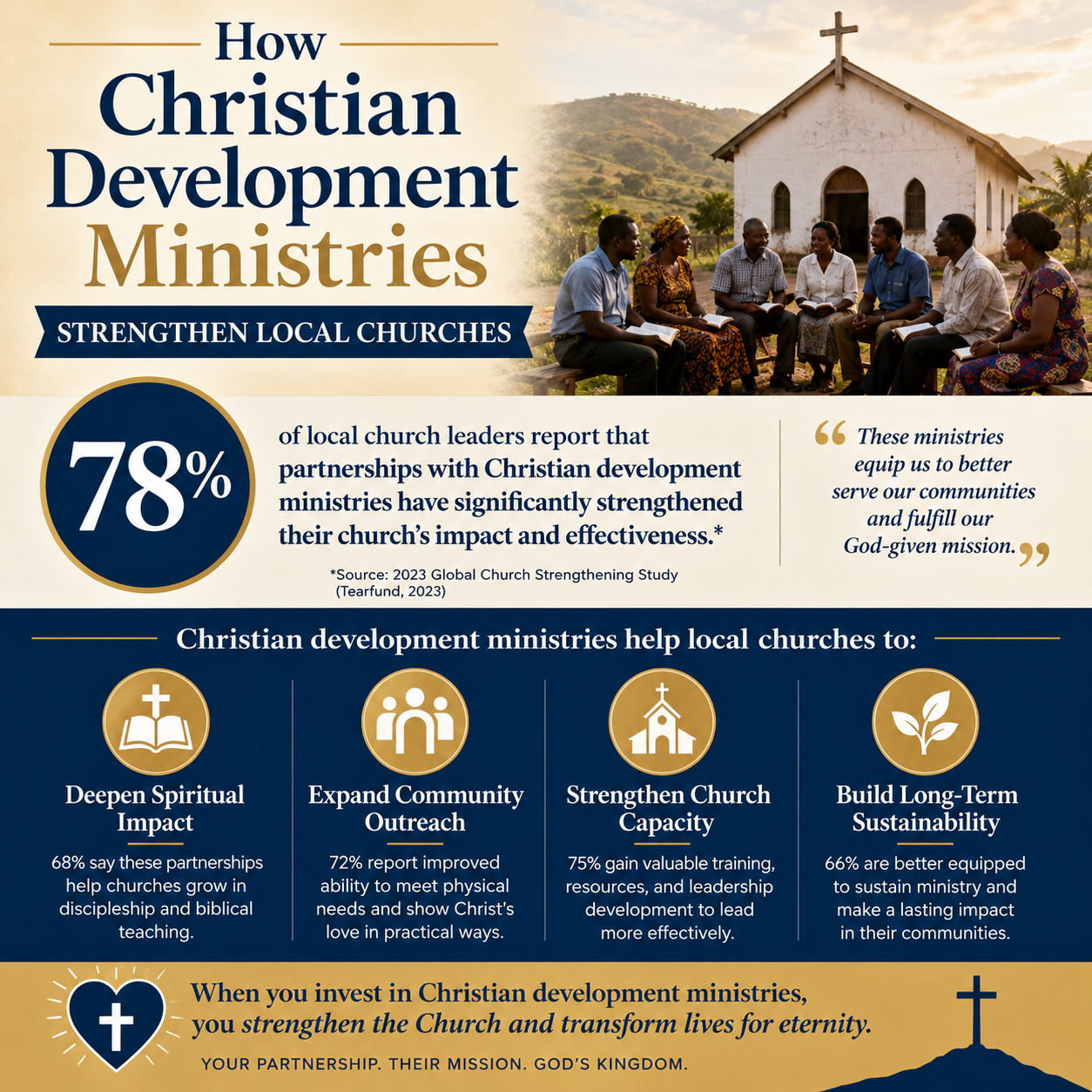
How Christian development ministries strengthen local churches depends less on the size of a project and more on the theology and governance underneath it. Done well, development work does not compete with the church’s calling; it serves the church’s witness by supporting durable institutions of discipleship, mercy, and moral formation. Done poorly, it can displace local leadership, attach the church to donor expectations, and reduce Christian mission to a service delivery brand.
Christian donors sense this tension because many have seen both outcomes. Some partnerships produce local pastors who are better resourced to shepherd their people through drought, displacement, unemployment, or chronic illness. Others leave churches with dependency, internal conflict over funds, or a quiet cynicism about outside help. The question is not whether development is biblical—Scripture is unambiguous about God’s concern for the poor—but whether development is structured to honor the church as the primary local institution through which Christian life is sustained.
Development that strengthens the church begins with ecclesiology
The church is not a distribution channel
When Paul organized relief for believers in Jerusalem, he treated the work as an expression of unity and maturity, not a campaign for publicity or control. The collection is described in terms of grace, fellowship, and integrity (2 Corinthians 8–9). That framing matters for donors because it establishes a hierarchy of ends: Christ’s people are formed into Christlikeness, and material care is part of that formation.
Christian development ministries strengthen local churches when they refuse to treat congregations as convenient last-mile infrastructure. Churches are not warehouses for goods or venues for trainings; they are worshiping communities accountable to Scripture, with spiritual authority that does not originate in project funding. The practical implication is that development partners must ask early whether a proposed program will deepen the church’s discipleship and diaconal life, or whether it will subtly reorganize the church around external deliverables.
Mercy ministry must be joined to spiritual formation
Christian donors rightly want to avoid coercion and manipulation. The field has had to reckon with genuine abuses: aid conditioned on conversions, public shaming of recipients, and “photo-first” approaches that treat suffering people as marketing content. Yet an equal danger is a functional secularism where Christian ministries silence the gospel to appear more acceptable, effectively leaving local churches to carry spiritual formation alone while development staff carry “impact.”
Healthy partnerships integrate proclamation and compassion without collapsing them. When a ministry’s work reinforces the church’s ordinary practices—preaching, prayer, sacraments, mutual care, discipline, and leadership development—the church becomes more resilient over time, not merely better supplied for a season.
Good development reinforces local leadership and accountability
Authority must be local, not imported
Most development failures that donors hear about have a common pattern: outsiders control the money, define success, and decide when to exit. Local leaders are invited to implement, not to govern. Even when this produces short-term outputs, it can weaken the church by training people to look past their elders for direction and resourcing.
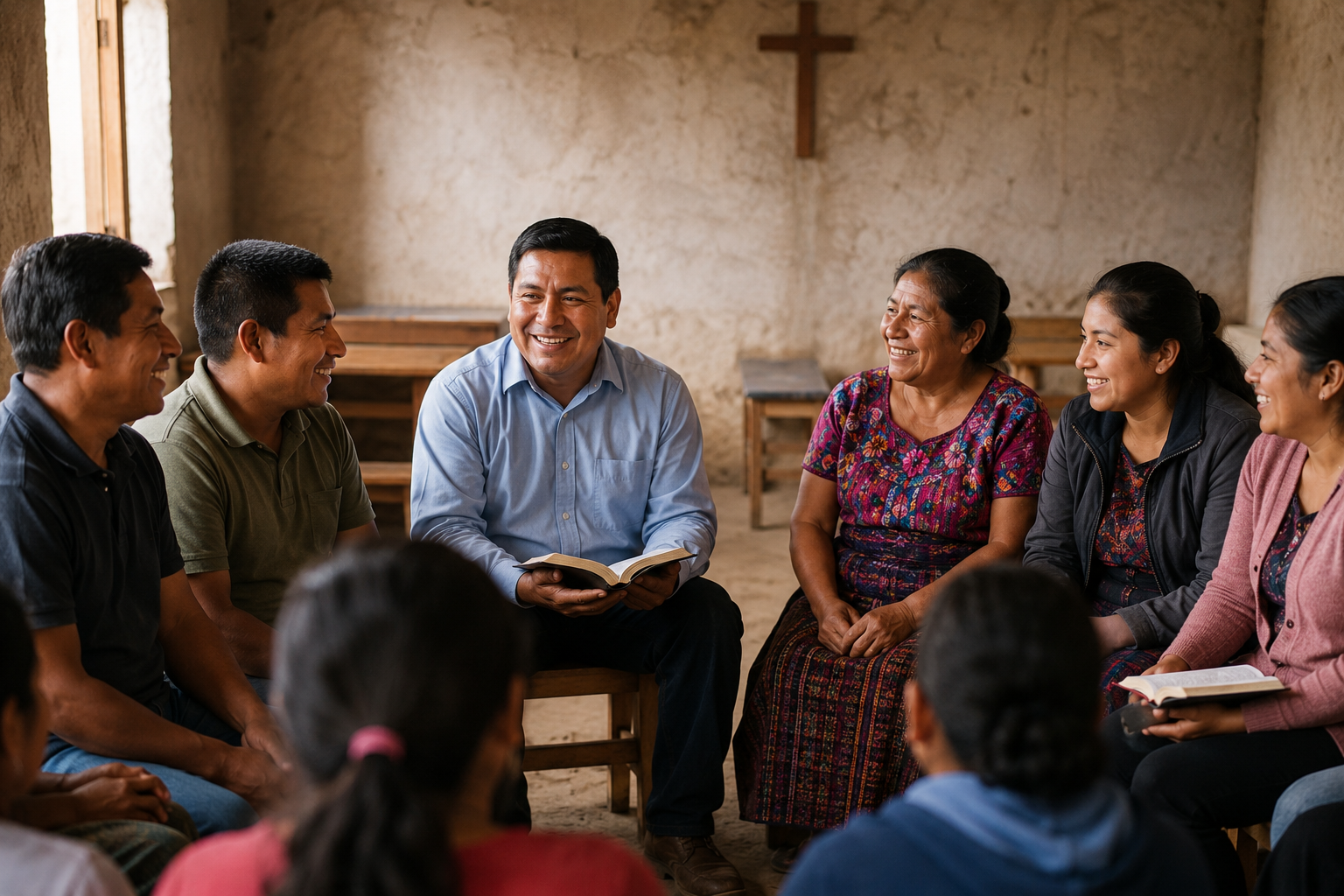
Strengthening local churches requires a different posture. Development ministries should treat pastors and lay leaders as co-equal decision-makers and insist on transparent, written agreements about roles, budgets, and expectations. That is not merely good management; it is a practical outworking of honoring the body of Christ and refusing partiality based on wealth or passport.
Capacity building is spiritual and institutional
Capacity building is often spoken about as skills training, but churches are strengthened when capacity includes governance practices that withstand pressure: documented financial controls, conflict-of-interest policies, and clear lines of authority. These are not “corporate” intrusions into ministry; they are a form of neighbor love that protects both donors and vulnerable recipients from predictable temptations.
Across our verification work at Most Trusted, we observe that ministries meeting The Most Trusted Standard tend to name these protections explicitly and to make them auditable—budgets, board oversight, and program results that can be examined without defensiveness. Donors can support local church strengthening more confidently when partners can show how decisions are made, not simply what they intend.
Wise programs avoid dependency and build shared ownership
The hardest question is what happens when the donor leaves
Christians genuinely disagree about how to define “dependency,” and the research is not simplistic. Emergency relief is sometimes essential; refusing help in the name of “empowerment” can be cruel. Yet long-term development that repeatedly replaces local initiative with external funding can leave churches weaker. When the money is the unspoken center of the relationship, the church’s integrity and unity are put at risk.
The When Helping Hurts framework, articulated by Steve Corbett and Brian Fikkert, helped many ministries confront how paternalism and “savior” dynamics distort both giver and receiver. Their central insight—helping should restore people to right relationships with God, self, others, and creation—aligns with a thoroughly biblical vision of human flourishing. See Moody Publishers.
Shared contribution is not a trick
One credible marker of church-strengthening development is shared ownership. This can include local financial contribution, in-kind labor, land, materials, or ongoing operational responsibility. The purpose is not to reduce costs for donors; it is to honor agency and protect dignity. Programs are more likely to endure when the local church and community have real stake, not symbolic “buy-in.”
What this means in practice is that donors should ask whether a program’s design includes an exit strategy that is morally serious: leadership succession, maintenance plans, and revenue or support systems that do not presume indefinite foreign subsidy.
- Clear local governance for funds and assets
- Documented criteria for selecting participants that avoids favoritism
- Plans for maintenance, replacement, and long-term staffing
- Local church oversight that is more than ceremonial
- A defined transition from external support to local sustainability
Church strength is measured in discipleship, not only in outputs
Outputs are necessary but not sufficient
Development work often reports what is easily counted: wells drilled, loans issued, children enrolled, farmers trained. Those numbers can be meaningful, but they can also mislead. A church can host a large program and still be spiritually brittle if leadership is compromised, if congregational trust erodes, or if money becomes the central incentive for participation.
Donors do not need ministries to measure everything, but we should expect ministries to measure the right things. A credible approach includes both program indicators and ecclesial indicators: strengthened pastoral care, functioning deaconal structures, increased local giving, healthier conflict resolution, and durable partnerships with other local churches. These are harder to quantify, but they reflect whether the church is becoming more capable of sustaining mercy without external control.
Evidence and humility belong together
Verifiable evidence suggests that poverty is multidimensional and not reducible to income alone. The World Bank’s poverty work consistently frames poverty in terms of deprivations that include health, education, and living standards, and emphasizes that local context matters for what effective interventions look like. See World Bank. A Christian account goes further: spiritual alienation and social fragmentation are not “add-ons” but part of the real human condition that the church addresses.
This is where sophisticated donors should press for humility. Some interventions have mixed results, and ministries should be able to say so plainly, revise programs, and disclose learnings. The ministries that treat evaluation as discipleship—truth-telling before God and neighbor—are more likely to strengthen the church than those that treat evaluation as donor management.
Verification helps donors support church-strengthening ministries with confidence
The donor’s responsibility is stewardship, not suspicion
Most donors want to give with joy, not with anxiety. Yet the modern nonprofit environment includes real incentives to exaggerate impact, minimize bad news, and blur the line between program and fundraising. Christian donors are not exempt from these pressures; in some cases, religious language can make accountability feel like distrust.
Scripture does not treat accountability as an insult. Paul took pains to ensure that relief funds were handled honorably, “not only in the Lord’s sight but also in the sight of man” (2 Corinthians 8:21). That principle underwrites the reason verification exists: donors should be able to support compassionate work without suspending prudence.
What we examine when strengthening the local church is the claimed outcome
Most Trusted evaluates ministries against The Most Trusted Standard, a 15-criteria framework spanning faith commitments, financial integrity, governance and leadership, and transparency and effectiveness. When a ministry claims to strengthen local churches, we recommend donors look for evidence in each area: doctrinal clarity that avoids syncretism, governance that prevents capture by one personality, financial reporting that makes restricted funds traceable, and program reporting that shows partnership rather than control.
Donors considering partnerships in this field often benefit from reading broadly across Christian Relief and Development Ministries to understand the range of models—from emergency relief to market development to church-based community health. The stronger ministries typically name their model clearly and can explain why it fits the ecclesial realities of the places they serve.
For donors focused on long-term outcomes, it is also worth engaging How Christian Development Ministries Create Long-Term Change, especially the questions of local ownership, time horizons, and the risks of parallel structures. A ministry can do “effective” work by secular standards and still inadvertently weaken the church if it centralizes authority outside the congregation.
FAQs for How Christian development ministries strengthen local churches
Should development ministries work through local churches even when churches are weak?
Sometimes yes, and sometimes a direct program partnership is wiser in the short term. Churches can be compromised by local politics, captured by a leader, or lacking basic administrative capacity. Yet bypassing churches as a default can institutionalize weakness by starving congregations of the chance to mature in diaconal responsibility. A prudent approach is staged partnership: begin with limited scope, clear safeguards, and shared governance, and expand as local leadership demonstrates integrity and competence.
How can donors tell whether “church strengthening” is real and not a marketing phrase?
Donors should ask for concrete mechanisms, not slogans: Who makes decisions about beneficiaries and budgets? What accountability exists for leaders? What happens when funding ends? Request financial statements, governance policies, and program reporting that shows local ownership. When a ministry welcomes this scrutiny, it often signals that strengthening the church is an operational commitment, not a fundraising claim.
A more durable witness
Christian development ministries strengthen local churches when they treat mercy as part of discipleship, not as a separate enterprise justified by Christian branding. The church becomes stronger when local leaders govern, when aid builds shared ownership rather than dependency, and when integrity is protected through transparent systems. Donors who give for a more durable witness should support ministries whose methods align with their theology, and whose claims can be verified without strain.



