
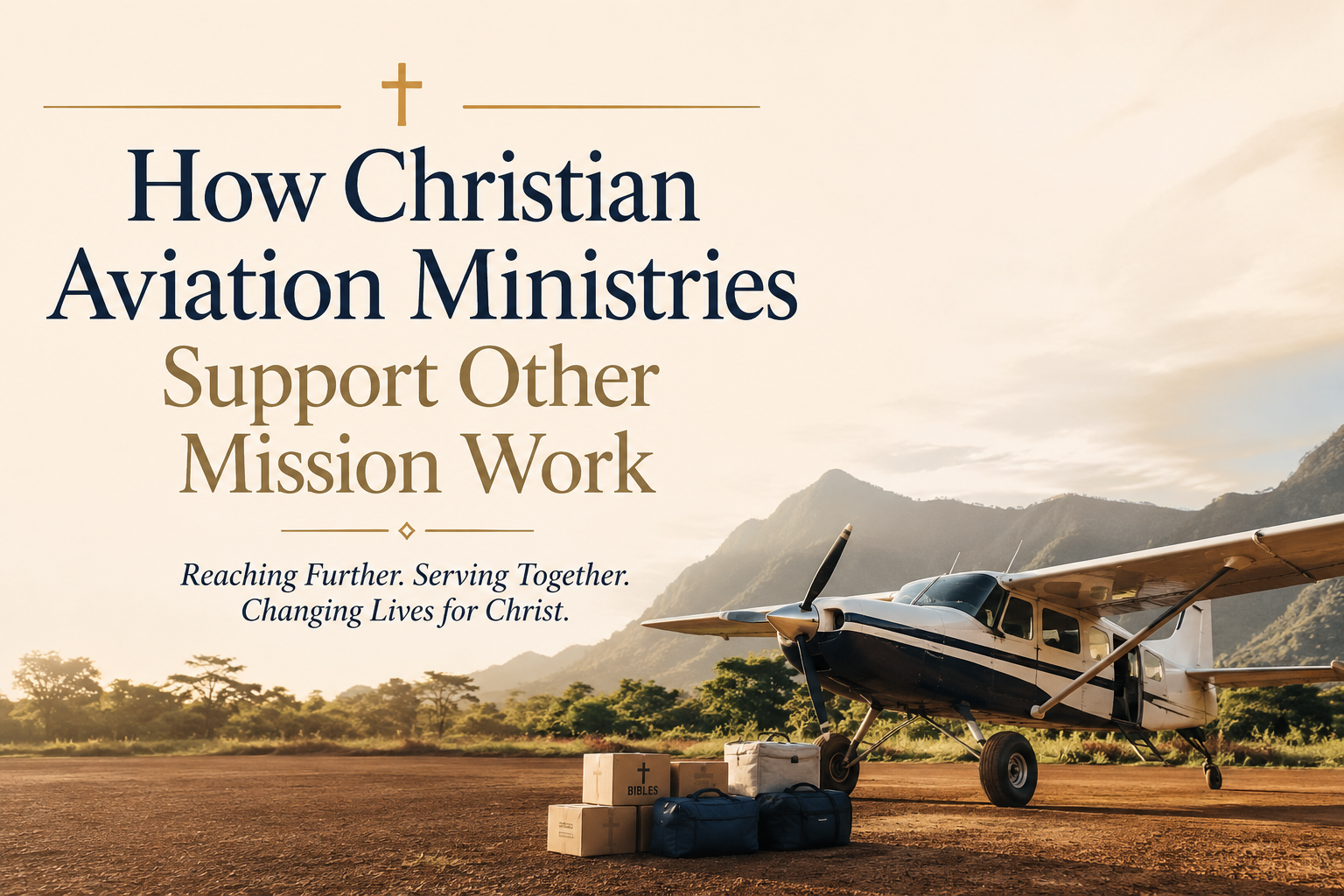
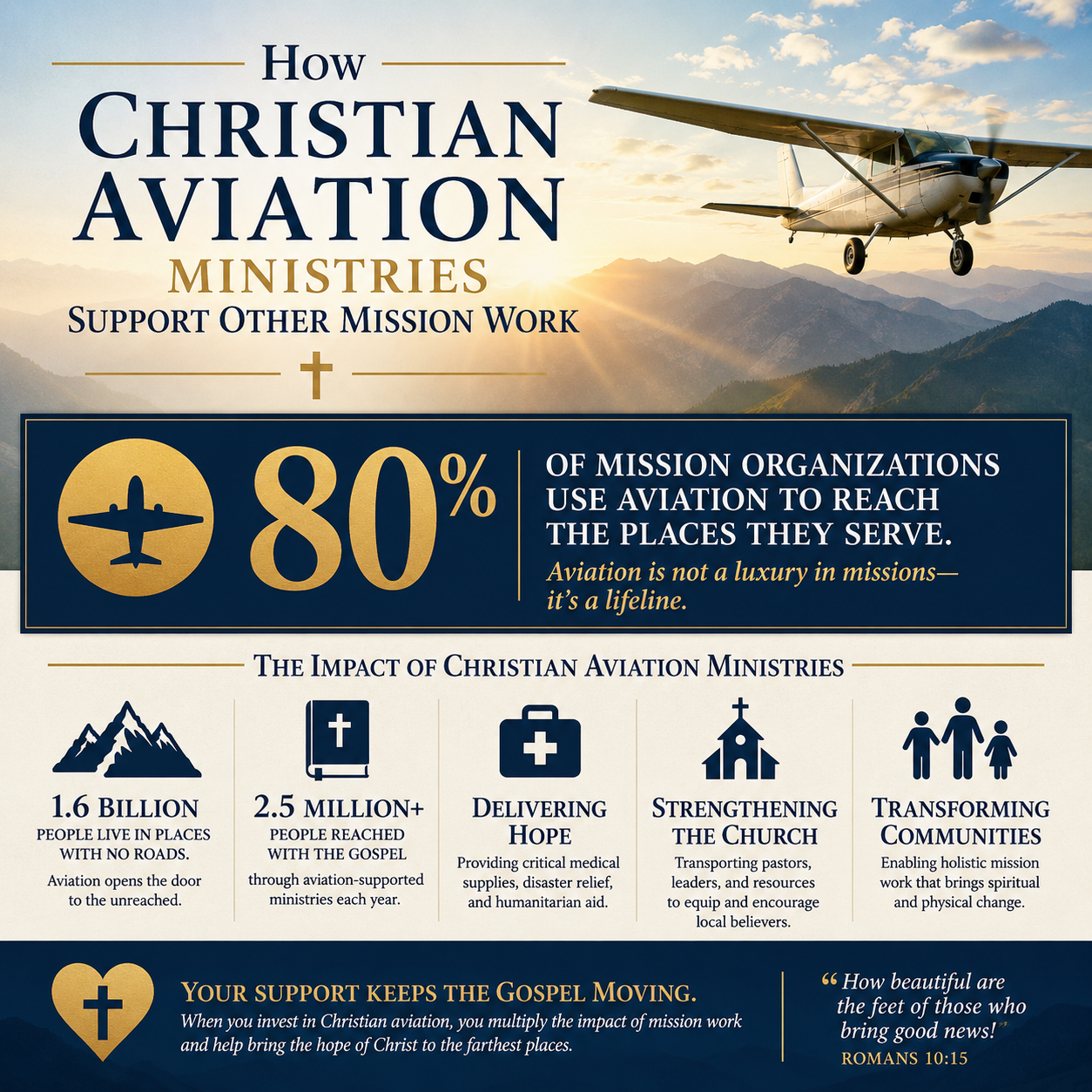
How Christian Aviation Ministries support other mission work is not primarily a question of aircraft, but of ecclesiology and stewardship. When a plane becomes a means of strengthening the local church, extending discipleship, and sustaining long-term presence, aviation functions as infrastructure for the Great Commission rather than a self-contained ministry.
Donors tend to feel the weight of two competing instincts here. One is urgency: remote communities are hard to reach, and flight can compress days of travel into hours. The other is caution: aviation is expensive, technically complex, and easy to romanticize. Mature giving holds both realities together and asks whether a ministry’s flight program is governed, accountable, and integrated with on-the-ground partners who can disciple, translate, plant, and pastor.
Aviation is enabling ministry, not the mission itself
The New Testament’s vision for mission work is embodied and local: elders appointed, churches strengthened, and the word of God taught in communities over time (Acts 14:21–23). Aviation can serve that biblical end by removing barriers of distance, terrain, and seasonal access, but it cannot replace the local, patient work of spiritual formation. The healthiest aviation ministries understand themselves as a support role—often invisible when done well—under the authority of Scripture and in partnership with the church.
What this means in practice is that donors should listen for language of accompaniment rather than heroism. Aviation ministries can be tempted to narrate themselves as the primary agents of change because the aircraft is visible, quantifiable, and compelling. Yet the deeper fruit usually belongs to local pastors, translators, and long-term missionaries who remain when the aircraft leaves.
Why “access” is not the same as “impact”
A flight opens a door, but it does not walk through it. Remote access may bring medical personnel, Scripture translation teams, or church planters into contact with communities that would otherwise remain isolated. But the gospel’s advance is ultimately measured by faithfulness—teaching, repentance, reconciliation, and durable local leadership—not by flight hours.
This is one reason sophisticated donors often ask for evidence beyond operational metrics. How does the aviation program strengthen the ministries it serves? Are local leaders gaining capacity? Are partnerships built around shared theology and accountability? The aircraft is a tool; the question is whether the tool is governed toward biblically coherent ends.
When aviation can unintentionally distort a mission ecosystem
Christians genuinely disagree about where to draw the line between “support” and “direct ministry.” Some aviation organizations conduct evangelism and discipleship as part of their work. Others see their calling as serving other ministries and local churches. Both models can be faithful; both can drift.
Aviation can distort priorities if it becomes the center of fundraising, the center of decision-making, or the implicit measure of effectiveness. It can also create dependency if partner organizations begin planning around aircraft availability rather than building resilient local systems. Donors serve the field well by asking whether the ministry has clear partnership criteria, a theology of the local church, and a disciplined approach to growth.
Where aviation most concretely strengthens other ministries
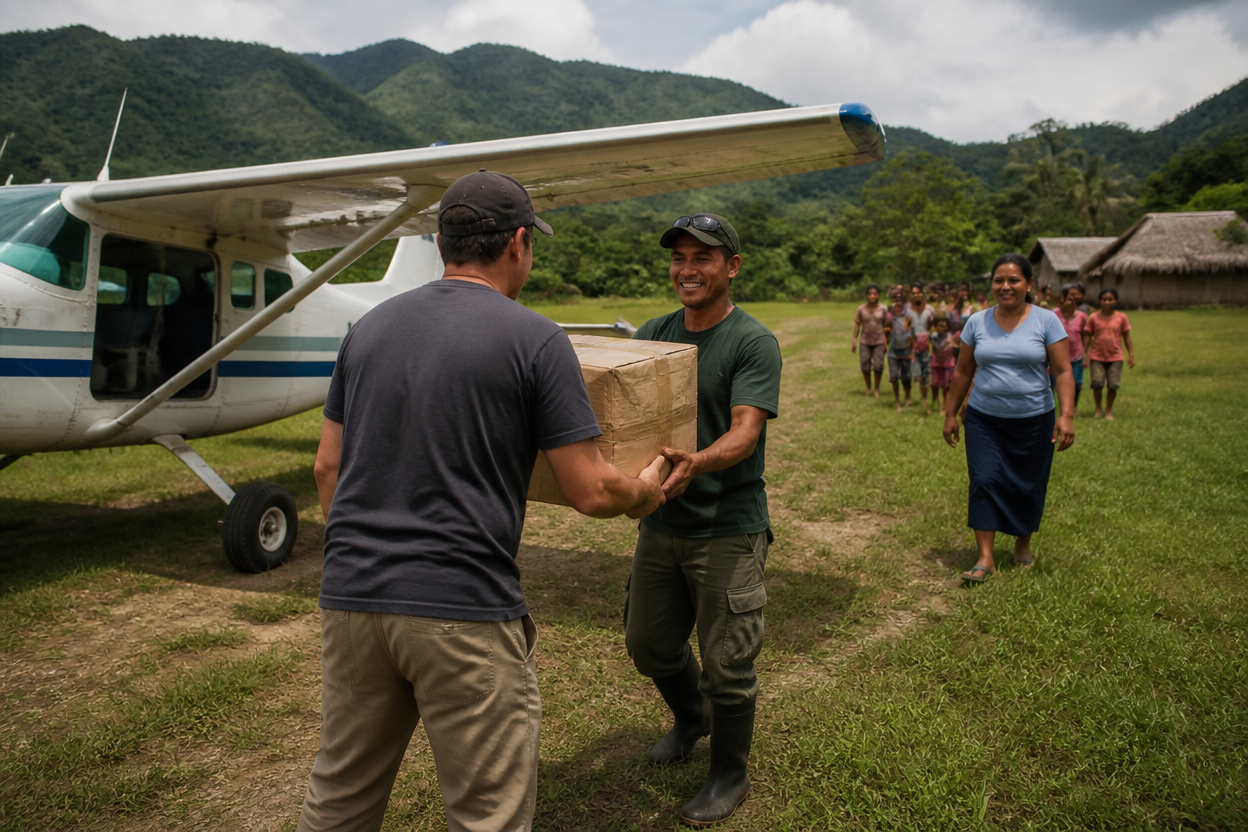
In the best cases, aviation strengthens other mission work by making other people’s calling more durable. That durability often shows up in three patterns: consistent support to local churches, strengthened discipleship partnerships, and disciplined service to specialized teams such as Bible translators and medical ministries.
Supporting local churches and pastors without displacing them
Healthy aviation partnerships honor pastoral authority and local church leadership. Flights may transport pastors to preach and train in outlying congregations, bring leaders together for regional teaching, or help elders respond to crises in their communities. The goal is not to make the plane the center of ministry, but to make ordinary pastoral presence possible in places where travel would otherwise be prohibitive.
Donors can ask whether the ministry has explicit commitments to local leadership. Does it prioritize flights that serve church-based initiatives? Does it evaluate requests through relationship and accountability rather than through whoever can pay? Aviation that serves the church will often be less dramatic than aviation that serves its own story.
Prioritizing discipleship partners over transactional flight requests
Many aviation ministries have learned that the most faithful use of limited flight capacity is not “first come, first served,” but long-term partnership with ministries that share doctrine, safeguarding practices, and a track record of local accountability. This does not mean refusing urgent requests; it means recognizing that flight capacity is a stewardship responsibility that must be governed by mission alignment.
We also observe a subtle but important distinction: aviation that is built around discipleship partners tends to resist the pressure to prove itself through constant expansion. It can make hard decisions about where it will and will not fly, because it has defined the spiritual purpose of its service, not merely the technical scope of its operations.
Serving Bible translation and Scripture engagement work
Aviation has historically served Bible translation by transporting translation teams, literacy trainers, and Scripture engagement workers to remote language communities. The work is slow, often spanning decades, and it depends on consistent access, trusted relationships, and safe logistics. A flight can preserve scarce human energy for the labor that only people can do: listening, learning, translating, testing, and teaching.
Donors should also recognize the necessary complexity. Translation work involves community review, safeguarding of language data, careful team selection, and long-term commitments. Aviation can help, but it also adds layers of cost, risk, and scheduling constraints. The most trustworthy organizations can articulate how aviation integrates into a broader translation strategy rather than functioning as a standalone project.
The donor questions that separate romance from stewardship
Because aviation is expensive and high-profile, it attracts both generous support and understandable skepticism. Mature stewardship does not default to cynicism; it asks disciplined questions about governance, financial integrity, safety culture, and measurable service to other ministries.
Safety culture and operational accountability
Aviation ministry is not an arena for improvisation. Donors should expect formal safety management, clear incident reporting, ongoing pilot training, maintenance protocols, and board-level oversight commensurate with the risks involved. The presence of strong safety practices is not a lack of faith; it is an expression of prudence and love of neighbor.
It is also appropriate to ask how the ministry handles the moral weight of risk. Aviation work can involve operating in challenging environments, and mature leaders should be able to articulate how they discern acceptable risk, how they care for staff families, and how they respond when incidents occur.
Financial clarity in a capital-intensive ministry
Aircraft acquisition, maintenance, fuel, insurance, hangar costs, and specialized staffing create a financial profile that differs from many other mission organizations. Donors can rightly expect transparency in how restricted gifts are used, how capital campaigns are governed, and how replacement reserves are planned.
Christian donors often ask whether high overhead invalidates an aviation ministry. The sector has largely rejected simplistic overhead ratios as a measure of trustworthiness. In fact, leading charity evaluators have warned donors against judging nonprofits by overhead alone, emphasizing that “overhead” often includes investments necessary for long-term effectiveness and accountability; see the Overhead Myth statement from GuideStar, BBB Wise Giving Alliance, and Charity Navigator (https://www.charitynavigator.org/). The better question is whether costs are governed, disclosed, and aligned to clearly defined mission outcomes.
Partnership integrity and theological alignment
Because aviation sits underneath many other ministries, it becomes a gatekeeper of sorts. Which ministries receive flights? Under what criteria? Are partnerships evaluated for safeguarding, doctrinal coherence, and local accountability? Or does money, convenience, or donor pressure shape access?
This is not merely an operational question. It touches ecclesial responsibility and moral accountability. If an aviation ministry repeatedly serves partners with poor safeguarding practices or unclear theology, it is not neutral; it is participating. Donors should look for a clear partnership policy and evidence that it is applied consistently.
How we assess trustworthiness in aviation ministries
At Most Trusted, our work exists because donors need more than compelling stories; they need verifiable confidence. The ministries that meet The Most Trusted Standard demonstrate seriousness across doctrine, financial integrity, governance, and truthful communication. Aviation ministries face particular pressures in each of these areas because the work is costly, visible, and technically specialized.
Faith foundation that governs strategy
In aviation, “mission drift” can occur when operational growth becomes self-justifying. A credible faith foundation does not simply affirm a statement of faith; it shapes partnership choices, protects the primacy of the local church, and defines the spiritual purpose of the flight program. Donors should expect clarity about how aviation serves evangelism, discipleship, and church strength without confusing means and ends.
Governance and leadership equal to the complexity
Aviation requires leadership competence in risk management, compliance, and crisis response. Boards that meet their fiduciary and moral responsibilities will ask detailed questions about safety reporting, pilot standards, maintenance practices, and insurance coverage. They will also ask spiritual questions: staff care, partnership integrity, and whether fundraising claims match reality.
Where governance is weak, aviation can become vulnerable to celebrity storytelling, underinvestment in maintenance, or overpromising impact. Strong governance is not glamorous, but it is one of the primary protections donors can look for.
Transparency and effectiveness that serve the donor’s conscience
Christian donors are not merely purchasers of outcomes; they are stewards accountable to God. Transparency matters because it respects the donor’s conscience and supports truthful prayer. Aviation ministries should be able to explain, in plain terms, what flights they performed, why those flights mattered to partner ministries, and what limitations remain.
Effectiveness should also be described with appropriate humility. Some results are measurable—transport volume, response time, medical evacuations, cost per flight hour. Other outcomes are indirect and long-term—pastoral presence sustained, translation teams supported, leaders trained. The best reporting is honest about what can and cannot be attributed to the aircraft.
Readers seeking context across the wider landscape of Christian Aviation Ministries will find that trustworthy organizations typically emphasize partnership, restraint, and doctrinal clarity as much as technical excellence.
A faithful aircraft serves faithful work
Christian aviation becomes most credible when it disappears into the success of others: pastors who can shepherd, translators who can persevere, churches that can gather, and ministry leaders who can remain present in hard places. The question for donors is not whether aviation is inspiring, but whether it is governed as a stewarded tool in service of Christ’s church.
When an aviation ministry demonstrates operational accountability, financial clarity, partnership integrity, and a theology that keeps the aircraft in its proper place, donors can give without sentimentality and without suspicion. That posture—clear-eyed, prayerful, and evidence-informed—is a form of discipleship in itself.



