

How Christian aviation ministries handle emergency funding needs is not a peripheral operational question. It is a test of whether a ministry can respond to genuine human suffering without compromising stewardship, safety, or truthfulness. When a medevac request arrives, when a relief corridor opens for a brief window, or when an aircraft is grounded by an unexpected maintenance issue, money becomes time. The temptation for donors and ministries alike is to treat urgency as permission to suspend ordinary safeguards.
Scripture does not grant that permission. The same Bible that compels mercy also requires integrity: “Moreover, it is required of stewards that they be found faithful” (1 Corinthians 4:2). Mature donors understand that “emergency” can describe both a real crisis and a fundraising strategy. The question is not whether crises happen in aviation ministry. They do. The question is how a ministry prepares for them, communicates about them, and accounts for them so that compassion and accountability remain united.
Emergency funding in aviation is predictable even when the event is not
Aviation is an industry where risk is managed, not eliminated. Weather changes, parts fail, and compliance requirements do not pause for a ministry’s cash flow. Christian flight organizations operate in that reality while also serving remote places where alternate transport may not exist.
Two kinds of emergencies donors should distinguish
Across our verification work at Most Trusted, we observe that ministries often use the word “emergency” to describe two different categories. The first is programmatic: a sudden humanitarian need, evacuation, or time-sensitive transport request that aligns with the ministry’s mission. The second is infrastructural: an aircraft or operations interruption that threatens the ministry’s capacity to serve.
Both may be legitimate. They also require different funding approaches. Programmatic needs are often bounded and measurable: a specific sortie, a defined relief response, a time-limited deployment. Infrastructural needs tend to be more complex: maintenance backlogs, avionics upgrades, hangar issues, insurance increases, or compliance costs that cannot be solved with a single one-time gift.
Why “maintenance emergencies” are not necessarily mismanagement
Some donors equate an unexpected maintenance cost with poor leadership. That conclusion can be too simple. Aircraft maintenance is affected by factors beyond any ministry’s control, including parts availability and labor constraints across the aviation sector. What donors can reasonably expect is not perfect predictability, but disciplined preparation: conservative budgeting, clear reserves policies, and timely reporting when realities change.
When a ministry repeatedly treats foreseeable costs as surprises, the issue is usually not aviation complexity; it is governance maturity. The donor’s task is to separate the unavoidable from the avoidable by asking for verifiable evidence.
Prepared ministries build reserves and systems before the crisis
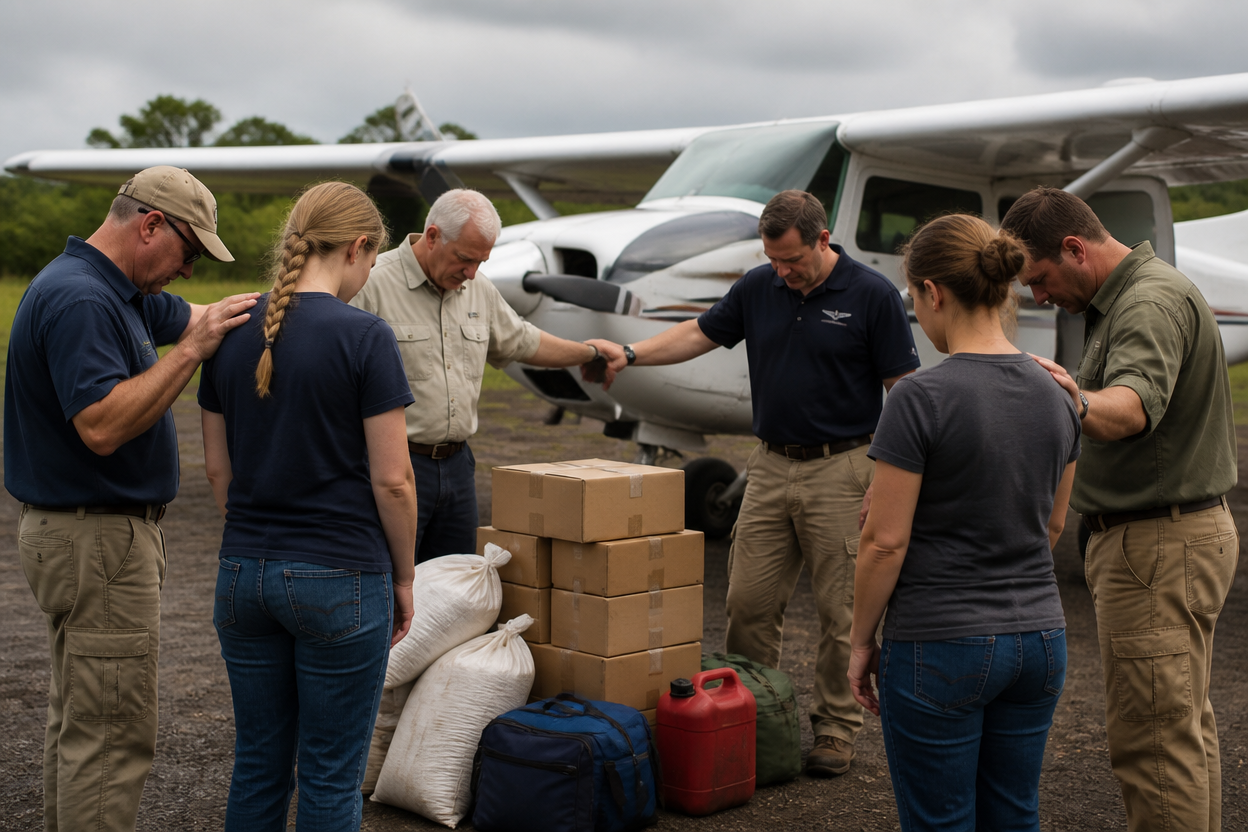
Christian compassion is not opposed to planning. Joseph’s grain stores in Genesis were not faithlessness; they were wisdom in anticipation of a famine that would otherwise devastate lives. Aviation ministries that respond well under pressure typically have already done their hardest work: building financial capacity and decision systems before the urgent appeal is ever written.
Operating reserves as a stewardship practice
Nonprofit financial best practice commonly includes maintaining operating reserves, though appropriate levels vary by mission, revenue reliability, and risk exposure. The National Council of Nonprofits addresses operating reserves as a core component of financial sustainability and board oversight, particularly for organizations facing revenue volatility or high fixed costs such as staffing and facilities (National Council of Nonprofits).
For aviation ministries, the case is stronger, not weaker. An aircraft grounded for weeks because cash is unavailable for a required repair can mean that isolated communities lose access to medical transport, pastoral visits, or disaster response. Reserves are not hoarded mercy; they are stored capacity for faithful service.

Internal controls that keep urgency from overriding integrity
Emergency spending is a classic pressure point for weak controls. Sound ministries define approval thresholds, segregate duties, and document expenditures even when timelines are tight. A well-governed organization does not rely on a single heroic leader with access to every account; it relies on clear authority, timely board visibility, and enforceable policies.
When Helping Hurts, articulated by Steve Corbett and Brian Fikkert, reshaped how many Christian donors think about good intentions and unintended consequences. The same framework applies to financial practices: unexamined urgency can harm the very mission donors are trying to help by eroding trust, encouraging dependency, or masking deeper fragility (Moody Publishers).
Emergency appeals require truthfulness that is specific, not dramatic
Christian ministries have a moral obligation to tell the truth in fundraising, especially when emotions are high. Donors are not merely revenue sources; they are fellow stewards who deserve information that enables discernment. “We aim at what is honorable not only in the Lord’s sight but also in the sight of man” (2 Corinthians 8:21). That verse is not a public relations slogan. It is a standard.
What credible emergency communication includes
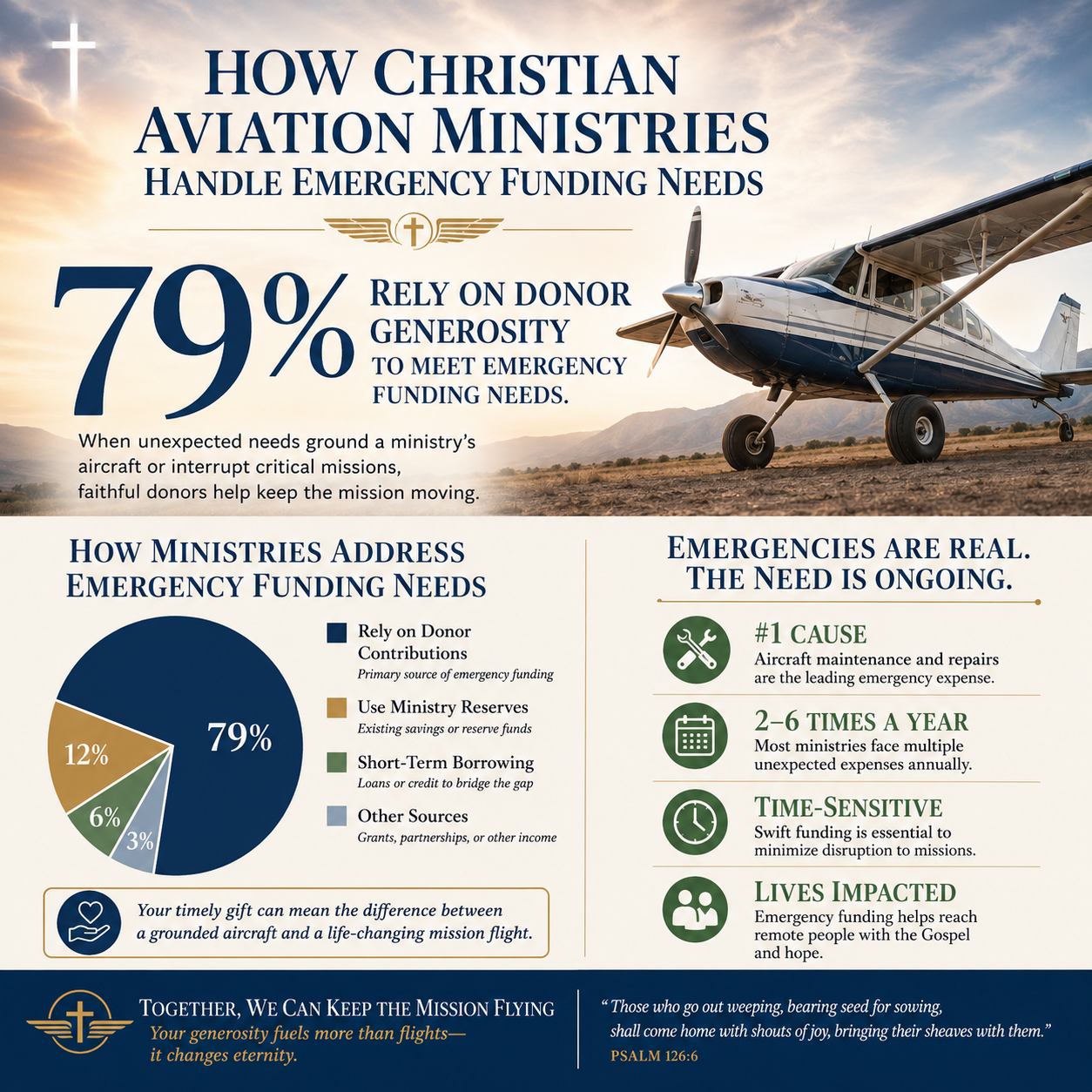
Responsible appeals typically include a defined need, an estimated cost range with stated assumptions, and a timeframe for action. They avoid vague language that makes accountability impossible later. They also distinguish between restricted gifts for a stated emergency and unrestricted gifts for ongoing readiness, because those are different requests.
The ministries that meet The Most Trusted Standard tend to communicate emergency needs in a way that is operationally concrete: what happened, what must occur next, what compliance or safety requirement is involved, and how donors will be updated. They do not treat donors as an audience to be moved, but as partners to be informed.
The harder question of designation and flexibility
Christians genuinely disagree about how tightly a donor should restrict gifts in an emergency. Some prefer strict designation to prevent funds from drifting into overhead. Others prefer flexibility so leaders can respond intelligently as facts change. Both instincts can reflect stewardship.
What this means in practice is that donors should ask whether the ministry has a policy for restricted funds, a mechanism for handling overfunded appeals, and a documented practice for communicating when circumstances change. A ministry that cannot explain these clearly may still do good work, but it is asking donors to underwrite ambiguity.
Short-term cash is not the same as long-term solvency
Emergency funding needs can tempt a ministry to solve a structural problem with episodic generosity. Donors may keep responding because the mission is compelling and the stories are real, yet the organization remains one crisis away from operational collapse. Aviation is unforgiving of this pattern, because deferred maintenance and staff instability can become safety issues.
The field has learned to resist simplistic overhead narratives
Aviation ministries face significant non-program costs: maintenance, insurance, training, regulatory compliance, and safety systems. Donors sometimes assume these are suspect “overhead” rather than mission-essential. The sector has had to reckon with the damage done by simplistic overhead ratios, a concern addressed in the Overhead Myth statement signed by GuideStar (now Candid), BBB Wise Giving Alliance, and Charity Navigator (Candid).
That does not mean “anything goes.” It means donors should evaluate whether indirect costs are appropriate to the mission and whether they are governed and disclosed with clarity. A ministry that refuses to fund safety and compliance is not lean; it is fragile.
Healthy ministries treat emergency funding as one tool among several
Across aviation-focused organizations, the strongest financial posture typically combines diversified revenue, disciplined budgeting, and a reserve strategy sized to operational risk. Emergency appeals may still be necessary, but they are not the default mechanism for keeping planes in the air.
For donors discerning whether a ministry is structurally sound, it helps to place emergency appeals in a larger context. Reviewing a ministry’s public reporting and program strategy within Christian Aviation Ministries can clarify whether crises are occasional interruptions or an ongoing business model.
What donors should examine before responding to the next urgent ask
Donors do not honor God by suspending discernment. They honor God by giving with both compassion and wisdom, recognizing that the people being served, the staff on the ground, and the donors themselves are all affected by how money is raised and spent.
Practical due diligence that fits an emergency timeline
A mature donor’s diligence does not need to be slow, but it should be real. When a ministry asks for urgent support, donors can reasonably look for a short set of signals that indicate whether the appeal is trustworthy and whether the organization is prepared to account for the gift.
- Clear description of the emergency and why it requires funding now, not later
- Specific use of funds, including whether gifts are restricted or unrestricted
- Evidence of governance oversight for emergency expenditures
- Transparent financial reporting that is current and accessible
- Commitment to donor updates after the emergency window closes
How Most Trusted fits into a donor’s decision
Most Trusted exists because many donors want to give decisively without giving blindly. We evaluate ministries against The Most Trusted Standard, a 15-criteria framework across Faith Foundation, Financial Integrity, Governance and Leadership, and Transparency and Effectiveness. In emergencies, these criteria are not theoretical. They determine whether urgency leads to faithful action or preventable confusion.
Donors engaging the broader ecosystem of support, prayer, and partnership can also situate emergency requests within Praying for and Partnering with Christian Aviation Ministries, where the question is not only whether a crisis is real, but whether ongoing partnership is shaped by truth, accountability, and shared theological commitments.
FAQs for How Christian aviation ministries handle emergency funding needs
Should donors restrict gifts for a specific aviation emergency?
Restriction can be wise when the need is well-defined and time-bound, such as a particular relief deployment or a specific repair required to restore an aircraft to service. It can also reduce a ministry’s ability to respond if circumstances change. The better question is whether the ministry has a clear restricted-gifts policy, communicates what happens if the appeal is overfunded, and provides follow-up reporting that shows how the designated funds were used.
Is it a red flag if an aviation ministry has repeated emergency appeals for maintenance?
It depends on whether the appeals reflect genuinely unpredictable events or chronic undercapitalization. Aviation has real volatility, but routine maintenance and many compliance costs are foreseeable. A pattern of repeated “surprise” repairs may indicate weak budgeting, inadequate reserves, or governance that is not exercising appropriate oversight. Donors can ask for evidence: reserve policy, maintenance planning assumptions, recent financial statements, and post-appeal reporting that closes the loop.
Faithful urgency is governed urgency
Emergency funding is often where a ministry’s theology of stewardship becomes visible. Compassion that is unaccountable is not biblical compassion, and accountability that is indifferent to suffering is not biblical stewardship. Christian aviation ministries serve in places where minutes matter. Donors serve well when they insist that speed and integrity remain joined, so that every urgent gift strengthens the ministry’s capacity to love neighbors with both truth and endurance.



