

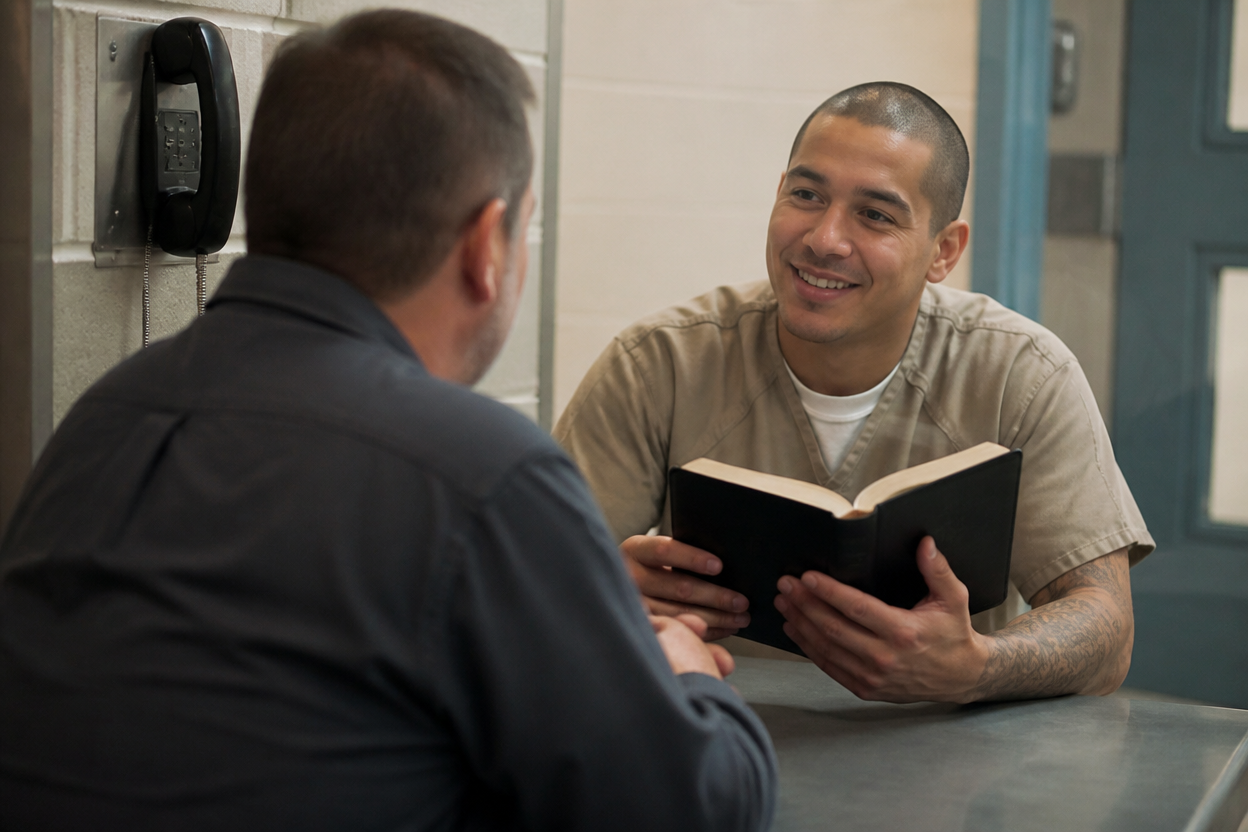
How to give to prison ministry year-round is fundamentally a question of Christian endurance: whether our mercy persists when the headlines fade and the needs remain. Jesus named prison visitation alongside feeding the hungry and welcoming the stranger in Matthew 25, not as a specialized interest but as a test of discipleship.
For many donors, the challenge is not willingness but consistency. Prison ministry operates on constrained schedules, regulated environments, and long arcs of change that do not always produce tidy stories. Faithful year-round giving requires a different mindset than seasonal charity, and it benefits from careful verification so generosity strengthens what is good rather than subsidizing dysfunction.
Start with the long obedience that prison ministry requires
Prison and reentry work moves at the pace of institutions and human hearts. Security procedures shift, chaplain access varies, lockdowns suspend programming, and families are often in crisis long before incarceration and long after release. Donors who give only when a campaign is visible can unintentionally amplify instability in ministries that are built to provide steady presence.
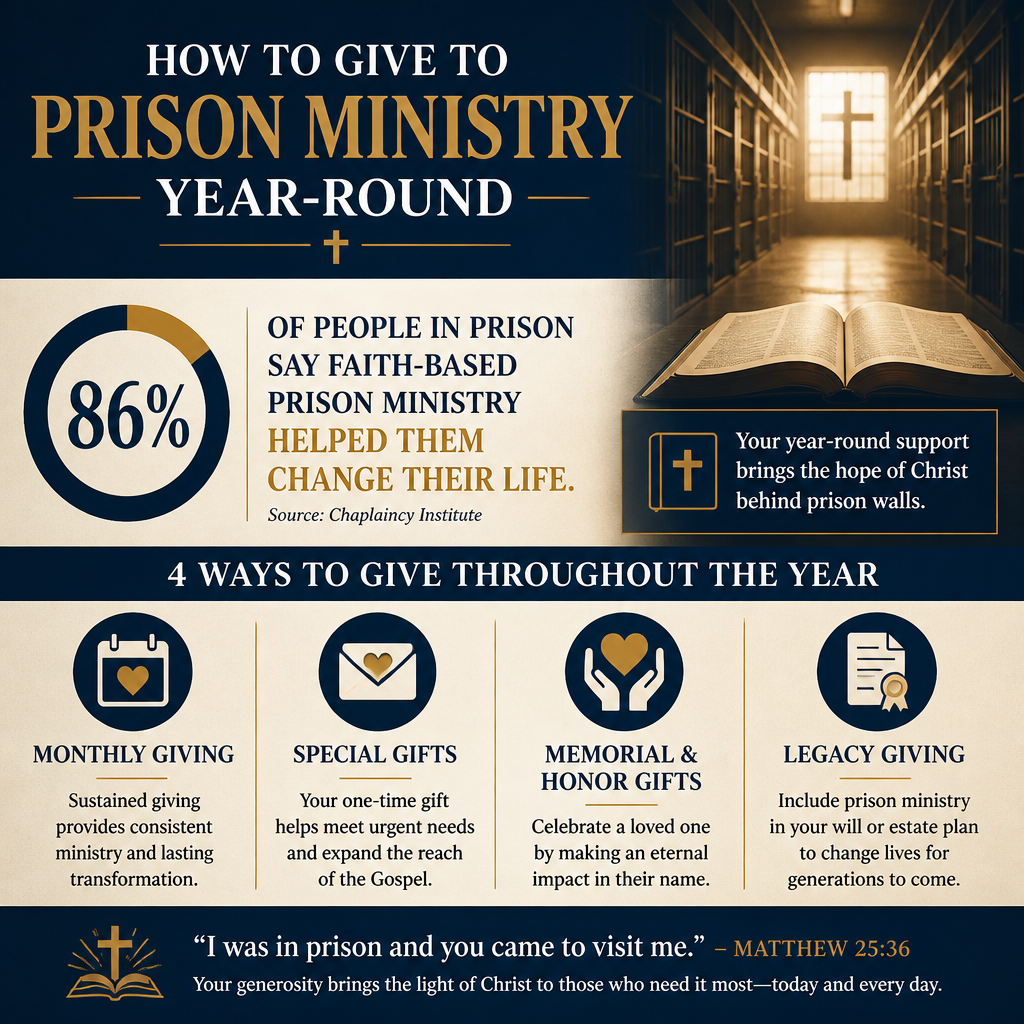
What this means in practice is that year-round giving is less about intensity and more about continuity. A modest monthly commitment often serves better than sporadic larger gifts, especially for ministries that must retain trained volunteers, maintain curriculum, and plan around facility calendars.
Measure faithfulness by formation, not only by numbers
Christians genuinely disagree about how to evaluate outcomes in prison ministry. Some prioritize decisions and baptisms; others emphasize discipleship depth, reconciliation with family, and durable church connection after release. The New Testament holds conversion and perseverance together, and donors should resist simplistic scorecards that ignore either.
At the same time, a ministry should be able to describe what it is trying to accomplish and how it knows whether it is doing that work with integrity. For a broader view of the field, we maintain a curated set of resources and organizations within Prison and Post-Prison Ministries.
Plan your giving around the ministry calendar, not the retail calendar
Many prison ministries experience a predictable funding surge in November and December. Needs, however, are often highest when budgets tighten: early in the year, during summer travel months when volunteer coverage dips, or after unexpected lockdown periods that require retooling and extra pastoral follow-up. Donors who ask, “When is your hardest month?” are usually closer to wise stewardship than those who ask, “What is your year-end goal?”
Choose a giving model that matches the ministry operating reality
Year-round support can take several forms, each with trade-offs. Some ministries are best served by unrestricted monthly gifts; others require designated support for chaplaincy coordination, Bible distribution, reentry housing, or family services. Mature giving begins with the discipline to match the type of gift to the kind of work.
Monthly, unrestricted support when governance is strong
Unrestricted giving is not a blank check; it is trust placed where accountability is already demonstrated. When a ministry has credible board oversight, clean financial reporting, and transparent program description, flexible support helps leaders respond to changing prison access, shifting reentry partnerships, and emergent pastoral needs without constant fundraising.
Financial integrity is a pastoral concern as well as an operational one. Donors are not only funding services; they are reinforcing an ethic of truthfulness and restraint in the way God’s work is described and financed.
Project support when the ministry can show real unit economics
Designated giving can be wise when a ministry can articulate realistic costs and limits. For example, if a program trains volunteers for a specific facility, the ministry should be able to explain what training entails, what ongoing supervision looks like, and how it prevents harmful or naïve engagement. If a ministry distributes Bibles or study materials, it should be able to describe sourcing, permissions, and how materials are actually delivered inside correctional settings.
A useful donor question is: “What would you stop doing if this project were not funded, and what would you keep doing anyway?” Clarity here often signals disciplined leadership.
Give in ways that respect the dignity and agency of incarcerated people and families
Some giving patterns unintentionally center the donor’s emotional experience rather than the neighbor’s good. Prison ministry is vulnerable to this because access is limited, stories are powerful, and the line between testimony and fundraising can blur. Christian donors should insist on a dignity-first approach: people are not props for a newsletter; they are image-bearers with agency, accountability, and complexity.
Avoid funding models that require sensational storytelling
Ministries that must constantly produce dramatic conversions to satisfy donor attention may drift toward exaggeration, selective reporting, or pressure on participants to share more than is wise. Trauma-informed practice recognizes that disclosure can be re-traumatizing and that confidentiality is often essential in carceral contexts.
Donors can ask for anonymized, aggregated reporting; they can also support ministries that speak honestly about setbacks. The Gospel is not threatened by candor about relapse, broken relationships, or slow growth.
Support family and church connection beyond the prison gate
Reentry is not a single event; it is a high-risk transition involving housing, employment, documentation, addiction recovery, and community belonging. The U.S. Department of Justice has long reported high recidivism rates among people released from state prisons, underscoring how difficult the transition can be even with services available. Bureau of Justice Statistics
Many prison ministries increasingly collaborate with local churches, employers, and reentry providers rather than attempting to be a one-stop solution. Donors can strengthen this approach by funding coordination, mentoring structures, and pastoral follow-up that keeps a person connected to a healthy congregation.
Verify before you commit, then stay the course
Year-round giving is only as wise as the trustworthiness of the ministry receiving it. Prison ministry attracts both exemplary servants and, at times, unhealthy or unaccountable leaders. Because the work is emotionally charged and often hidden from public view, donors should place a premium on verification: doctrinal clarity, board governance, financial transparency, and evidence that the ministry does what it claims.
Use The Most Trusted Standard to ask better questions
Most Trusted evaluates Christian nonprofits against The Most Trusted Standard, a 15-criteria framework spanning faith foundation, financial integrity, governance and leadership, and transparency and effectiveness. Verification does not replace discernment, but it disciplines it. It helps donors distinguish between ministries with durable structures and those built on charisma, urgency, or vague reporting.
Across our verification work, the ministries that meet rigorous standards tend to share a few habits: they publish accessible financial statements, they name their leadership and board oversight, they explain how decisions are made, and they acknowledge constraints and risks rather than offering unrealistic promises.
Look for transparency that is specific, not performative
Christian donors sometimes fixate on overhead ratios as the primary measure of virtue. The nonprofit sector has repeatedly warned that this can create perverse incentives and underfund necessary administration and evaluation. Charity Navigator
Better questions include: Are audited financials available when appropriate for the organization’s size? Are related-party transactions disclosed? Does the board have independence? Does the ministry report outcomes in a way that avoids manipulation? A ministry can be spiritually sincere and still financially careless, and donors should not confuse the two.
Build a year-round plan that fits your household stewardship
Giving faithfully over time requires spiritual realism about budgets, competing obligations, and fatigue. Many donors carry a quiet burden: the sense that they should do more, combined with uncertainty about where gifts truly help. A plan does not eliminate that tension, but it can convert anxiety into disciplined generosity.
A simple cadence most households can sustain
Consider a pattern that aligns with how households actually manage money and attention:
- Set a monthly baseline gift to one verified prison or reentry ministry.
- Reserve one additional “capacity gift” each year for a specific program need or capital expense.
- Schedule one annual review of the ministry’s financials, leadership updates, and program reporting.
- Pray with specificity for staff, volunteers, chaplains, and participants, not as a substitute for giving but as its proper companion.
- Hold back a modest discretionary amount for urgent needs that arise mid-year.
Align your giving with the kind of impact you mean to fund
Some donors are drawn to direct evangelism inside facilities; others prioritize reentry housing, job readiness, or family reunification. The field has had to reckon with the limits of any single intervention. Employment programs without pastoral care can become merely transactional; Bible study without reentry support can leave a person spiritually encouraged but materially stranded. Many of the strongest ministries integrate multiple forms of care through partnerships, and donors should reward that humility.
To see how different prison ministries typically allocate donor gifts across program and support needs, consult How Prison Ministries Use Donor Gifts.
FAQs for How to give to prison ministry year-round
Should we give to prison evangelism or to reentry services?
Many Christian donors frame this as an either-or, but it often becomes a question of sequence and integration. Evangelism and discipleship inside prison matter, and so does the practical bridge to housing, work, and church community after release. We recommend supporting ministries that can articulate a coherent theology of discipleship and a realistic plan for post-release connection, whether delivered directly or through accountable partners.
What should we ask a prison ministry before starting monthly giving?
Start with questions that reveal governance, transparency, and program integrity: Who provides board oversight, and is the board meaningfully independent? Are current financial statements available, and are audits conducted when appropriate? What programs operate inside facilities versus outside, and what happens during lockdowns? How does the ministry protect participant privacy and avoid sensational fundraising? Clear, specific answers usually indicate a ministry prepared for faithful year-round partnership.
A faithful year-round posture toward prison ministry
Year-round giving to prison ministry is one of the clearest ways Christian donors can practice mercy without sentimentality. The incarcerated are not an abstract cause; they are neighbors Christ names. When donors verify carefully, give consistently, and refuse manipulative narratives, they help build ministries that can remain present for the long work of repentance, restoration, and hope.



