

Faith-based prison outreach and evangelism sits at the intersection of clear biblical mandate and hard institutional reality. Jesus’ words in Matthew 25 place “visiting… those in prison” alongside feeding the hungry and welcoming the stranger, which means donors are not funding a religious hobby; they are participating in a work Christ himself names as a mark of discipleship.
The harder question for donors is not whether prison evangelism matters, but what faithfulness looks like inside systems designed for security, not spiritual formation. Effective prison outreach honors legitimate facility constraints, takes trauma and manipulation seriously, and proclaims the Gospel without treating incarcerated men and women as projects. The ministries most worthy of support combine theological clarity with operational maturity.
Why prison evangelism remains a biblical imperative
Christian prison outreach begins with a theological claim about the kind of God we serve: the God who “executes justice for the oppressed” and “loves the sojourner” does not look away from those society forgets. Scripture does not romanticize sin or minimize harm to victims. Yet the New Testament insists that the Gospel is God’s power for salvation for all who believe, including those whose stories include serious crimes and devastating consequences.
That tension is precisely why donors must think carefully. We can affirm accountability, restitution, and public safety while still insisting that no human being is beyond the reach of repentance and new life. The cross does not suspend justice; it reveals God’s justice and mercy meeting without denial.
Evangelism inside confinement is different from evangelism outside
Within prisons and jails, almost every normal ministry assumption changes. A volunteer cannot simply “drop by.” A chaplain cannot freely gather whomever will come. Participants may attend for mixed reasons: sincere faith, loneliness, incentives, safety, or access to scarce community. None of that invalidates the Gospel, but it raises the need for sober discernment and patient discipleship.
Across our verification work at Most Trusted, we observe that strong prison evangelism ministries do not measure success primarily by momentary responses. They build pathways that test and strengthen credibility over time: consistent teaching, accountable small groups, pastoral oversight, and continuity after release.
The field has had to reckon with coercion and credibility
Christians genuinely disagree about how to define “coercion” in a carceral environment. A ministry can offer hope and structure, and still unintentionally create pressure if participation is treated as a requirement for benefits, favorable reports, or access to basic goods. Mature ministries take this seriously. They insist on voluntary participation, refuse quid pro quo arrangements, and work carefully with chaplaincy staff to keep the Gospel free from transactional dynamics.
How facility protocols shape faithful outreach
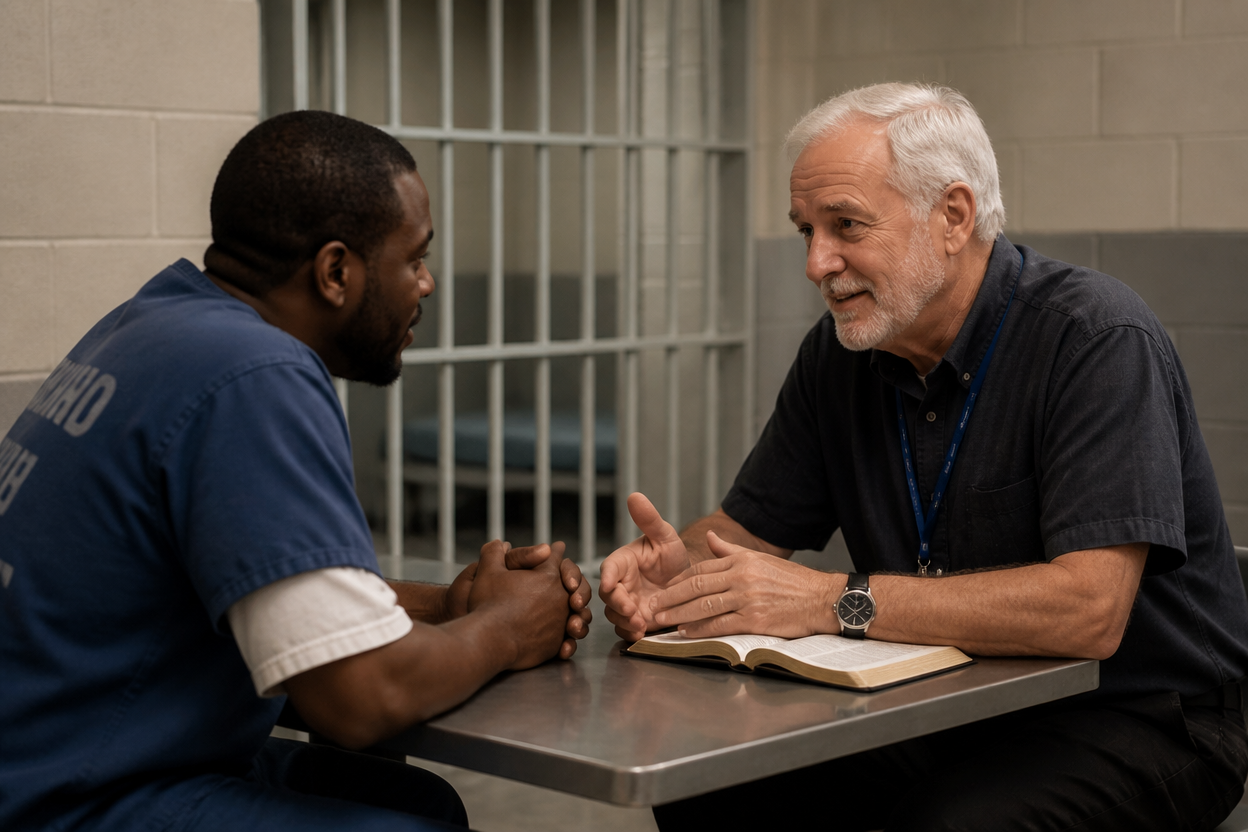
Faith-based prison outreach and evangelism succeeds or fails on whether a ministry can operate within facility protocols without compromising its message or its ethics. Donors often assume the primary obstacles are spiritual—hostility to religion, hardened hearts, or cultural opposition. In practice, the daily constraints are logistical: background checks, volunteer training, contraband rules, scheduling, movement restrictions, lockdowns, and staffing shortages that can cancel programming without warning.
A ministry that ignores these realities tends to produce two outcomes: conflict with staff that reduces access over time, and programming that becomes irregular and unreliable for participants. Consistency is not a luxury in prison ministry; it is part of pastoral care.
Security is not the enemy of ministry
Correctional officers and administrators carry legal and moral responsibility for safety. Wise prison ministries treat security procedures as guardrails, not adversaries. That includes honoring restrictions on physical contact, avoiding manipulation of staff, and training volunteers to recognize grooming behaviors and boundary violations.
Donors should expect verified ministries to have written policies for volunteer conduct, incident reporting, and communication with incarcerated individuals. These are not bureaucratic add-ons. They are safeguards for the dignity of participants, the integrity of the ministry, and the stability of access.
Chaplains are partners, not obstacles
In many facilities, chaplains are the institutional stewards of religious liberty and program coordination. Effective prison evangelism ministries respect chaplains’ role and avoid triangulation. They also understand that religious programming must often serve diverse faith backgrounds under the same constitutional framework. Mature ministries keep their evangelistic identity clear while cooperating with the facility’s responsibilities.
Local churches are often the missing link
Prison outreach cannot end at the gate. A man or woman may make credible progress inside and still return to housing instability, family fracture, substance use triggers, and unemployment. Churches are uniquely positioned to provide belonging, accountability, and ordinary discipleship after release. Donors should ask whether a prison evangelism ministry has real church partnerships or whether “aftercare” is a brochure promise with little operational substance.
For donors evaluating this category within a broader portfolio, we also encourage attention to how prison ministry fits within Prison and Post-Prison Ministries. The strongest work integrates evangelism with reentry support without confusing the two.
What effective prison discipleship looks like
Evangelism and discipleship are not competitors; they are sequential responsibilities. Proclamation invites repentance and faith. Discipleship forms durable obedience. In carceral settings, donors should be cautious about ministries that celebrate high numbers of decisions while offering thin theological formation, limited pastoral care, or no pathway to ongoing community.
Worship services and the ministry of presence
A prison worship service can range from a simple Scripture reading and hymn-singing to a full liturgy depending on the facility’s policies and the ministry’s tradition. What matters for donor discernment is not production value but pastoral seriousness: clear preaching, reverent prayer, appropriate volunteer leadership, and respect for those who are listening but not yet ready to participate.
The ministry of presence also matters. Consistent, non-performative visitation communicates that the Church does not abandon people when their lives become inconvenient. Yet presence must be bounded by wisdom: volunteers should not become substitute family systems, nor should emotional attachment replace long-term community structures.
Mentoring that can withstand manipulation and trauma
Mentoring is often where prison ministry turns from event-driven to life-shaping. It is also where risks concentrate. Incarcerated people are not uniquely manipulative, but prisons are environments where survival often rewards impression management. Many participants also carry deep trauma, addiction histories, and fractured relational patterns. Mentors need training, supervision, and clear boundaries to serve without naïveté or cynicism.
Donors should look for ministries that require mentor screening, provide ongoing coaching, and maintain structured contact policies. Informal “be a friend” models can unintentionally create dependency or expose both parties to avoidable harm.
Recidivism claims require restraint and evidence
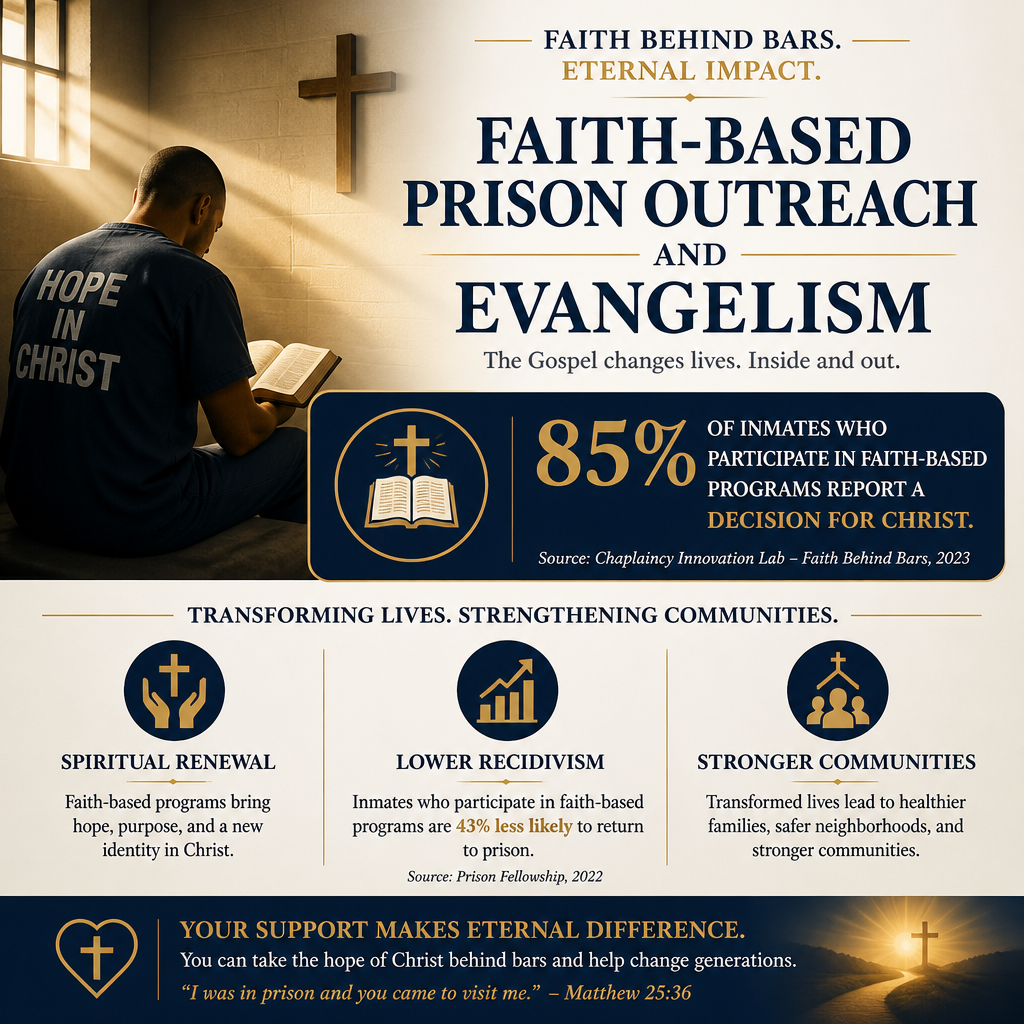
Many prison ministries make strong claims about reducing recidivism. Some programs do show promising associations between participation and improved outcomes, but the research landscape is complex: outcomes depend on program design, dosage, participant selection, local labor markets, supervision conditions, and family supports. When a ministry makes numerical claims, donors should expect clear definitions (rearrest, reconviction, or reincarceration), a stated timeframe, and a credible evaluation approach.
For context, the Bureau of Justice Statistics has documented that many people released from state prison are arrested again within years of release, underscoring the scale of the challenge and the need for sustained support beyond a single program cycle. See the Bureau of Justice Statistics for primary reporting and updates: https://bjs.ojp.gov/.
How donors can fund prison outreach with confidence
Donors who care about prison evangelism often carry two concerns that pull against each other. First, the Gospel is urgent, and the need is real. Second, carceral ministry can be difficult to evaluate from a distance: access is restricted, stories are hard to verify, and the strongest pastoral moments are often private by nature. The answer is not cynicism; it is disciplined due diligence.
What to look for in governance and accountability
Across our work verifying Christian nonprofits, we find that effective prison outreach ministries tend to have governance that is both spiritually serious and institutionally competent. Under The Most Trusted Standard, we look for clear doctrinal commitments, independent board oversight, conflict-of-interest controls, and policies that match the risk profile of working in correctional environments.
Donors should ask practical questions: Who supervises volunteers? How are incidents documented and reported? What training is required before entering a facility? How does the ministry coordinate with chaplains and comply with facility rules? A ministry that treats these questions as distractions is not ready for scale or sustained donor investment.
Financial integrity and restricted gifts
Prison evangelism often depends on small, recurring costs that are easy to underfund: curriculum printing, volunteer training, background checks, transportation, and communication systems for post-release follow-up. Donors can help by funding these “unseen” costs when a ministry can articulate why they matter and how they are controlled.
We also recommend that donors pay attention to restricted giving. If a ministry offers options to fund Bibles, courses, mentorship, or reentry support, it should be able to explain how restricted funds are tracked and reported. Clarity here is not merely an accounting issue; it is part of honoring donor intent.
Transparency and effectiveness without sensationalism
Some prison ministries unintentionally drift toward storytelling that serves fundraising more than truth: dramatic conversions, exceptional transformations, and selective anecdotes that imply a typicality they cannot support. Donors do not need ministries to be cynical about God’s power. We need ministries to be truthful about what they can verify.
Healthy transparency includes: program descriptions that match what facilities permit; realistic metrics such as participation retention, course completion, mentor engagement, and post-release connection to churches; and honest disclosure of limitations when access is restricted or outcomes cannot be tracked. When outcomes are presented, they should be accompanied by definitions and methodology, even when that reduces marketing appeal.
For donors who want a broader framework for nonprofit evaluation beyond raw overhead ratios, the long-standing “Overhead Myth” conversation is helpful: donors should focus on whether spending aligns with mission and whether the organization is governed well, not on simplistic percentage thresholds. See Charity Navigator’s discussion and related resources: https://www.charitynavigator.org/.
Faithful support that honors both justice and mercy
Faith-based prison outreach and evangelism calls donors to hold together what Scripture holds together: justice for victims, accountability for wrongdoing, and the real possibility of repentance and restoration in Christ. The most credible ministries do not promise easy outcomes. They do the slower work of proclamation, pastoral care, discipleship, and reintegration with sobriety about the environment and hope grounded in the Gospel.
When donors support prison evangelism through organizations that meet The Most Trusted Standard, giving becomes more than sympathy at a distance. It becomes a disciplined participation in the Church’s calling to remember those in prison, serve them with integrity, and seek fruit that can endure beyond the prison gate.



