
How donor-advised funds support pastoral support ministries becomes clearer when we name the central tension: many donors want to strengthen the shepherds who serve the church, yet they also want confidence that their giving is governed wisely, financially sound, and spiritually aligned. A donor-advised fund can serve that aim by combining disciplined, accountable philanthropy with flexible, mission-focused grantmaking.
Pastoral support is not sentimental charity. Scripture treats the spiritual and material conditions of those who labor in Word and doctrine as a matter of justice and order in the church. Paul’s instruction that “the laborer deserves his wages” (1 Timothy 5:17–18) is not a fundraising slogan; it is a church health principle. What remains difficult is translating that principle into modern funding: clergy compensation pressures, burnout, counseling needs, sabbaticals, and crisis care often sit outside normal church budgets, and the ministries that help can vary widely in governance and transparency.
Donor-advised funds bring structure to a category that easily becomes reactive
Pastoral care funding often arrives late
Many gifts to pastoral support ministries are triggered by pain: a moral failure, a medical diagnosis, a sudden resignation, a traumatic event in a congregation. Reactive giving can be compassionate, but it is rarely strategic. A donor-advised fund (DAF) helps a donor prepare before the crisis by setting aside capital in a dedicated charitable account that can be granted over time.
DAFs have become a significant part of American philanthropy. For context, donor-advised fund grants reached $52.16 billion in 2023 according to the National Philanthropic Trust’s 2024 Donor-Advised Fund Report National Philanthropic Trust. That growth does not automatically mean better giving, but it does mean many Christian donors now have an additional tool for sustained support of ministry categories that require patience and prudence.
They separate the timing of your tax decision from the timing of your ministry decision
What this means in practice is simple: donors can make a contribution to a DAF in a year when income is unusually high or when a major liquidity event occurs, and then recommend grants to pastoral support ministries across subsequent years. That separation can reduce the pressure to make hurried, end-of-year decisions based on tax calendars rather than ministry readiness.
Christians genuinely disagree about how much “planning” is appropriate in giving. Some worry that careful structuring can become an excuse for control. Others see planning as a form of stewardship. The biblical pattern holds both together: generosity that is prompt and open-handed, and stewardship that is accountable and wise.

DAFs can improve consistency for ministries that serve pastors over the long haul
Pastoral support is often preventative, not only crisis response
Healthy pastoral support ministries do not merely respond to breakdown; they build resilience. Counseling subsidies, spiritual direction, peer cohorts, retreats, coaching, and sabbaticals are often more effective when they are funded predictably. A DAF can help a donor establish a rhythm of annual or quarterly support without turning a ministry into a “special project” that must be re-justified each year.
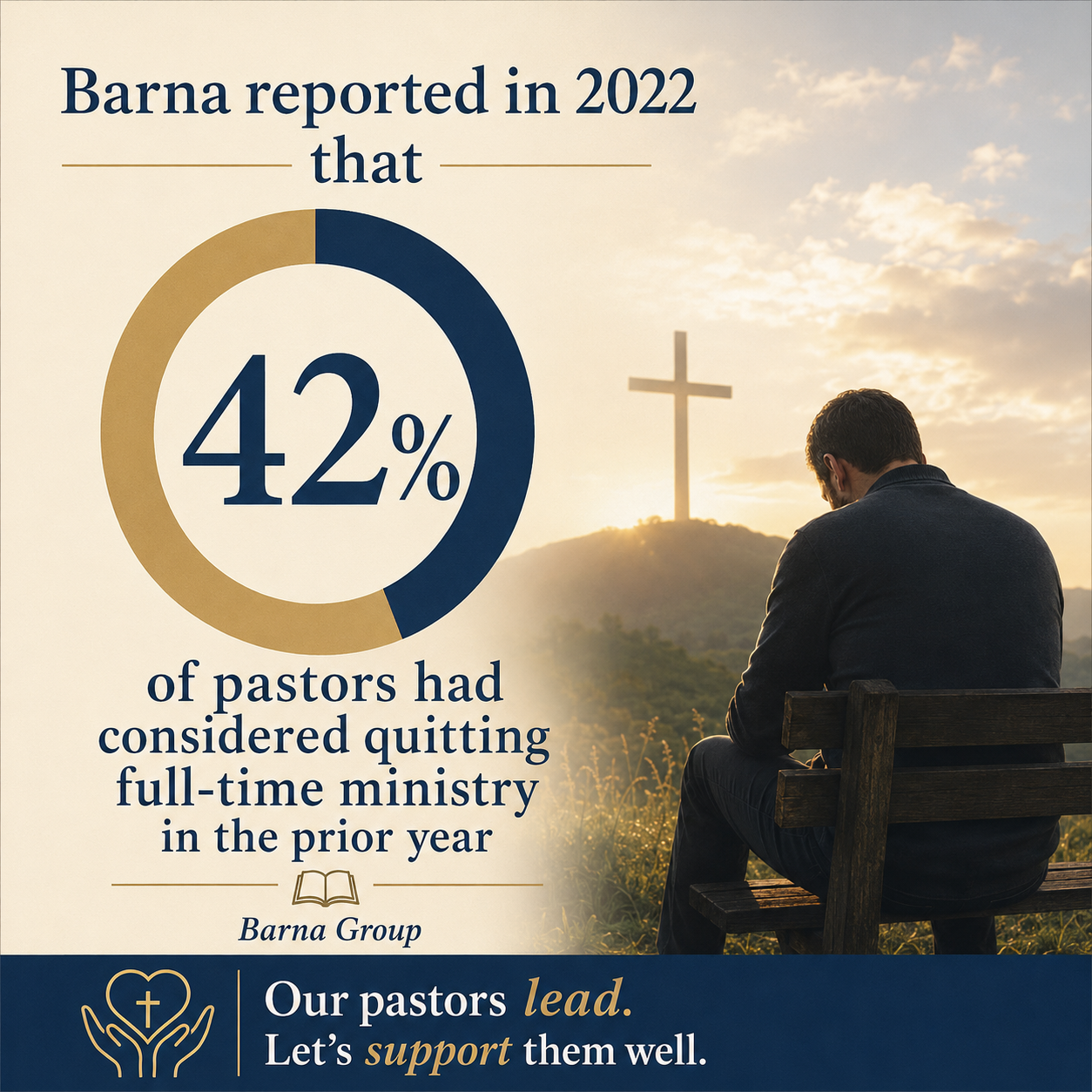
That consistency matters because the pressures on pastors are real and measurable. Barna reported in 2022 that 42% of pastors had considered quitting full-time ministry in the prior year Barna Group. Statistics like this cannot explain every story, and they can be overused to manufacture urgency. Still, the data aligns with what many church leaders observe: pastoral strain is not rare, and ministries that strengthen pastors often need stable funding more than dramatic one-time gifts.
Designated intentions can be honored without creating restricted-fund dysfunction
Donors often want their support to reach a particular kind of pastoral need: counseling access, retreat scholarships, emergency relief for a disabled pastor, or care for a pastor’s family. A DAF allows donors to aim their giving with clarity while still leaving the ministry room to operate responsibly. The harder question is whether a donor’s desire for specificity becomes a practical constraint that blocks wise administration.
Across our verification work at Most Trusted, we observe that mature ministries are explicit about how they handle donor intent. The ministries that meet The Most Trusted Standard tend to explain which gifts are restricted, how allocations are decided, and what happens when a designated purpose is fully funded or no longer feasible. That posture is not merely administrative; it is an expression of truthfulness.
DAFs strengthen discernment when paired with verification and clear due diligence
Not every ministry that helps pastors is equally prepared to handle donor funds
Pastoral support can be deeply personal, and that can make donors vulnerable to persuasive stories, informal networks, or charismatic leaders. None of these are automatically suspect. Yet pastoral care ministries face distinctive governance risks: the beneficiaries may be reluctant to report harm, confidentiality can be used to avoid scrutiny, and boards can become socially entangled with founders and celebrity pastors.
DAFs do not solve these risks by themselves. They can, however, slow the process just enough to ask better questions before recommending a grant. That is where independent verification matters. Most Trusted exists to help Christian donors give with confidence by evaluating ministries against The Most Trusted Standard, a 15-criteria framework across Faith Foundation, Financial Integrity, Governance and Leadership, and Transparency and Effectiveness. The goal is not to replace spiritual discernment, but to discipline it with evidence.
A practical due diligence checklist for DAF grants
Before recommending a grant to a pastoral support ministry, we recommend confirming a few basics that correlate strongly with long-term integrity:
- Clear doctrinal commitments and an explicit statement of Christian identity
- Independent board oversight, with documented governance practices
- Audited or professionally reviewed financials appropriate to the organization’s size
- Transparent programs and eligibility criteria for pastors served
- Credible safeguarding practices, especially where counseling and confidentiality are involved
These are not bureaucratic hurdles. They are markers that a ministry is prepared to steward gifts meant for vulnerable moments in pastoral life.
DAFs can support complex pastoral needs that do not fit ordinary charity categories
Confidential care requires unusual integrity
Many pastoral support ministries operate in a world where privacy is essential: counseling records, marital crises, depression, addiction, ministry conflict. Donors rightly want to know impact, but pastors also need dignity. A DAF can help here by allowing donors to fund the ministry’s capacity rather than demanding case-level reporting that would violate confidentiality or pressure staff into performative metrics.
The field has had to reckon with the limits of simplistic measurement. In nonprofit evaluation, donors sometimes overvalue what is countable and undervalue what is faithful. Pastoral resilience, restored marriages, and renewed calling are real outcomes, but they are often best evidenced through carefully summarized reporting, third-party evaluation where feasible, and strong governance rather than public storytelling.
DAFs can help fund capacity, not only direct aid
Christians often prefer “direct” giving: dollars that obviously touch the pastor in need. That instinct can be noble. It can also unintentionally starve ministries of what they need to serve well: trained clinicians, secure systems, appropriate insurance, and qualified leadership. The “Overhead Myth” letter, signed by GuideStar (now Candid), Charity Navigator, and BBB Wise Giving Alliance, warned donors against treating administrative costs as inherently suspect Candid. Pastoral support ministries, in particular, may require serious administrative strength to protect the very people they serve.
A DAF can make it easier to give to capacity because it frames giving as sustained stewardship rather than one-time relief. Donors can support both immediate care and the infrastructure that makes that care safe.
DAFs belong within a broader theology of stewardship and ecclesial responsibility
DAFs complement the local church without replacing it
Some donors worry that funding pastoral support ministries through a DAF can become a substitute for local church responsibility. That concern deserves respect. The New Testament pattern places primary responsibility for shepherding and materially supporting leaders within the church (1 Timothy 5). At the same time, the broader body of Christ has long developed specialized ministries that strengthen local congregations—seminaries, missions agencies, counseling centers, and relief organizations.
The wise path is often “both-and.” Donors can remain committed to their local church’s ordinary budget and care systems while also funding specialized pastoral support ministries that provide expertise and capacity the average congregation cannot sustain alone. For donors evaluating the wider landscape of Pastoral Support Ministries, it is often helpful to ask where the local church is strong and where outside support is genuinely needed.
Giving should be both generous and accountable
DAFs can make accountability easier, but they can also tempt donors to delay action indefinitely. The moral question is not whether a tool exists, but whether it is used in love. Scripture warns against storing up without neighbor-facing generosity, and it also warns against careless stewardship. A DAF should move a donor toward timely, thoughtful support—not away from it.
For donors making tactical decisions about vehicles, timing, and grant recommendations, the category of How to Give to Pastoral Support Ministries is where many of the practical trade-offs become clearer: when to give directly, when to give through a DAF, and what kind of reporting and governance a ministry should provide.
FAQs for How donor-advised funds support pastoral support ministries
Can a donor-advised fund support pastoral support ministries while keeping a pastor’s situation confidential?
Yes. In most cases, a DAF grant is made to the ministry, not to an individual pastor, and the donor can recommend support without receiving sensitive case details. The ministry should still be able to describe its safeguarding practices, eligibility criteria, and oversight, even when it cannot share personal stories or identifiable data.
Are donor-advised funds appropriate for emergency pastoral care needs?
They can be, provided the timeline works. Some DAF sponsors process grants quickly; others require additional review or time. For true emergencies, donors sometimes give directly to a vetted ministry or to a church benevolence fund, then use the DAF for sustained follow-up support once the immediate crisis has passed.
DAFs are most useful when they serve disciplined generosity
How donor-advised funds support pastoral support ministries is ultimately a question of purpose. A DAF can help Christian donors fund the steady, often unseen work of sustaining those who shepherd God’s people, with a pattern that is both generous and accountable. When paired with careful due diligence and independent verification, DAF giving can become a quiet form of pastoral care itself: timely, prudent, and oriented toward the long faithfulness of the church.



