
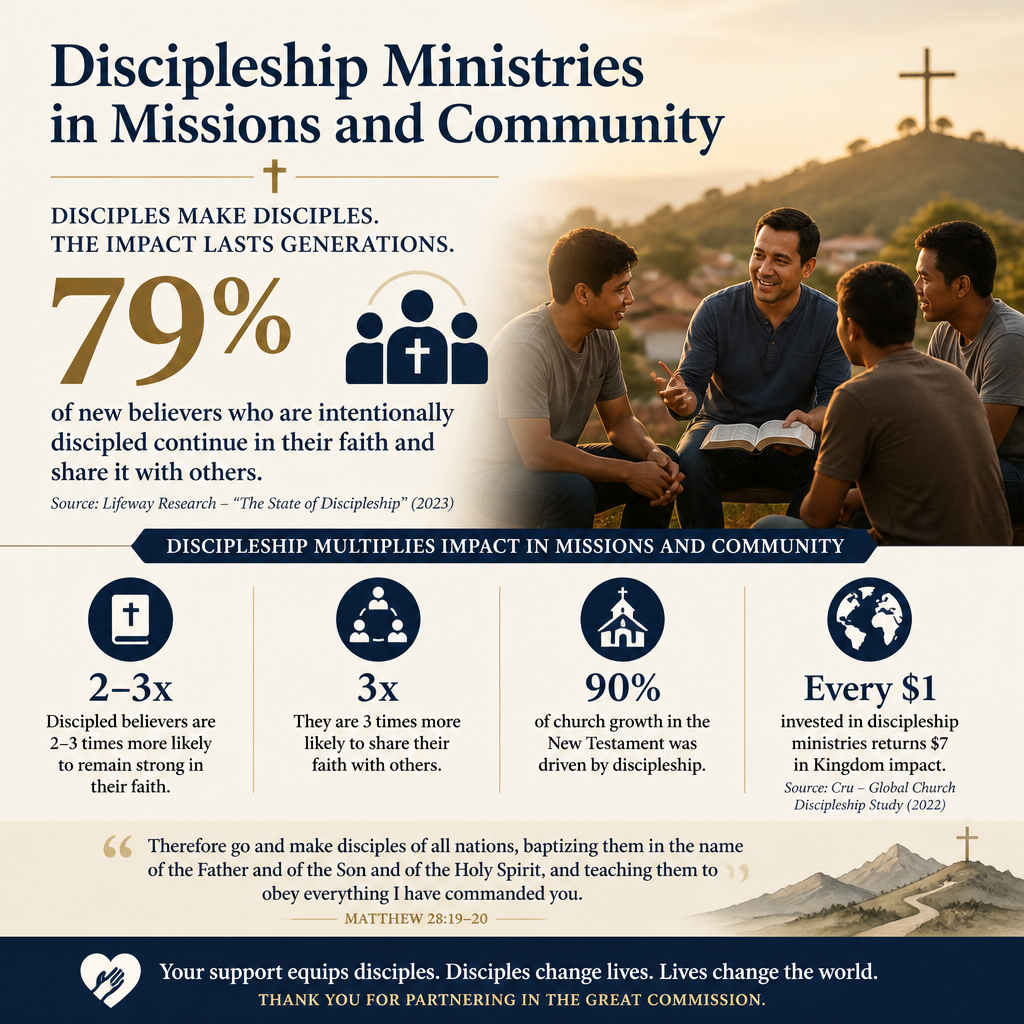
Discipleship ministries in missions and community sit at a point of recurring donor discernment: is the ministry forming faithful disciples who love their neighbors in concrete ways, or is it merely funding religious activity adjacent to need? For Christian donors, the question is not whether discipleship matters. Jesus’ Great Commission explicitly binds mission to “teaching them to observe all that I have commanded you” (Matthew 28:19–20). The harder question is what faithful, measurable, and accountable discipleship looks like when it is embedded in cross-cultural mission and community transformation.
Across our verification work at Most Trusted, we see that mature discipleship ministries do not treat evangelism, church strengthening, and works of mercy as competing priorities. They treat them as mutually interpreting responsibilities under the Lordship of Christ. The ministries that prove most trustworthy tend to articulate a theology of formation, build systems that protect people from harm, and demonstrate disciplined stewardship with evidence a donor can evaluate.
Why discipleship belongs at the center of mission and community work
The New Testament presents discipleship as the ordinary means by which the gospel takes root in persons and communities. Paul’s aim was not merely decisions but mature faith: “Him we proclaim… that we may present everyone mature in Christ” (Colossians 1:28). When discipleship is reduced to information transfer or spiritual enthusiasm, community outcomes often become accidental. When discipleship is treated as apprenticeship to Jesus, the fruit tends to show up in households, vocational ethics, reconciliation, and local care for the vulnerable.
What this means in practice is that “missions” should not be framed as a short-term export of American energy. It is the long work of the Spirit through the local church, often in fragile contexts, shaped by Scripture, prayer, pastoral oversight, and accountable leadership. Done well, discipleship becomes the mechanism by which communities gain durable spiritual and social resilience: leaders are formed, families are strengthened, and local believers develop the capacity to serve their neighbors without dependency on outside actors.
Discipleship and the Great Commission are inseparable
Many donors instinctively separate “gospel” and “good works,” either by privileging proclamation alone or by privileging humanitarian action as though it can be detached from Christian confession. Scripture refuses the split. The Great Commission includes baptism into the Triune name and instruction in obedience to Christ. James likewise refuses a faith that is verbally orthodox but practically inert (James 2:14–17). In global mission and local community work, discipleship is the bridge that keeps proclamation from becoming abstraction and keeps mercy from becoming mere philanthropy.
Community transformation that lasts is usually mediated through local institutions
In most settings, the most durable Christian community work is mediated through local congregations and indigenous Christian leaders who will remain after foreign teams leave and funding cycles end. Donors rightly ask how a ministry relates to local churches: does it strengthen their capacity, compete with them, or bypass them? Strong discipleship ministries typically build with local pastoral leadership, prioritize contextual theological formation, and resist creating parallel structures that unintentionally diminish the church’s credibility in its own community.
The field has learned hard lessons about unintended harm
Christians genuinely disagree about the best models for short-term mission, relief, and development. Yet there is broad recognition that good intentions can still do damage when outsiders define problems, set incentives, or create dependency. The “When Helping Hurts” framework articulated by Steve Corbett and Brian Fikkert has helped many ministries name the relational and spiritual distortions that can occur when donors or visiting teams assume a posture of saviorhood rather than service under local authority (When Helping Hurts).
What trustworthy discipleship ministries do differently in mission settings
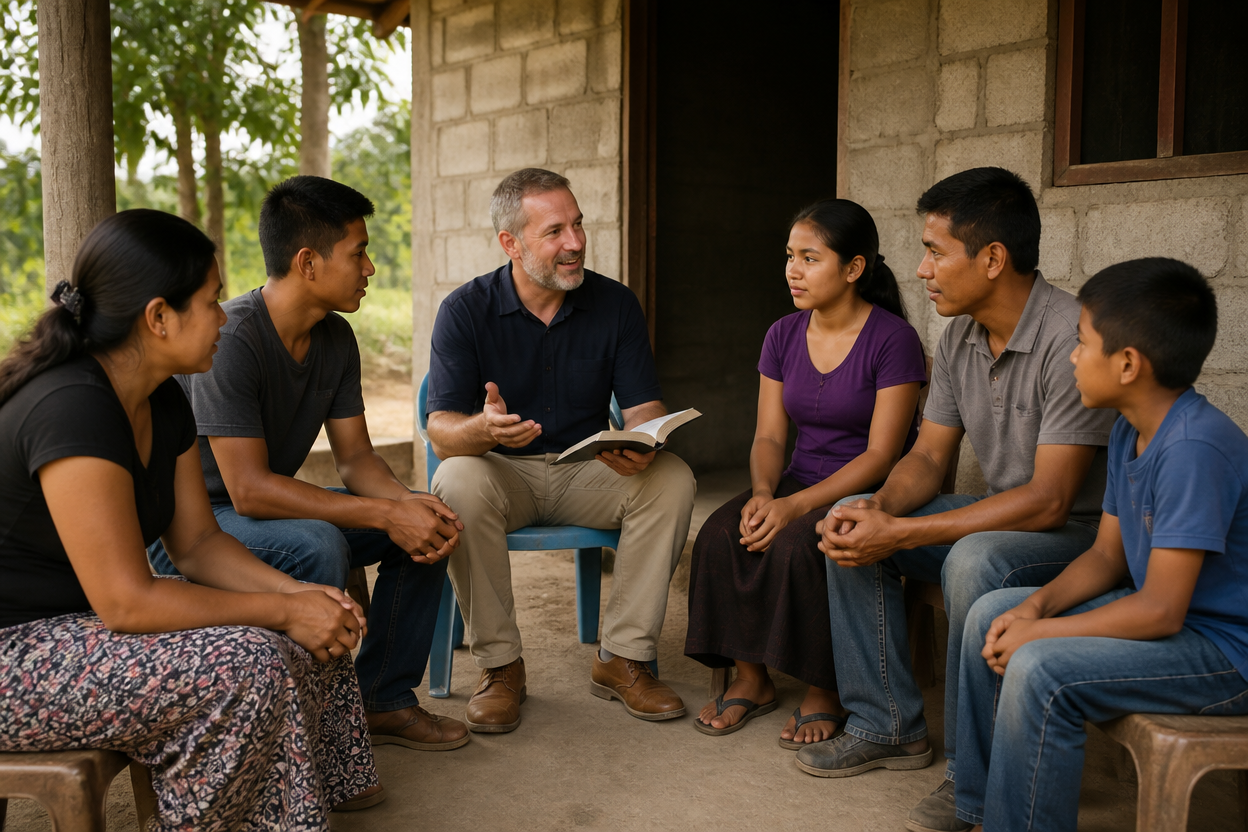
Discipleship in mission contexts is not merely a curriculum. It is an ecosystem of teaching, modeling, accountability, and patient leadership development. Donors who fund discipleship-driven missions should look for ministries that can explain both their theology of formation and their operational discipline: who teaches, who holds authority, how leaders are trained, and what safeguards exist for the vulnerable.
They train local leaders rather than centralizing control
Across our evaluation work, ministries that meet The Most Trusted Standard tend to build leadership pipelines that are locally governed and culturally grounded. The aim is not to replicate an American church model but to cultivate biblically faithful shepherds and lay leaders who can teach Scripture, discern doctrine, and guide the church through local pressures. Donors can ask practical questions: What proportion of resources is invested in local training? What is the plan for local governance? What is the ministry’s exit strategy if outside funding decreases?
They integrate Scripture, character formation, and mission practice
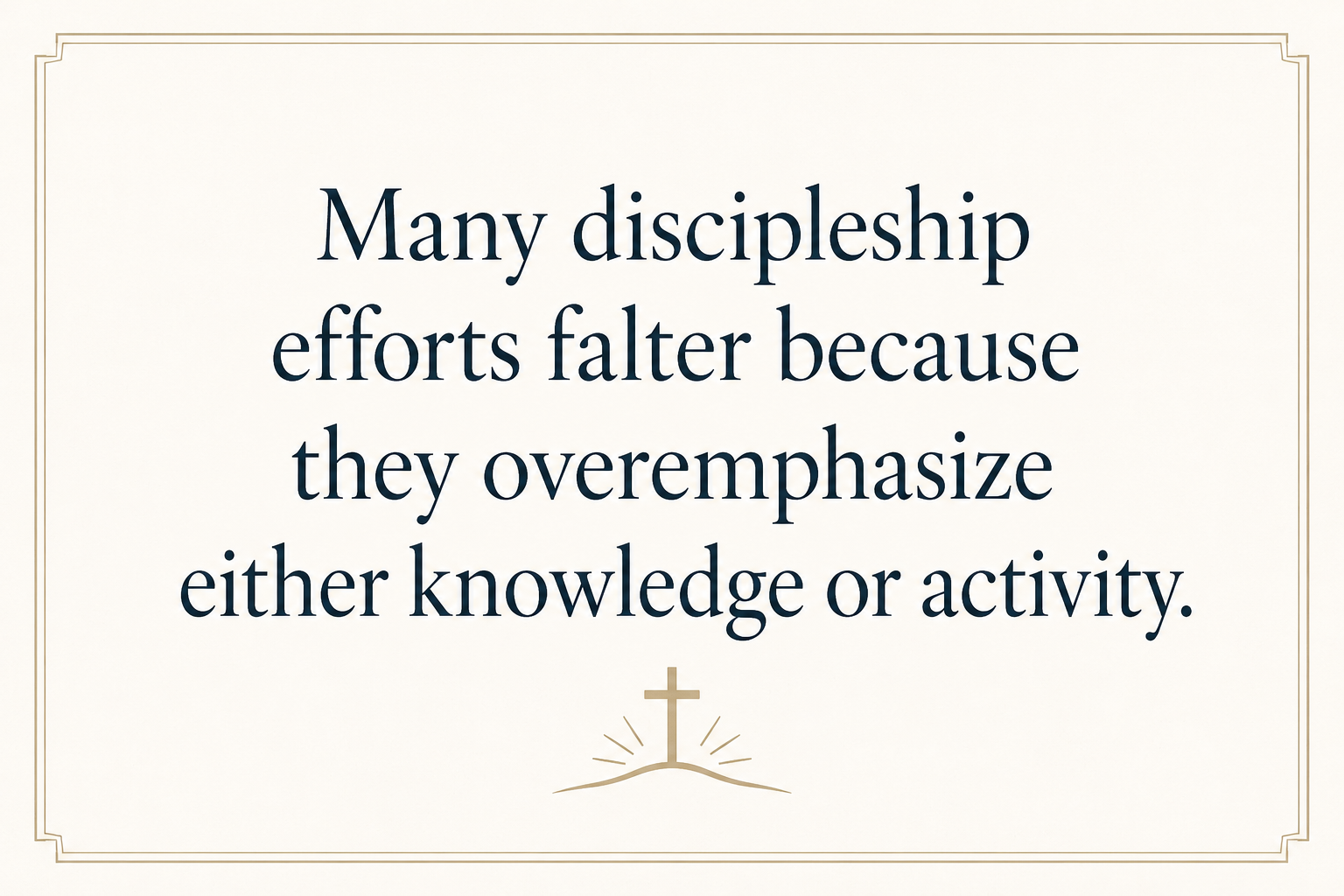
Many discipleship efforts falter because they overemphasize either knowledge or activity. Mature ministries tend to hold together three dimensions: (1) Scripture and doctrine that anchor the church against error, (2) character formation that addresses sin, power, and family life, and (3) mission practice that expresses love of neighbor through tangible service. This integration matters for donors because it is a leading indicator of durability. Where leaders are trained to handle Scripture well, repent quickly, and steward power carefully, communities are more likely to experience steady, credible Christian witness.
They treat safeguarding as a discipleship issue, not merely a compliance issue
In both global missions and local community ministry, safeguarding failures often follow predictable patterns: ambiguous authority, inadequate screening, informal access to children, and cultures that discourage reporting. Trustworthy ministries build policies and practices that fit the seriousness of the work: background checks where available, two-adult standards, clear boundaries for counseling, reporting pathways, and regular training. Donors should see safeguarding reflected not only in policies but in leadership accountability and transparent response when harm occurs.
How discipleship-driven community ministry creates local impact through churches
Discipleship ministries that serve communities through churches tend to affect more than program outputs. They shape congregational culture: how members view money, family responsibilities, work, neighbor love, civic trust, and reconciliation across lines of race and class. For donors, this is often the most compelling form of “community transformation” because it is anchored in a worshiping community that can sustain the work without constant external intervention.
They strengthen the church’s diaconal capacity
Historically, the church has recognized a distinct calling to organize care for those in need—widows, orphans, the sick, the poor, and the stranger. Discipleship-driven ministries often help congregations build or rebuild this capacity: mercy funds with accountable distribution, volunteer care teams, partnerships with local schools, and referral networks for housing or addiction recovery. The result is not simply a set of services but a congregation trained to notice need, respond wisely, and remain present over time.
They address poverty with humility about complexity
Effective community ministry avoids two equal errors: romanticizing the poor or treating poverty as merely a technical problem. The biblical witness is clear that poverty has spiritual and moral dimensions as well as economic and structural ones, and Christian ministry must speak truthfully about all of them. The “When Helping Hurts” framework is especially relevant here, warning that one-way giving can unintentionally communicate inferiority and undermine local initiative (When Helping Hurts).
Donors can look for ministries that work with churches to distinguish relief from rehabilitation and development, set appropriate time horizons, and measure outcomes that reflect real movement toward stability: employment readiness, strengthened family systems, reduced isolation, and sustained participation in Christian community. The goal is not to turn the church into a social service agency. It is to form disciples who love their neighbors with wisdom.
They take reconciliation seriously, including its costs
Community discipleship frequently touches contested ground: racial tension, immigration pressures, political polarization, and the trauma of violence or incarceration. Some ministries promise unity without addressing truth; others address truth without building practices of peace. Trustworthy discipleship ministries tend to be explicit about the cost of reconciliation: confession, restitution where appropriate, leadership diversification, and long-term pastoral labor. Donors should expect careful theological language and practical initiatives that do not collapse reconciliation into sentiment.
What Christian donors should evaluate before funding discipleship ministries in missions and community
Christian donors often carry a distinctive burden: the desire to give generously without funding harm, dysfunction, or mission drift. Discipleship ministries can be especially difficult to assess because their most important outcomes are spiritual and long-term. Yet serious evaluation is possible. Donors can ask for clarity on theology, governance, finances, and evidence of effectiveness, without demanding simplistic metrics that distort ministry priorities.
Start with theological clarity and ecclesial accountability
Discipleship ministries should be able to state, in plain terms, what they believe about the gospel, Scripture, the church, and the nature of discipleship. Ambiguity here is not sophistication; it is often a warning sign. Donors should also ask how the ministry is accountable to the church: Is there meaningful pastoral input? Is there a credible statement of faith? Are local churches partners, or merely referral sources and meeting spaces?
For donors seeking a broader view of how discipleship ministries are evaluated across contexts, our team has compiled resources on Discipleship Ministries that reflect recurring verification questions and patterns we see in the field.
Look for financial integrity that serves mission rather than optics
Donors sometimes over-focus on overhead ratios as though low administration expenses guarantee faithfulness. The sector has had to correct this. Charity Navigator, Candid (formerly GuideStar), and BBB Wise Giving Alliance jointly warned donors that overhead ratios are a poor measure of performance and can create perverse incentives that underfund governance, evaluation, and safeguarding (Charity Navigator). What donors should seek instead is financial integrity: clean audits when appropriate, transparent reporting, board oversight, clear expense classification, and a coherent explanation of how resources advance the mission.
Ask for evidence of effectiveness that matches the ministry’s claims
Discipleship outcomes cannot be reduced to a single number, and the church should resist the temptation to treat spiritual formation as a production line. Yet donors can still ask for credible evidence: leader retention and training completion rates, local church engagement, follow-up practices after evangelistic events, safeguarding incident reporting, and qualitative assessments from local partners. A trustworthy ministry does not claim certainty where only patience is possible. It also does not hide behind spiritual language to avoid accountability.
Verify governance and transparency, especially in cross-cultural work
Cross-border ministry adds layers of risk: currency transfers, intermediary partners, uneven legal frameworks, and cultural barriers to reporting misconduct. Donors should expect clear governance: named board members, conflict-of-interest policies, documented decision rights between U.S. entities and field partners, and transparent disclosures about leadership compensation and related-party transactions where relevant. These are not peripheral technicalities. They are safeguards that protect the mission and the people served.
The Most Trusted Standard provides a structured way to evaluate these questions across faith foundation, financial integrity, governance and leadership, and transparency and effectiveness. Not every faithful ministry will present the same level of documentation, particularly in restricted contexts. Yet trustworthy ministries typically show consistent patterns: they tell the truth about their work, invite scrutiny, and build systems that make integrity normal rather than heroic.
Funding discipleship that serves mission with integrity
Discipleship ministries in missions and community are at their best when they form believers who love Christ, submit to Scripture, and serve neighbors through the local church with humility and staying power. Donors are right to ask for more than inspiring stories. The church’s credibility and the well-being of vulnerable people depend on ministries that can show theological seriousness, operational discipline, and transparent stewardship.
Giving with confidence rarely comes from finding a perfect ministry. It comes from funding ministries that are clear about their calling, honest about complexity, accountable to the church, and willing to be evaluated. That posture aligns with biblical stewardship and with the practical standards donors need when generosity is entrusted with real responsibility.



