
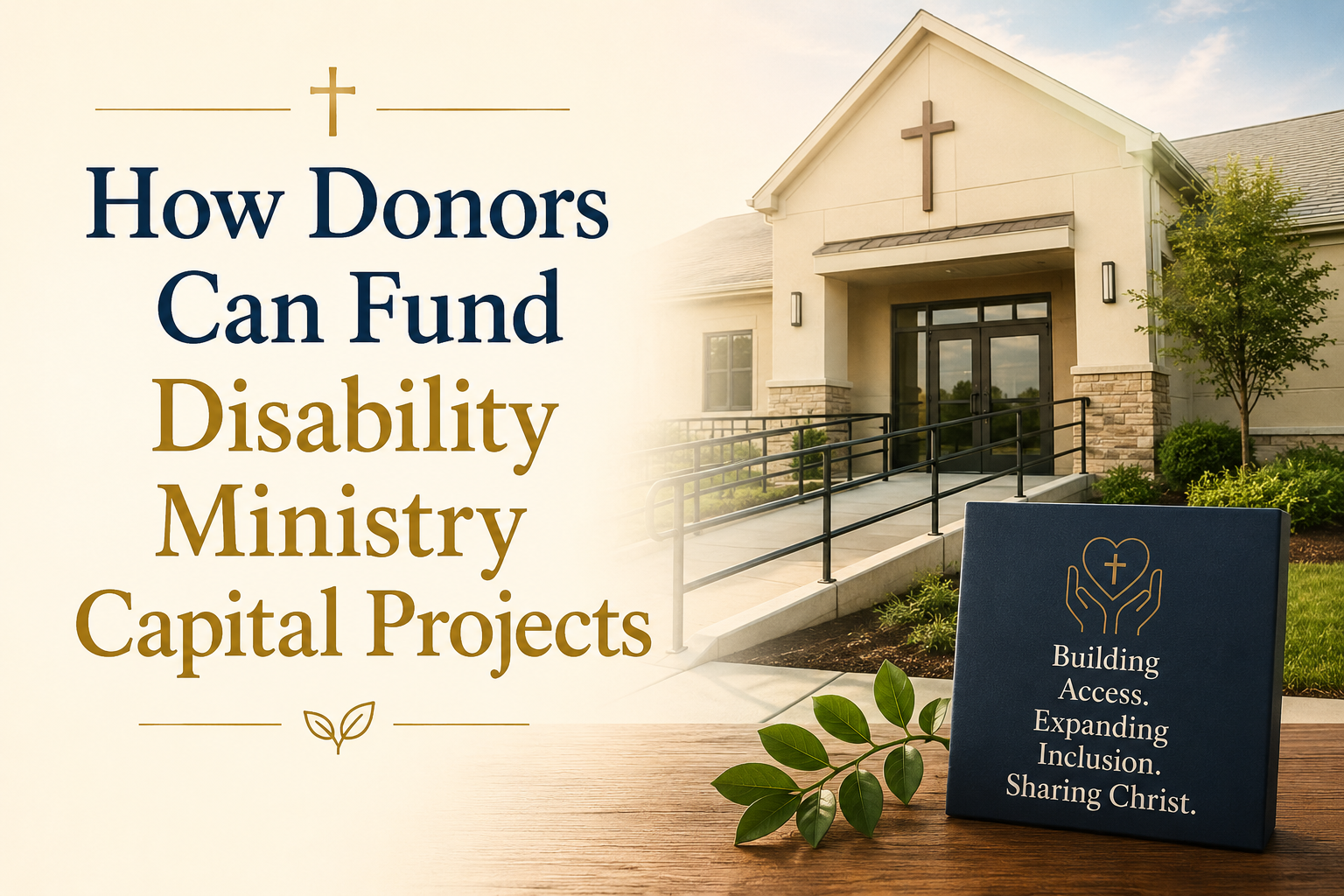
How donors can fund disability ministry capital projects is not primarily a question about buildings. It is a question about whether the church will embody the welcome of Christ in spaces that are truthful about human limitation, suffering, and dignity. Capital projects can either reinforce exclusion through thoughtless design, or they can quietly proclaim that those with disabilities are not guests at the edges of congregational life but members whose presence is assumed.
Because construction is expensive and highly visible, it also invites a predictable set of donor risks: projects that swell beyond their mission, debt that constrains future ministry, and fundraising narratives that trade on pity rather than honoring the image of God. Mature Christian giving can address these risks without retreating into cynicism. The goal is neither to romanticize capital campaigns nor to avoid them, but to fund them with moral clarity, verifiable evidence, and the patience to do the work well.
Begin with a theological and missional case, not a facilities plan
Access is not an add-on to the gospel
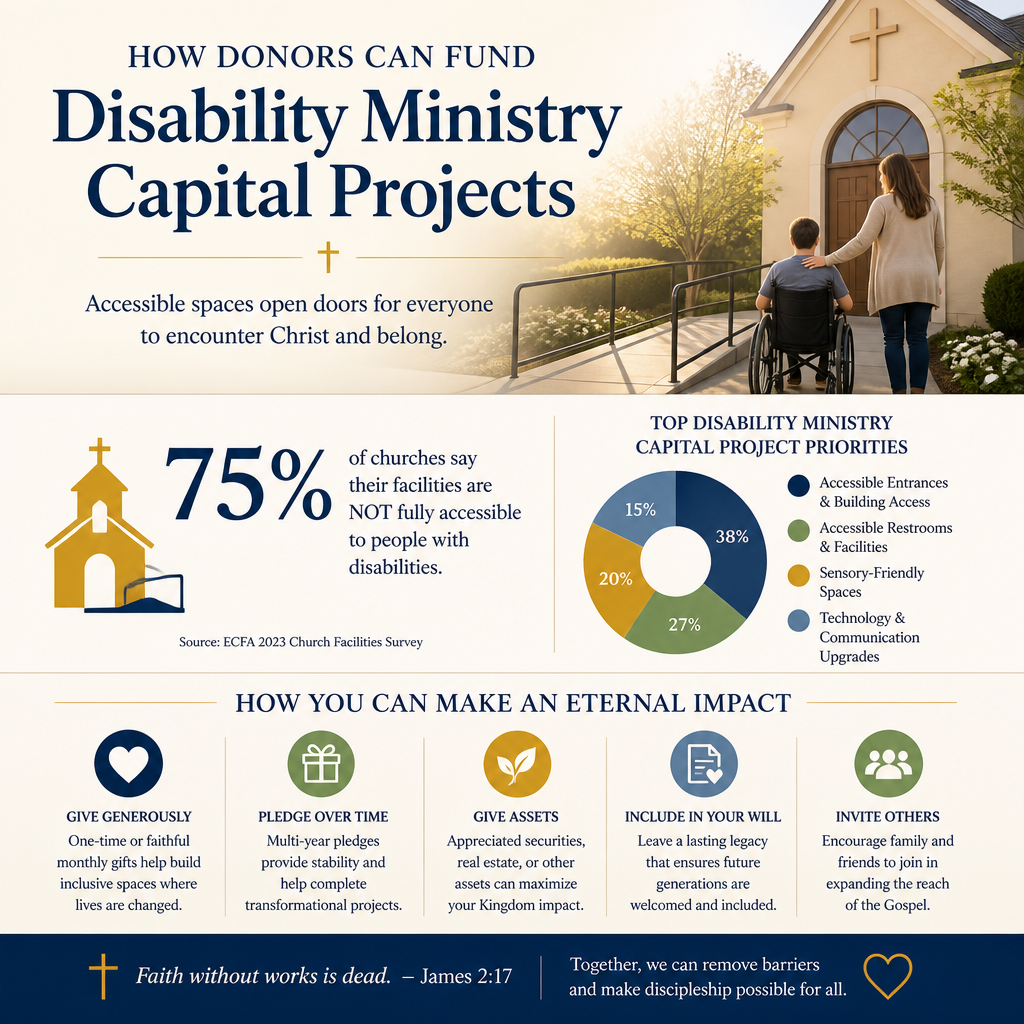
Disability ministry capital projects tend to be presented as pragmatic: ramps, sensory rooms, accessible restrooms, wider doorways, hearing assistance, accessible vans, and renovated classrooms. Those elements matter, but donors should insist on the deeper question: what doctrine of the church is being expressed in the built environment? In the Gospels, Jesus consistently treats those marginalized by illness, impairment, and social stigma not as objects of charity but as persons to be seen, addressed, and restored to community. That pattern should shape how a congregation plans space, not merely how it staffs programs.
What this means in practice is that a capital project should be tied to a coherent ministry model: hospitality, discipleship, family support, respite care, inclusive worship, and pathways to membership and service. A building can remove barriers, but it cannot substitute for culture. Donors should ask for a written ministry plan that names how the project will change participation and pastoral care over time, not only how it will improve compliance.
Ask for a theory of change that does not depend on sentiment
Capital campaigns can drift toward emotional storytelling that unintentionally diminishes the very people the ministry intends to serve. The harder question is whether the ministry can articulate outcomes in human terms that respect agency: families experiencing consistent respite; adults with disabilities participating in small groups; children able to engage in worship without being overwhelmed; volunteers trained to support without patronizing.
Many donors will also want assurance that the ministry is learning from the disability community rather than simply building for it. A project plan that includes consultation with disabled congregants, caregivers, occupational therapists, special educators, or local disability advocates tends to be more realistic and less paternalistic. The ambition is welcome; the process must be accountable.
Discern which kind of capital project is being funded
Accessibility upgrades and code compliance
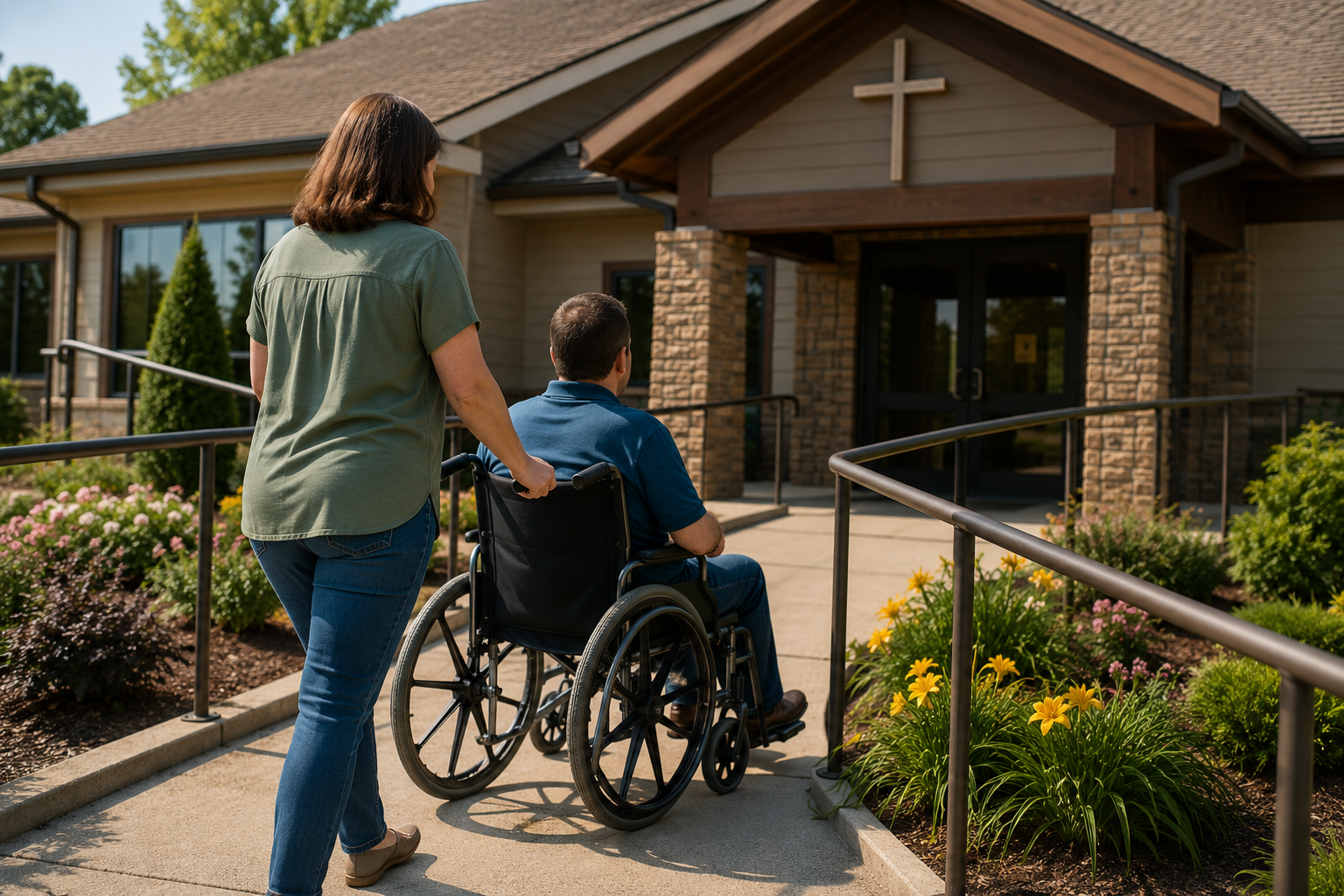
Some projects are corrective: removing barriers that should not have existed. In the United States, accessibility is also a legal category with real obligations. While most churches are exempt from the Americans with Disabilities Act in certain contexts, the ADA has become an accepted baseline for accessible design in public life, and many ministries adopt its standards as a matter of Christian witness and prudence. Donors can read primary guidance from the U.S. Department of Justice at ada.gov.
When a ministry frames accessibility only as “meeting requirements,” it can undercut the spiritual meaning of the work. Donors can help by funding accessibility as an expression of neighbor love, while still expecting technical competence: qualified architects, clear scopes, and inspection-ready plans.
Program-driven expansion
Other projects are expansive: adding classrooms for inclusive education, building a sensory-friendly wing, creating an adult day program space, or purchasing an accessible vehicle fleet. These often require more than construction funding. They require staffing models, volunteer pipelines, safeguarding policies, and ongoing operating budgets.
Across our verification work at Most Trusted, we observe that ministries most likely to sustain expansions have already demonstrated disciplined financial management and clear governance. The ministries that meet The Most Trusted Standard tend to show that their boards understand the difference between capital expense and long-term operational commitments, and they can explain how new space will be staffed, supervised, and evaluated without hollow promises.
Residential and long-term care models
Some disability ministries operate group homes, residential programs, or supported living communities. Christians genuinely disagree about the best models here, in part because the disability community itself is diverse and because history includes examples of institutionalization that were harmful. Donors should not assume that “residential” automatically means “institutional,” nor should they assume that every congregate setting is wise. The due diligence burden increases: licensing, staffing ratios, safeguarding, incident reporting, and family involvement are not optional details.

When residential construction is on the table, donors should ask for evidence of compliance with relevant state regulations, independent audits where appropriate, and a clear ethical framework that prioritizes dignity, consent, and family partnership.
Fund the predevelopment work that prevents harm and waste
Architectural and operational feasibility
Many capital campaigns begin with a rendering and a fundraising goal. Mature projects begin with feasibility: site assessment, code review, realistic construction estimates, operational pro formas, and contingency planning. This stage is not glamorous, but it is where ministries either avoid preventable failures or walk into them with eyes open.
Donors can fund predevelopment directly, often with restricted gifts that require deliverables: feasibility study completion, board-approved budget ranges, and contractor bid comparisons. This can be a more strategic gift than paying for a visible feature if the project is still conceptually unstable.
Universal design and disability-informed planning
Accessible design is often treated as a checklist. Disability-informed design is more attentive: sensory load, wayfinding, acoustics, lighting, quiet rooms, caregiver spaces, and flexibility for varied needs. The aim is not to create a separate “special needs area” that isolates people, but to build an environment where inclusion is ordinary.
Donors should ask how the ministry is incorporating principles of universal design and neurodiversity-aware spaces. Those choices frequently cost less when made early and cost more when bolted on later.
Safeguarding, risk management, and duty of care
Capital projects that expand programs for vulnerable populations raise safeguarding stakes. Ministries need policies for screening and training, incident reporting, supervision, and boundaries. These requirements should be funded, not merely written. Donors can request evidence that safeguarding is integrated into the project timeline and operating budget.
For many donors, this is where verification becomes particularly valuable. Most Trusted evaluates ministries against The Most Trusted Standard, including governance and leadership strength and transparency and effectiveness. Those categories matter because safeguarding failures are rarely “one bad actor” alone; they are often systems failures where leadership oversight and reporting practices were not strong enough.
Give with financial discipline and governance expectations
Restrict gifts wisely and avoid starving operations
Capital projects can create a familiar distortion: donors fund bricks, but not people. Yet the ministry impact that donors desire typically depends on ongoing staff, training, and program costs. The nonprofit field has documented the long-term harm of underfunding core capacity; Stanford Social Innovation Review described this dynamic as the “nonprofit starvation cycle” in work by Ann Goggins Gregory and Don Howard at ssir.org.
Donors can respond by funding a balanced package: a capital gift paired with multi-year operating support, or a restricted gift that includes a portion for staff training, volunteer management systems, or program evaluation directly tied to the new facility. This approach respects the difference between capital and operations while refusing the false piety of underfunded excellence.
Debt, timelines, and the moral weight of forecasting
Borrowing is not automatically unfaithful, but it is morally significant. Debt introduces fixed obligations that can pressure ministries to overpromise future giving, rush construction, or cut staffing when realities change. Donors should ask how much debt is contemplated, what covenants exist, and what happens under stress scenarios. A board that cannot explain these issues plainly is not prepared to steward a large capital project.
Donors should also ask for a timeline that distinguishes aspirational milestones from contractual commitments. Construction is prone to delays and cost changes. Mature governance does not pretend otherwise; it builds in contingencies and communicates them.
Practical due diligence questions for capital gifts
- Has the board approved a scope, budget range, and funding plan, and are meeting minutes available upon request?
- Is there an independent cost estimate, and were multiple contractor bids sought?
- What portion of the project is funded or pledged, and what is the plan if the campaign falls short?
- How will ongoing operating costs be funded for at least three years after completion?
- What safeguarding and risk-management measures are required for the expanded space and programs?
Donors do not need to become construction experts, but they should insist that ministries demonstrate competence and candor. Christian charity does not require financial naivety.
Measure fruit in community, not merely in square footage
Outcomes worth tracking
The most common capital reporting is visual: photos, ribbon cuttings, occupancy. Those have their place, but disability ministry is measured by human participation in the life of the church. Donors can ask ministries to report on outcomes that reflect discipleship and belonging: increased attendance among families affected by disability, retention over time, volunteer training completion, caregiver satisfaction, and pathways into membership and service.
These are not always simple to quantify, and ministries should not be forced into performative metrics. The point is clarity about what the space is for. A capital project that does not deepen community may still be accessible, but it may not yet be pastoral.
Honor the agency and voice of people with disabilities
Many churches and ministries are learning to move from “ministry to” toward “ministry with,” in which people with disabilities are not only served but also lead, teach, and shape decisions. Donors can encourage this shift by asking who was consulted, who is on advisory teams, and how feedback is gathered and acted upon after the project opens.
For donors seeking broader orientation to the field, our coverage of Disability Ministries addresses common models, risks, and questions that recur across organizations.
Giving is also more coherent when it fits within a donor’s overall approach to the category. For practical considerations on making gifts that strengthen a ministry rather than distort it, see How to Give to Disability Ministries.
FAQs for How donors can fund disability ministry capital projects
Should donors restrict gifts to specific construction items like ramps or sensory rooms?
Restrictions can be appropriate when they support clear deliverables and prevent a project from drifting. But overly narrow restrictions can leave a ministry with a beautiful space and inadequate staffing, training, or maintenance. Many of the strongest capital gifts pair a defined construction purpose with support for the program capacity that makes the space usable and safe.
How can donors evaluate whether a disability ministry capital campaign is credible?
Credible campaigns show disciplined governance and transparent planning: board-approved scope and budget, independent cost estimates, a realistic timeline, a funding plan that does not depend on optimistic assumptions, and a thoughtful operating budget for the years after completion. Donors should also look for disability-informed planning and safeguarding measures that are funded and implemented, not merely described.
Funding capital projects as an act of truthful welcome
Disability ministry capital projects can be faithful, strategic, and deeply pastoral when they are anchored in a clear theology of belonging, disciplined planning, and accountable governance. Donors serve the church well by funding what is visible without neglecting what is structural: staff formation, safeguarding, operational sustainability, and honest measurement of fruit. When giving is shaped by these commitments, the built environment becomes more than a facility upgrade. It becomes a durable form of welcome that reflects the character of Christ.



