
How Christian development ministries create long-term change is ultimately a question of whether love of neighbor can be expressed in ways that strengthen, rather than replace, the God-given agency of families and local communities. Christian donors are often willing to fund urgent relief, yet long-term development asks for a different kind of patience: fewer dramatic moments, more disciplined follow-through, and a sober realism about what it takes for households to become resilient.
Scripture holds together both mercy for immediate suffering and a vision of durable flourishing. The prophets condemn those who “trample on the needy” while performing religious observance (Amos 5:11), and Jesus identifies himself with the hungry, the stranger, and the sick (Matthew 25:35–40). The question is not whether to act, but how to act in a way that honors dignity, avoids unintended harm, and results in measurable improvements that persist after outside funding recedes.
Long-term change begins with a faithful theory of poverty and a clear moral posture
Christian development work goes wrong when poverty is treated as only a material deficit, or when it is reduced to a simple moral failure. The field has learned to name poverty as a complex web: constrained opportunities, weak institutions, trauma, injustice, broken relationships, and sometimes predatory power. A ministry’s theology matters here. If people are made in the image of God, then the aim is not merely delivering goods but restoring the conditions in which people can exercise responsibility, contribute to community life, and provide for their households with stability.
The When Helping Hurts framework, articulated by Steve Corbett and Brian Fikkert, has reshaped how many Christian donors and ministries evaluate “help.” It argues that uncritical giving can reinforce dependency or distort local economies, and that the goal should be reconciling relationships—with God, self, others, and creation—alongside prudent economic practice (Moody Publishers). The point is not to paralyze generosity, but to insist that compassion and competence belong together.
Development is not slower relief
Relief and development are not interchangeable. Relief addresses acute crisis when people cannot provide for themselves; development strengthens normal systems over time. A donor who funds a water project after a disaster is doing relief. A donor who funds maintenance training, governance, supply chains for spare parts, and local tariff systems is investing in development. The moral posture changes: we move from “we provide” to “we strengthen,” from short-term substitution to long-term capacity.
The local church is not a mascot and not a substitute for public systems
Many donors want to see the local church involved, and rightly so. The church often has relational proximity, moral credibility, and long-term presence that outsiders lack. Yet it can be unfair and ineffective to treat the church as a replacement for functioning schools, health systems, or accountable local government. The wisest ministries clarify what the church can uniquely do—discipleship, community formation, care for the vulnerable, convening neighbors—and where it should partner rather than carry the whole burden.
Donors should ask what changes when the ministry leaves
A practical test for long-term change is deceptively simple: what will still be true in five years if this program ends? If outcomes depend on continuous external inputs, the program may still be compassionate, but it is less likely to be developmental. Christian donors can press for answers without cynicism: Who owns the assets? Who makes decisions? Who is trained to repair, manage, and adapt? What local revenue, policy, or market mechanisms sustain the work?
Effective Christian development strengthens livelihoods and household resilience
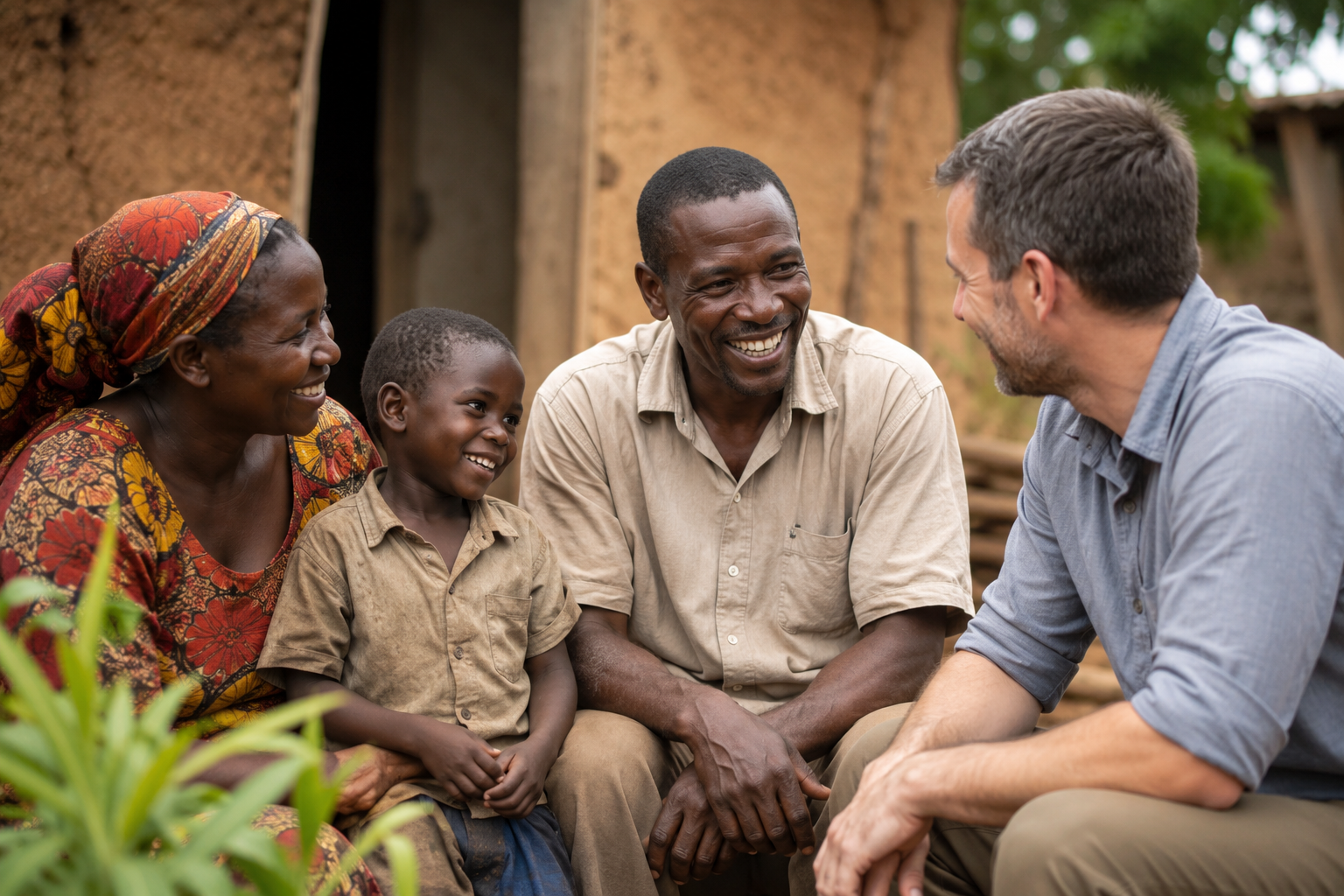
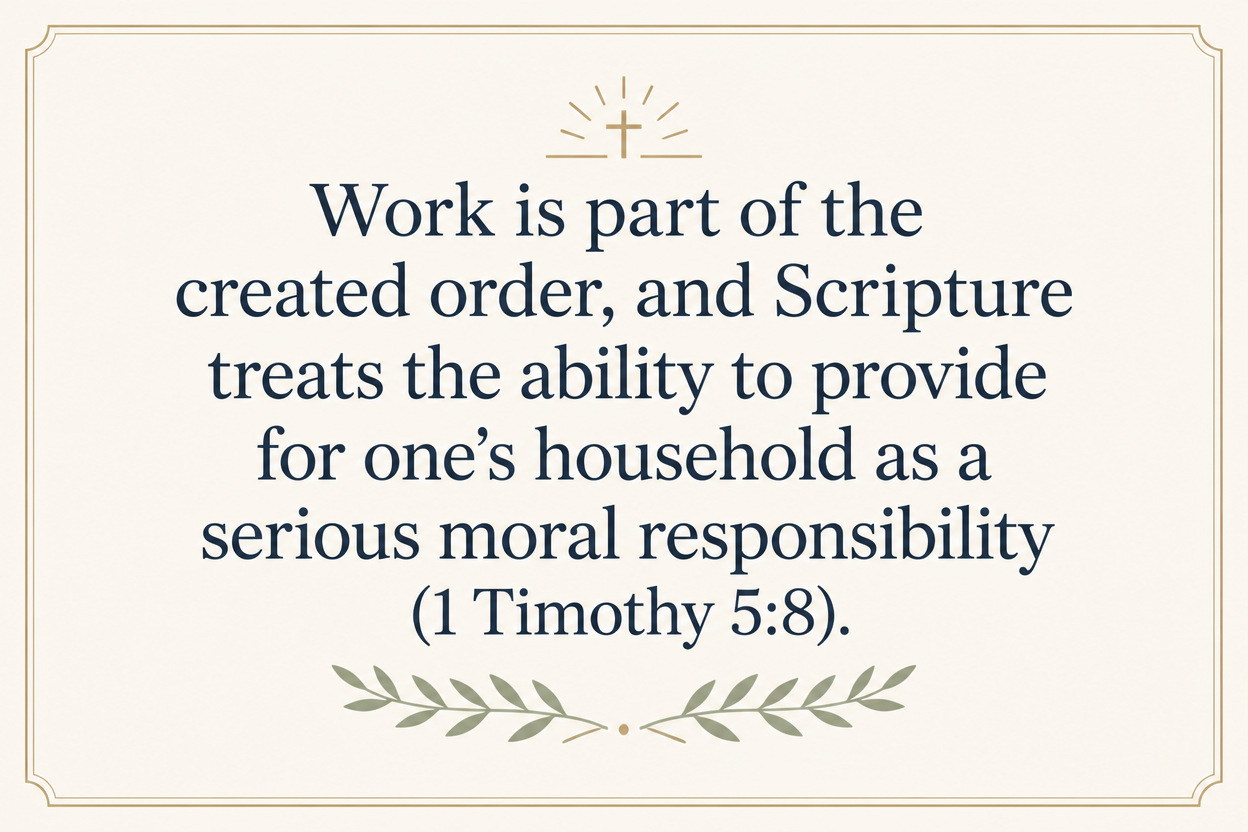
Because poverty is frequently experienced first at the household level, many development ministries focus on livelihoods: income stability, savings behavior, skills, and productive assets. This is not a concession to materialism. Work is part of the created order, and Scripture treats the ability to provide for one’s household as a serious moral responsibility (1 Timothy 5:8). Done carefully, livelihoods programming protects families from sliding back into crisis after a single shock.
Microenterprise support can help, but it is not a universal solution
Christian donors regularly encounter microenterprise and microfinance language. These tools can be helpful where markets function and where there is room for small businesses to grow. But Christians genuinely disagree about how much microcredit can accomplish for the poorest households, and the research literature is cautious: microcredit often shows mixed effects on income and poverty outcomes, even when it improves short-term consumption smoothing and business activity (J-PAL). Mature ministries avoid promising that a loan will “end poverty” and instead design financial tools that fit the local context and household risk profile.
More effective approaches often combine elements: financial literacy, savings groups, mentoring, market linkages, and sometimes grants for the most vulnerable. The key is alignment between participant selection, local demand, and an honest understanding of who can bear debt.
Graduation and resilience models prioritize stability, not sentiment
Some ministries draw on “graduation” approaches that sequence interventions: consumption support, savings, coaching, and asset transfers, with defined criteria for “graduating” to greater independence. These models have shown encouraging results in multiple contexts, although outcomes vary by setting and implementation quality. The most valuable feature for donors is clarity: a transparent pathway, explicit milestones, and a disciplined approach to measuring whether families are actually more resilient.
Livelihoods programs require attention to protection and power
Livelihoods work can expose participants—especially women and displaced people—to exploitation if programs ignore power dynamics. A vocational training initiative that increases income but increases domestic violence risk is not a clean win; it is a moral and pastoral failure. Responsible Christian ministries integrate safeguarding, referral pathways, and community engagement so that economic progress does not come at the expense of safety.
Lasting change depends on local ownership, institution-building, and accountable partnerships
Development ministries create durable impact when they build with local ownership from the beginning. That ownership is not a slogan; it is a governance reality. Communities contribute to design, commit resources, and hold implementers accountable. Outside expertise can be valuable, but it should not eclipse local authority. The question is whose priorities shape the work and whose capacity grows through it.
Institutional capacity is slower than projects and harder to fund
Donors often prefer tangible outputs: wells drilled, clinics supplied, schoolrooms built. Yet the limiting factor in many contexts is not the absence of infrastructure; it is the weakness of institutions that operate and maintain it. Training local water committees, strengthening financial controls, and establishing transparent procurement systems are not photo-ready, but they determine whether a program lasts. The Overhead Myth letter—signed by BBB Wise Giving Alliance, GuideStar, and Charity Navigator—helped correct the donor habit of treating administration as inherently suspect, reminding the sector that healthy outcomes require strong organizational capacity (Charity Navigator).
Partnership is tested under stress
Many Christian development ministries work through local partners, including churches, community-based organizations, and national NGOs. Partnership language is common; the discipline is rarer. Healthy partnerships clarify roles, budgets, decision rights, data ownership, and safeguarding responsibilities. They also plan for conflict. Donors can ask ministries how they handle partner failure, fraud risk, theological divergence, or political pressure. A mature answer will acknowledge that these challenges are not hypothetical.
Church strengthening must be defined carefully
“Strengthening the local church” can mean many things, and not all of them belong in development budgets. Some ministries focus on pastoral training, theological education, and discipleship that forms believers for vocational faithfulness and public witness. Others integrate the church into community care structures. The more credible approaches define what is being strengthened (leadership development, diaconal care, governance, child protection, or community reconciliation) and how that strengthening connects to measurable community outcomes without turning the church into a mere delivery channel.
Donors looking for a broader frame for this work can situate it within Christian Relief and Development Ministries, where the interplay between emergency response and long-term transformation becomes clearer across program types and contexts.
Donors should look for outcomes that can be reported, verified, and spiritually coherent
Long-term change requires evidence that is more than stories, yet more humane than spreadsheets. The best ministries report outcomes that are specific, comparable over time, and ethically collected. They also resist the temptation to claim causal impact they cannot support. Randomized evaluations are sometimes possible, but many development contexts rely on quasi-experimental designs, longitudinal monitoring, and triangulation through third-party data. What matters for donors is honesty about what is known, what is inferred, and what remains uncertain.
What credible outcome reporting often includes
Outcome reporting should distinguish between outputs (what was delivered) and outcomes (what changed). In livelihoods programs, that may include sustained income changes, savings accumulation, reduced negative coping strategies, or food security improvements tracked across seasons. In health and nutrition work, it may involve immunization coverage, maternal care access, or reductions in stunting—reported with definitions and measurement methods that allow scrutiny.
We also watch for ministries that can report durability: what happens 12–24 months after a participant “graduates,” after a subsidy ends, or after a partner assumes full responsibility. Long-term change is, by definition, not fully visible at project close.
Transparency is part of discipleship in the use of donor funds
Christian donors are not purchasing outcomes; they are practicing stewardship. That stewardship is undermined when ministries cannot explain their finances, governance, or results in plain terms. Across our verification work at Most Trusted, we find that ministries meeting The Most Trusted Standard tend to treat transparency as a moral obligation, not a marketing strategy. They publish coherent financial statements, maintain accountable boards, and explain program decisions in ways that invite informed support rather than emotional coercion.
Faithfulness and effectiveness belong together
Some donors worry that emphasizing measurement reflects a secular mindset. Others worry that theological language is used to excuse weak results. Both concerns deserve to be taken seriously. The Christian tradition has always held that we are accountable for what we do with what we have been given. Jesus’ parable of the talents is not a treatise on metrics, but it does establish a moral logic of stewardship and responsibility. Development ministries honor that logic when they pursue competence with humility, welcome correction, and tell the truth about impact.
Giving that creates long-term change is patient, rigorous, and rooted in love of neighbor
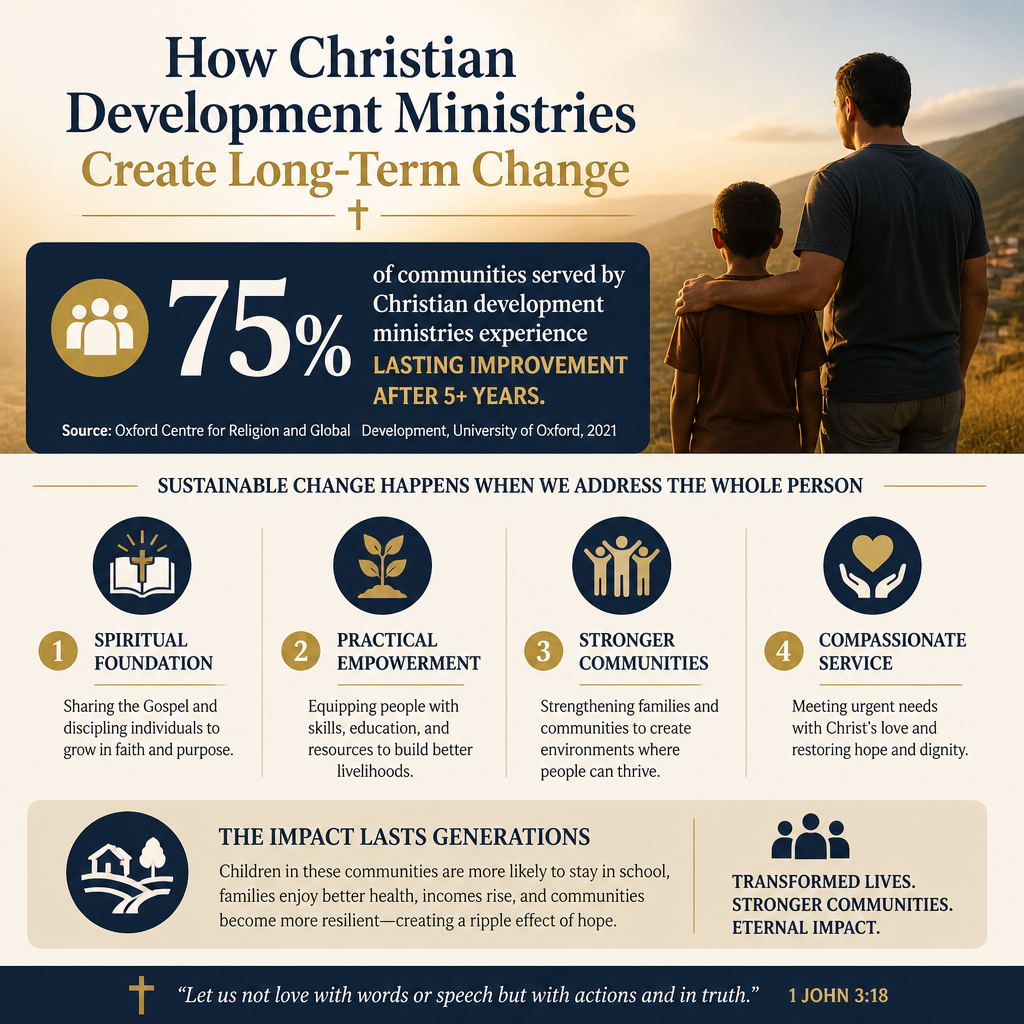
Christian development ministries create long-term change when they move beyond substitution and toward strengthening: livelihoods that endure shocks, local institutions that can govern resources, and partnerships marked by accountability. Donors serve that work best by funding what is less visible but more durable—training, systems, safeguarding, and credible measurement—while insisting on theological integrity that treats people as agents made in God’s image. The need is urgent, but the most enduring fruit usually comes through sustained commitment and disciplined truth-telling about what actually helps.



