
What donor updates Christian addiction recovery leaders provide is not a marketing question. It is a discipleship question shaped by truthfulness, the dignity of people in crisis, and the stewardship of gifts offered to God. Donors are not asking for perfection; they are asking for reality—clear evidence that a ministry is proclaiming Christ faithfully and serving people wisely.
Addiction recovery ministry sits at a difficult intersection: trauma, relapse, family fracture, spiritual warfare, and the slow work of sanctification. Leaders who update donors well do not hide this complexity, and they do not exploit it for emotional effect. They communicate with the sobriety of Scripture: “Speaking the truth in love” (Ephesians 4:15).
Updates begin with faithful clarity about the mission
Donors often support recovery work because they have seen addiction take a son, a sister, a spouse, a friend. They know that programs can become therapeutic without being Christian, or Christian in language but thin in practice. The first responsibility in donor communication is to state plainly what the ministry is, what it is not, and what it believes God is doing through its work.
Define the recovery model and its theological commitments
Christian recovery programs vary: residential discipleship homes, outpatient counseling, church-based groups, reentry-focused recovery, or integrated models that partner with licensed clinicians. Christians genuinely disagree about the boundaries between spiritual care and clinical treatment, and donors deserve to know where a ministry stands. Leaders serve donors well when updates clarify whether the program uses Celebrate Recovery, a 12-step model, a clinical curriculum, or a house-developed discipleship pathway—and how Scripture, prayer, and the local church function within that pathway.
Updates should be explicit about what “success” means. If a ministry defines fruit primarily as church integration, family reconciliation, employment readiness, and sustained sobriety, donors can interpret outcomes more faithfully than if the only metric is “graduates.” The best updates do not collapse redemption into a single measurable outcome, but they also do not use spiritual language to avoid accountability.
Name the ministry’s relationship to the local church
Christian recovery work becomes brittle when it is detached from a worshiping community. Donors respond to updates that show how participants are connected to pastors, small groups, mentoring relationships, and congregational life. In our verification work at Most Trusted, ministries that meet The Most Trusted Standard tend to articulate clearly how their recovery programming complements, rather than competes with, the local church.
For donors seeking a broader view of this field, our coverage of Christian Addiction Recovery Ministries tracks common models and the questions that tend to surface when ministries report results.

Donors need transparency without voyeurism
Recovery stories are powerful, but they are also dangerous. A donor update can easily slip into content that pressures participants to disclose, trades in sensational detail, or treats relapse as scandal rather than a tragic feature of many addiction histories. The ethical standard is higher, not lower, because these are image-bearers whose lives have often been marked by manipulation and shame.
Use testimonies with informed consent and careful boundaries
Leaders should be able to explain how consent is obtained for any story shared publicly, whether names are changed, and what safeguards exist for participants in early recovery. Donors can support storytelling that honors dignity: focusing on God’s mercy, the reality of repentance, and the ordinary disciplines of obedience—without graphic details or public disclosure that could harm future employment, custody proceedings, or family relationships.
When minors are involved, the standard should be stricter still. Donor communications ought to make clear that photos and identifying details are handled with care. Mature donors typically accept fewer pictures and less personal detail when the ministry explains why.

Report relapse and setbacks with moral seriousness and pastoral realism
Relapse reporting is contested. Some ministries fear that acknowledging relapse will be misread as program failure; others fear that never naming it fosters donor naïveté. The healthiest pattern is neither a triumphalist narrative nor a clinical detachment. Updates can acknowledge setbacks as part of serving a population with high rates of co-occurring trauma, mental health challenges, and unstable housing, while still holding participants to clear expectations and boundaries.
Many donors already know relapse is common. What they need is confidence that the ministry has a coherent response: safety protocols, referral pathways, pastoral care, and a commitment to restoration when repentance is present.
Effective updates show evidence of stewardship and governance
Christian donors are not wrong to ask where money goes. Scripture treats stewardship as a matter of worship, and ministry leaders honor that by providing financial and governance transparency that is understandable to non-specialists. Donors should not have to infer integrity from tone; they should be able to see it in documents and practices.
Provide clear, accessible financial reporting
At minimum, ministries should make their latest financial statements, Form 990 (when applicable), and an annual report easy to find. Donors should be told how restricted gifts are handled, whether the ministry is audited or reviewed by an independent accountant, and what internal controls exist for cash handling and disbursements.
Donors also benefit from contextual clarity on overhead. Christian nonprofits have had to reckon with the long-term damage of simplistic overhead expectations. The “Overhead Myth” statement—signed by GuideStar, Charity Navigator, and the BBB Wise Giving Alliance—helped reset the conversation by arguing that administrative and fundraising costs can be necessary investments in effectiveness and accountability https://www.guidestar.org/OverheadMyth. A credible update does not apologize for paying for competent finance staff, secure systems, or staff training; it explains why those costs protect people and improve care.
Explain leadership accountability and safeguarding
Recovery ministries are especially vulnerable to leadership failure: charismatic founders, informal power, and the intense trust participants place in staff. Donor updates should address governance plainly: an active board, conflict-of-interest practices, whistleblower channels, and safeguarding policies. If the ministry houses residents, donors should also expect clear policies for staff boundaries, incident reporting, and supervision structures.
Those questions fall squarely within Leadership and Operations in Christian Addiction Recovery, where we focus on the governance and management practices that tend to separate sustainable ministries from fragile ones.
Outcome reporting must match the reality of recovery
Addiction recovery is measurable, but the measurement must be disciplined. Programs can inflate results by counting early milestones as graduation, by losing touch with participants after discharge, or by only reporting the best stories. Donors can handle complexity, but they cannot evaluate what is concealed.
Use outcome categories that donors can interpret
The best updates distinguish between outputs (what the ministry did) and outcomes (what changed). Outputs might include bed-nights provided, counseling sessions delivered, or hours of Bible teaching. Outcomes might include sustained sobriety at defined time intervals, employment stability, reunification steps, or church participation—reported in ways that show both progress and limits.
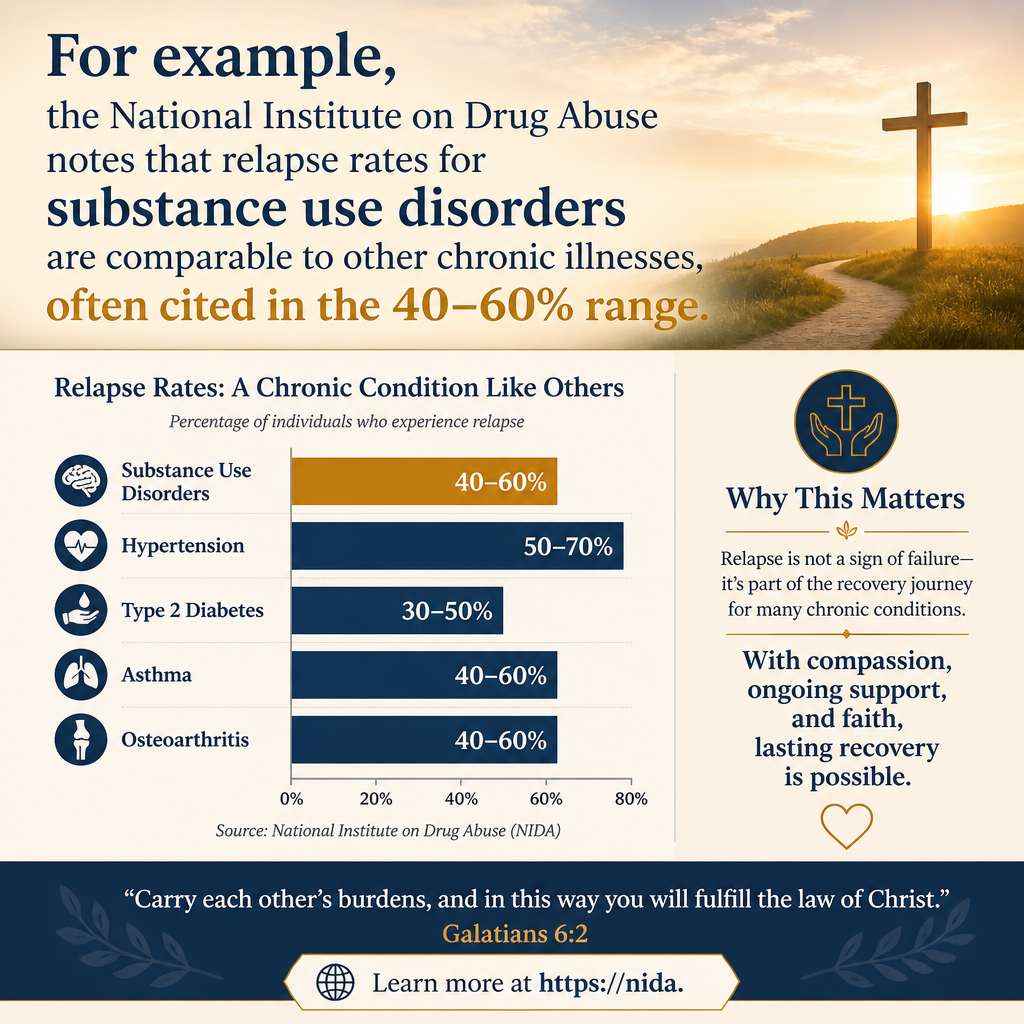
When ministries cite research to frame their work, they should do so carefully. For example, the National Institute on Drug Abuse notes that relapse rates for substance use disorders are comparable to other chronic illnesses, often cited in the 40–60% range https://nida.nih.gov/. A donor update can reference this kind of framing to set realistic expectations, while still emphasizing that Christian ministry is not merely chronic disease management; it is also repentance, renewed worship, and new patterns of life in community.
Disclose methodology and limitations without defensiveness
Donors should be told how outcomes are tracked. Is follow-up done at 3, 6, and 12 months? What percentage of graduates are reachable? What happens when a participant disappears? Programs that report “100% success” invite skepticism. Programs that explain their denominator, their follow-up rate, and their limitations invite trust.
Across our verification work, we observe that ministries aligned with The Most Trusted Standard tend to publish outcome reporting that is modest in claims and strong in documentation. They avoid turning complicated human lives into a single triumph narrative, and they refuse to let complexity become an excuse for vagueness.
Donor communication should be pastoral, not promotional
Many donor updates are technically informative but spiritually thin. Others are spiritually warm but operationally vague. Christian donors often want both: evidence that the ministry is faithfully Christian and evidence that it is competently run. The tone of updates matters because it signals what a ministry believes about God, people, and money.
What strong updates typically include
- A recent ministry snapshot that names what has changed since the last update (capacity, staffing, partnerships, challenges).
- One participant story shared with clear consent and dignity, focused on God’s work and concrete steps of recovery.
- Program realities such as relapses, rule violations, or staffing constraints, described without sensational detail.
- Financial clarity on how donor funds were used and what the next quarter requires.
- Outcomes and learning including what the ministry is adjusting as it learns.
Prayer and Scripture belong in updates, with discipline
Scripture should not be used as ornamental inspiration. It should explain why the ministry operates as it does: why truth-telling matters, why consequences are sometimes necessary, why forgiveness is offered without denying harm, why the church is central, why the poor are not projects. When leaders ground their updates in biblical categories—sin and grace, wisdom and folly, repentance and perseverance—donors can interpret program decisions with greater charity and discernment.
Prayer requests should be specific enough to be real: staffing stability, protection from predatory influences, wisdom in handling relapse, reconciliation in families, fruit in local church partnerships. Donors are not only funders; many are intercessors who carry the work before God for years.
FAQs for What donor updates Christian addiction recovery leaders provide
How often should a Christian addiction recovery ministry update donors?
Quarterly updates are a common and workable standard for most ministries, with an annual report that consolidates finances and outcomes. Major incidents that materially affect safety, leadership integrity, or financial stewardship should be communicated sooner to key stakeholders, with appropriate privacy protections for participants.
What should donors do if an update feels inspiring but lacks verifiable details?
Donors should ask for basic documentation: financial statements, governance information, safeguarding policies, and outcome definitions. Ministries worthy of long-term support typically respond without defensiveness because they understand that transparency is part of faithful stewardship. Most Trusted exists to help donors evaluate those signals against The Most Trusted Standard so giving can be both generous and well-grounded.
A credible update is a form of truth-telling
Christian addiction recovery leaders serve donors best when their updates are sober, documented, and spiritually serious. The work is often slow, and the path is rarely linear, but truth remains the Christian obligation. Donors are not served by stories that conceal relapse, finances that conceal risk, or spiritual language that conceals weak governance. They are served by ministries that speak plainly, protect participants, and invite God’s people into informed, persevering generosity.



